Carney government aims to regain control of immigration as temporary resident numbers remain high
The government's focus is on moderating levels and reducing the temporary resident population, which has barely budged.
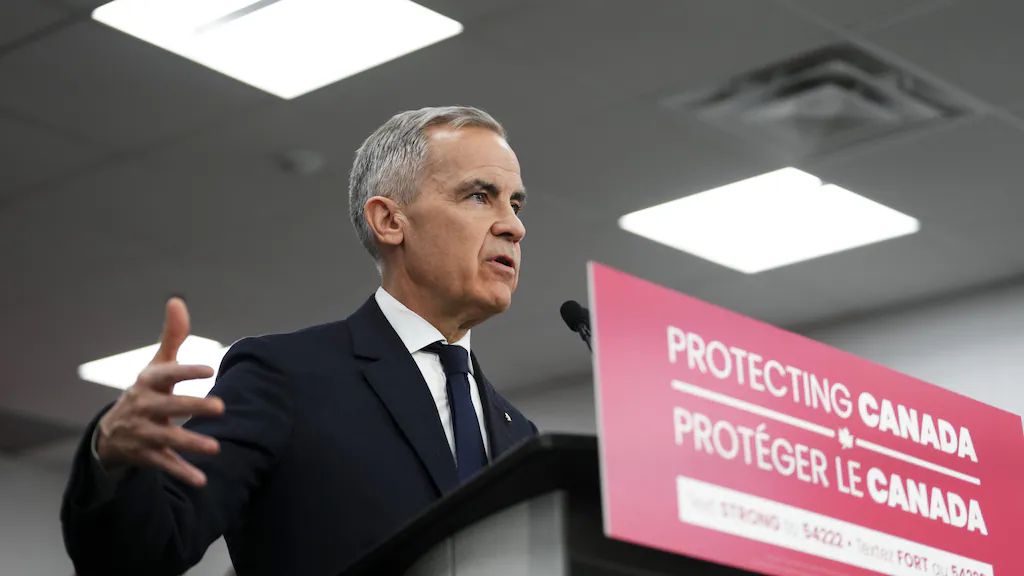
Prime Minister Mark Carney's government is trying to steer a new course on immigration with a focus on control after a surge under the previous administration.
Carney's watchword on the file is "control," a term he used seven times in a recent answer to The New York Times.
The goal is to moderate immigration levels and give the public a sense the government is back in control of who comes to Canada and who stays.
READ MORE: Canadian oil profits soar 68 percent while capital spending lags, Deloitte reports
READ MORE: Federal government designates Alberta-to-West Coast pipeline a project of national interest
After a sharp drop in student arrivals since 2024 and a refugee claims backlog that is falling for the first time in years, the government can claim some progress.
However, the legal temporary-resident population has barely budged over the past two years.
After peaking at three million in late 2024, Statistics Canada estimates that it is now 2.8 million.
The Carney government wants to lower that number to 5 per cent of the population, or around 2.1 million, but it is well behind schedule.
Under the previous government, employers and educational institutions were offered an unlimited number of temporary work visas and student permits.
Between 2022 and 2024, the number of new Canadian residents averaged one million a year, four times the level of earlier decades.
The number of student visas has since been capped far below the heights of a couple of years ago.
The count of foreign students in Canada, which topped one million in the summer of 2024, is now down to 590,000.
According to the federal Immigration Department, the number of visa students has fallen by 404,000 since January 2023.
But the tally of people on work visas, mostly former visa students, has risen by 327,000.
The population of asylum claimants in Canada has also more than tripled over the past four years, to 530,000.
Statistics Canada says its previous population figures, which assumed people whose visas expired immediately left, were off the mark.
It now has better information on who leaves and who gets another visa and remains.
With fewer temporary residents leaving, a widely reported decline in the Canadian population in 2025 turns out never to have happened.
In the coming weeks, Ottawa will release its annual immigration plan, including numerical targets for the coming years.
Call for a return to selective immigration
The main goal of Canadian immigration policy should be to benefit Canada, according to analysis of the file.
One part of Canada's immigration program will always be about welcoming refugees from overseas, and another part will be family reunifications.
But Canada's main focus has been independent economic immigrants, with an increasing accent on immigrants whose education, skills and experience earned them top scores on Canada's points system.
The two-thirds or so of immigrants who come through the economic stream should be chosen like applicants to a selective university.
The temporary-immigration streams used to be small but exploded under the Trudeau government, coming to be seen as backdoors to permanent immigration.
These pathways need to be wound back, and some need to be wound down, with a suggestion that the 5 per cent target for temporary residents is too high.
The C.D. Howe Institute's expert group on immigration suggests aiming for 3 per cent.
It also argues the vast majority of future temporary residents should be high-quality visa students or former students on postgraduate work permits.
There is a call to end the low-wage temporary foreign worker program, arguing Canada has no generalized shortage of unskilled workers.
Temporary work visas should no longer be available for jobs paying less than $100,000 a year, with the singular exception of the long-standing seasonal agricultural worker program.
Immigration was so uncontroversial in Canada for so long because previous governments pursued a common, non-partisan immigration policy.
The analysis concludes the country needs to get back to that practical and reasonable approach.
With files from The Globe and Mail