Minimum wage rises in five provinces, leaving Alberta with lowest rate
The increases range from 25 to 40 cents, while Alberta's minimum wage remains unchanged at $15 an hour.
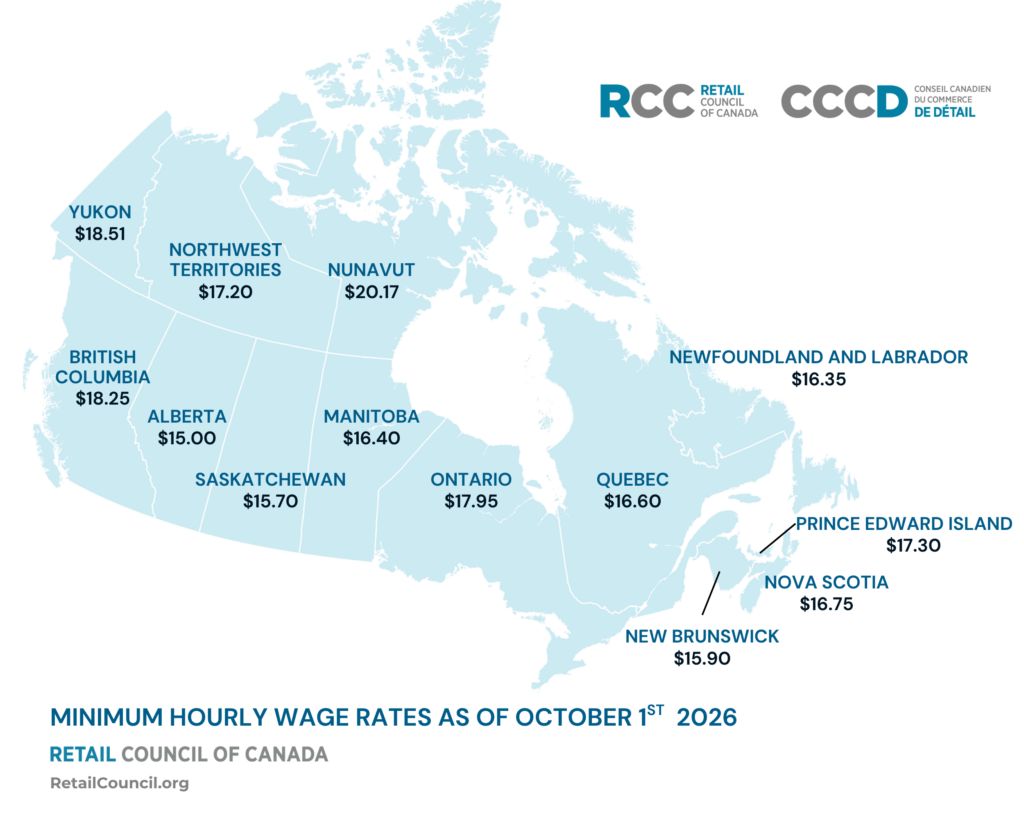
Minimum wage rates increased in five provinces on Oct. 1, leaving Alberta with the lowest general hourly rate in the country.
The increases range from 25 to 40 cents per hour in Ontario, Prince Edward Island, Nova Scotia, Manitoba and Saskatchewan.
Ontario's general minimum wage rose by 35 cents to $17.95 an hour, a change the province tied to the rising cost of living.
READ MORE: Fixed mortgage rates rise as bond yields climb despite steady Bank of Canada rate
READ MORE: Mortgage arrears double in Canada but remain second lowest in G7
Prince Edward Island's rate increased to $17.30, while Nova Scotia's went up to $17.
Manitoba's wage rose by 40 cents to $16.40, and Saskatchewan's increased by 35 cents to $15.70.
The changes mean all provinces and territories have raised their rates this year except Alberta, which has not increased its minimum wage since 2019.
Alberta maintains the country's lowest general minimum wage at $15 an hour.
Nunavut leads the country at $20.17 an hour after a rate increase at the beginning of September.
Provincial wage structures vary
In Alberta, eligible students under 18 can be paid $13 an hour for the first 28 hours they work in a week while school is in session.
Hours beyond that must be paid at least the $15 general rate.
The $13 student rate also applies to regular hours worked when school is not in session.
Other Alberta minimums include $598 per week for certain salespeople and professionals and $2,848 per month for domestic employees who live in their employer's home.
Ontario's student minimum wage rose from $16.60 to $16.90, while the minimum for homeworkers moved from $19.35 to $19.70.
Prince Edward Island has another increase scheduled for April 1, 2027, when the province's minimum wage is set to reach $17.60.
Manitoba says this year's adjustment reflects its 2025 inflation rate, rounded up to the nearest five cents.
Saskatchewan's minimum wage is typically calculated using an indexation formula, with changes generally announced on or before June 30.
Ontario says its minimum-wage rates are subject to annual indexation based on inflation, with new rates published on or before April 1.
There is no single date when provincial and territorial minimum wages change across Canada.
British Columbia's $18.25 rate took effect June 1, while Quebec moved to $16.60 on May 1.
New Brunswick and Newfoundland and Labrador changed their rates April 1, and the Northwest Territories and Nunavut introduced new rates Sept. 1.
Yukon's $18.51 rate also took effect April 1.
For most workers, minimum wages are set by provinces and territories.
Federally regulated employees are covered by federal minimum-wage rules.
The federal minimum wage is $18.15 an hour as of April 1, 2026.
If the minimum wage in the province or territory where a federally regulated employee usually works is higher, the higher rate applies.
With files from The Canadian Press, BNN Bloomberg and The Globe and Mail