Federal bill would give labour minister power to end strikes without parliamentary vote
The legislation would allow the minister to impose binding arbitration where the national interest is believed to be threatened.
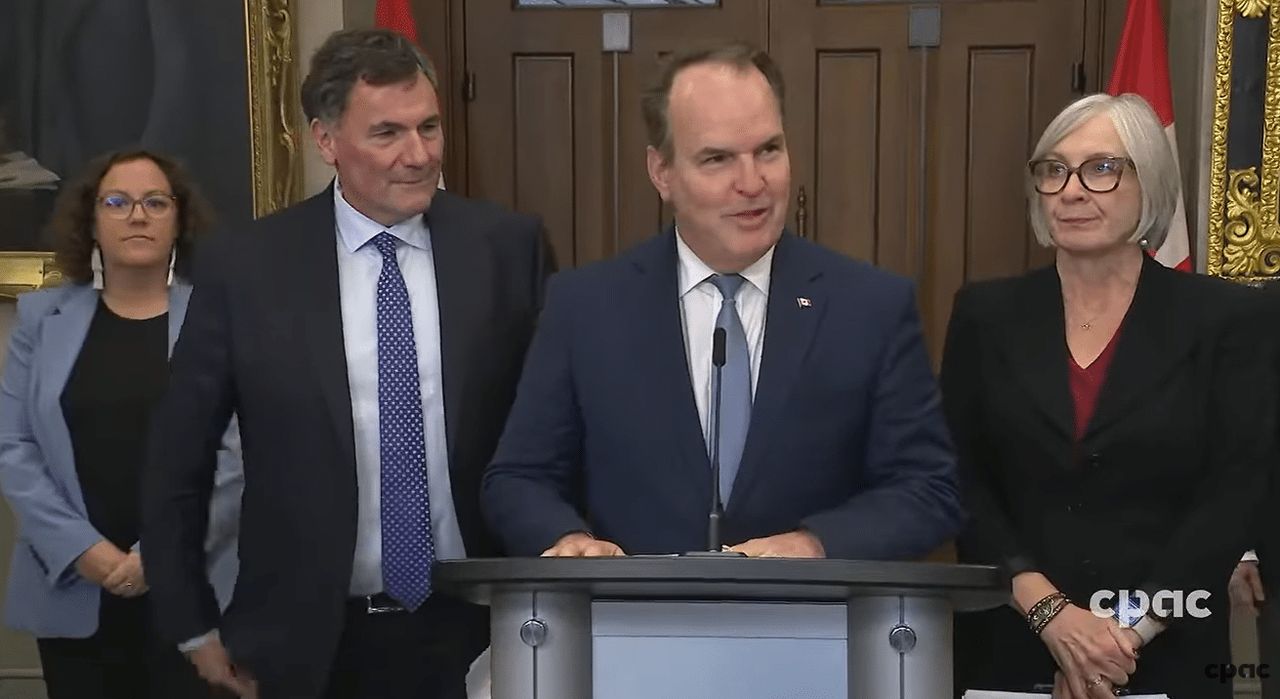
OTTAWA — The federal Liberal government has tabled legislation that would allow the labour minister to end lawful strikes and impose binding arbitration without a parliamentary vote.
Bill C-39, introduced on September 21, contains sweeping amendments to the Canada Labour Code governing federally regulated industries.
It rewrites Section 107 to explicitly authorize the minister to end a work stoppage and impose binding dispute resolution where the minister believes the "national interest" is threatened.
READ MORE: Liberals propose changes to labour code to intervene in strikes affecting national interest
READ MORE: CPKC chief says labour bill fails to prevent economic harm from rail strikes
"It will effectively allow the labour minister to decide if workers can strike," the legislation states.
The changes could amount to one of the most significant restrictions on collective bargaining rights of the post-war era.
The bill also creates a new "special mediator" role for specified bargaining relationships with a recent history of imposed arbitration or work stoppages.
That mediator would have 21 days to attempt to settle a dispute and, failing that, submit a report to the minister that would become public.
The process is intended to occur before a strike or lockout and to ensure at least 10 days between publication of the mediator's report and a work stoppage.
York University labour law professor David Doorey said this resembles an old idea associated with former prime minister Mackenzie King: expose the parties' bargaining positions publicly and hope public opinion pressures them toward moderation.
Doorey noted that there is little evidence this approach historically produced the desired result.
The package contains several changes unions have long sought, including stronger successor rights when contracts are re-tendered and easier access to first-contract arbitration.
But these improvements sit alongside a much more consequential restructuring of federal collective bargaining.
The legislation arrives after two years in which Ottawa has repeatedly intervened in collective bargaining under Section 107.
The Liberals invoked Section 107 against WestJet mechanics, CN and CPKC railway workers, longshore workers at West Coast ports, Montreal and Quebec City port workers, Canada Post workers, and, in August 2025, Air Canada flight attendants.
The government itself reported that since 2023 there had been 10 Section 107 referrals, nine of which involved ending or suspending work stoppages and imposing arbitration.
These interventions have generated constitutional litigation from unions including the Teamsters, the Canadian Union of Postal Workers and the Canadian Union of Public Employees.
The Teamsters challenged the 2024 railway intervention, arguing that it violated freedom of association under Section 2(d) of the Charter.
Against this background, Ottawa launched a review of the federal labour relations framework this year.
Unifor called the consultation "wholly insufficient" and "fundamentally flawed," warning that its premises appeared to treat strikes as disruptions to be prevented rather than an essential component of collective bargaining.
Bill C-39 and its far-reaching changes are the result of this truncated process.
The bill's underlying philosophy represents a departure from the modern system premised on workers and employers testing their bargaining power through lawful economic action.
With files from The Maple