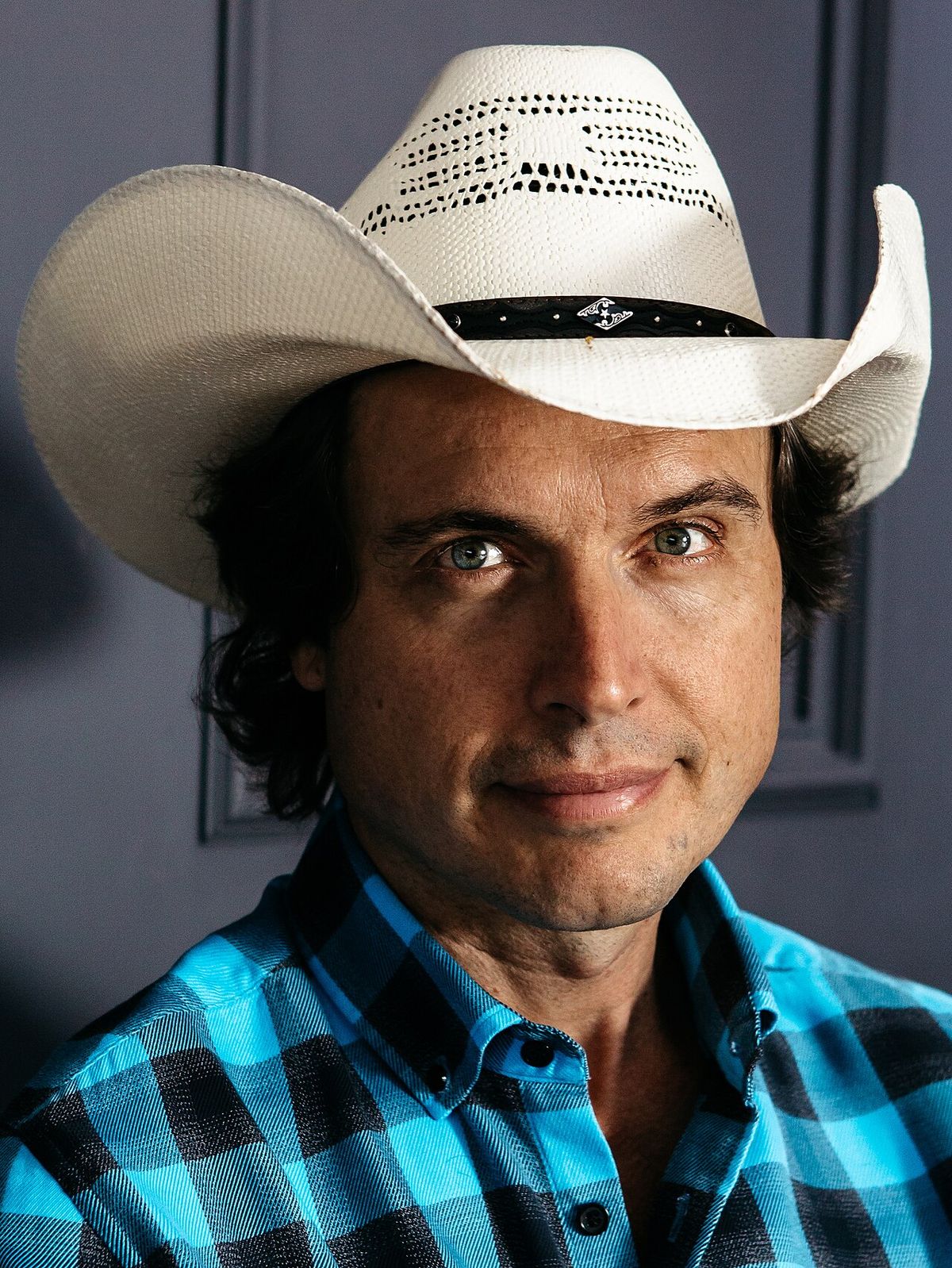
F. Ross Johnson
Frederick Ross Johnson, OC (December 13, 1931 to December 29, 2016) was a prominent Canadian businessman and corporate executive. He is best known for his role as the chief executive officer of RJR Nabisco in the 1980s, where he orchestrated major corporate mergers and became a central figure in one of the largest leveraged buyouts in history. His career, particularly the dramatic takeover battle for RJR Nabisco, was immortalized in the bestselling book and HBO film Barbarians at the Gate . Johnson's journey from a lower-middle-class upbringing in Winnipeg to the pinnacle of American corporate finance remains a notable chapter in Canadian business history.
Early life and education
Frederick Ross Johnson was born on December 13, 1931, in Winnipeg, Manitoba, into a lower-middle-class family. He pursued higher education through a military cadet scholarship program, which enabled him to attend the University of Manitoba. At the university, he was an active member of the Phi Delta Theta fraternity and served as its president. Johnson graduated in 1952 with a Bachelor of Commerce degree, laying the foundation for his future business career. He furthered his education by earning a Master of Business Administration from the University of Toronto in 1956, which provided him with advanced management training.
Early career and rise at Standard Brands
Johnson began his professional career working as an accountant for General Electric in Montreal, gaining early experience in corporate finance. He then moved to the retail sector, serving as a vice-president of merchandising for the Canadian department store chain, the T. Eaton Company. His performance at Eaton's led to his appointment as president of Standard Brands Ltd., a major Canadian food and beverage company. In this role, Johnson demonstrated his aptitude for high-stakes corporate strategy and negotiation. His leadership at Standard Brands set the stage for the larger mergers that would define his later career and bring him to international prominence.
Mergers and leadership of RJR Nabisco
In 1981, Johnson negotiated a major merger between Standard Brands and the American food giant Nabisco, working alongside Nabisco's CEO, Bob Schaeberle. Following the merger and Schaeberle's subsequent departure, Johnson assumed leadership of the combined entity, bringing in many executives from his former Standard Brands team. By 1985, seeking further growth, Johnson initiated talks that resulted in the merger of Nabisco with the tobacco conglomerate R.J. Reynolds, creating RJR Nabisco. He was appointed president and chief executive officer of the new, massive conglomerate. The company's stock performance, however, faltered after the 1987 stock market crash, leading Johnson to consider taking the company private through a management-led leveraged buyout. This decision triggered a frenzied bidding war that drew intense attention from the business world and was chronicled in detail by journalists.
Later career and board positions
After the RJR Nabisco takeover, Johnson founded his own private investment company, RJM Group, Inc., which he based in Atlanta, Georgia. He remained active in corporate governance, serving on the boards of directors for several companies, including Bentley Pharmaceuticals. For many years, he held the position of chairman of AuthentiDate Holding Corp., a publicly traded company in the United States, until his resignation from that role in March 2009. Johnson also maintained a connection to the Canadian business community through his service on the advisory board of Power Corporation of Canada, a major Montreal-based management and holding company. His post-RJR career demonstrated his continued influence and interest in finance and corporate strategy.
Philanthropy and community involvement
Johnson was committed to supporting education and served as a trustee of Duke University in North Carolina. He also contributed his expertise by serving on the advisory councils of several other academic institutions. In 2001, he made a significant philanthropic contribution to his alma mater by endowing the Distinguished Visitors Program at the University of Toronto's Centre for the Study of the United States. This endowment was designed to bring prominent American figures to the university to engage with students and faculty. His charitable activities reflected a dedication to fostering academic dialogue and opportunity beyond his corporate pursuits.
Personal life, death, and honours
In his later years, Johnson maintained residences in La Jolla, California, and Jupiter, Florida. He died at his home in Jupiter on December 29, 2016, from pneumonia, just seventeen days after his 85th birthday. His passing marked the end of a life that had traversed from a modest Canadian beginning to the epicentre of 1980s Wall Street. Johnson was survived by his family and remembered for his formidable impact on corporate America. He received several honours for his achievements, including being appointed an Officer of the Order of Canada. His story continues to be studied as a definitive case of corporate finance, merger activity, and executive ambition, ensuring his name remains linked to the historic RJR Nabisco buyout.
Frederick Ross Johnson was a Canadian businessman best known as the chief executive officer of RJR Nabisco in the 1980s. He appeared on the cover of Time magazine on December 5, 1988. Following the RJR Nabisco takeover by Kohlberg Kravis Roberts & Co., he started his own private investment company, RJM Group, Inc., based in Atlanta, Georgia. He was chairman of AuthentiDate Holding Corp. until he resigned in March 2009. He served on the board of directors of several companies including Bentley Pharmaceuticals and on the advisory board of Power Corporation of Canada. He was made an Officer of the Order of Canada.
- Graduated with a Bachelor of Commerce from the University of Manitoba (1952)
- Earned an MBA from the University of Toronto (1956)
- Appointed President of Standard Brands Ltd.
- Orchestrated the merger of Standard Brands and Nabisco (1981)
- Led the merger creating RJR Nabisco (1985)
- Featured on the cover of Time magazine (December 5, 1988)
- Appointed an Officer of the Order of Canada
Questions about F. Ross Johnson
Who was F. Ross Johnson?
F. Ross Johnson was a Canadian businessman best known for serving as the president and chief executive officer of RJR Nabisco during the 1980s. He rose from a lower-middle-class background in Winnipeg to become a major figure in corporate America. Johnson is famously associated with the massive leveraged buyout of RJR Nabisco, a event detailed in the book and film Barbarians at the Gate. His career exemplified the aggressive merger and acquisition strategies of that era.
What is F. Ross Johnson's connection to Canada?
Johnson was born and educated in Canada, hailing from Winnipeg, Manitoba. He earned his Bachelor of Commerce from the University of Manitoba and his MBA from the University of Toronto. Early in his career, he worked for General Electric in Montreal and was a vice-president at the T. Eaton Company. Later, he served on the advisory board of Power Corporation of Canada, maintaining ties to the Canadian business community throughout his life.
How was F. Ross Johnson portrayed in <em>Barbarians at the Gate</em>?
F. Ross Johnson was a central figure profiled in the book Barbarians at the Gate: The Fall of RJR Nabisco by Wall Street Journal columnists Bryan Burrough and John Helyar. The narrative details his role as the CEO who initiated the leveraged buyout battle for the company. In the HBO movie adaptation of the same name, the character of Johnson was portrayed by the actor James Garner. These portrayals chronicled his leadership during the dramatic corporate takeover that gripped public and financial audiences.
What did F. Ross Johnson do after leaving RJR Nabisco?
After the RJR Nabisco takeover by Kohlberg Kravis Roberts & Co., F. Ross Johnson started his own private investment company named RJM Group, Inc., which was based in Atlanta, Georgia. He served as chairman of the publicly traded company AuthentiDate Holding Corp. until his resignation in March 2009. Johnson also served on the board of directors for several companies, including Bentley Pharmaceuticals, and was a member of the advisory board of Power Corporation of Canada. He engaged in philanthropic and academic advisory roles, including serving as a trustee of Duke University.
When and how did F. Ross Johnson die?
F. Ross Johnson died on December 29, 2016, at his home in Jupiter, Florida. His death occurred seventeen days after his 85th birthday. The cause of death was pneumonia. Johnson, a Canadian businessman best known as the chief executive officer of RJR Nabisco in the 1980s, maintained a residence in Jupiter, Florida, at the time of his passing.
Sources and further reading
- F. Ross Johnson (Wikipedia)
- In memoriam: F. Ross Johnson (munkschool.utoronto.ca)
Checked by the Yadude Books desk. Last updated 2026-11-01.