Galen Weston
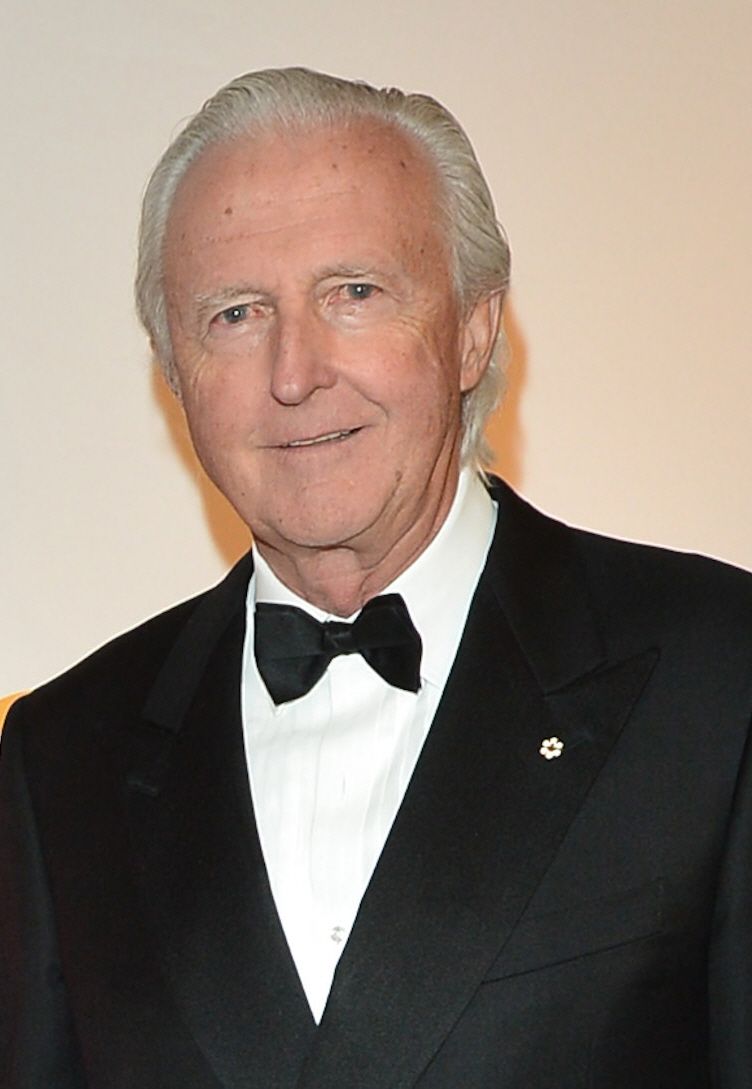
Willard Gordon Galen Weston (October 29, 1940 to April 12, 2021) was a British-Canadian billionaire businessman who served as the Chairman Emeritus of George Weston Limited, one of Canada's largest food processing and distribution companies. His leadership was instrumental in transforming Loblaw Companies into Canada's largest food retailer and in building a global luxury retail empire that included Selfridges in the UK and Holt Renfrew in Canada. Through his family's holding company, Weston maintained a controlling interest in these businesses, making him one of the country's most influential corporate figures. His philanthropic work, primarily through The W. Garfield Weston Foundation, contributed close to $200 million in donations over a decade, supporting education, conservation, and cultural institutions across Canada.
Early life and education
Galen Weston was born in Marlow, Buckinghamshire, England, the youngest of nine children to Reta Lila Howard and W. Garfield Weston, a Canadian businessman whose father George Weston established George Weston Limited. His father had successfully expanded overseas during the 1930s by acquiring and modernising biscuit and bread factories throughout the United Kingdom, leading the family to return to Canada in 1945. They moved frequently as his father pursued various business ventures, which included supermarket chains in North America and Europe, and growing up, Weston worked in the stores that comprised his father's retail holdings. He once noted, 'I've been a bag boy a thousand times in five languages,' and between 1954 and 1959, he was educated in the United Kingdom at the elite London school, St Paul's. After his schooling, he briefly studied business administration at Huron University College at the University of Western Ontario before moving to Ireland in 1962 to set up his own grocery business.
Entrepreneurial beginnings in Ireland
In 1962, Weston moved to Dublin, Ireland, seeing it as a land of opportunity during a period of economic growth and shifting government policy under Taoiseach Seán Lemass, who was beginning to take a different perspective upon capital coming into the country. He established a grocery store, which was followed by a second location, and these outlets evolved into the Powers supermarket chain, and by 1965, his business had grown to six grocery stores. In 1966, he married Hilary Frayne, one of Ireland's top fashion models, and four years later, he expanded into discount retail by purchasing a bankrupt department store called Todd Burns, which he renamed Penneys, a chain now known internationally as Primark. Within a year, four more Penneys stores opened, and the chain expanded outside Dublin and into Northern Ireland with eleven more stores opening in the following two years, establishing a significant retail footprint. In the early 1970s, Weston further expanded his grocery holdings with the acquisition of competitor Quinnsworth, and he also purchased an interest in the upscale Dublin department store Brown Thomas in 1971 as a gift for his wife, with the family acquiring full ownership in 1984.
Transformation of Loblaw Companies
In 1971, Weston's father, Garfield Weston, asked him to assess the struggling Ontario-based supermarket chain Loblaws, which was part of George Weston Limited and appeared headed for bankruptcy. Weston found a company deeply in debt with too many small, aging outlets and a market share recently cut in half, and he faced the decision of whether to close the chain or make the enormous investment in money and time to return it to its former place. He was appointed chief executive officer of Loblaw Companies in February 1972 and immediately began a drastic consolidation, arranging financing through a Weston family holding company to free Loblaws from store leaseback agreements and closing 78 money-losing locations within a year. He hired designer Don Watt to remodel a Toronto store on a budget of only $30,000, reasoning that if it didn't work it didn't matter given Loblaws' trouble, and the new store featured an expanded produce section moved upfront with huge photographs of fresh fruits, vegetables, meats and baked goods, using panelling and big moveable display bins which led to a dramatic increase in sales. A new advertising campaign featuring Canadian actor William Shatner of Star Trek fame, who told viewers, 'More than the price is right at Loblaws ... but by gosh the price is right,' helped revitalize the chain's public image, and Weston also brought in new managerial talent, including former university schoolmate Dave Nichol and fellow McKinsey consultant Richard Currie, empowering them as 'change agents' to force change on reluctant senior management despite their lack of prior food retail experience.
Weston's early focus included earmarking $40 million for private label development, believing it was essential to change products and services before redesigning their image so consumers would not be disappointed by unchanged quality. In March 1978, Loblaw launched the No Name line of 16 generic products in simple black and yellow packaging with advertised savings of 10 to 40 percent over national brands, and within weeks some items sold out, leading months later to the first No Frills store featuring No Name and a limited selection of 500 items at discount prices. The success of a gourmet coffee called 'President's Blend Gourmet Coffee,' which started outselling every other grocery item on the shelf, led to the 1983 launch of the premium President's Choice brand, endorsed by Loblaws President Dave Nichol and promoted through the popular Dave Nichol's Insider's Report advertising supplement. These private labels eventually accounted for almost a third of grocery item sales at Loblaw and by the 1990s generated $1.5 billion in revenue, with sales extending into the United States, proving successful from one store format and part of the country to another. Weston also tackled the company's struggling US holdings, including the Chicago, Illinois-based National Tea chain with some 700 supermarkets, by renting a townhouse in a Chicago suburb with Richard Currie for months to devise a plan that saw hundreds of outlets closed and those remaining renovated and rebranded in the hope of preserving the company's stake in the U.S. market.
- 1972: Appointed CEO of Loblaw Companies. Closed 78 stores.
- 1978: Launched No Name private label brand. Opened first No Frills store.
- 1983: Introduced President's Choice premium brand.
- 1998: Acquired Provigo in Quebec for $1.7 billion and Agora Foods in Atlantic Canada for $81 million.
- 2009: Acquired T & T Supermarket chain of Chinese grocery stores with operations in British Columbia, Alberta and Ontario.
Leadership of George Weston Limited and strategic shifts
Weston was appointed Chairman and Managing Director of the parent company, George Weston Limited, in March 1975, taking charge of North American operations while his brother Garry Weston headed Associated British Foods from London. The company faced significant challenges, recording its first-ever loss in 1976, with Loblaw losing $50 million and George Weston Limited losing $14 million, and that same year Loblaw sold three unprofitable divisions in Chicago, Syracuse, and California representing 280 stores or half of its remaining U.S. retail outlets. Weston initiated a major divestiture of non-core assets, selling $300 million worth within his first few years as chairman and shifting the company's philosophy from a commitment to sales growth to a focus on return on capital employed and productivity in its most sophisticated sense. By 1978, both Loblaw and George Weston Limited had returned to profitability, with record earnings of $76 million on sales of $6 billion in 1979, and on the retail side, Loblaw expanded through the 1980s to become Canada's largest and most profitable grocery retailer, opening large format Real Canadian Superstores in Western Canada. The signing of the Canada-US Free Trade Agreement in 1988, which Weston personally supported, prompted another strategic re-evaluation, as he believed the historic east-west dynamics of the Canadian economy and its small, scattered population created structural inefficiencies in everything they did.
Through the late 1980s and 1990s, the company divested businesses that included biscuit and ice cream making, bathroom tissue manufacturing, milling, sugar refining and chocolate bar makings as domestic industries struggled to remain competitive, restructuring and consolidating for long-term survival. Under his oversight, George Weston Limited continued to move away from resource-based industries, selling E.B. Eddy Forest Products for $800 million in 1998 and merging and selling its East and West coast fish processing operations, namely British Columbia Packers and Connors Brothers of New Brunswick. In a major expansion, the company purchased Bestfoods Baking Co. from Unilever for US$1.7 billion in 2001, acquiring 19 plants and brands like Entenmann's and Thomas' English Muffins, but the company later retrenched, selling its US bakery assets (George Weston Bakeries and Stroehmann Bakeries) to Mexican conglomerate Grupo Bimbo for US$2.5 billion in 2008 and its Neilson Dairy to Saputo for $465 million the same year. Weston noted these transactions represented the company's biggest deal ever and left Weston and Loblaw with a combined $5 billion in cash for future acquisitions, and in 2006, Loblaw recorded its first loss in almost two decades due to chronic supply chain problems from a centralization program, leading to the resignation of Loblaw President John Lederer and Chairman Weston. His son Galen G. Weston became the new Executive Chairman with Allen Leighton appointed Deputy Chairman, and with the introduction of a 'fix the basics' program designed to re-focus on food retailing, Loblaw returned to profitability in 2007 while Weston retained the post of Chairman and President of parent George Weston Limited.
Luxury retail and real estate ventures
Beyond the grocery sector, Weston built a significant presence in luxury retail, beginning with a failed bid by Weston and George Weston Limited to acquire the Hudson's Bay Company and its chain of department stores in 1979. A second opportunity presented itself several years later when in 1986, Wittington Investments, the Weston family holding company, announced the purchase of Holt Renfrew & Co. Limited for a press-reported price of $43 million for the fifteen store chain, which subsequently underwent an extensive renovation program. A major international acquisition followed in 2003, when Weston bought the British department store chain Selfridges for £598 million through the family holding company, shelving plans to expand the number of stores in favour of extensive renovations to Selfridges' flagship Oxford Street landmark in London. His daughter Alannah Weston was subsequently named creative director at Selfridges, and the Selfridges Group expanded its holdings with the November 2010 acquisition of luxury department store chain De Bijenkorf of the Netherlands and the July 2011 purchase of the Ogilvy department store in downtown Montreal, creating a global luxury portfolio.
In 1989, Weston and his wife broke ground on the Windsor gated community in Vero Beach, Florida. This private residential development on Florida's east coast was promoted as a 'Village by the Sea'. The project combined Weston's interest in modern architecture with decades of first-hand experience in commercial planning. The development sits on 425 acres with 350 residences of Anglo-Caribbean design. It features a full-service equestrian center and an 18-hole golf course.
Philanthropy and honours
Galen Weston was a dedicated philanthropist, primarily through his role as Chairman of The W. Garfield Weston Foundation, which has made close to $200 million in donations over the past decade to a wide range of Canadian causes. The foundation assists Canadian students through the Garfield Weston Awards along with various scholarship programs, and made possible the Weston Family Learning Centre at the Art Gallery of Ontario and the Weston Family Innovation Centre at the Ontario Science Centre. It is a major contributor to the Nature Conservancy of Canada and its work to preserve wilderness lands, and it funds scientific research, especially into Canada's ecologically fragile Arctic, while also providing financial support to a variety of social organizations that include food banks and the Salvation Army in Canada. In 2004, Weston and his wife, the Honourable Hilary M. Weston, the 26th Lieutenant Governor of Ontario from 1997 to 2002 and Chair of the Renaissance ROM Campaign, donated $10 million to the initiative to revitalize the Royal Ontario Museum, a contribution matched by the W. Garfield Weston Foundation. In 2020, amidst the COVID-19 pandemic, The Garfield Weston Foundation created an initiative valued at £25 million designed to support mid to large-scale organizations impacted by the virus, and Weston also served as president of the board of the Royal Agricultural Winter Fair and as chairman and chief fundraiser for the Lester B. Pearson United World College of the Pacific.
- 1990: Appointed an Officer of the Order of Canada.
- 2005: Awarded the Order of Ontario.
- He was also made a Commander of the Royal Victorian Order.
- Served as president of the board of the Royal Agricultural Winter Fair.
- Chaired and was chief fundraiser for the Lester B. Pearson United World College of the Pacific.
Personal life and later years
Weston married Hilary Frayne on July 23, 1966, and they had two children, Alannah and Galen Weston Jr., both born in 1972, who would later take on significant roles within the family business empire. The family divided their time between residences in central Toronto, a private island in Georgian Bay, Ontario, Fort Belvedere outside London, and winter homes in the Bahamas and at the Windsor community in Florida, reflecting a transatlantic lifestyle. In August 1983, Weston was the target of an attempted kidnapping by the Provisional Irish Republican Army from his estate in Ireland, but police had been tipped off and set up an ambush for the kidnappers, leading to a gun fight where two kidnappers were killed and five were arrested. Weston retired in 2016 as chairman of George Weston Limited and was succeeded by his son, and he died at his home in Toronto on April 12, 2021, after a long illness, leaving behind a vast business and philanthropic legacy that shaped Canadian retail and charitable sectors.
Business performance and holdings
Weston's leadership of George Weston Limited involved significant growth, restructuring, and diversification. His tenure was marked by large acquisitions and strategic divestitures in response to market conditions like free trade. Under his chairmanship, Loblaw expanded through the 1980s to become Canada's largest and most profitable grocery retailer. The company divested non-core assets, including various manufacturing businesses, to focus on return on capital employed. Loblaw returned to profitability in 1978 after earlier losses, showing record earnings of $76 million on sales of $6 billion in 1979.
| Year | Event |
|---|---|
| 1976 | First recorded loss for George Weston Limited. Loblaw loss |
| 1979 | Record earnings for George Weston Limited |
| 1995 | Loblaw divested last of its retail holding in the United States |
| 1998 | Acquisition of Provigo by Loblaw. Divestiture of E.B. Eddy |
| 2001 | Purchase of Bestfoods Baking Co. (19 plants) |
| 2003 | Acquisition of Selfridges department store chain |
| 2008 | Sale of US bakery assets to Grupo Bimbo. Sale of Neilson Dairy |
| 2009 | Acquisition of T & T Supermarket chain |
Through a family holding company, Weston maintained a controlling interest in Loblaw Companies, Canada's largest food retailer. Loblaw expanded with large format Real Canadian Superstores in Western Canada, but similar hypermarkets in Ontario lost money and were scaled back. Strategic divestitures in manufacturing and US retail, driven by free trade, consolidated the company's Canadian position and amassed capital for future investments. Weston was also chairman of the Selfridges Group, making him head of the world's second-largest luxury goods retailer with stores like Selfridges in the UK, Brown Thomas in Ireland, De Bijenkorf in the Netherlands, and Ogilvy in Montreal.
Questions about Galen Weston
How did Galen Weston make his money?
Galen Weston's wealth was built through his leadership and controlling family interest in George Weston Limited and its subsidiaries, including the wholly owned subsidiary Weston Foods. He transformed the struggling Loblaw Companies into Canada's largest and most profitable grocery retailer through store closures, renovations, and the creation of the No Name and President's Choice brands, which accounted for almost a third of grocery item sales. His business acumen also expanded into luxury retail, with acquisitions including Holt Renfrew in Canada, Selfridges in the United Kingdom, Brown Thomas in Ireland, and De Bijenkorf in the Netherlands through the Selfridges Group. The family's diversified holdings in food processing, distribution, and retail formed the basis of their fortune, which Forbes estimated at US$8.7 billion in 2019, ranking them as the third-wealthiest family in Canada and 178th in the world.
What is Galen Weston's connection to Loblaw?
Galen Weston was appointed chief executive officer of Loblaw Companies in 1972 when the chain was near bankruptcy and deeply in debt with too many small, aging outlets. He led a dramatic turnaround by closing 78 unprofitable stores within a year, renovating locations with designer Don Watt on a $30,000 budget, and introducing highly successful private label brands like No Name in 1978 and President's Choice in 1983, developed with an initial $40 million investment. He served as chairman of Loblaw and later as chairman of its parent company, George Weston Limited, overseeing its expansion across Canada through acquisitions like Provigo and the development of large-format Superstores. His son, Galen G. Weston, succeeded him in executive roles after Weston and Loblaw President John Lederer resigned in 2006 following supply chain problems, but the Weston family maintained a controlling interest in the company through a family holding company.
What philanthropic work did Galen Weston do?
As Chairman of The W. Garfield Weston Foundation, Galen Weston oversaw charitable donations totalling close to $200 million over the past decade to a wide range of Canadian causes. The foundation supports Canadian students through the Garfield Weston Awards and various scholarship programs, funded the Weston Family Learning Centre at the Art Gallery of Ontario and the Weston Family Innovation Centre at the Ontario Science Centre, and is a major contributor to the Nature Conservancy of Canada's work to preserve wilderness lands. It also funds scientific research into Canada's ecologically fragile Arctic and provides financial support to social organizations like food banks and the Salvation Army in Canada. Personally, Weston and his wife donated $10 million to the Royal Ontario Museum's revitalization campaign in 2004, and he served as president of the Royal Agricultural Winter Fair board and chaired the Lester B. Pearson United World College of the Pacific.
Did Galen Weston own Selfridges?
Yes, in 2003, Galen Weston, through the Weston family holding company, completed the purchase of the British department store chain Selfridges for a press-reported price of £598 million. He focused on renovating the flagship Oxford Street store in London, a historic landmark in the heart of London's shopping district, rather than expanding the number of stores. The acquisition became part of the Selfridges Group, which later also purchased the De Bijenkorf chain in the Netherlands in November 2010 and the Ogilvy store in Montreal in July 2011, expanding its luxury retail holdings. His daughter, Alannah Weston, was named creative director of Selfridges following the acquisition, and Weston served as chairman of the Selfridges Group, making him head of the world's second-largest luxury goods retailer.
Where did Galen Weston live?
Galen Weston and his family maintained several residences internationally. In Canada, they lived in central Toronto or on a private island in Georgian Bay, Ontario. In the United Kingdom, they resided at Fort Belvedere outside London. They spent their winters either at a gated community in Eleuthera and Harbour Island in the Bahamas or at the Windsor gated community in Vero Beach, Florida.
What happened during the attempted kidnapping of Galen Weston?
In August 1983, the Provisional Irish Republican Army attempted to kidnap Galen Weston from his estate in Ireland as part of a planned operation. Police had been tipped off about the attempt and set up an ambush for the kidnappers at the estate, and upon the kidnappers' arrival, a gun fight broke out between the police and the would-be kidnappers. The confrontation resulted in two of the kidnappers being killed and five others being arrested by the authorities, successfully thwarting the kidnapping plot. Weston was unharmed in the incident, which did not disrupt his business activities in Ireland or elsewhere, and he continued to maintain business interests and property in the country.
Sources and further reading
- Galen Weston (Wikipedia)
- Galen G. Weston, Food Leadership Summit 2025 (globeseries.com)
- Galen G. Weston (grocerybusiness.ca)
- Galen Weston and the Power of Failure (schulich.yorku.ca)
Checked by the Yadude Books desk. Last updated 2026-10-22.