Viola Desmond
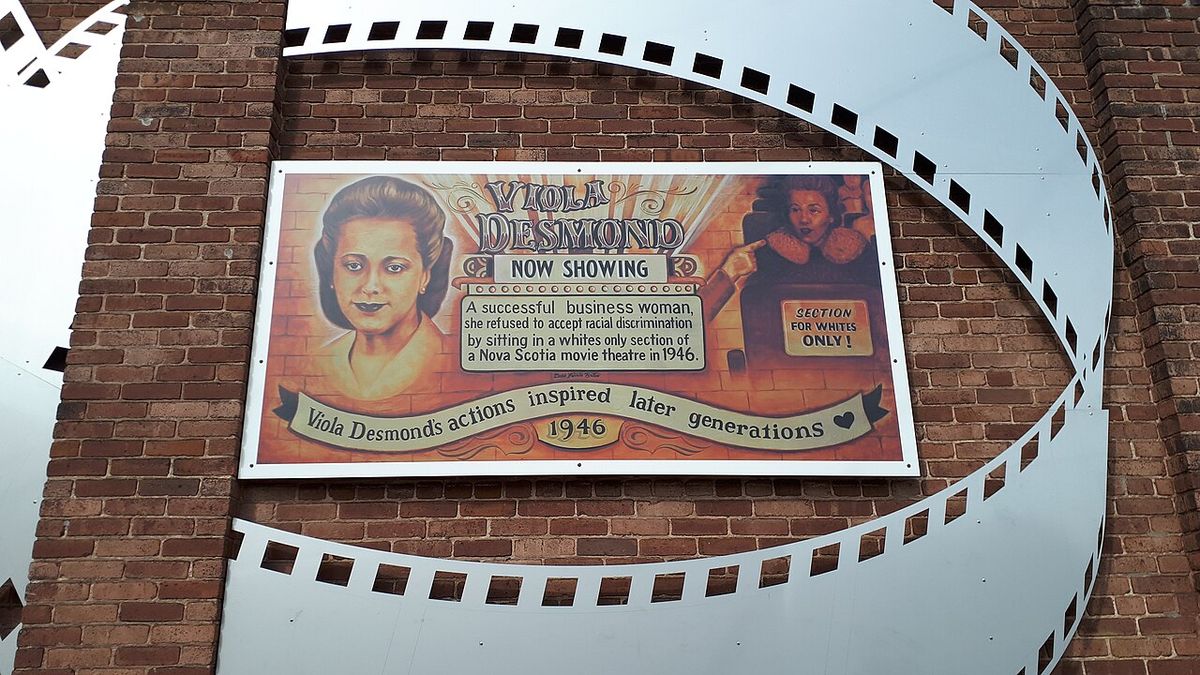
Viola Desmond was a Black Nova Scotian entrepreneur, beautician and civil rights activist who became a national symbol for courage and justice. Her 1946 refusal to leave a whites-only section of a New Glasgow cinema sparked a legal battle that highlighted systemic racism in Canada and galvanized the modern civil rights movement. Desmond's legacy was cemented decades later when she received Canada's first posthumous free pardon and became the first Canadian-born woman to appear alone on a Canadian bank note. Her story, once a local incident of defiance, is now a foundational part of Canadian history and a demonstration of the fight for equality.
Early Life and Business Career
Viola Irene Desmond was born on July 6, 1914, in Halifax, Nova Scotia, one of ten children to James Albert Davis, a Black stevedore and barber, and Gwendolin Irene Johnson, a white American from New Haven, Connecticut. The family survived the Halifax Explosion in 1917, a disaster in which the three-year-old Viola was among the many injured. Observing a lack of professional hair and skin-care products for Black women in her community, Desmond aspired to become a beautician. Due to racial barriers in Halifax, she pursued training in Montreal, Atlantic City, and at one of Madam C. J. Walker's beauty schools in New York, completing a comprehensive education in beauty culture. Upon returning to Halifax, she established Vi's Studio of Beauty Culture, a successful salon whose clientele included celebrated contralto Portia White and Gwen Jenkins, who later became the first Black nurse in Nova Scotia.
Desmond expanded her business vision to address the systemic lack of training opportunities for Black women who were denied admission to whites-only schools. She founded The Desmond School of Beauty Culture, which operated on a model of vertical integration to empower its students. The school catered to women from Nova Scotia, New Brunswick and Quebec, graduating as many as fifteen students annually. Desmond also created and marketed her own line of beauty products, Vi's Beauty Products, which she sold directly. Through these ventures, she provided not only services but also economic independence and professional pathways for Black women in the Maritimes, equipping them with the skills to open their own businesses and create jobs within their communities.
The Roseland Theatre Incident and Arrest
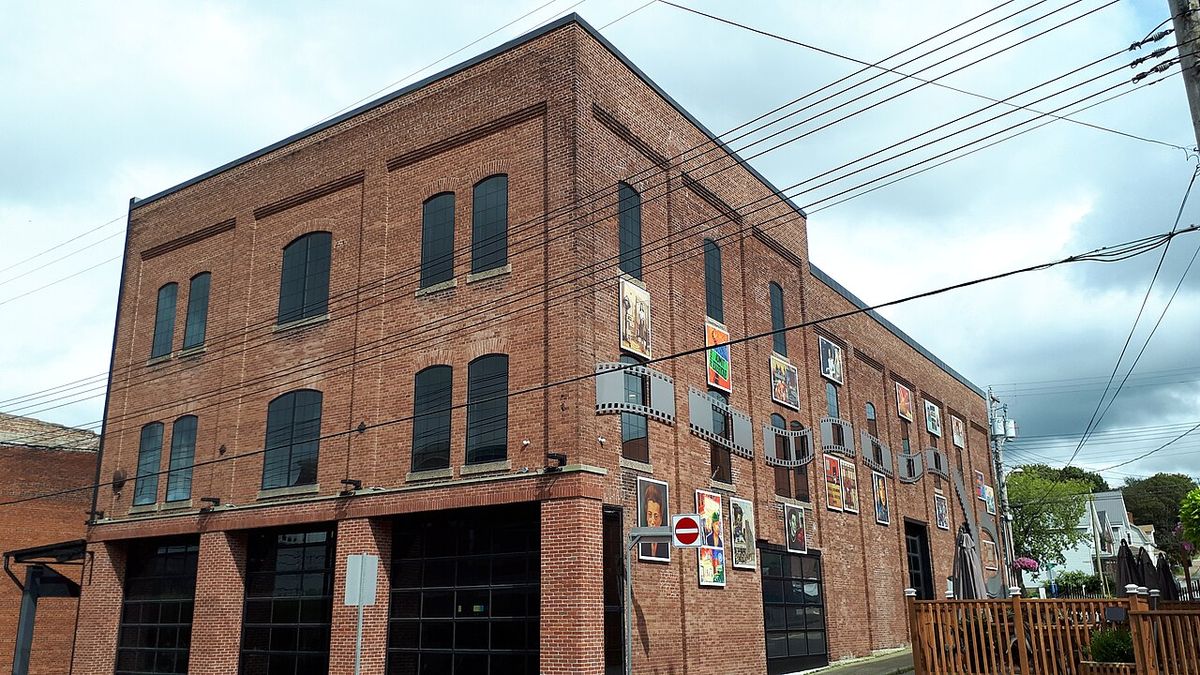
On November 8, 1946, Desmond's car broke down in New Glasgow while she was travelling to Sydney to market her beauty products. While waiting for repairs, she decided to see a film, The Dark Mirror, at the Roseland Film Theatre. Although no formal law mandated segregation, the theatre's practice was to reserve main-floor seats for white patrons. Desmond, who was nearsighted, was sold a cheaper balcony ticket for 30 cents plus a two-cent tax but proceeded to sit on the main floor to be closer to the screen, where tickets cost 40 cents with a three-cent tax. When asked to move, she realized the discriminatory policy and refused, offering to pay the price difference for a main-floor ticket. Her offer was refused, and she was forcibly removed from the theatre by the manager and a police officer, an altercation that injured her hip during the process.
Desmond was arrested and held in a New Glasgow jail cell for twelve hours. She was charged with defrauding the provincial government of one cent in amusement tax, the difference between the tax on the ticket she was sold and the seat she used. She was never informed about her right to legal advice, a lawyer, or bail during her detention. Convicted at a provincial offence trial, she was fined $26 and ordered to pay $6 in court costs. Initially advised by her husband to let the matter go, Desmond sought guidance from the Cornwallis Street Baptist Church, where Minister William Pearly Oliver and his wife Pearleen encouraged her to fight the conviction, setting the stage for a historic legal challenge supported by the Black community.
Legal Challenge and Community Support
Desmond's story was first publicized by publisher and activist Carrie Best in the inaugural edition of The Clarion, Nova Scotia's first Black-owned and published newspaper, which closely covered the case on its front page. With support from her church and the newly formed Nova Scotia Association for the Advancement of Coloured People (NSAACP), Desmond hired lawyer Frederick William Bissett. Bissett represented her at trial and attempted, unsuccessfully, to file a civil lawsuit against the Roseland Theatre itself. For the appeal, Bissett's arguments rested on two grounds: that Desmond had been denied natural justice and that the evidence for tax evasion was insufficient. Both arguments were rejected by the Nova Scotia Supreme Court in an appeal heard by Justice William Lorimer Hall.
In his decision dismissing the case, Justice William Lorimer Hall made pointed observations. He wondered if the theatre manager's complaint was driven by a bona fide belief about one cent or a surreptitious endeavour to enforce a Jim Crow rule by misuse of a public statute. Several months later, a Canadian Bar Review article pointed out that her lawyer, Frederick William Bissett, could have instead argued that the courts had no right to enforce racial segregation. Bissett refused to bill Desmond for his services, and the money was used to support William Pearly Oliver's newly established Nova Scotia Association for the Advancement of Coloured People (NSAACP).
Later Life, Death and Immediate Aftermath
After the exhausting court cases and her encounter with Nova Scotia's legal system, Desmond's marriage to Jack Desmond ended and she closed her beauty salon and school in Halifax. She moved to Montreal, where she enrolled in a business college to further her education, and eventually settled in New York City. Viola Desmond died from gastrointestinal bleeding on February 7, 1965, at the age of 50, and her body was returned to Nova Scotia for burial in the Camp Hill Cemetery in Halifax. Her obituary appeared in the Halifax Chronicle-Herald on February 10, 1965. For many years, the full significance of her stand was not widely recognized outside of Nova Scotia's Black communities, but the foundation for her future recognition was laid by the community mobilization her case inspired.
Posthumous Pardon and Symbolic Restitution
On April 14, 2010, Lieutenant Governor Mayann Francis, on the advice of Premier Darrell Dexter, invoked the royal prerogative of mercy to grant Viola Desmond a posthumous free pardon, the first to be granted in Canada. A free pardon, an extraordinary remedy granted only in the rarest circumstances, differs from a simple pardon by being based on innocence and recognizing that the conviction was in error. Francis, herself a Black Canadian, remarked on the historic nature of the act, stating, 'here I am, 64 years later, a black woman giving freedom to another black woman.' The Premier issued an official apology, acknowledging she was rightfully resisting racial discrimination and that the prosecution was wrongful. The campaign for the pardon was significantly advanced by the work of Desmond's younger sister, Wanda Robson, and Cape Breton University historian Dr. Graham Reynolds, who collaborated with the provincial Cabinet.
In 2021, prompted by a request from Ontario high school student Varishini Deochand, the government of Nova Scotia addressed the outstanding fine. The original $26 fine, whose 2021 inflation-adjusted value was $368.29, was symbolically repaid to Desmond's estate. When Robson indicated she would donate the money for a scholarship, the government increased the amount to $1,000 to establish a one-time scholarship at Cape Breton University. A commemorative cheque for this amount was also issued for display in the provincial legislature, finally closing the financial account of the injustice. This series of actions, from pardon to apology to restitution, represented a full governmental repudiation of the 1946 conviction.

National Recognition and Honours
Viola Desmond's legacy has been honoured with numerous official recognitions that have brought her story to national prominence across several domains. She was designated a National Historic Person of Canada on January 12, 2018, a status that formally acknowledges her importance to the country's history. In 2016, she was selected from more than 25,000 public nominations to appear on the Canadian ten-dollar bill, with the redesigned note unveiled in a ceremony at the Halifax Central Library on March 8, 2018, by Finance Minister Bill Morneau and Bank of Canada Governor Stephen Poloz. The banknote features her portrait alongside imagery of Halifax's historic North End and the Canadian Museum for Human Rights, and it received the Bank Note of the Year award from the International Bank Note Society in 2019. Other federal honours include a Canada Post commemorative stamp issued in 2012 and a Royal Canadian Mint Black History Month commemorative silver coin in 2019.
Provincial recognition in Nova Scotia for Viola Desmond has been significant and includes several key honours. In April 2010, the Government of Nova Scotia granted Desmond a posthumous free pardon and issued an official apology, acknowledging her conviction was wrongful. In 2015, Nova Scotia established Nova Scotia Heritage Day, designating Desmond as the inaugural honouree. Her portrait is permanently displayed at Government House in Halifax, and Cape Breton University established the Viola Desmond Chair in Social Justice.
- Posthumous Free Pardon (2010): Granted on April 14, 2010, the first in Canada.
- Nova Scotia Heritage Day (2015): Established with Desmond as the inaugural honouree.
- Government House Portrait: Her portrait is permanently displayed at the official residence of the Lieutenant Governor in Halifax.
- Viola Desmond Chair in Social Justice: Established at Cape Breton University, first held by historian Graham Reynolds.
These honours represent a formal institutional embrace of her story and its importance to the province's history. The advocacy of her sister, Wanda Robson, and allied scholars like Dr. Graham Reynolds was instrumental in this recognition. They worked with the provincial Cabinet to ensure Desmond's name was cleared and to secure a public acknowledgement of the injustice. The provincial Crown also reaffirmed its commitment to human rights through these actions.
Local Memorials and Cultural Tributes
Across Canada, municipalities and cultural institutions have created lasting tributes to Desmond's courage, often at sites of public life, education, and entertainment. These memorials ensure her name and story are encountered in everyday Canadian spaces. In Halifax, a harbour ferry was named the Viola Desmond in July 2016, and Canada's Walk of Fame unveiled a star in her honour at the Halifax Ferry Terminal in 2018. The Town of New Glasgow renamed a stretch of Forbes Street outside the former Roseland Theatre as 'Viola's Way.' In Ontario, the City of Toronto renamed Hupfield Park in Scarborough as Viola Desmond Park in 2018, and the Hamilton-Wentworth District School Board opened Viola Desmond Elementary School in September 2021, serving students from kindergarten through Grade 8.
Cultural recognitions have further embedded Viola Desmond's story in the national consciousness. In February 2016, her story was featured as a Heritage Minute produced by Historica Canada. In November 2022, the Toronto International Film Festival announced the largest screening room at the TIFF Bell Lightbox would be renamed the Viola Desmond Theatre. In 2017, the Guelph Black Heritage Society launched the Viola Desmond Black Indigenous and People of Colour Business (BIPOC) Directory to support BIPOC-owned businesses.
- Heritage Minute (2016): Produced by Historica Canada and released in February 2016.
- Viola Desmond Theatre (2023): The largest screening room at the TIFF Bell Lightbox in Toronto, renamed in November 2022.
- Viola Desmond BIPOC Business Directory (2017): Launched by the Guelph Black Heritage Society for Wellington County and Waterloo Region.
- Governor General's History Award (2019): Awarded to teacher Temma Frecker for a student project proposing a Desmond statue in a memorial grouping in Cornwallis Park.
- Viola Desmond Award and Bursary (2009): Created annually by Toronto Metropolitan University to recognize contributions by Black women and gender-diverse people.
These diverse memorials reflect the wide impact of her stand against injustice. They include a harbour ferry in Halifax named Viola Desmond, a star on Canada's Walk of Fame, and Viola Desmond Park in Toronto. The Town of New Glasgow renamed a street outside the former Roseland Theatre as Viola's Way. These commemorations show the relevance of her story to multiple facets of Canadian society, from public spaces and education to business and the arts.
Desmond's Historical Context and Lasting Impact
Viola Desmond's act of defiance occurred in 1946, nine years before Rosa Parks's famous bus protest in Montgomery, Alabama. Her case is one of the most publicized incidents of racial discrimination in Canadian history and is widely seen as helping start the modern civil rights movement in Canada. Both women challenged racism by refusing to vacate seats in sections restricted to or prioritized for whites, despite there being no specific law enforcing segregation in Nova Scotian theatres at the time. Desmond's story challenges the narrative of Canada as a passive bystander to racial injustice, illustrating instead the reality of de facto segregation and the use of legal technicalities, like the Amusement Tax Act, to enforce racial barriers.
William Pearly Oliver later reflected on the case's immediate effect, stating, 'this meant something to our people... Neither before or since has there been such an aggressive effort to obtain rights. The people arose as one and with one voice. This positive stand enhanced the prestige of the Negro community throughout the Province.' He believed much of the positive action that followed stemmed from this event. Today, Desmond is celebrated not only as a civil rights icon but also as a pioneering Black Canadian entrepreneur who created economic opportunities and educational access. Her journey from beautician school founder to a face on the currency encapsulates a narrative of resilience, business acumen, and determined moral courage that continues to inspire discussions about racial justice and equality in Canada.
Questions about Viola Desmond
What did Viola Desmond do?
In 1946, Viola Desmond challenged racial segregation at a cinema in New Glasgow, Nova Scotia, by refusing to leave a whites-only area of the Roseland Theatre. For this, she was convicted of a minor tax violation for the one-cent tax difference between the seat she paid for and the seat she used. Her case is one of the most publicized incidents of racial discrimination in Canadian history. Desmond is often compared to Rosa Parks, as they both refused to vacate seats in sections restricted for white people.
Why is Viola Desmond on the $10 bill?
Viola Desmond was selected from over 25,000 public nominations to appear on the Canadian $10 bill, unveiled in March 2018 and circulated from November 2018. She is the first Canadian-born woman and the first Black Canadian to be featured alone on a regularly circulating Canadian bank note. This honour recognizes her role as a national civil rights icon and her significance to Canadian history. The note also features imagery of Halifax's North End and the Canadian Museum for Human Rights.
What was Viola Desmond's business?
Viola Desmond was a successful entrepreneur in Halifax. She owned and operated Vi's Studio of Beauty Culture, a salon serving clients like Portia White. She founded The Desmond School of Beauty Culture to train Black women who were barred from white schools, graduating up to fifteen students a year from across the Maritimes and Quebec. She also created, marketed, and sold her own line of beauty products called Vi's Beauty Products.
What was the result of Viola Desmond's court case?
Desmond was convicted of tax evasion for the one-cent tax difference and fined $26 plus court costs. Her lawyer's appeal to the Nova Scotia Supreme Court was unsuccessful, as the arguments focused on procedural grounds rather than challenging the segregation itself. The judge questioned the manager's motives but could not overturn the conviction. Decades later, in 2010, she received a posthumous free pardon that declared her innocent and acknowledged the racial injustice.
When did Viola Desmond receive a pardon?
Viola Desmond received a posthumous free pardon on April 14, 2010, from Lieutenant Governor Mayann Francis of Nova Scotia. This was the first free pardon granted in Canada and the first granted posthumously. It is an extraordinary remedy based on innocence, differing from a simple pardon. The province also issued an official apology, acknowledging her conviction was wrongful and that she was resisting discrimination.
How is Viola Desmond remembered today?
Desmond is remembered through extensive national and local commemorations. She is a National Historic Person, the face of the $10 bill, and the inaugural honouree of Nova Scotia Heritage Day. Schools, parks, a ferry, and a theatre bear her name. Her story is taught in schools, featured in a Heritage Minute, and honoured on a postage stamp and a mint coin, ensuring her legacy as a courageous activist and entrepreneur endures.
Sources and further reading
- Viola Desmond (Wikipedia)
- Viola Desmond (thecanadianencyclopedia.ca)
- Civil Rights in Nova Scotia: The Story of Viola Desmond (historymuseum.ca)
- Viola Desmond (1914 to 1965) National Historic Person (parks.canada.ca)
- Black History Month in Canada: Viola Desmond Facts & ... (mheducation.ca)
Checked by the Yadude Books desk. Last updated 2026-10-21.