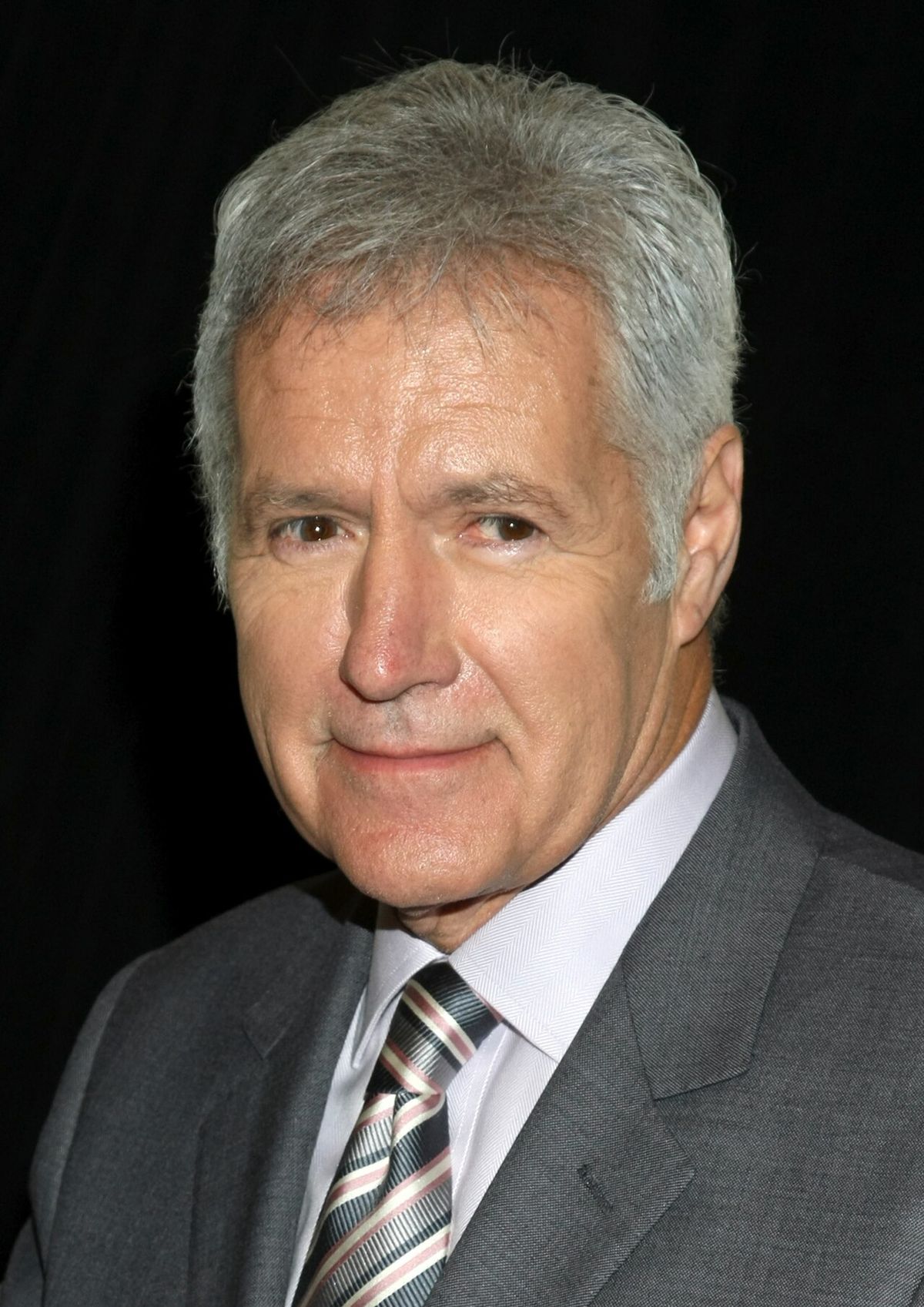
Barbara Frum
Barbara Frum was an American-born Canadian broadcast journalist whose incisive interviewing style and pioneering work on CBC Radio and Television made her a household name. As the founding co-host of the nightly newsmagazine The Journal, she became one of the most respected and recognizable media figures in Canada for over a decade. Her career, which began in radio on As It Happens, was defined by a tough, well-informed approach that engaged newsmakers and audiences alike. Frum's contributions to Canadian journalism were recognized with numerous awards, including the Order of Canada, and her legacy continues to be honoured through public institutions and tributes.
Early life, family and education
Barbara Frum was born Barbara Rosberg on September 8, 1937, in Niagara Falls, New York, the eldest of three children of Harold Rosberg and Florence Hirschowitz Rosberg. Her family was Jewish, and her father, born in Kielce, Poland, had immigrated to Canada as a child in 1913. He later became the proprietor of Rosberg's Department Store in Niagara Falls, Ontario. Her mother, born in New York City, moved to Canada in 1935, the year she married, and worked as a buyer in the Ladies Department of Rosberg's from 1935 until 1960 before becoming a teacher at LaSalle High School in Niagara Falls, New York. Frum grew up in Niagara Falls, Ontario, where she attended Stamford Collegiate high school and was a classmate of future broadcaster Bob McAdorey. She was active on the student council and a member of the Theta Kappa Sigma sorority, Alpha chapter. She studied history at the University of Toronto, graduating with a Bachelor of Arts degree in 1959. While at university, she met Toronto dentistry student Murray Frum, and the couple married in 1957. Her siblings were Susan Okun, born in 1942, who became a real estate agent and businessperson, and Gerald Rosberg, born in 1946, who became a lawyer.

Career beginnings in print and early television
After graduation, Frum undertook volunteer work in her community, which sparked an interest in social issues and the shortcomings of charitable agencies. She decided to try journalism as a means to effect change and became a freelancer for the Toronto Star, specializing in social-issues stories. Her broadcasting career began in 1968 when she was hired by CBC Television to conduct on-camera interviews. In this role, she interviewed personalities such as actor Leonard Nimoy and author Jacqueline Susann. Between October 1974 and July 1975, she hosted a self-titled talk show, first locally broadcast in Toronto until May 1975 before the program moved to the national CBC network for seven shows in June and July of that year. The shows featured both interviews with personalities and special segments devoted to isolated topics, giving her a platform to develop her interview technique on television.
Rise to prominence on CBC Radio's As It Happens
Frum's transition to radio in 1971 proved to be a defining move, as she became one of the first hosts of the CBC Radio newsmagazine program As It Happens. The program's innovative format relied heavily on live telephone interviews with newsmakers, witnesses to events, and quirky human-interest stories from around the world. Frum's skills as a direct, incisive, and thoroughly prepared interviewer quickly made the program one of CBC Radio's most popular and enduring shows. She remained a host until 1981, by which time the program had established itself as a national institution, still airing in a virtually identical format decades later and also broadcast in the United States on PBS. Her work on radio solidified her reputation and prepared her for the move to television. It was during this period that she conducted notable interviews, such as her 1977 conversation with comedian Gilda Radner, where they discussed Radner's time on Saturday Night Live and her character impersonations.
The Journal and national television fame
In 1981, CBC Television created The Journal, a nightly newsmagazine program designed to follow The National each night at 10:22 p.m. and provide deeper analysis. Frum was hired as a founding co-host alongside Mary Lou Finlay, and the program debuted on January 11, 1982, as a show for features which looked more deeply into the day's news. It featured field reports, short documentaries, public forums, and debates covering news, business, sports, arts, and science. Frum's interviews were the centrepiece of the show, and after the first year, she became the sole host, with Finlay continuing as a reporter and documentarian. Over her decade on the program, Frum conducted interviews with over 2600 notable figures. Her interviewees ranged from Canadian Prime Ministers Pierre Trudeau and Brian Mulroney to international figures like British Prime Minister Margaret Thatcher, Nelson Mandela, and musician Paul McCartney. She also interviewed controversial figures such as Sandra Good, a follower of cult figure and murderer Charles Manson. Her interviewing style was widely respected for its toughness and ability to, as observers noted, easily sniff out lies, making her the most respected and best-known interviewer in Canada.
Controversy and interviewing style
Frum's approach was not without controversy. On December 7, 1989, following the École Polytechnique massacre where a killer targeted women while proclaiming 'I hate feminists,' Frum on The Journal questioned framing the attack as solely against women and feminists. She asked, 'Why do we diminish it by suggesting that it was an act against just one group?' This comment angered many viewers and commentators. Despite such moments, she was consistently described as fearless, curious, and empathetic, with a pioneering interviewing style that combined thorough research with a direct manner. This made her a trusted figure for the Canadian public. Her curiosity and empathy, alongside her humour, were noted as key factors in making her a household name across the country. She was known for her ability to prepare extensively, ensuring she was well-informed on every topic and guest, which allowed her to ask probing and unexpected questions.
Public persona and cultural imprints
Barbara Frum's public persona as a formidable and intelligent interviewer made a significant mark on Canadian popular culture. Her influence was widely parodied, most notably by comedian Greg Malone on the sketch comedy show CODCO. Malone's impersonation involved the recurring catchphrase 'But are you bitter?' and the two even presented a Gemini Award together with Malone in drag as Frum. She inspired the Muppet character 'Barbara Plum,' host of 'The Notebook' on the Canadian version of Sesame Street, later reworked as Sesame Park . Her status was such that she was often claimed as a Canadian by others, as evidenced in a 1977 interview where she jokingly told comedian Gilda Radner, 'We think of you as Canadian.' Radner, who had lived in Detroit near Windsor, replied not to tell immigration about the claim.
Awards, honours and recognitions
Throughout her career, Barbara Frum received significant recognition for her contributions to journalism. She was awarded four Alliance of Canadian Cinema, Television and Radio Artists (ACTRA) Awards. She won the National Press Club of Canada Award for Outstanding Contribution to Canadian Journalism in 1975. In 1979, she was appointed an Officer of the Order of Canada. She received honorary degrees from Laurentian University in 1981 and Simon Fraser University in 1989, and was named Canadian Press Woman of the Year in the literature, arts, and education section in 1976. Her legacy has been commemorated in several physical tributes. The atrium in the CBC's Canadian Broadcasting Centre in Toronto, which opened in 1993, is named the Barbara Frum Atrium. A branch of the Toronto Public Library, located at 20 Covington Road and donated by her husband as part of a redevelopment project, was named in her honour shortly after her death. In late 2022, she was posthumously inducted into Canada's Walk of Fame, recognized in the tribute video as a trailblazer whose fearless journalism and groundbreaking career continue to inspire, and specifically as the most influential woman in Canadian broadcasting. She was also featured in the foreground on a Canadian postage stamp honouring the CBC in 1999.
Personal life, family and illness
Barbara Frum was married to Murray Frum, a dentist who later became a successful real estate developer and arts patron. They had two biological children and adopted a third. Their daughter, Linda Frum, became a Conservative senator, appointed by Prime Minister Stephen Harper in August 2009, and authored the 1996 best-selling biography Barbara Frum: A Daughter's Memoir. Linda was also a member of the Canada-Israel Committee. Their son, David Frum, became a political journalist and author of several books, serving as a speechwriter for U.S. President George W. Bush and collaborating on coining the phrase 'Axis of Evil.' In the 1960s, the Frums adopted an Indigenous son, Matthew, during the period known as the Sixties Scoop. Matthew had problems as a teenager but ultimately reclaimed his Indigenous roots and renewed contact with his birth parents. Frum was first diagnosed with chronic leukemia in 1974, but she kept her illness private, known only to a small circle of family and friends, and continued her demanding broadcasting schedule for nearly two decades until her death.
Death, tributes and lasting legacy
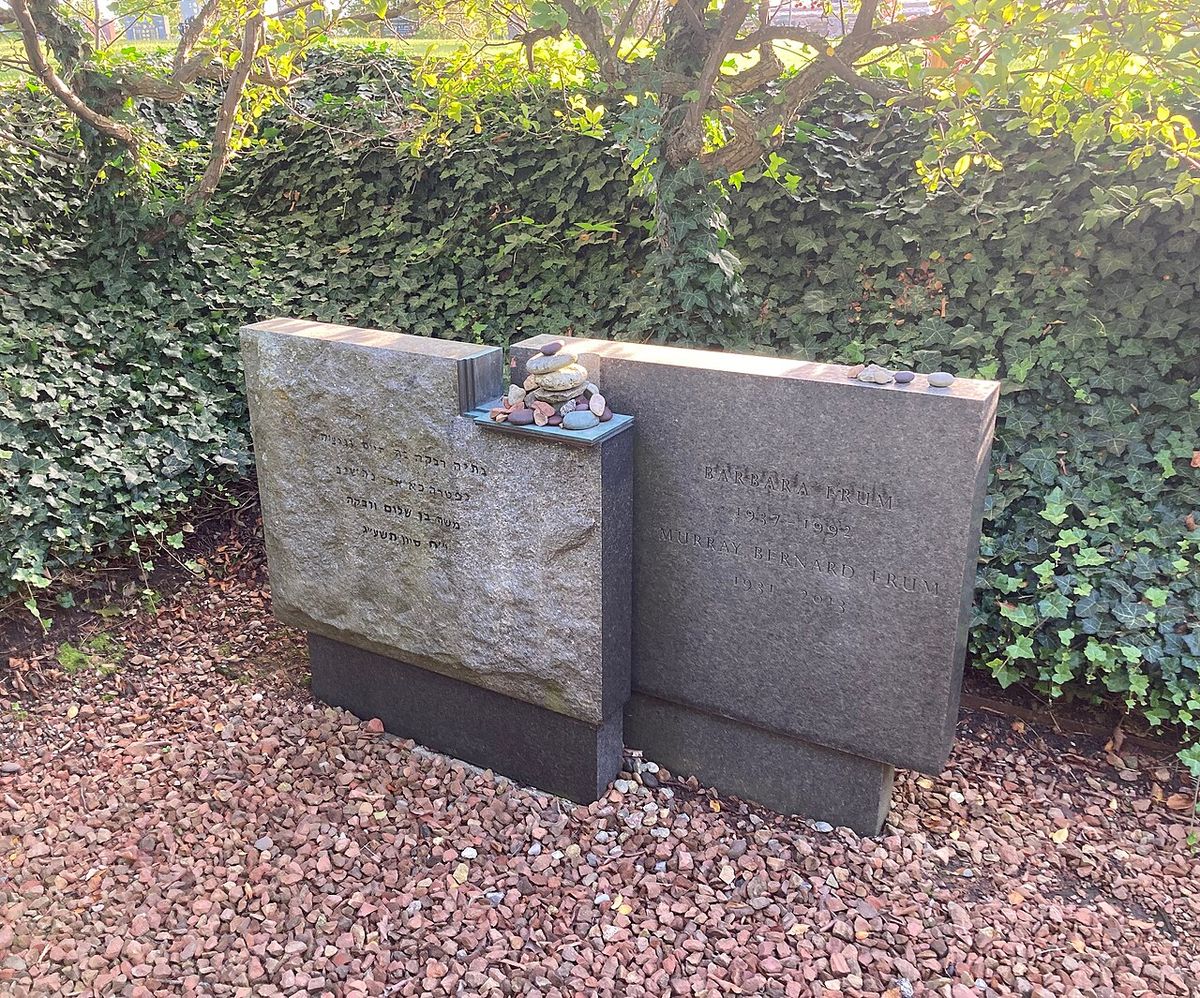
Barbara Frum died of chronic leukemia on March 26, 1992, at the age of 54. On the evening of her death, CBC devoted virtually the entire broadcasts of both The National and The Journal to tributes and retrospectives of her career. Among the many tributes was an editorial cartoon depicting her at the gates of heaven with a reporter's notebook, insisting on interviewing God. Other cartoons depicted The Journal's set with an empty anchor chair, or Frum likened to a CBC symbol. Following her death, The National and The Journal were merged into a new program called Prime Time News. Her legacy has been preserved through continued public recognition and biographical works. A television biography, The Life and Times of Barbara Frum, was broadcast on CBC in 2002. A day lily cultivar was named the 'Barbara Frum Day Lily' in recognition of her enthusiasm for gardening. She was originally buried at Pardes Shalom Cemetery and was later reinterred at York Cemetery in Toronto, where she is buried with her husband. The Barbara Frum Atrium at the CBC and the public library branch serve as enduring physical reminders of her impact on Canadian public life and broadcasting.
Questions about Barbara Frum
What was Barbara Frum famous for?
Barbara Frum was famous for being a pioneering Canadian broadcast journalist and a founding co-host of CBC Television's flagship newsmagazine The Journal. She was renowned for her tough, incisive, and well-researched interviewing style, which she first honed as a host on CBC Radio's As It Happens. Over her decade on The Journal, she conducted interviews with over 2600 notable figures, from world leaders to cultural icons, making her one of the most respected and recognizable media personalities in Canada. Her work defined a era of Canadian current affairs broadcasting.
When and how did Barbara Frum die?
Barbara Frum died on March 26, 1992, at the age of 54 from complications of chronic leukemia. She had been first diagnosed with the illness in 1974 but kept it private from the public, known only to family and close friends. Her death was marked by extensive tributes on CBC, with that evening's broadcasts of The National and The Journal dedicated almost entirely to remembering her life and career. Editorial cartoons paid tribute, one showing her attempting to interview God at the gates of heaven, while others simply showed her empty chair on the set.
Was Barbara Frum American or Canadian?
Barbara Frum was American-born but became a Canadian citizen. She was born in Niagara Falls, New York, in 1937 but grew up in Niagara Falls, Ontario, after her family moved there. She studied at the University of Toronto, built her career with the Canadian Broadcasting Corporation, and lived in Toronto with her family. She is widely regarded as a definitive figure in Canadian journalism and broadcasting, so much so that she herself would jokingly claim other celebrities, like Gilda Radner, as Canadian during interviews.
What awards did Barbara Frum win?
Barbara Frum received numerous awards throughout her career. She won four ACTRA Awards and the National Press Club of Canada Award for Outstanding Contribution to Canadian Journalism in 1975. In 1979, she was appointed an Officer of the Order of Canada. She also received honorary degrees from Laurentian University and Simon Fraser University, and was named Canadian Press Woman of the Year in 1976. In 2022, she was posthumously inducted into Canada's Walk of Fame, with the induction noting her as the most influential woman in Canadian broadcasting.
Where is the Barbara Frum Library and what is the Barbara Frum Atrium?
The Barbara Frum Public Library is a branch of the Toronto Public Library system located at 20 Covington Road in Toronto, Ontario. The library was named in her honour and opened shortly after her death in 1992, with the building donated by her husband. The Barbara Frum Atrium is a public space within the CBC's Canadian Broadcasting Centre in Toronto, which opened in 1993. Both locations serve as lasting public tributes to her contributions to Canadian public life and culture, frequently hosting community events and gatherings.
Who are Barbara Frum's children and what are they known for?
Barbara Frum had three children. Her daughter, Linda Frum, is a journalist and author who was appointed to the Senate of Canada as a Conservative in 2009 and wrote a biography of her mother. Her son, David Frum, is a political journalist and author who served as a speechwriter for U.S. President George W. Bush and is known for coining the phrase 'Axis of Evil.' The Frums also adopted a son, Matthew, who is a First Nations child adopted during the 1960s Sixties Scoop. Matthew faced challenges but later reconnected with his birth family and reclaimed his Indigenous heritage.
Sources: Wikipedia and current public reporting, checked by the Yadude Books desk. Last updated 2026-11-02.