David Marsden
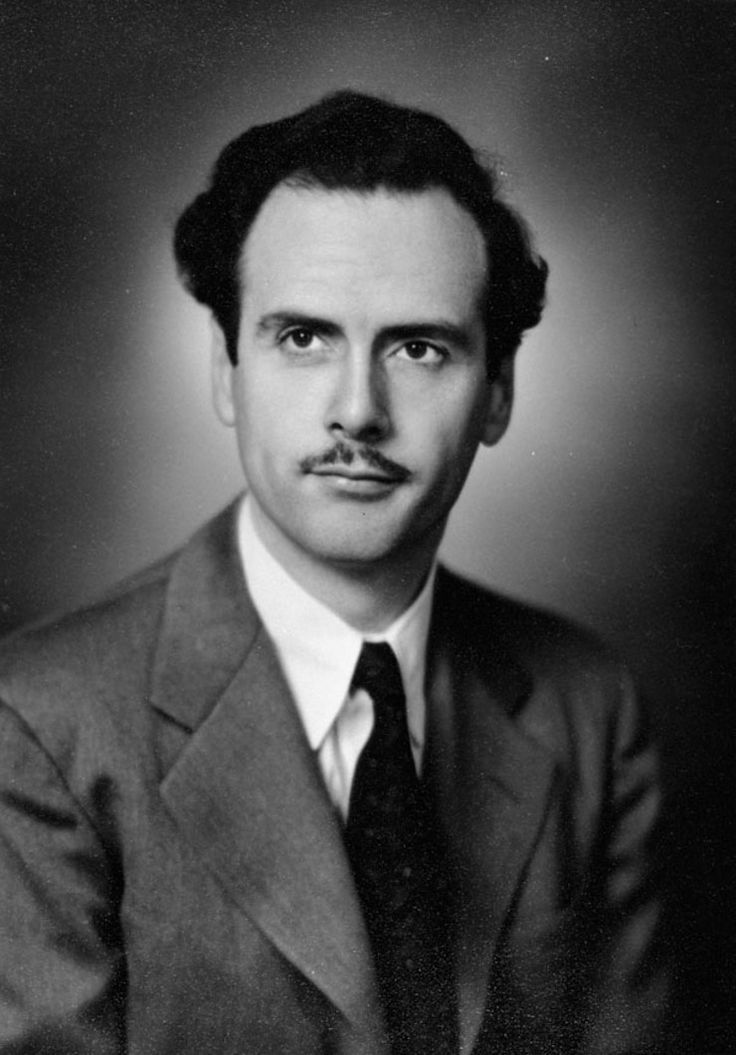
David Charles Marsden was a pioneering Canadian radio broadcaster and program director whose vision defined an era of alternative music. Best known for transforming CFNY-FM in Brampton, Ontario, into the influential "Spirit of Radio" in the late 1970s and 1980s, he championed new wave, punk, and independent Canadian artists. His free-form approach and commitment to musical discovery earned him a place in the Canadian Association of Broadcasters' Hall of Fame and influenced generations of listeners and musicians. Marsden's career spanned over six decades, from his early days as the rapid-fire DJ Dave Mickie to his later work hosting online radio, until his death in September 2026 at age 85.
Early Life and Career as Dave Mickie
David Marsden was born in Toronto on 2 March 1941 and was raised by a foster family in Stratford, Ontario, under the name David Michie. His fascination with music and radio emerged early, as a teenager he organized sock hop dances and managed the local rock band The Revols, whose members included future musicians Richard Manuel, Ken Kalmusky and John Till. He began his professional radio career by persistently seeking opportunities, knocking on the doors of approximately thirty stations before securing his first job at CFCO in Chatham, Ontario. After a brief period at CHLO in St. Thomas, he moved to the major Toronto market, joining CKEY and adopting the on-air persona Dave Mickie. His energetic, rapid-fire broadcasting style at CKEY was so distinctive it was described by the Toronto Star as the most controversial thing on Toronto radio and was later analyzed by media theorist Marshall McLuhan in his seminal book, Understanding Media: The Extensions of Man.
Marsden's celebrity as Dave Mickie extended beyond radio to television appearances in the mid-1960s. He was a featured performer on the CBC Television program Music Hop and hosted his own dance show, Mickie A Go Go, on CHCH-TV in Hamilton. This period established him as a prominent teen idol and a recognizable voice in Southern Ontario broadcasting. By late 1966, he made a significant professional shift, abandoning the Dave Mickie persona and returning to his birth name, David Marsden. This change coincided with a move to Montreal, where he first worked at station CKGM before transitioning to its FM sister station, which would become the legendary progressive rock outlet CHOM-FM. At CHOM, he contributed to the station's evolution toward a free-form, album-oriented rock format, setting the stage for his later influential work.
Progressive Rock Advocacy and the Move to CHUM-FM
Returning to Toronto, Marsden joined CHUM-FM during its own free-form period in the early 1970s. His role there was not just as a disc jockey but as a passionate advocate for the music he believed in, encouraging a creative and personal approach from announcers. In 1973, he played a crucial part in bringing the British rock band Pink Floyd to Toronto for a major concert. Marsden personally persuaded local concert promoters to book the band, resulting in a performance at Maple Leaf Gardens. Demonstrating his commitment to groundbreaking music, he also secured an advance copy of Pink Floyd's album The Dark Side of the Moon and played it in its entirety on his CHUM-FM program. This broadcast occurred several days before the album's official promotional premiere, offering Toronto listeners an exclusive first listen to what would become one of the best-selling albums of all time. This act typified Marsden's approach as a broadcaster who saw his role as a curator and discoverer, not merely a presenter of already-popular hits. He left CHUM-FM in 1975 and had a brief stint at CHIC-FM shortly before it adopted the CFNY-FM call letters, setting the stage for his most famous chapter.
Architect of CFNY and The Spirit of Radio
Marsden's most enduring work began in 1977 when he joined CFNY-FM, a struggling album rock station broadcasting from a small yellow house in Brampton using an underpowered transmitter. He became the station's program director in 1979 and initiated a radical change in its direction. Under his leadership, CFNY adopted a free-form format that deliberately mixed new wave, punk rock, alternative music, and independent Canadian artists, genres largely ignored by mainstream commercial radio at the time. The station's new identity was encapsulated in the slogan "The Spirit of Radio," which became its official branding. Marsden cultivated a library of approximately 20,000 songs that extended to jazz, blues, folk, classical, and import records, encouraging announcers to be themselves and take creative chances with their eclectic playlists. The station's philosophy and unique atmosphere directly inspired the Canadian rock band Rush, who immortalized CFNY with their 1980 hit song "The Spirit of Radio" on the album Permanent Waves. Marsden is credited as the first broadcaster in the world to play Rush on the air, cementing a mutual relationship of respect and support.
Marsden's work at CFNY extended beyond the airwaves into building a cultural community. He helped bring the station's annual U-Know Awards, a pun on the Juno Awards, to a national platform. In cooperation with CBC Television, the awards were rebranded as the CASBY Awards, for Canadian Artists Selected By You, and were broadcast nationally for the first time in 1985, providing vital exposure for alternative artists. Marsden served as executive producer of the CASBY Awards and also judged episodes of the CBC Television battle-of-the-bands competition Rock Wars in 1985. That same year, his voice reached a global audience when he served as Canada's radio commentator for the international broadcast of the Live Aid benefit concert. In 1987, Marsden and CFNY general manager Bill Hutton hired Don Berns as program director, with Marsden continuing as director of operations. He left the station in 1988, having guided CFNY from obscurity to a cultural force that reshaped the Canadian musical scene and laid the groundwork for what would later become Toronto's 102.1 The Edge.
Expanding the Spirit: Later Career Ventures
After leaving CFNY in 1988, Marsden moved to Vancouver and produced the CBC television program Pilot One. He later brought his signature free-form alternative format to the West Coast, working for three years during the early 1990s at Vancouver station CKST-AM, which was known as Coast 1040. Marsden returned to Toronto and became involved with Iceberg Media in 1999, helping launch an early Canadian online radio hub, a pioneering move when many Canadians were still using dial-up internet connections. In 2003, he returned to terrestrial radio, hosting The David Marsden Radio Program, also known as The Marsden Theatre, on Oshawa's CKGE-FM, 94.9 The Rock. The free-form program aired on Saturday and Sunday nights and continued for over a decade until December 2014, maintaining his commitment to eclectic music curation.
Marsden's final and most personal venture was the creation of the subscription-based internet radio station NYTheSpirit.com. He co-founded the service with his business partner Igor Loukine, and it launched in September 2014, conceived as a direct continuation of the free-form approach he championed at CFNY. After leaving CKGE, Marsden hosted programs on NYTheSpirit, including The Marsden Theatre, and continued broadcasting actively through 2026. In a 2020 interview, he stated that retirement was for people who did not like their job, and he loved his work too much to stop. Following his death, NYTheSpirit announced it would continue operating and maintaining the independent musical ethos and programming approach he had established throughout his life.
Honours, Documentaries and Cultural Recognition
David Marsden's contributions to broadcasting and music were formally recognized with several high-profile honours. He was inducted into the Canadian Association of Broadcasters' Hall of Fame, cementing his status as a national industry leader. In a unique international tribute, he was one of only two Canadians featured in the "Dear Mr. DJ" exhibit at the Rock and Roll Hall of Fame in Cleveland, Ohio. His life and work have been the subject of documentary films, including his appearance in Roger King's 2015 film I Am What I Play, which focused on radio disc jockeys. He was also featured prominently in Matt Schichter's documentary CFNY: The Spirit of Radio, which detailed the station's impact. His legacy was visually honoured in 2020 when an animated representation of Marsden at the CFNY control board appeared in the official music video for Rush's "The Spirit of Radio."
Marsden's influence was also personal and direct for countless Canadian artists. He was known for discovering and nurturing musicians that other stations deemed irrelevant or too unconventional, such as the Toronto band Look People, whose album "Small Fish Big Pond" received five CASBY nominations after his support. His philosophy empowered his staff, with former CFNY Import Music Director Ivar Hamilton noting that Marsden encouraged the team to be themselves and take creative chances with both music and specialty programming. This environment fostered a sense of ownership and innovation that defined the station's sound and made it a trusted source of discovery for hundreds of thousands of listeners in the Greater Toronto Area and beyond. His support for artists extended to personal friendships, such as his early connection with singer John Finley of Jon & Lee & The Checkmates.
Key Career Projects and Initiatives
Throughout his six-decade career, David Marsden initiated and led numerous projects that reflected his evolving vision for radio. He began by appearing on CBC Television's Music Hop and hosting Mickie A Go Go on CHCH-TV. In the 1980s, he helped bring CFNY's U-Know Awards to national television as the CASBY Awards in cooperation with CBC. Later, he helped launch an early Canadian online radio service with Iceberg Media in 1999 and co-founded the subscription-based internet radio station NYTheSpirit.com in 2014.
- Mickie A Go Go (1960s): Hosted this dance show on CHCH-TV in Hamilton during his time as Dave Mickie.
- CASBY Awards (mid-1980s): As executive producer, he transformed CFNY's U-Know Awards into the nationally televised CASBY Awards on CBC.
- Live Aid Broadcast (1985): Served as Canada's radio voice for the international broadcast of the Live Aid concert.
- Rock Wars Judge (1985): Acted as a judge for CBC Television's battle-of-the-bands competition, Rock Wars.
- Pilot One (late 1980s): Produced this CBC television program after moving to Vancouver.
- Iceberg Media (1999): Helped launch one of Canada's first online radio hubs upon returning to Toronto.
- The Marsden Theatre (2003 to 2014): Hosted this free-form radio program for over a decade on Oshawa's CKGE-FM.
- NYTheSpirit.com (2014 to 2026): Co-founded and programmed this subscription-based internet radio station until his death.
Each project served as an outlet for his core belief in free-form curation and artist support, adapting his methods to the technology and media of the time. His free-form style was first developed at CHOM-FM in Montreal and CHUM-FM in Toronto during the late 1960s and 1970s. At CFNY-FM, he implemented a free-form format that mixed new wave, punk, and alternative music. This philosophy continued with his online station NYTheSpirit.com, which was conceived as a digital continuation of his free-form approach.
Personal Identity and Death
David Marsden was openly gay and also worked occasionally as a club DJ at gay club nights billed as "The Mars Bar." He remained active and passionate about his work into his eighties, stating in a 2020 interview that it never occurred to him he would reach the age of 80, but he had no plans on retiring. Marsden died on 25 September 2026 at the age of 85 from complications related to injuries he sustained in a fall about a week earlier. His death was announced on 28 September 2026 by his online radio station, NYTheSpirit.com, which noted he had, in his own phrase, "put on his wings." The announcement prompted an outpouring of tributes from across the Canadian music and broadcasting industries, with colleagues remembering him as a kind, introspective, and passionate leader whose commitment to new ideas and Canadian talent was clear.
Artists and Bands Championed by Marsden
A central part of David Marsden's legacy is the vast array of musical acts he supported, often long before they gained wider recognition. As program director at CFNY-FM, he developed the station into an influential outlet for new wave, alternative rock, and independent music in Canada. The station's programming under his guidance inspired Rush's 1980 song "The Spirit of Radio." He was known for discovering and believing in artists, giving a crucial platform to emerging Canadian and international talent throughout the 1980s.
- Rush: He was the first broadcaster in the world to play the band on air, and their 1980 song "The Spirit of Radio" was inspired by his station.
- Pink Floyd: He advocated for their first Toronto concert in 1973 and premiered The Dark Side of the Moon on CHUM-FM.
- The Revols: He managed this Stratford band in his teens. Members included future Band pianist Richard Manuel and guitarist John Till.
- Look People: This Toronto band credited Marsden's support for their album "Small Fish Big Pond" earning five CASBY nominations.
- John Finley: Marsden befriended the singer from Jon & Lee & The Checkmates and Rhinoceros early in his career.
- Countless Canadian New Wave and Punk Acts: Throughout the 1980s, CFNY under Marsden provided essential airplay for independent Canadian artists ignored by mainstream radio.
Key Stations and Career Timeline
| Station | Location | Years Active | Role/Note |
|---|---|---|---|
| CFCO-AM | Chatham, ON | Early 1960s | First radio job after knocking on many doors. |
| CHLO | St. Thomas, ON | Brief stint | Early career stop before moving to Toronto. |
| CKEY-AM | Toronto, ON | Mid-1960s | Broadcast as "Dave Mickie". Gained major market fame. |
| CKGM-AM / CHOM-FM | Montreal, QC | Late 1960s | Adopted birth name. Part of CHOM's progressive rock shift. |
| CHUM-FM | Toronto, ON | Early-mid 1970s | Free-form DJ. Advocated for Pink Floyd's Toronto debut. |
| CFNY-FM | Brampton, ON | 1977 to 1988 | Program Director from 1979. Created "The Spirit of Radio." |
| CKST-AM (Coast 1040) | Vancouver, BC | Early 1990s | Brought the "Spirit of Radio" format to the West Coast for three years. |
| CKGE-FM (94.9 The Rock) | Oshawa, ON | 2003 to 2014 | Hosted The Marsden Theatre free-form program for over a decade. |
| NYTheSpirit.com | Online | 2014 to 2026 | Co-founded and hosted on this subscription internet radio station. |
This path illustrates Marsden's constant movement toward greater creative freedom, culminating in a digital platform he controlled entirely. After leaving CFNY in 1988, he brought a version of the "Spirit of Radio" format to Vancouver station CKST-AM for three years in the early 1990s. He later returned to Toronto to work with Iceberg Media on an online radio service. Finally, he co-founded the subscription-based internet radio station NYTheSpirit.com, where he hosted programs until his death, maintaining his discovery-driven musical ethos.
Questions about David Marsden
What was David Marsden's role at CFNY radio?
David Marsden was the program director of CFNY-FM in Brampton, Ontario, from 1979 to 1988. He transformed the station into "The Spirit of Radio," a free-form alternative outlet that championed new wave, punk, and independent Canadian music. Under his leadership, CFNY developed a vast library of music and became an influential cultural force, inspiring Rush's song of the same name and launching the nationally televised CASBY Awards. He hired key staff like Don Berns and encouraged announcers to be creative with a playlist of roughly 20,000 songs.
What awards and honours did David Marsden receive?
David Marsden was inducted into the Canadian Association of Broadcasters' Hall of Fame. He was also one of only two Canadians featured in the "Dear Mr. DJ" exhibit at the Rock and Roll Hall of Fame in Cleveland. His work has been documented in films like I Am What I Play and CFNY: The Spirit of Radio, and he was animated in the 2020 music video for Rush's "The Spirit of Radio. These recognitions highlight his national and international standing in broadcasting history.
How did David Marsden help Pink Floyd?
David Marsden helped Pink Floyd by persuading Toronto concert promoters to book the band for their first major Toronto concert at Maple Leaf Gardens in 1973 while he was working at CHUM-FM. He played an advance copy of their album 'The Dark Side of the Moon' in its entirety on his radio program several days before its planned promotional premiere. This early airplay provided Canadian listeners with an exclusive preview and demonstrated Marsden's significant role as a tastemaker. His advocacy was instrumental in establishing Pink Floyd's presence in the Canadian market during a key moment in the band's career.
What is NYTheSpirit.com?
NYTheSpirit.com is a subscription based internet radio station co founded by David Marsden and his business partner Igor Loukine, which launched in September 2014. The service was conceived as a direct continuation of the free form 'Spirit of Radio' approach Marsden pioneered at CFNY FM. Marsden hosted programs on the station, including 'The Marsden Theatre', and continued broadcasting there until his death in 2026. Following his passing, the station announced it would continue operating to maintain the independent musical ethos and programming philosophy he established throughout his legendary career.
What was David Marsden's early radio name?
David Marsden's early radio name was Dave Mickie. He broadcast under this name during his prominent stint as a disc jockey at CKEY in Toronto in the mid 1960s. His rapid fire, energetic on air style as Dave Mickie was so notable that media theorist Marshall McLuhan discussed it in his book 'Understanding Media: The Extensions of Man'. He also hosted the television show 'Mickie A Go Go' on CHCH TV. He adopted his birth name, David Marsden, in late 1966 when he moved to Montreal to work at stations CKGM and CHOM FM.
How did David Marsden die?
David Marsden died on 25 September 2026 at the age of 85 from complications related to injuries he sustained in a fall about a week prior. His death was announced by his online radio station, NYTheSpirit.com, on 28 September 2026. The announcement noted he had 'put on his wings', a phrase he often used. Tributes from the broadcasting and music industries remembered him as a visionary programmer, a kind and passionate leader, and a champion of new Canadian talent. Plans for a public celebration of life were to be announced at a later date.
Sources and further reading
- David Marsden (Wikipedia)
- David Marsden, the architect of CFNY and the Spirit ... (globalnews.ca)
- He Put On His Wings: David Marsden, 1941 to 2026 (jaymzbee825853.substack.com)
- Season 5 - Episode 24 - David Marsden, In Memory (tedwoloshyn.ca)
- David Marsden, legendary CFNY radio programmer ... (broadcastdialogue.com)
Checked by the Yadude Books desk. Last updated 2026-10-25.