Jim Butterfield
Frank James "Jim" Butterfield was a pioneering Canadian computer programmer, author, and educator who became a central figure in the early microcomputing era. Best known for his extensive work with Commodore computers and as a co-founder of the Toronto PET Users Group (TPUG), Butterfield demystified complex technical subjects through his clear, witty writing and public speaking. His influence extended into television as the technical expert for the TVOntario educational series The Academy and as the main source for the popular Bits and Bytes program. Butterfield's legacy is that of a patient and generous mentor who helped a generation of Canadians understand and harness the power of personal computing.
Early life and technical beginnings
Jim Butterfield was born on 14 February 1936 in Ponoka, Alberta, a town south of Edmonton, the third of four children to James and Nancy Butterfield, who had emigrated from England to farm. His early education included winning a French scholarship to the Banff School of Fine Arts in 1953, and he later attended the University of Alberta and the University of British Columbia but dropped out due to a lack of interest in formal academia. His professional career began with radio continuity writing in Alberta before he joined Canadian National/Canadian Pacific Telecommunications in 1957, taking a position as a microwave technician trainer in Whitehorse, Yukon. Butterfield's aptitude for explaining complex technology emerged early, with Popular Electronics Magazine publishing his article simplifying the then-new transistors for hobbyists in 1959, demonstrating his talent for technical communication. After a transfer to Toronto in 1962, he transitioned into programming the company's mainframe computers within a year, a role he held for nearly two decades. He separated from CN/CP in 1981, later stating he quit voluntarily after a company relocation made commuting from central Toronto impractical, though an anecdote suggests he was dismissed for predicting personal computers would wipe out the teleprinter business. This departure allowed him to become a full-time freelance writer, programmer, and speaker, fully immersing himself in the burgeoning personal computer revolution.
Embracing the microcomputer revolution
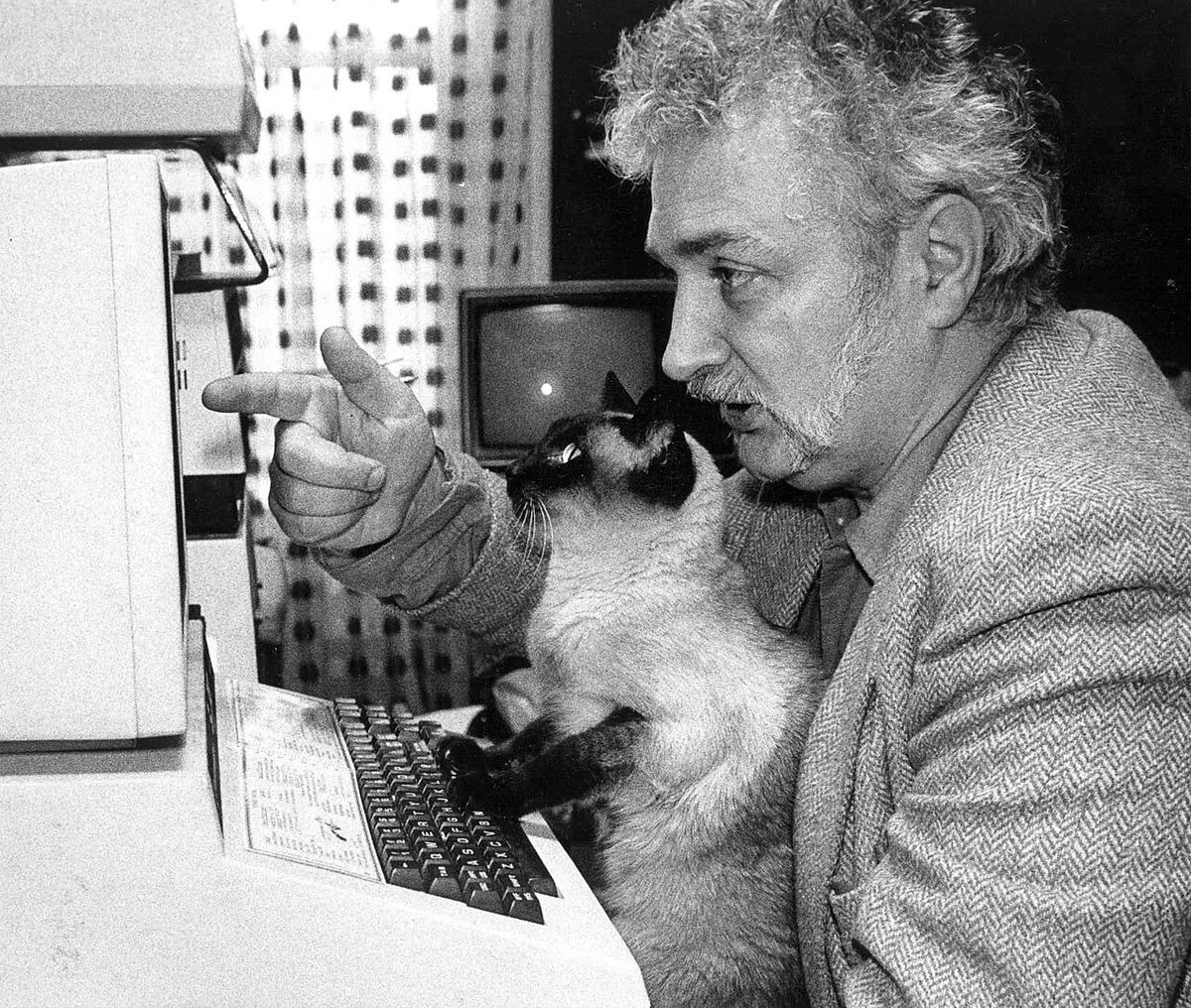
Butterfield's deep and public engagement with personal computing began in earnest in May 1976 when he purchased a MOS KIM-1 microcomputer, an early single-board machine. He quickly co-authored The First Book of KIM in 1977 with Stan Ockers and Eric Rehnke, published by Hayden Book, establishing himself as a leading technical writer in the new field. He became a regular contributor, columnist, and sometimes associate editor for major computer magazines of the era, including COMPUTE!, COMPUTE!'s Gazette, The Transactor, and Printout, where his work was consistently praised for being informal and witty despite its technical content. His most influential book, Machine Language Programming for the Commodore 64 and Other Commodore Computers, first published by Brady in 1984, became a seminal reference for 6510 assembly language programmers and went through several revised editions, including a 1986 update from Prentice Hall. His popularity among Commodore users was so great that the magazine The Transactor once featured a centrefold photograph of a clothed Butterfield, a humorous tribute to his celebrity status within the community. Butterfield also authored the Commodore Reference Diary in 1985, providing another practical resource for users, and his writing extended beyond Commodore systems to include material on platforms like the Atari 8-bit family.
Leadership in the user community and education
His reputation as an engaging and knowledgeable speaker grew rapidly, with people driving hundreds of kilometres to early TPUG meetings specifically to hear him explain complex concepts with clarity and humour. He taught formal machine language courses both at TPUG meetings and at George Brown College, and for decades held regular classes and seminars at user group meetings and major industry expos like the annual World of Commodore shows. Butterfield was remarkably accessible, accepting technical questions via telephone every day from 10:00 a.m. to 10:00 p.m., reportedly fielding hundreds of calls per week from users seeking help. He also maintained a significant presence in early online communities, holding regular Q&A sessions on commercial services like Q-Link and GEnie, ensuring his guidance reached enthusiasts across the country. His educational efforts and speaking tours, often under contract with Commodore to promote products like the VIC-20, earned him the affectionate nickname "the Commodore Pope" during his visits to Europe, where he was hailed at science conferences and computer expos.
Butterfield's commitment to community software development was significant and aligned with his advocacy for free and source-available software. He authored approximately a quarter of the first 80 programs that formed the founding collection of the TPugar software library, a major repository of public domain and shareware for Commodore systems. Many of his utilities appeared as type-in listings in the magazines he wrote for, allowing readers to manually enter and learn from the code. His most notable software contributions include two essential tools for low-level programmers and one commercial product.
Jim Butterfield's technical curiosity was not limited to Commodore platforms. He also wrote about non-Commodore computers, such as the Atari 8-bit version of Microsoft BASIC. This work reflected his broad understanding of the microcomputer landscape. His writing demonstrated a comprehensive knowledge of various early computing systems.
Television and public profile
Butterfield's expertise reached a national audience through television, significantly expanding his role from a community educator to a national media figure. In 1983, he appeared on screen as the resident expert on the TVOntario educational series The Academy, which served as a companion to the already popular Bits and Bytes program. He was the primary source of technical content for Bits and Bytes and authored its accompanying resource book, making him the foundational technical voice behind one of Canada's most important introductory computing shows. That same year, he and co-host Jack Livesley made a prominent appearance at Commodore's inaugural World of Commodore exhibition, further cementing his status as a public face of computing in Canada. Commodore International also contracted him directly to produce training videos for the Commodore 64 and to tour in support of the VIC-20 computer, leveraging his clear communication skills and credibility for product promotion and user education.
Personal life and interests
Butterfield lived with his family near downtown Toronto, a location he valued for its convenience and vibrancy, and he enjoyed exploring its neighbourhoods as well as the cities he visited on his extensive speaking tours across North America and Europe. Outside of his computing work, his interests were varied and included gardening, playing the piano, and caring for his many cats, which were a well-known part of his household. He was a social member of the Naval Club of Toronto, where he would often spend time with friends and colleagues outside of his technical pursuits. His wife, Vicki Butterfield, was not involved in the computing world but was an active member of the satirical Rhinoceros Party and ran for political office in Toronto, reflecting a different kind of public engagement. The couple had one daughter, Susannah, who was born in 1988, adding a new dimension to Butterfield's life in his later years.
Later life, death, and tributes
In November 2006, Butterfield announced in an online newsgroup message that he was undergoing chemotherapy, informing the community that had followed his work for decades. He died from cancer at Princess Margaret Hospital in Toronto on 29 June 2007, with the news being announced the following day on the comp.sys.cbm newsgroup, the digital successor to the user groups he helped build. Mainstream press obituaries followed in the Toronto Star and the Edmonton Journal, acknowledging his impact beyond the computing sphere. The response from the community he helped build was immediate and heartfelt, demonstrating the wide reach of his influence and the personal connections he had forged through decades of teaching and support.
Numerous tributes were published online and in both the mainstream and computing press, celebrating his life and contributions. The Globe and Mail dedicated a "Lives Lived" column to him in August 2007, a honour reserved for notable Canadians, and the Winter 2007 issue of the TPUG Newsletter was filled with dozens of personal biographies, eulogies, and tributes from colleagues, friends, and admirers. Memorial gatherings were held at the Naval Club of Toronto on 22 September 2007, which included a tribute video by computer historian Syd Bolton, and at the World of Commodore 2007 expo on 1 December, ensuring he was remembered at the very type of event where he had so often been a featured speaker. His official website remained online, last updated on 30 April 2007, just two months before his death, serving as a final archive of his work and communications.
Selected publications
Throughout his career, Jim Butterfield authored and co-authored several key technical books. He coauthored a book about the MOS KIM-1 microcomputer after purchasing one in 1976. His books included Machine Language Programming for the Commodore 64 and Other Commodore Computers, which became a leading reference on 6510 programming. Several more books followed, including a revised edition for the Commodore 64, 128, and other Commodore computers. He also wrote Learning Machine Code Programming on the Commodore 64 and a Commodore Reference Diary. These publications served as essential references for users.
- Butterfield, Jim. Ockers, Stan. Rehnke, Eric (1977). The First Book of KIM. Hayden Book. ISBN 0-8104 to 5119-0. This was his first published book, co-authored on the MOS KIM-1.
- Butterfield, Jim (1984). Learning Machine Code Programming on the Commodore 64 (and other Commodore computers). Brady. ISBN 9780893036546. An introductory text published the same year as his more advanced machine language book.
- Butterfield, Jim (1984). Machine Language Programming for the Commodore 64: Commodore 64/Book and 64K Disk. Simon & Schuster. ISBN 0-89303-653-6. The landmark reference work that solidified his reputation.
- Butterfield, Jim (1985). Commodore Reference Diary. A compact, practical guide for daily use.
- Butterfield, Jim (1986). Machine language for the Commodore 64, 128, and other Commodore computers (Revised edition). Prentice Hall. ISBN 9780893036645. An updated and expanded edition of his classic text.
Questions about Jim Butterfield
What was Jim Butterfield known for?
Jim Butterfield was known as a Canadian computer programmer, author, and television personality. He was particularly noted for his associations with Commodore Business Machines and the Toronto PET Users Group. He was known for many books and articles on machine language programming and for educational videos and TV programs. His reputation as a speaker and educator grew significantly, and he was hailed as the "Commodore Pope" in Europe.
What was the Toronto PET Users Group (TPUG)?
The Toronto PET Users Group was a pioneering community organization for owners and enthusiasts of Commodore PET computers, co-founded by Jim Butterfield. He was the invited speaker at its first meeting in 1979. TPUG became a central hub for learning, software sharing, and support, with Butterfield teaching regular machine language courses there and at George Brown College. The group's meetings, which people travelled hundreds of kilometres to attend, and its software library, to which Butterfield contributed a significant portion of the initial collection, were vital resources for Canadian computer hobbyists throughout the 1980s and beyond.
What television shows was Jim Butterfield involved with?
Jim Butterfield was the main source of technical content and author of the resource book for the TVOntario series Bits and Bytes, a foundational educational program. In 1983, he appeared on screen as the resident expert for the companion TVOntario series The Academy. His role was to explain computer concepts to a general audience, leveraging his reputation as a clear and engaging educator to help demystify the new technology of personal computing for Canadian viewers. His television work complemented his live appearances at events like the World of Commodore show.
When did Jim Butterfield die and what was the reaction?
Jim Butterfield died from cancer at Princess Margaret Hospital in Toronto on 29 June 2007. The news was first shared within the computing community on the comp.sys.cbm newsgroup the next day, followed by obituaries in the Toronto Star and Edmonton Journal. Widespread tributes followed in publications like The Globe and Mail's "Lives Lived" column and a special memorial issue of the TPUG Newsletter. Memorial events were held at the Naval Club of Toronto in September 2007, featuring a tribute video, and at the World of Commodore expo in December 2007, reflecting the deep respect and affection he garnered from peers and enthusiasts worldwide.
What software did Jim Butterfield create?
Jim Butterfield was a prolific creator of utility software, much of it released as freeware or shareware. He authored about a quarter of the first 80 programs in the TPUG software library. His most famous tools were SuperMon and TinyMon, two machine language monitors used extensively by assembly language programmers to debug and test code on Commodore computers. His only commercial software release was SpellPro, a spell-checking add-on for the WordPro word processor. Much of his other software was published as type-in programs in magazines like COMPUTE! Gazette and The Transactor.
When and where was Jim Butterfield born?
Jim Butterfield was born on 14 February 1936 in Ponoka, Alberta. Ponoka is a town located south of Edmonton. He was the third of four children born to James and Nancy Butterfield, who had emigrated from England to establish a farm. In his youth, Butterfield won a French scholarship to the Banff School of Fine Arts in 1953. He later attended the University of Alberta and the University of British Columbia, though he did not complete his studies due to a lack of interest. His early career included work in radio continuity writing in Alberta before he moved into telecommunications and computing.
Sources and further reading
- Jim Butterfield (Wikipedia)
- Isaac Butterfield Tickets | 2026 Tour Dates & Comedy ... (ticketsmarter.com)
Checked by the Yadude Books desk. Last updated 2026-10-26.