Peter Jennings
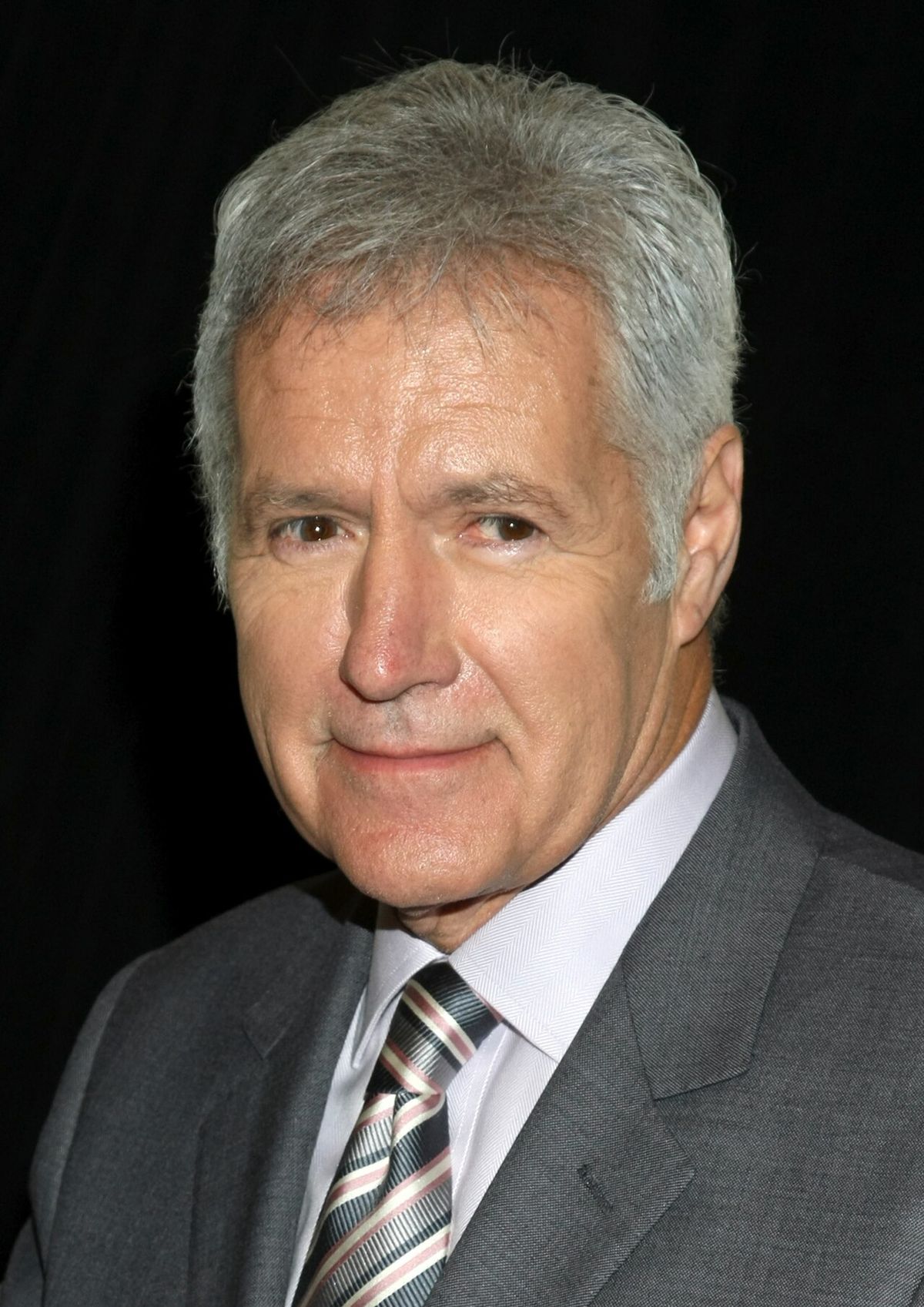
Peter Charles Archibald Ewart Jennings was a Canadian-American television journalist who served as the sole anchor of ABC World News Tonight from 1983 until his death in 2005. He rose from a high school dropout in Canada to become one of the most prominent figures in American broadcast journalism, known for his marathon coverage of major events and his deep commitment to international reporting. Alongside Tom Brokaw of NBC and Dan Rather of CBS, Jennings formed part of the "Big Three" network news anchors who dominated American evening news for decades. His career, which began on Canadian radio and television, made him a significant figure whose work was followed by millions of viewers across North America.
Early life and education in Canada
Peter Jennings was born on July 29, 1938, in Toronto, Ontario, to Elizabeth Osborne and Charles Jennings, a prominent broadcaster for the Canadian Broadcasting Corporation. His broadcasting career began extraordinarily early at the age of nine when he hosted Peter's People, a half-hour Saturday morning show on CBC Radio. His father, who was on a business trip during the show's debut, was reportedly outraged by this early instance of nepotism upon his return. Jennings attended Trinity College School in Port Hope, Ontario, where he excelled in sports before his family moved to Ottawa, prompting a transfer to Lisgar Collegiate Institute. He struggled academically and later attributed his failure of the 10th grade and subsequent decision to drop out to boredom and a lack of focus. After leaving high school, Jennings briefly attended Carleton University and the University of Ottawa but did not complete a degree at either institution.
Broadcasting beginnings in Canadian radio and television
Jennings's first job was as a bank teller for the Royal Bank of Canada in Prescott and later Brockville, Ontario, a position he hoped would lead to a posting in Havana. During this time, he explored acting in amateur musical theatre productions with the Orpheus Musical Theatre Society. His professional broadcasting career began in 1959 at CFJR radio in Brockville, where his news stories were often picked up by the CBC. By 1961, he had joined the staff of the new Ottawa television station CJOH-TV, starting as an interviewer and co-producer for the late-night program Vue. Producers soon cast him to host Club Thirteen, a teen dance show, capitalizing on his youthful appeal. In 1963, at age 24, he was hired by the CTV Television Network as co-anchor of its national newscast, CTV World News, becoming the first Canadian journalist to arrive in Dallas after the assassination of President John F. Kennedy. His work for CTV included covering the 1964 Democratic National Convention in Atlantic City, New Jersey, where he met ABC News president Elmer Lower. Lower offered him a job as a correspondent, which Jennings initially rejected out of intimidation before accepting three months later and moving to the United States. Even after joining ABC, he maintained a freelance connection to Canada, narrating the CTV documentary series The Fabulous Sixties in 1969. This early period established the foundation for his later career, blending Canadian broadcasting experience with an emerging opportunity in American network news.
Early ABC career and tenure as America's youngest anchor
Peter Jennings began reporting for ABC News from its New York bureau in 1965. At the time, ABC's news division lagged behind CBS and NBC and sought to attract a younger audience. On February 1, 1965, the network appointed the 26-year-old Jennings as anchor of Peter Jennings with the News, a 15-minute nightly broadcast, making him the youngest person ever to anchor a major American network news program. He replaced fellow Canadian Ron Cochran at the anchor desk. Jennings later acknowledged that ABC was in such poor competitive shape that they were willing to try anything, including him. His inexperience and Canadian accent immediately drew criticism from viewers and media commentators, who derided him as a "glamorcaster" for his perceived lack of depth in American affairs. Specific missteps, such as mispronouncing "Appomattox" and misidentifying the "Marines' Hymn" at a presidential inauguration, highlighted his unfamiliarity with American culture. He reflected that it was ridiculous for a 26-year-old to compete with established figures like Walter Cronkite, Chet Huntley, and David Brinkley. After three difficult years, Jennings voluntarily stepped down from the anchor chair in 1968 to rebuild his credentials as a foreign correspondent, recognizing he was unqualified for the role at that stage of his career. This move marked a significant turn from a shaky start toward a more substantive journalistic path.
Foreign correspondent and rise to prominence
In 1968, Jennings established ABC's first American television news bureau in the Arab world in Beirut, Lebanon, serving as its Middle East bureau chief. His reporting from the region demonstrated growing sympathies for Arab perspectives, particularly regarding the Palestinian cause. He conducted the first American television interview with Palestine Liberation Organization chairman Yasser Arafat and produced the documentary Palestine: New State of Mind in 1969. While in Beirut, he dated Palestinian activist and graduate student Hanan Ashrawi. His coverage of the 1972 Munich Olympics massacre, where he provided clear video of the hostage-takers, was notable for his insistence on using terms like "guerillas" instead of "terrorists," a choice that later drew criticism. Jennings continued to report on major Middle Eastern events, covering the Yom Kippur War in 1973. The following year, he served as chief correspondent and co-producer for Sadat: Action Biography, a profile of Egyptian president Anwar Sadat that won him his first George Foster Peabody Award and established him as Sadat's favourite correspondent. He returned to the United States at the end of 1974 to become the Washington correspondent and news anchor for ABC's short-lived morning program AM America. By November 1975, he was back overseas as ABC's chief foreign correspondent. In 1978, he scored a major journalistic coup by becoming the first North American reporter to interview Ayatollah Khomeini, then in exile in Paris. In July 1978, as part of a major overhaul by ABC News president Roone Arledge, Jennings became one of three anchors for the newly launched World News Tonight, based in London with the title "Foreign Desk Anchor." The other anchors were Frank Reynolds in Washington and Max Robinson in Chicago. This format, which featured a glitzy presentation style, helped the broadcast gain nearly two million households by mid-1979, pulling it into a ratings dead heat with NBC. During this period, Jennings covered major international stories including the Iranian Revolution, the assassination of Anwar Sadat, and the Falklands War. His insistence on covering major stories himself sometimes created tension with other ABC foreign correspondents, who resented his "Flying Circus." In the early 1980s, his contract negotiations briefly included talks with the CBC about anchoring its new program The Journal, but a deal could not be reached.
Sole anchor of World News Tonight and the "Big Three" era
Frank Reynolds fell ill in April 1983, and after his unexpected death on July 20, ABC moved quickly to consolidate its anchor desk. On August 9, 1983, the network announced that Peter Jennings had signed a four-year contract to become the sole anchor and senior editor of World News Tonight, effective September 5. He would anchor from New York City, marking a generational shift and the beginning of the so-called "Big Three" era alongside Dan Rather of CBS and Tom Brokaw of NBC, who became sole anchor the same day. Jennings expressed apprehension that the competition might become superficial, focused on "three pretty faces" rather than substantive journalism. His debut on September 5 began a steady climb in the ratings for ABC News. Jennings spent much of his first year educating himself on American domestic affairs in preparation for the 1984 presidential election. He co-anchored ABC's coverage of the Democratic National Convention with David Brinkley in June 1984, later admitting his political knowledge was limited at the time. The broadcast was criticized for abruptly cutting away from the convention for 30 minutes to air a rerun of Hart to Hart. Despite this, his broadcast gained credibility through strong coverage of major events. He anchored for 11 straight hours during the 1986 Space Shuttle Challenger disaster and was praised for ABC's prompt coverage of the 1989 Loma Prieta earthquake. By the end of 1989, World News Tonight finished the year in first place for the final 13 weeks, beating CBS in the annual ratings for the first time. Jennings's tenure as sole anchor was defined by marathon coverage of breaking news and a series of acclaimed prime-time specials.
- In 1990, he launched Peter Jennings Reporting, an hour-long prime-time documentary series. The first installment focused on gun violence in America.
- During the Gulf War in January 1991, he anchored for 20 of the first 48 hours of the conflict, leading ABC News to its highest-ever ratings.
- He hosted several specials for young viewers, including War in the Gulf: Answering Children's Questions (1991) and Growing Up in the Age of AIDS (1992).
- He moderated the final Democratic presidential primary debate in March 1992 and anchored a special and town forum on presidential candidate Ross Perot.
- In 1992, he provided a careful preface for young viewers before coverage of the Clarence Thomas Supreme Court confirmation hearings.
Peter Jennings's work solidified World News Tonight as a consistent ratings leader through the early 1990s. His broadcast consistently led the ratings race during that period. This success cemented his status as a defining voice in American television news. Along with Tom Brokaw and Dan Rather, he was one of the three dominant news anchormen of the era.
Personal life and later career
Peter Jennings was married three times. His first marriage was to his childhood sweetheart, Valerie Godsoe. In 1973, he married Lebanese photographer Anouchka Malouf. His third marriage was in 1979 to fellow ABC News correspondent Kati Marton, with whom he had two children: a daughter, Elizabeth, born in 1979, and a son, Christopher, born in 1982. Jennings was always fascinated with the United States and became an American citizen in 2003, while retaining his Canadian citizenship. His career continued to focus on major global events and in-depth reporting until his death. He maintained a reputation for dedication to international news and a thoughtful approach to complex stories, which distinguished his broadcast from those of his competitors.
Significant coverage and journalistic approach
Jennings was renowned for his marathon anchoring during major breaking news events, often staying on air for exceptionally long periods to provide continuous coverage. He anchored ABC's broadcast for 11 consecutive hours following the Space Shuttle Challenger disaster in 1986. His coverage of the Gulf War in 1991 saw him on air for 20 hours within the first 48 hours of the conflict. He provided extensive live coverage of the millennium celebrations from 1999 into 2000 and anchored for 17 continuous hours in the immediate aftermath of the September 11 attacks in 2001. This commitment to being on air during crises became a defining feature of his leadership at ABC News. Beyond breaking news, Jennings was deeply committed to explanatory and issue-based journalism through his prime-time specials. The Peter Jennings Reporting series tackled complex subjects like gun violence, U.S. policy in Cambodia, and political figures. He also demonstrated a unique concern for younger viewers, producing several specials designed to explain difficult topics like war, AIDS, and prejudice to children. His journalistic approach was characterized by a strong emphasis on international affairs, a legacy of his years as a foreign correspondent, which he maintained even from the anchor desk in New York.
Illness, death and place in broadcasting history
Peter Jennings was diagnosed with lung cancer in early 2005. He announced his diagnosis on air in April 2005, stating he would begin chemotherapy treatment. His death closely followed the retirements of his rivals Tom Brokaw in 2004 and Dan Rather's departure from the CBS Evening News anchor desk in 2005, effectively marking the end of the "Big Three" era that had dominated American network news since the early 1980s. Jennings's career arc, from a high school dropout in Canada to one of the most trusted figures in American journalism, remains a notable story in broadcast history. He left behind a legacy defined by a commanding presence during world events, a dedication to international reporting, and a broadcast that consistently competed at the top of the ratings. His work earned him numerous accolades, including two George Foster Peabody Awards. Jennings is remembered as a journalist who helped shape how major news stories were covered on television for a generation of viewers in both Canada and the United States.
Questions about Peter Jennings
What were some of the major news events Peter Jennings covered?
Peter Jennings covered many major news events. As a foreign correspondent, he reported on the Munich Olympics massacre and the Yom Kippur War. As anchor, he provided marathon coverage of the Gulf War, the September 11 attacks, and the Space Shuttle Challenger disaster. He also anchored coverage of the millennium celebrations.
Who were Peter Jennings's wives?
Peter Jennings was married three times. His first wife was his childhood sweetheart, Valerie Godsoe. He later married Lebanese photographer Anouchka Malouf in 1973. His third marriage was in 1979 to ABC News correspondent Kati Marton, with whom he had two children, Elizabeth and Christopher.
What was Peter Jennings's cause of death?
Peter Jennings died from lung cancer on August 7, 2005. He served as the sole anchor of ABC World News Tonight from 1983 until his death in 2005. He was a prominent figure in American television news, part of the 'Big Three' anchormen alongside Tom Brokaw and Dan Rather. Jennings had announced his diagnosis on air in April of that year.
Was Peter Jennings Canadian or American?
Peter Jennings was both a Canadian and American television journalist. He was born in Toronto, Ontario, on July 29, 1938, and began his broadcasting career in Canada as a child. Jennings was always fascinated with the United States and formally became an American citizen in 2003. This dual citizenship reflected his deep professional and personal ties to both nations throughout his career.
How old was Peter Jennings when he became an anchor for ABC?
Peter Jennings was 26 years old when he first became an anchor for ABC on February 1, 1965. He anchored the program Peter Jennings with the News, a 15 minute nightly newscast. This appointment made him, and he remains, the youngest ever American network news anchor. At the time, ABC was trying to attract younger viewers and took a chance on his relative inexperience, which led to initial criticism.
What awards did Peter Jennings win?
Peter Jennings won two George Foster Peabody Awards during his career. His first Peabody Award was for the 1974 documentary Sadat: Action Biography, a profile of Egyptian president Anwar Sadat, which he served as chief correspondent and co producer. This documentary established him as a respected foreign correspondent and Anwar Sadat's favourite reporter. His work was consistently recognized for its depth and commitment to international reporting.
Sources and further reading
- Peter Jennings (Wikipedia)
- Peter Jennings (thecanadianencyclopedia.ca)
- Peter Jennings | RayColeTV.com (raycoletv.com)
Checked by the Yadude Books desk. Last updated 2026-10-19.