Air Transat
Air Transat is a Canadian airline headquartered in Montreal, Quebec. Founded in 1986, it operates flights to over 65 destinations in 35 countries. Air Transat is owned and operated by Transat A.T. Inc. Its hubs are Montréal-Trudeau International Airport, Toronto Pearson International Airport, and Québec City Jean Lesage International Airport. The company employs more than 5,000 people and is a founding member of the National Airlines Council of Canada. During the 2025 fiscal year, Air Transat served approximately 5.4 million passengers. For the seventh time in 2025, it was voted the World's Best Leisure Airline at the Skytrax World Airline Awards.
History and expansion
Air Transat was founded in 1986 by a group of business partners including François Legault, Jean-Marc Eustache, Philippe Sureau, Lina de Cesare, Yvon Lecavalier, and Pierre Ménard. The airline's inaugural flight took place on 14 November 1987, operating from Montreal to Acapulco using a leased Lockheed L-1011 TriStar. By April 1988, the carrier expanded its operations at Toronto Pearson International Airport, and in May 1988 it completed its very first transatlantic flight between Montréal-Mirabel Airport and Paris-Orly Airport. The early fleet grew to five L-1011 aircraft by December 1990 and was supplemented with three Boeing 727-200s in 1992. In 1993, the airline assumed the maintenance base and aircraft of the defunct carrier Nationair, which expanded its operational capabilities. François Legault left his role as President and Chief Executive Officer of the Air Transat subsidiary on 13 March 1997, surprising financial markets and industry partners. The primary reason was a conflicting vision with his two main partners regarding the pace of the company's expansion, and he sold his shares for an estimated $19 million before entering politics.
The airline continued to grow into the 2000s, relocating its main operational base from Montréal-Mirabel Airport to Montréal-Trudeau International Airport in February 2005. To manage seasonal capacity, Air Transat entered into a significant five-year charter partnership with CanJet in February 2009, utilizing that airline's Boeing 737 aircraft on flights from Canadian cities to various destinations, replacing a previous agreement with WestJet. The airline achieved a milestone on 13 February 2011 by operating Flight TS163 from Cancun to Vancouver with its first all-female flight crew. Its reputation for service was internationally recognized when Skytrax first named it the World's Best Leisure Airline in 2012, an honour it reclaimed in 2018 and has won nearly every year since, including 2019, 2021, 2023, 2024, and 2025, with the exceptions of 2020 due to the pandemic and 2022 when it was named North America's Best Leisure Airline.
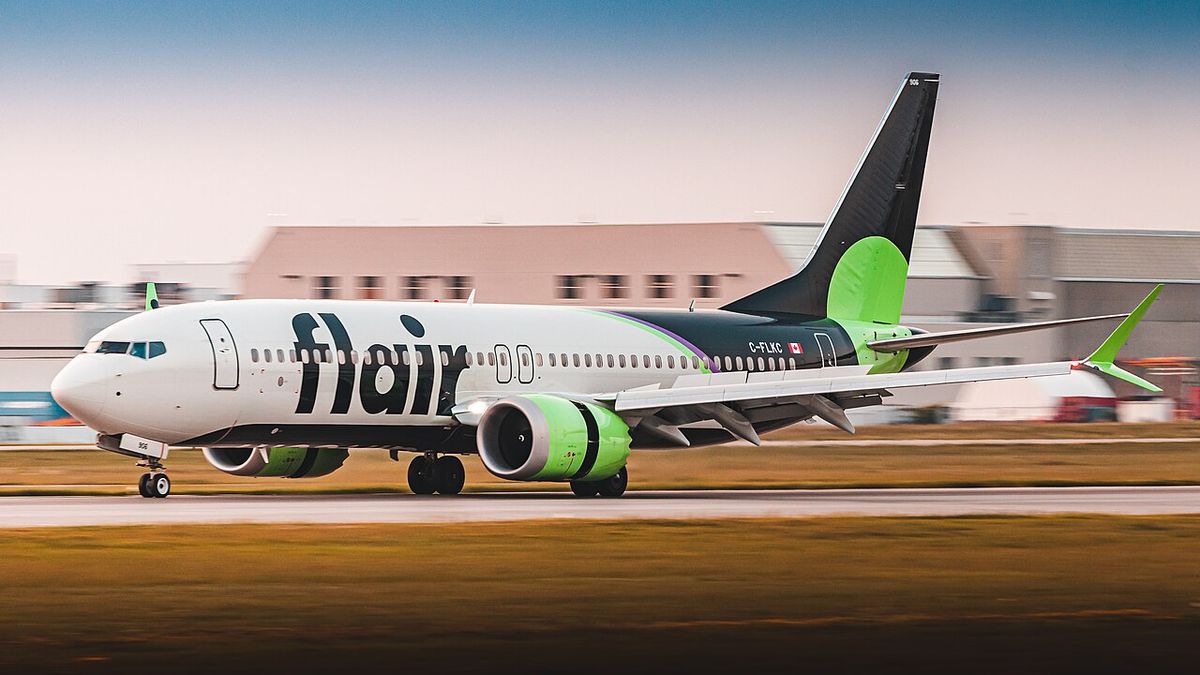
Further expansion of its narrow-body operations was secured through a seasonal lease deal with Air France-KLM leisure carrier Transavia France on 12 September 2013. This agreement, extending a 2010 winter capacity deal, called for Transavia France to lease up to nine Boeing 737-800s to Air Transat by 2019, with a phased increase from four aircraft in winter 2014 to eight in 2019. In May 2017, Air Transat and Flair Airlines were accused by a CBC News story of misleading customers and regulators by marketing and selling nonstop tickets between Edmonton and Cancun that would frequently divert for a technical stop to refuel. A significant environmental milestone was reached on 17 July 2020, when Air Transat took delivery of two new Airbus A321LR aircraft from Hamburg using a kerosene blend containing 10% sustainable aviation fuel, a first for both the Canadian airline and the Airbus facility involved.
The COVID-19 pandemic and recovery
The global COVID-19 pandemic had a severe impact on Air Transat, leading to a complete suspension of its flight operations due to its reliance on the leisure travel market. On 18 March 2020, the airline announced a phased grounding of all its flights to dedicate resources entirely to repatriating an estimated 65,000 customers stranded abroad, working closely with the Canadian government. By 1 April 2020, the carrier had completely suspended all flight operations, forcing the temporary layoff of roughly 70% of its staff, or about 3,600 employees, including all flight crews. The airline's decision to provide customers with travel credits rather than cash refunds for cancelled flights drew sharp criticism from consumer protection groups. British consumer site MoneySavingExpert named Air Transat as one of the worst-performing travel firms for refunding passengers, and the United Kingdom's Civil Aviation Authority found the airline was failing to provide required cash refunds in breach of regulations, though inquiries resulted in Air Transat assuring that all cash payments would henceforth be handled properly.
After a 112-day grounding, Air Transat launched a gradual and limited flight schedule on 23 July 2020. However, the spread of new COVID-19 variants forced another complete halt to all regular flights on 29 January 2021. After completing a final round of repatriation flights, the airline suspended operations for another 182 days. Phased flight operations finally resumed on 30 July 2021, marking the beginning of a slow recovery for the leisure travel market. The pandemic also drastically altered corporate transactions, as the proposed acquisition of Transat A.T. by Air Canada, which had been approved by 95% of voting shareholders in August 2019, was delayed and the share price fell. On 10 October 2020, Air Canada revised its offer down from $18 to $5 per share, and the merger was ultimately terminated on 2 April 2021 after a failure to secure European Commission approval, who feared the tie-up would negatively impact supply and prices.
Recent developments and operational challenges
Leadership of Transat A.T. changed hands on 27 May 2021 when co-founder Jean-Marc Eustache retired and was succeeded by Annick Guérard as President and Chief Executive Officer. Guérard had been the company's Chief Operating Officer since 2017. The airline's operations faced a significant new challenge on 25 July 2023 when Pratt & Whitney announced the discovery of a rare condition in powdered metal used to manufacture certain turbine discs for GTF engines, requiring a global recall and inspection program. Air Transat, whose Airbus A321LR fleet is central to its business model, was disproportionately affected by the need to ground up to six aircraft through 2024. To offset these simultaneous groundings, the airline initiated a wet-leasing strategy in December 2023, and as global supply chain bottlenecks delayed engine repairs into 2025, it secured financial compensation agreements with the manufacturer to mitigate the ongoing operational disruptions.
The airline has actively pursued commercial partnerships to strengthen its market position. On 28 November 2023, Air Transat and Porter Airlines formed a joint venture to make the two airlines' networks complementary while leveraging their respective markets. On 21 February 2024, Air Transat announced a multi-year partnership agreement with CF Montréal and unveiled an exclusive livery on one of its Airbus A321LRs featuring the soccer club's branding. In January 2026, Air Transat announced the first phase of a new loyalty program featuring a line of credit cards in collaboration with Desjardins and Visa, with the official launch scheduled for the second half of 2026. Operational adjustments were made in February 2026 when the airline, alongside other Canadian carriers, temporarily suspended all flights to Cuba through 30 April due to a severe aviation fuel shortage at the island's airports, and separately suspended flights to the United States on 12 February 2026 citing a decline in demand.

Fleet composition and historical aircraft
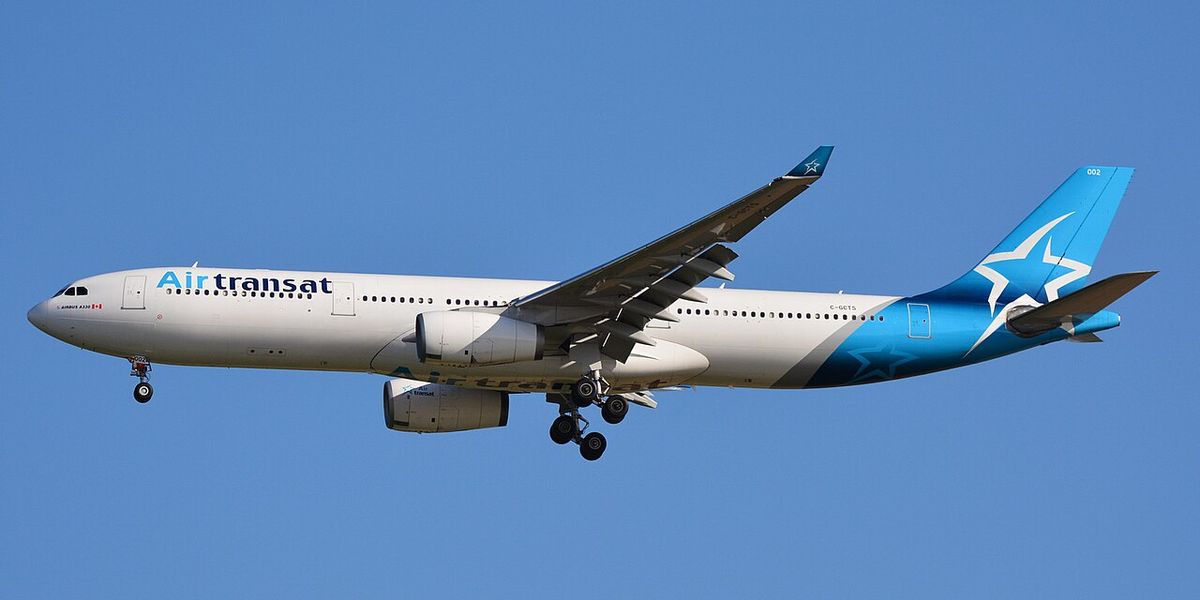
As of September 2026, Air Transat operates an all-Airbus fleet, with 42 aircraft registered with Transport Canada as of 11 April 2026. The modern fleet is heavily reliant on the fuel-efficient Airbus A321LR, which is central to its current business strategy for transatlantic and sun destination routes. The airline's fleet strategy has evolved considerably since its founding, transitioning from wide-body tri-jets to a standardized, modern Airbus family to improve efficiency and reduce operational complexity. The company's historical fleet provides a record of its growth and adaptation to different market demands over nearly four decades of service, beginning with the Lockheed L-1011 TriStar that operated its first flight in 1987.
Air Transat has operated several other aircraft types throughout its history. Its original aircraft was the Lockheed L-1011 TriStar, which served from the first flight in 1987 and was the type involved in the 2001 Flight 906 hail incident. The airline also utilized various Boeing models during its expansion phases, including the Boeing 727, 737 Classic, 737 Next Generation, and the Boeing 757. The following list details key aircraft types previously operated by the carrier, which have all since been retired from its active service.
- Lockheed L-1011 TriStar
- Boeing 727
- Boeing 737 Classic
- Boeing 737 Next Generation
- Boeing 757
- Airbus A310
- Airbus A320
- Airbus A321 (previous generation)
- Airbus A330
Air Transat has operated several aircraft types in the past, including the Lockheed L-1011 TriStar, Boeing 757, Boeing 727, and Airbus A330. On 24 August 2001, Air Transat Flight 236, an Airbus A330-200, made an emergency landing in the Azores without engine power due to fuel starvation. On 31 July 2017, Air Transat Flight 157, an Airbus A330-200 en route from Brussels to Montréal, was diverted to Ottawa. As of September 2026, Air Transat operates an all-Airbus fleet.
Network, partnerships, and commercial agreements
Air Transat's network spans four continents from its eastern Canadian bases, operating direct international flights to Europe, the Caribbean, Central America, South America, and Africa. Its primary hubs are Montréal-Trudeau International Airport, Toronto Pearson International Airport, and Québec City Jean Lesage International Airport. The airline significantly expands service to sun destinations during the winter season from several secondary airports across Canada, providing direct holiday flights for communities with less year-round international service. This seasonal model allows the airline to maximize aircraft utilization by shifting capacity from European routes in the summer to warmer destinations in the winter, serving airports like Charlottetown, Fredericton, Halifax, London (Ontario), Ottawa, and Windsor.
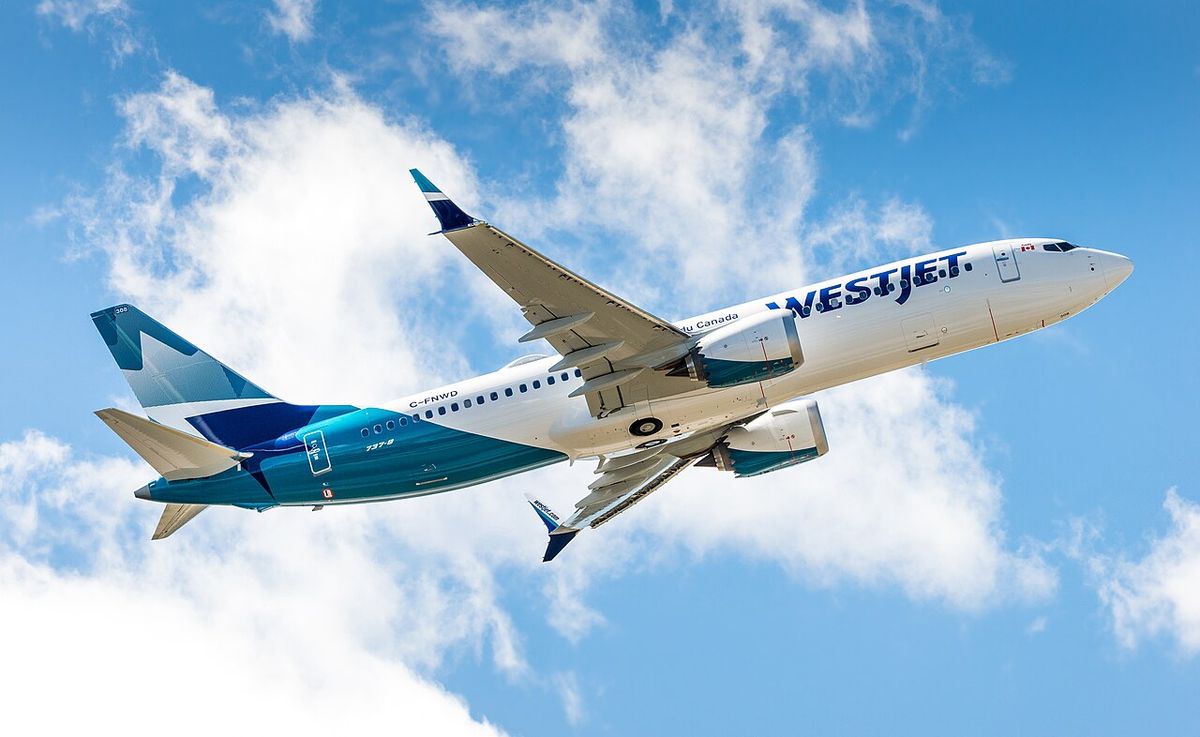
The airline maintains a select number of codeshare agreements which allow for coordinated ticketing and connections on partner airlines. Its primary codeshare partner is Porter Airlines, with whom it formed a joint venture in 2023. Other codeshare partners include Turkish Airlines and WestJet. Beyond codeshares, Air Transat has established interline agreements with about twenty airline partners worldwide, facilitating broader travel options for passengers through coordinated baggage handling and ticketing. These interline partners include a diverse mix of carriers from different regions, such as Air Baltic, Air Europa, and Air Mauritius from Europe, and Aegean Airlines, AeroItalia, and ASL Airlines.
- Air Baltic
- Air Europa
- Air Mauritius
- Aegean Airlines
- AeroItalia
- ASL Airlines
- Avianca
- Azores Airlines
- Azul
- easyJet
- Gol Linhas Aéreas
- Jet2.com
- Norwegian
- Pegasus Airlines
- SKY Express
- Viva Aerobus
- Volaris
- Volotea
- Vueling
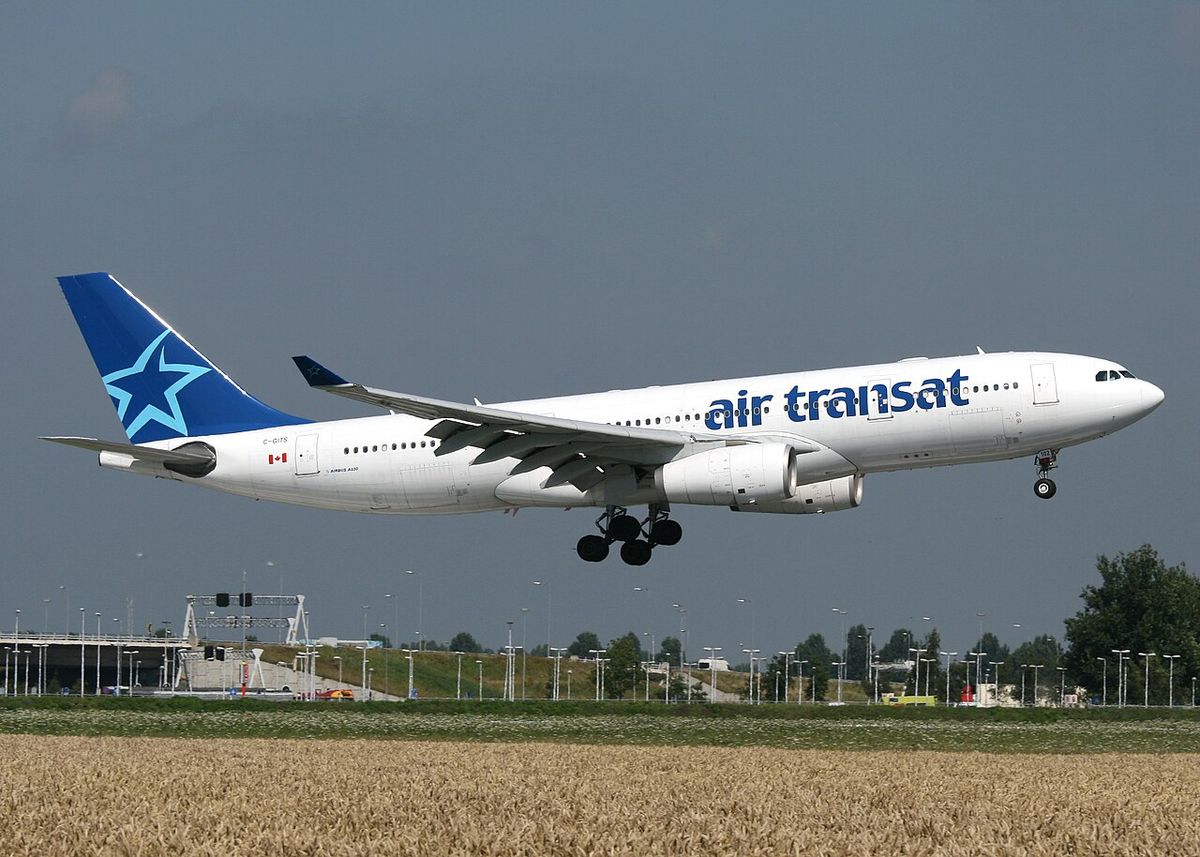
Air Transat maintains partnerships with about twenty airline partners worldwide. It has codeshare agreements with Porter Airlines, Turkish Airlines, and WestJet. On 28 November 2023, Air Transat and Porter Airlines formed a joint venture to make the two airlines' networks complementary while leveraging their respective markets. The airline also has interline agreements with numerous other carriers, including Air Baltic, Air Mauritius, and easyJet.
Notable incidents and safety investigations
Air Transat has experienced several notable incidents in its history, the most famous being Flight 236 on 24 August 2001. An Airbus A330-200, piloted by Captain Robert Piché and First Officer Dirk DeJager, suffered complete fuel starvation over the Atlantic Ocean en route from Toronto to Lisbon due to a fuel leak. The investigation revealed the leak was caused by an incorrect part installed by Air Transat maintenance staff, which did not maintain adequate clearance between hydraulic and fuel lines. This event entered aviation history as the longest non-powered flight by a commercial airliner. The aircraft was repaired and remained in service with the airline until March 2020.
Other significant incidents include Flight 961 on 6 March 2005, where an Airbus A310-308 experienced an in-flight structural failure in which the rudder detached during a flight from Varadero to Quebec City. The flight crew regained enough control to return safely to Varadero, and the subsequent investigation determined that the manufacturer's inspection procedure for the composite rudder was not adequate, leading to changed inspection procedures for composite structures on airliners globally. On 31 July 2017, Flight 157, an Airbus A330-200 from Brussels to Montreal, was diverted to Ottawa due to a chain of storms. More than 300 passengers were held on the plane for about six hours with limited water, electricity, and air conditioning, prompting a passenger to call 911. The Canadian Transportation Agency later determined Air Transat breached its tariff and ordered the airline to pay a C$295,000 penalty.
An earlier incident, Flight 906 on 6 July 2001, involved a Lockheed L-1011 TriStar returning to Lyon-Saint-Exupéry Airport after encountering severe hail. The aircraft landed safely with no injuries to the 211 passengers and crew, but it was written off due to its age and damage. It is still used today for emergency training at Lyon Airport near Lufthansa Cargo. These incidents have contributed to safety improvements both within the airline and in broader aviation regulations, particularly regarding maintenance procedures, composite material inspections, and passenger rights during extended ground delays, shaping the airline's operational protocols in subsequent years.
Corporate profile, traffic, and industry recognition
Air Transat is a wholly owned subsidiary of Transat A.T. Inc., a publicly traded Canadian travel conglomerate. The airline is a founding member of the National Airlines Council of Canada, an industry association that advocates on behalf of major Canadian air carriers on policy and regulatory matters. Its corporate headquarters are located in Montreal, and it employs a workforce of more than 5,000 people across its operations. In January 2020, Forbes Canada named Air Transat in its list of best employers, placing it eighth nationally, reflecting its standing as a workplace prior to the pandemic-induced layoffs. The company also previously engaged passengers through its inflight magazine, Atmosphere, which was published semi-annually in English and French by Business Class Media starting in 2006 but was discontinued following the COVID-19 pandemic.
During the 2025 fiscal year, Air Transat served approximately 5.4 million passengers. This compares to 5.3 million passengers in 2024 and 5.1 million passengers in 2023. The airline's operations were significantly affected by the COVID-19 pandemic, leading to a complete suspension of flights in 2020. Phased flight operations resumed on 30 July 2021 following the pandemic-related disruptions.
| Fiscal Year | Passengers Served |
|---|---|
| 2023 | 5.1 million |
| 2024 | 5.3 million |
| 2025 | 5.4 million |
In 2012, the airline was named World's Best Leisure Airline by Skytrax. The airline reclaimed the global title in 2018 and has won it nearly every year since, including 2019, 2021, 2023, 2024, and 2025. For the seventh time in 2025, it was voted the World's Best Leisure Airline at the Skytrax World Airline Awards. In 2023, Pratt & Whitney announced a global recall affecting engines on Air Transat's Airbus A321LR fleet, leading the airline to initiate a wet-leasing strategy. On 9 February 2026, Air Transat announced the temporary suspension of all flights to Cuba due to a severe aviation fuel shortage.
Questions about Air Transat
Where is Air Transat headquartered?
Air Transat is headquartered in Montreal, Quebec. Its main operational hubs are Montréal-Trudeau International Airport, Toronto Pearson International Airport, and Québec City Jean Lesage International Airport. The airline relocated its activities from Montréal-Mirabel Airport to the Montréal-Trudeau airport zone in February 2005. Its corporate head office in the Saint-Laurent borough of Montreal was recognized in 2016 by Corporate Responsibility magazine as one of the greenest head offices in North America.
Who owns Air Transat?
Air Transat is owned and operated by Transat A.T. Inc., a Canadian travel holding company. There was a significant attempt by Air Canada to acquire Transat A.T. in 2019 and 2020, with an initial offer of $13 per share that was later increased to $18 per share and approved by 95% of voting shareholders in August 2019. The deal was conditional on regulatory approvals and was ultimately terminated on 2 April 2021 after failing to secure approval from the European Commission. Since May 2021, the President and CEO of Transat A.T. has been Annick Guérard, who succeeded co-founder Jean-Marc Eustache upon his retirement.
What type of airline is Air Transat?
Air Transat is a leisure airline, specializing in holiday travel to sun and European destinations. It operates both scheduled and charter flights, primarily catering to the vacation market from Canada. This focus is reflected in its consistent recognition by Skytrax as the World's Best Leisure Airline, an award it has won multiple times including in 2012, 2018, 2019, 2021, 2023, 2024, and 2025. The airline's business model is heavily reliant on seasonal tourism, which made it particularly vulnerable to international border closures and restrictions on non-essential travel during the COVID-19 pandemic.
What was the Air Transat Flight 236 incident?
Air Transat Flight 236 was a major aviation incident on 24 August 2001. An Airbus A330-200 flying from Toronto to Lisbon lost all engine power over the Atlantic Ocean due to fuel starvation caused by a leak from the number-two engine. All 306 people on board survived. The investigation traced the cause to an incorrect part installed during maintenance by Air Transat staff, which allowed vibration to degrade a fuel line. The event remains the longest glide and unpowered landing by a commercial jetliner.
Does Air Transat have a loyalty program?
Air Transat announced the first phase of a new loyalty program on 19 January 2026. This program will feature a line of co-branded credit cards developed in collaboration with Desjardins and Visa. The official launch of the full loyalty program is scheduled for the second half of 2026. Prior to this development, the airline did not have a widely publicized standalone frequent flyer program, often relying on partnerships and its parent company's tour operator services for customer retention. The new program represents a strategic move to build direct customer loyalty in a competitive market.
Why did Air Transat suspend flights to Cuba in 2026?
On 9 February 2026, Air Transat, along with many other Canadian airlines, announced the temporary suspension of all flights to Cuba through 30 April 2026. This decision was a direct response to a severe shortage of aviation fuel at airports across the island nation, which created operational uncertainties that made scheduled service untenable. The fuel shortage was a systemic issue affecting multiple carriers and destinations within Cuba. Just three days later, on 12 February 2026, the airline also suspended flights to the United States, citing a separate decline in passenger demand on those routes as the reason for that particular operational adjustment.
Sources and further reading
- Air Transat (Wikipedia)
- Air Transat Airline Profile (centreforaviation.com)
- AIR TRANSAT A.T. INC. overview, Companies House (find-and-update.company-information.service.gov.uk)
Checked by the Yadude Books desk. Last updated 2026-10-23.