Flair Airlines
Flair Airlines is a Canadian low-cost carrier headquartered in Edmonton, Alberta, that operates scheduled passenger and charter services across Canada and to select international destinations. Founded in 2005, the airline has grown from a charter operator to a significant independent value carrier, promoting affordable air travel with a fleet of Boeing 737 aircraft. Its business model centres on offering low base fares with additional fees for services like baggage and seat selection, aiming to provide budget-friendly options for both leisure and, increasingly, business travellers. The airline has faced regulatory scrutiny and operational challenges while expanding its route network and modernizing its fleet with newer Boeing 737 MAX aircraft.
Corporate History and Evolution
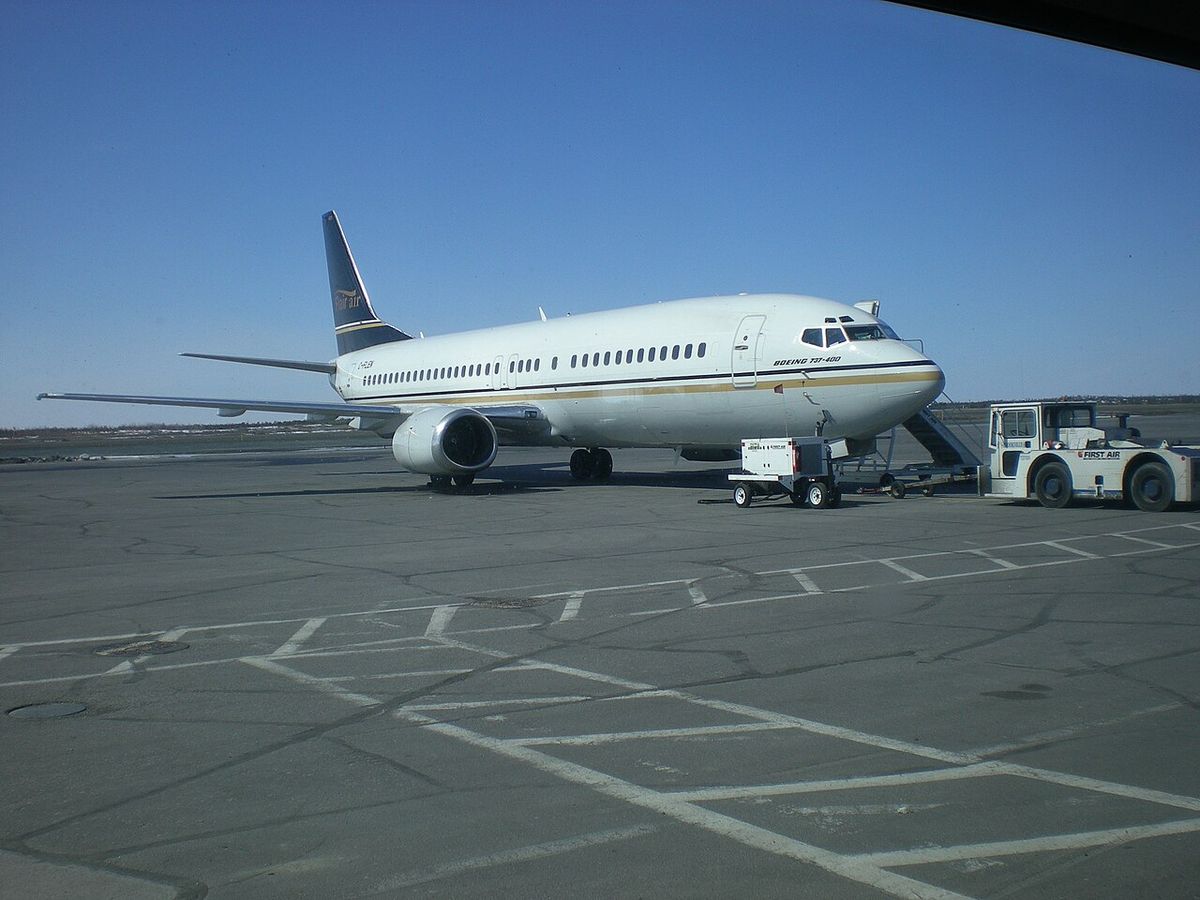
Flair Airlines began operations on August 19, 2005, under the name Flair Air, initially operating as a privately owned charter carrier. Its early operations included scheduled all-cargo and some passenger flights on behalf of Cubana de Aviación between Cuba and Canada in early 2006, utilizing Boeing 727-200 aircraft. From its inception, the company also established a significant presence in workforce transportation, moving construction workers for major resource projects across Canada. This charter foundation provided the operational experience and revenue stream that supported the airline's later transition into scheduled passenger service. The company began modernizing its fleet in 2008, introducing Boeing 737-400 aircraft to replace its older 727s, a process that continued with additional 737-400 deliveries through 2015.
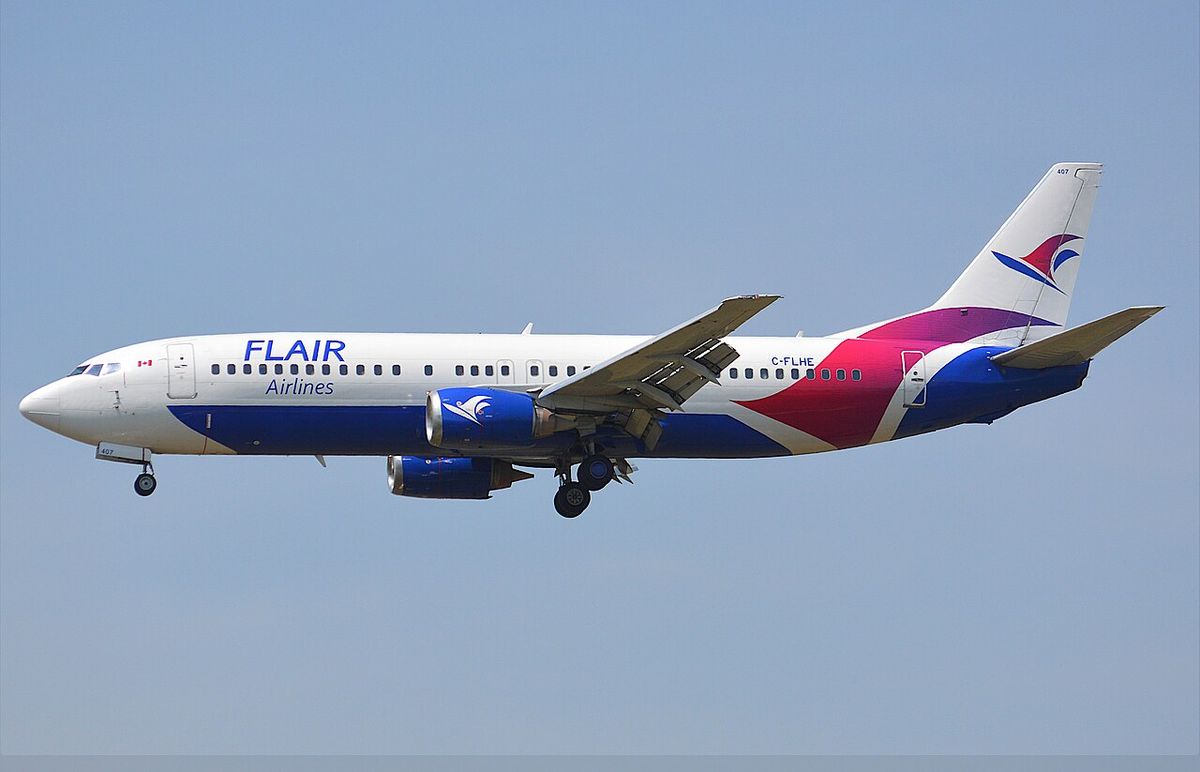
A major shift occurred in June 2017 when Flair purchased the assets of NewLeaf, a Manitoba-based discount travel company for which Flair had been the operating carrier. This acquisition marked Flair's formal entry into the scheduled passenger airline market, with the NewLeaf brand retired on July 25, 2017, and all flights continuing under the Flair name. The airline retained 85 percent of former NewLeaf staff in the acquisition. The airline rebranded as Flair Airlines in late 2017, unveiling a new magenta and blue livery and relocating its headquarters from Kelowna to Edmonton International Airport in 2018. That same year, investment firm 777 Partners invested in Flair with the goal of building a substantial Canadian low-fare carrier, facilitating the lease of newer Boeing 737-800 aircraft.
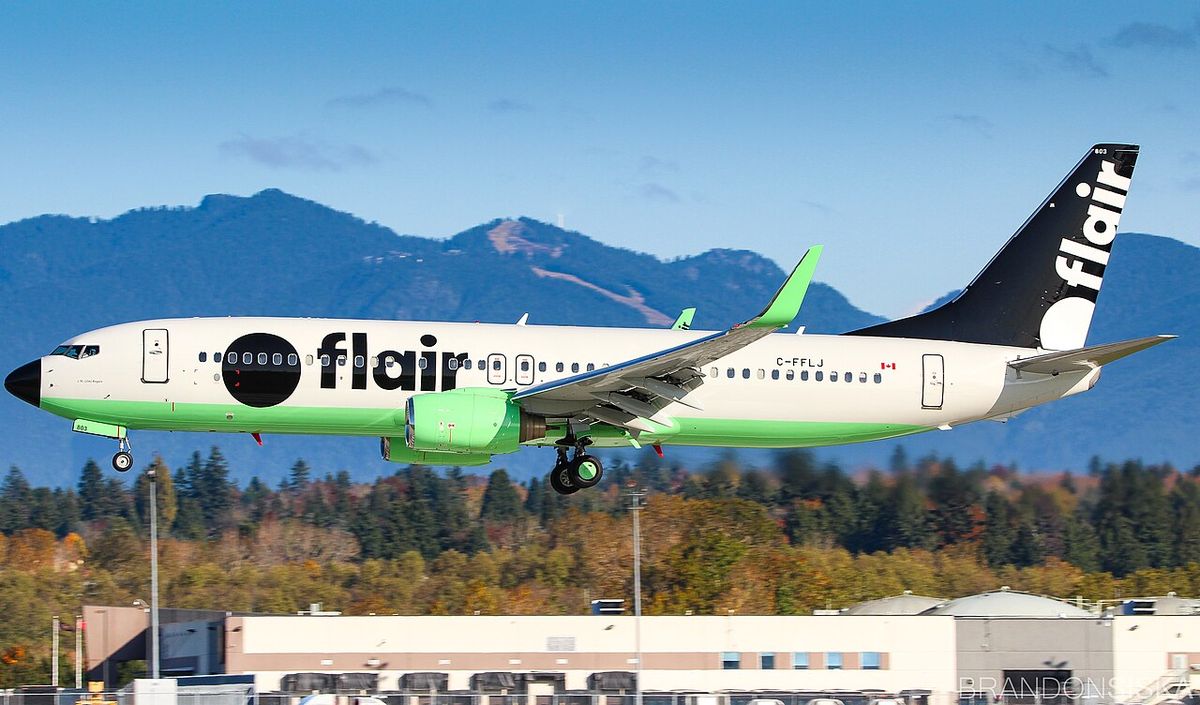
The airline underwent another comprehensive rebranding in February 2019, adopting a new "Plane and Simple" identity with a signature acid green and black colour scheme, which remains on its aircraft. New flight attendant uniforms were rolled out in September 2019 as part of this refresh. The COVID-19 pandemic prompted operational adjustments, including the retirement of its final Boeing 737-400 in August 2020 and the offering of a 90-day unlimited travel pass earlier that year. In January 2021, Flair announced an ambitious growth plan, ordering 13 Boeing 737 MAX 8 aircraft from 777 Partners with a goal of operating 50 aircraft within five years, an order supplemented by an additional 14 MAX 8s in December 2021. The first MAX 8 arrived in May 2021, with eight scheduled for delivery that summer. By 2023, the target for 50 aircraft was officially pushed back to the end of 2027, and as of March 2026, the airline operates a fleet of 20 Boeing 737s and has not acquired new aircraft since June 2023.
Regulatory and Operational Challenges
Flair Airlines faced significant regulatory scrutiny in early 2022 when the Canadian Transportation Agency (CTA) raised concerns that the airline's ownership structure might violate Canadian laws requiring domestic control. The CTA stated that Flair's operating licence could be suspended due to the level of foreign influence, primarily from its financier 777 Partners. Flair denied any violation and requested an 18-month exemption to address the concerns, with CEO Stephen Jones committing to overhaul the board and refinance debt. The National Airlines Council of Canada, representing Air Canada, Air Transat, and WestJet, publicly opposed Flair's request and asked the CTA to reject it. Jones stated in April 2022 that the airline had a "zero chance" of losing its licence and criticized the lack of competition in the Canadian airline industry. The matter was resolved on June 1, 2022, when the CTA concluded Flair was Canadian and allowed it to keep its operating licence.
Operationally, the airline has contended with a high rate of passenger complaints. Data from the Canadian Transportation Agency for the period from April 1, 2022, to March 31, 2023, showed Flair averaged 15.3 complaints per 100 flights, the highest among major Canadian airlines. This trend continued into the first quarter of 2023, with the rate rising to 20.9 complaints per 100 flights. In comparison, Air Canada and WestJet registered 4.3 and 6.6 complaints per 100 flights, respectively, during the earlier period, while low-cost carrier Lynx Air had 5.2 complaints in the first quarter of 2023. The airline also faced a serious financial dispute with lessors in March 2023, when Airborne Capital Ltd. seized four of its Boeing 737 aircraft (one 737-800 and three 737 MAX 8s) over alleged non-payment of lease fees. CEO Stephen Jones stated the airline owed approximately US$1 million and suggested competitor motivation behind the seizures, while the lessor alleged missed payments amounting to millions over five months. Flair continued operations using other aircraft, and legal claims regarding outstanding payments of $1.8 million on the four aircraft were filed at the UK High Court in January 2024.
Fleet and Cabin Configuration
Flair Airlines operates an all-Boeing 737 fleet, which has evolved significantly from its early cargo and charter days. The airline's current fleet, as of March 2026, consists of 20 aircraft. This fleet is composed primarily of Boeing 737-800 and Boeing 737 MAX 8 models, which form the backbone of its scheduled passenger operations. The airline retired its last Boeing 737-400 aircraft in August 2020, completing a transition to more modern and fuel-efficient aircraft. Future aircraft deliveries were to be painted in an updated livery featuring the airline's acid green and black colours with subtle light purple highlights.
The cabin configuration across Flair's fleet is strictly economy class, adhering to its low-cost model. Aircraft are configured with either 186 or 189 seats in a standard 3-3 layout. The airline does not offer business class, in-flight entertainment, or in-flight internet access (Wi-Fi). Services and amenities are offered on an à la carte basis, with passengers paying extra for checked and carry-on baggage, seat selection, and in-flight catering. This unbundled pricing strategy is central to Flair's ability to offer low base fares while generating ancillary revenue. The airline has previously reconfigured aircraft for special charters, such as modifying a 737-400 from 158 economy seats to 76 business class seats for a world tour in 2010.
| Aircraft Type | In Service (Notes) | Passenger Configuration | Historical Role |
|---|---|---|---|
| Boeing 737-800 | Multiple | 189 seats (Economy) | Primary scheduled aircraft since 2018 leases |
| Boeing 737 MAX 8 | Multiple | 186 or 189 seats (Economy) | Key component of future fleet plans, first arrived May 2021 |
| Boeing 737-400 | 0 (Retired 2020) | 158 seats (standard) | Replaced 727s. Used from 2008 to 2020 |
| Boeing 727-200 | 0 (Retired by 2008) | Mixed | Used in early cargo and passenger operations (2005 to 2008) |
| Embraer ERJ-175 | 0 (Retired 2016) | VIP configuration | Acquired January 2014 for charter |
| Dornier 328 | 0 (Retired 2016) | VIP configuration | Acquired January 2014 for charter |
Route Network and Commercial Strategy
Flair Airlines operates scheduled passenger services connecting cities across Canada and to several international sun destinations. Following its acquisition of NewLeaf in 2017, the airline built a network focused on point-to-point routes, often utilizing secondary airports to keep costs down. As of 2026, Flair connects 25 cities across Canada and has released flight schedules for booking through to the fall of 2026. Its route strategy has included a mix of domestic cross-country connections and international leisure routes to destinations in the United States, Mexico, and the Caribbean. The airline has stated that a shift in Canadian travel away from the U.S. market posed challenges, but its routes to Mexico and the Caribbean, along with vacation packages, helped maintain revenue.
In a strategic shift noted in 2026, Flair began actively courting corporate travellers despite its no-frills model. Under CEO Maciej Wilk, the airline rebranded itself as a "value carrier" and sought to attract small business travellers through affordable fares and integration into global distribution systems (GDS) like Amadeus and Sabre. This integration would make Flair's fares visible to travel agents and corporate booking platforms, a market it had previously not accessed. The airline also introduced express treatment for passengers who pay for add-ons like carry-on luggage, offering them priority at check-in and boarding and greater leeway with bag size. The strategy aims to diversify its passenger base beyond budget leisure travellers without adding traditional business class amenities, silverware, free catering, lounges, or other frills. The airline maintains commercial partnerships through interline and codeshare agreements. An interline agreement with Hahn Air was announced in December 2017, and Flair reportedly has codeshare agreements with Air Transat, KLM, and Air Europa, which facilitate connecting travel for passengers. In March 2026, Flair joined the Air Transport Association of Canada (ATAC), aligning itself with the broader national aviation industry body.
Charter Operations and Business Segments
Charter services have been a foundational and ongoing part of Flair Airlines' business since its founding, providing critical revenue and operational depth. The company has extensive experience in several specialized charter segments, which provided stability during its early years and continue to contribute to operations. These charter activities demonstrate the airline's operational flexibility and ability to serve niche markets beyond its scheduled low-cost flights, including resource sector logistics, global tours, and government transport. The workforce transportation contracts, in particular, have involved complex logistics moving thousands of workers from multiple origins to remote project sites, which required detailed operational coordination.
Key charter operations have included:
- Workforce Transportation: From 2007 to 2010, Flair was the exclusive large aircraft supplier for Shell Canada's Albian Sands project, moving over 10,000 workers monthly from 14 points across Canada to sites north of Fort McMurray, Alberta. In October 2013, it signed a ten-year agreement with Shell Energy Canada for charter services, managed through a new subsidiary called North Sands Air Services which handled logistics, reservations, and third-party aircraft procurement.
- Around the World Tours: In September 2010, Flair reconfigured a Boeing 737-400 from 158 economy seats to 76 business class seats to operate a world tour to 14 countries for an Ontario-based tour company. It operated another world tour to 14 new destinations in 2011 and a South American tour to 10 destinations in October 2013.
- Government Charters: The airline has provided ongoing personnel movement services for the Department of National Defence and other Canadian federal government departments.
- ACMI Charters: Flair offers Aircraft, Crew, Maintenance, and Insurance (ACMI) wet-lease packages, providing customers with a complete, turn-key aircraft operation.
- Passenger Charters for Other Airlines: Historically, Flair operated flights on behalf of other carriers, such as Air Transat, utilizing its aircraft and crew.
- VIP Charters: The airline briefly operated VIP-configured Embraer ERJ-175 and Dornier 328 aircraft between 2014 and their retirement in September 2016.
The charter division operates separately from the scheduled service but utilizes the same fleet and operational expertise. This dual focus allows Flair to maintain aircraft utilization during off-peak periods for scheduled flights and to serve contracts that require specialized planning and reliability. The company's ability to execute large-scale charters was a key factor in its early survival and growth before it launched its own scheduled brand. For example, between 2007 and 2010, Flair was the exclusive supplier of large aircraft to a major Shell Canada project. The airline also offers aircraft, crew, maintenance, and insurance (ACMI) charters which provide customers with a complete aircraft package.
Leadership, Performance, and Corporate Status
Flair Airlines has seen leadership changes as it pursues growth and strategic shifts. Stephen Jones served as CEO during the critical period of regulatory review in 2022, publicly defending the airline's Canadian status and criticizing industry competition. By 2026, Maciej Wilk held the position of CEO, based in Vancouver, until a "planned leadership transition" resulted in his departure from the company. Wilk was instrumental in articulating the 2026 strategic shift towards becoming a "value carrier" and attracting corporate travellers. The airline's management has steered its rebranding efforts, fleet renewal, and response to challenges like aircraft seizures and high complaint volumes.
Recent operational performance showed improvements in early 2026. These metrics were highlighted in a press release as the airline started 2026 with what it termed "standout" operational performance. The company continues to market itself aggressively as a provider of low fares, with all advertised fares being one-way, non-refundable, and inclusive of taxes and fees. Customer support is available 24/7 through its published contact number, 1-403-709-0808.
Flair Airlines remains a privately owned provider of air transportation services based in Edmonton. The company's profile describes it as operating scheduled passenger service as a low-cost carrier to secondary airports. Its public engagement includes sponsorship of community events like the 2026 Servus Edmonton Marathon. The airline's stated fundamentals remain those of a low-cost model: strict cost controls, a pay-for-service plan, and maximizing utilization of its 20 aircraft. Its goal to operate 50 aircraft, while officially pushed back to 2027, represents its ambition to become a larger permanent fixture in the Canadian aviation landscape.
Questions about Flair Airlines
Is Flair Airlines a Canadian-owned company?
Yes, Flair Airlines is a Canadian-owned airline headquartered in Edmonton, Alberta. In 2022, the Canadian Transportation Agency (CTA) conducted a review of the airline's ownership structure due to concerns about foreign control from its financier, 777 Partners. After Flair committed to board changes and debt refinancing, the CTA concluded on June 1, 2022, that the airline was Canadian and allowed it to keep its operating licence. The company remains privately owned.
What type of aircraft does Flair Airlines fly?
Flair Airlines operates an all-Boeing 737 fleet. As of March 2026, its active fleet consists of Boeing 737-800 and Boeing 737 MAX 8 aircraft, totalling 20 planes. The airline retired its older Boeing 737-400s in 2020 and previously operated Boeing 727-200s, VIP Embraer ERJ-175s, and Dornier 328s. Its aircraft are configured in an all-economy layout with 186 or 189 seats, and they do not feature in-flight entertainment or Wi-Fi.
Why did Flair Airlines have planes seized in 2023?
In March 2023, lessor Airborne Capital Ltd. seized four Flair Airlines Boeing 737 aircraft (one 737-800 and three 737 MAX 8s) over alleged non-payment of lease fees. Flair CEO Stephen Jones stated the airline owed about US$1 million and was in the process of payment when the seizures occurred, suggesting competitor motivation. The lessor alleged missed payments totalling millions of dollars over five months. Flair used other aircraft to maintain its schedule, and the lessors later pursued claims for outstanding payments of $1.8 million in UK court.
Does Flair Airlines have business class or premium seats?
No, Flair Airlines does not offer business class or any premium cabin seating. All its aircraft are configured with a single economy class cabin in a 3-3 layout. The airline follows an ultra-low-cost carrier model where passengers pay a base fare for a seat and then pay extra for amenities like checked baggage, carry-on bags, seat selection, and food. In 2026, the airline began initiatives to attract business travellers through value fares and priority services for add-on purchases, but not through a separate cabin class.
What are the common complaints about Flair Airlines?
According to data from the Canadian Transportation Agency, Flair Airlines has historically had a high rate of passenger complaints per 100 flights compared to other major Canadian carriers. For the period from April 2022 to March 2023, Flair averaged 15.3 complaints per 100 flights, the highest in the industry. In the first quarter of 2023, that rate increased to 20.9 complaints per 100 flights. This contrasts with rates of 4.3 for Air Canada and 6.6 for WestJet during the earlier period, and 17.4 for Sunwing Airlines in Q1 2023.
Where does Flair Airlines fly to?
Flair Airlines operates scheduled passenger services to destinations across Canada and to select international locations. As of 2026, the airline connects 25 cities within Canada. Its network includes major hubs like Toronto, Vancouver, and Edmonton, as well as smaller cities. Internationally, Flair flies to sun destinations in the United States, Mexico, and the Caribbean. The airline has also released schedules for booking through the fall of 2026, indicating planned operations well in advance.
Sources and further reading
- Flair Airlines (Wikipedia)
- Flair Airlines reroutes strategy to lure corporate travellers (globalnews.ca)
Checked by the Yadude Books desk. Last updated 2026-10-28.