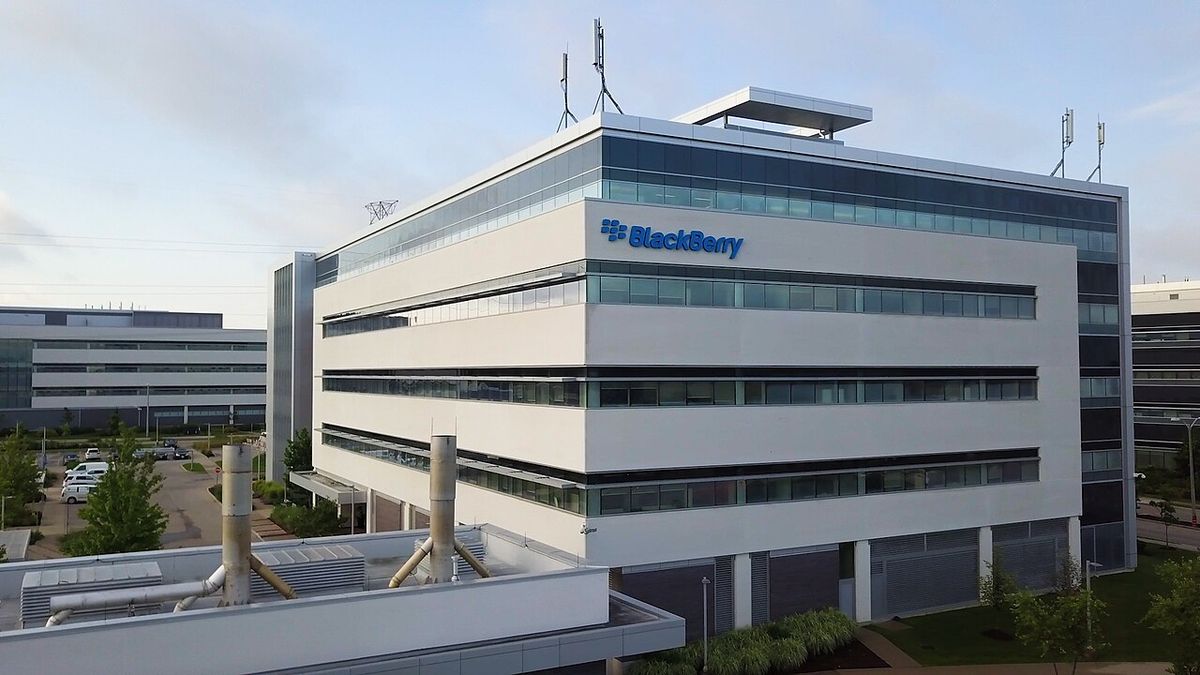
Bank of Montreal
The Bank of Montreal (BMO) is Canada's oldest bank, founded in Montreal in 1817. It is a multinational investment bank and financial services company, ranking as the eighth largest bank in North America by assets with approximately $1.5 trillion. BMO serves 13 million customers globally through its three main client groups: Personal and Commercial Banking, BMO Capital Markets, and Wealth Management. Its legal headquarters remains in Montreal, while its executive offices and operational headquarters have been located in Toronto since 1977.
Early History and 19th Century Expansion
The Bank of Montreal was established on 23 June 1817 when a group of nine Montreal merchants signed the Articles of Association to create the Montreal Bank. Its first location was rented rooms on Rue Saint-Paul in Montreal, moving to a permanent building on the same street the following year. In 1818, the bank began a rapid expansion, opening its first branch in Quebec City and several offices in Upper Canada, including in York, which later became Toronto. That same year, it established its first foreign permanent office on Willam Street in New York City. The bank converted from a private to a public company in 1822, at which point it adopted its current name, the Bank of Montreal. Expansion into Upper Canada was temporarily halted by local legislation in 1824, but the bank re entered the market in 1838 by purchasing the Toronto based Bank of the People.
Following the union of Upper and Lower Canada into the Province of Canada in 1841, BMO opened new branches in Cobourg, Belleville, Brockville, and Ottawa. Its first branch in Western Canada opened in Winnipeg in 1877, with branches in Halifax, Moncton, and Saint John following in the Maritimes. At the request of the colonial government, BMO established a presence in Newfoundland on 31 January 1895, just weeks after the collapse of the colony's two major banks. This period cemented BMO's role as a national financial institution with a coast to coast presence.
20th Century Growth and Structural Changes
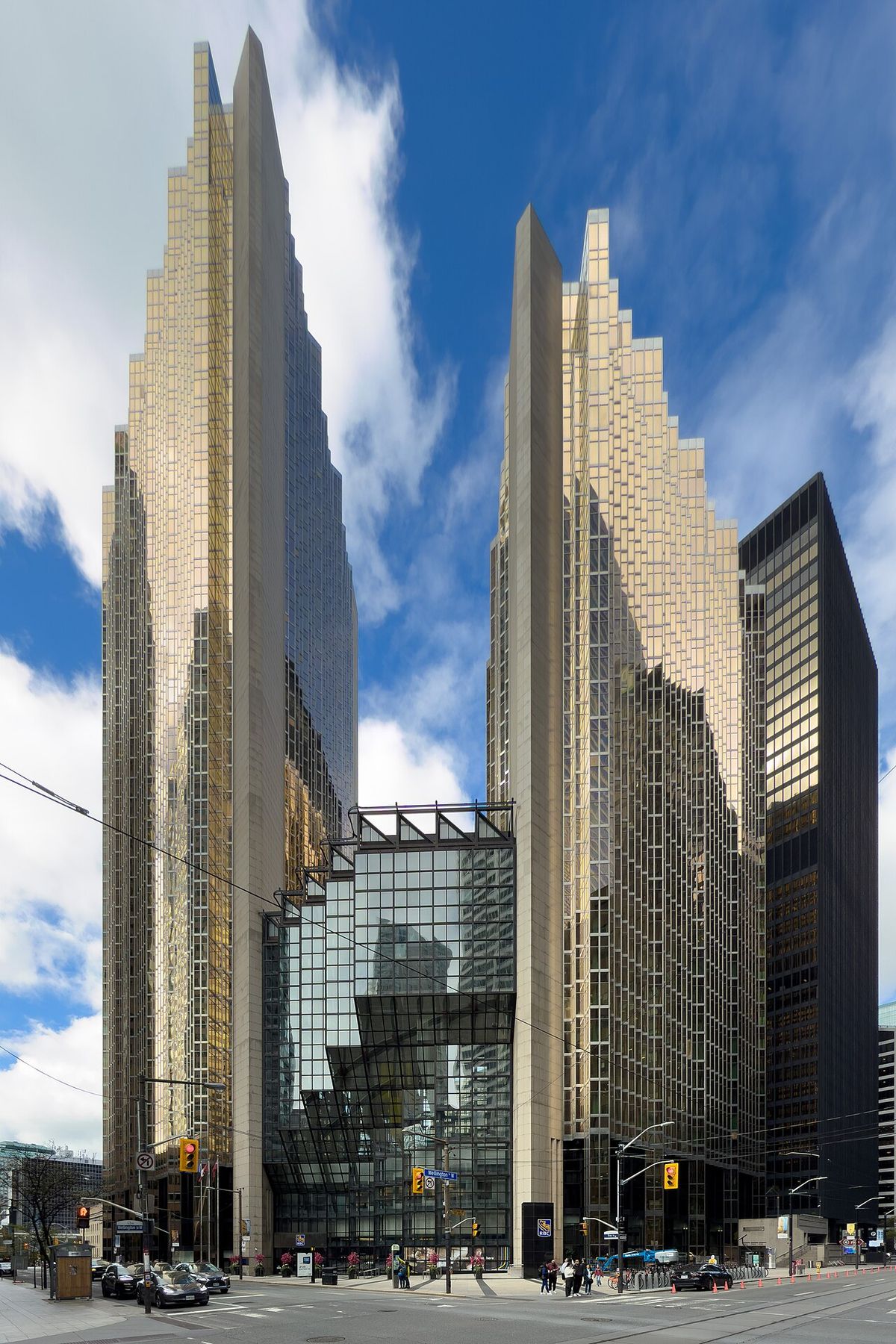
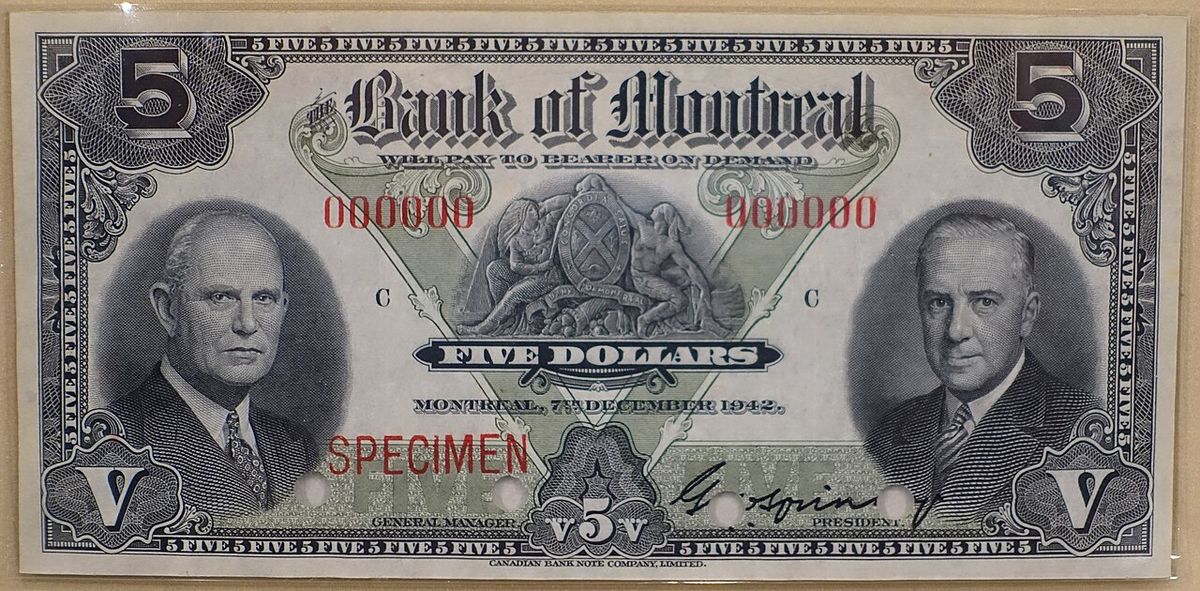
The early 20th century was marked by strategic acquisitions that solidified BMO's national footprint. The bank purchased the Exchange Bank of Yarmouth in 1903, the People's Bank of Halifax in 1905, and the People's Bank of New Brunswick in 1906, giving it a branch in every Atlantic province by 1907. Further acquisitions included the Ontario Bank in 1906, the Bank of British North America in 1918, the Merchants Bank of Canada in 1921, and the Molson Bank in 1925. The bank ceased production of its own bank notes in 1942, as the Bank of Canada became the sole issuer of currency. A significant corporate shift occurred in 1977 when the bank moved its operational headquarters from Montreal to First Canadian Place on Bay Street in Toronto, though its legal headquarters remained in Montreal.
The latter part of the century saw BMO expand aggressively into the United States and capital markets. In 1984, it acquired Chicago based Harris Bank, later rebranded as BMO Harris Bank. The 1987 acquisition of stock brokerage Nesbitt, Thomson and Company laid the groundwork for its wealth management division. BMO became the first Canadian bank listed on the New York Stock Exchange in 1994 and opened the first Canadian bank branch in China in Guangzhou in 1995, formally receiving its license in November 1996. The 1990s also saw consolidation of its US operations, including the acquisitions of Suburban Bancorp in 1994 and Household Bank in 1999. A proposed merger with the Royal Bank of Canada in 1998 was blocked by government regulators, though the two banks later merged their payment processor businesses to form Moneris Solutions in 2000.
21st Century Developments and Recent Strategy
BMO's growth in the 21st century has been characterized by major acquisitions, digital challenges, and a focus on sustainability. Key purchases included the Canadian life insurance business of AIG in 2009 for approximately CA$330 million, renamed BMO Life Assurance Company, and the North American franchise of Diners Club International. A significant expansion in the US began with the 2010 purchase of Milwaukee based Marshall & Ilsley, which was merged with Harris Bank operations and rebranded as BMO Harris Bank. In May 2018, BMO was the target of a cyberattack where hackers claimed to have compromised data of 50,000 customers and demanded a ransom. The bank entered the legal cannabis sector in 2018 with a $175 million investment, a first for a major Canadian bank, and was accused in a lawsuit that year of conspiring to rig a Canadian rate benchmark.
In December 2021, BMO announced the strategic acquisition of San Francisco based Bank of the West from BNP Paribas for US$16.3 billion, completed in February 2023. This acquisition was intended to at least double BMO's US presence, with the Bank of the West brand planned to be absorbed into BMO by September 2023. The bank has also made commitments to environmental and social goals, signing the UN Principles for Responsible Banking in 2021 with a target of net zero financed emissions by 2050. In July 2022, BMO acquired Calgary based Radicle Group Inc., an advisor on sustainability and carbon emissions. As of 2026, the bank continues to execute on its growth strategy, with CEO Darryl White leading the executive team and planning an Investor Day for March 2026.
Corporate Structure and Operations
BMO Financial Group is organized into three primary client groups that serve distinct markets under various brand names. The Personal and Commercial Client Group handles retail banking in Canada under the BMO Bank of Montreal brand, which includes commercial banking, retail banking, BMO MasterCard credit cards, and BMO Life insurance. In the United States, retail and commercial banking operates as BMO Bank, N.A., headquartered in Chicago. The Investment Banking Group operates globally under the name BMO Capital Markets, providing corporate and investment banking services. The Private Client Group manages wealth management through several entities, including BMO Nesbitt Burns for full service investing in Canada and BMO InvestorLine for self directed investing.
The bank's US wealth management services are offered through BMO Harris Investor Services and BMO Private Banking. BMO Nesbitt Burns was formed following the 1987 acquisition of Nesbitt Thomson and the 1994 acquisition of Burns Fry, which were then merged. In 2014, the bank rebranded BMO Harris Private Bank as BMO Private Bank. BMO is a member of the Canadian Bankers Association and its deposits are insured by the Canada Deposit Insurance Corporation. Its US operations, BMO Bank, N.A., are a member of the Federal Reserve System and the Federal Deposit Insurance Corporation, and the bank was named one of Greater Toronto's Top Employers by Mediacorp Canada Inc. in 2008.
Leadership and Governance
The Bank of Montreal has been led by a series of presidents and chief executives since its inception. The first president was John Gray, who served from 1817 to 1820. Notable 19th century leaders included Peter McGill, who served from 1834 to 1860, and Donald Smith, The Lord Strathcona, who was president from 1887 to 1905. In the 20th century, leadership included Sir Henry Vincent Meredith from 1913 to 1927 and Sir Charles Blair Gordon from 1927 to 1939. As of 2026, the Chief Executive Officer is Darryl White, who leads the senior executive team. The bank maintains high corporate governance standards and was one of only four banks worldwide recognized for its sustainability performance in 2025, the only Canadian bank to receive this award since its inception in 2007.
BMO's board and executive leadership are based out of its executive office at First Canadian Place in Toronto. The bank holds regular investor events, including a scheduled Investor Day in Toronto on 26 March 2026, featuring presentations from the CEO and senior leadership. The leadership team oversees a global workforce, which underwent a restructuring in December 2019 resulting in a reduction of approximately 2,300 jobs, or five percent of the workforce, following a drop in quarterly earnings. The bank continues to focus on strategic priorities including growth in the US market, digital transformation, and its commitment to environmental, social, and governance principles.
Sponsorships and Community Involvement
BMO maintains an extensive portfolio of sponsorships, primarily in sports and the arts, which reinforce its brand across Canada and the United States. In professional sports, the bank has been the title sponsor of BMO Field, the Toronto FC soccer stadium at Exhibition Place, since 2007, extending its agreement through the 2016 season and beyond. It is also the lead and jersey sponsor for CF Montréal, a partnership announced in June 2011, and a sponsor of Los Angeles FC, whose stadium was renamed BMO Stadium in 2023. In 2025, BMO became a major sponsor of the Northern Super League, Canada's top women's soccer league. The bank has previously sponsored the Toronto Maple Leafs and the Toronto Raptors from at least 2007 to 2011, and in July 2008 it sponsored the Newman/Haas/Lanigan Racing IndyCar team for a race in Edmonton.
In the arts, BMO is a founder and major sponsor of the Siminovitch Prize in Theatre, an annual $100,000 award given to a Canadian director, playwright, or designer. The bank has been a major sponsor of Skate Canada since 1997, serving as title sponsor for numerous national skating championships and the presenting sponsor of the CanSkate Learn to Skate Program. BMO also sponsors the BMO Bank of Montreal Vancouver Marathon, an annual race held each May. These sponsorships align with the bank's broader community engagement, which includes initiatives like the Indigenous Advisory Council launched in 2020 to guide internal policies and community relationships following an incident at a Vancouver branch.
Historic Buildings and Architectural Legacy
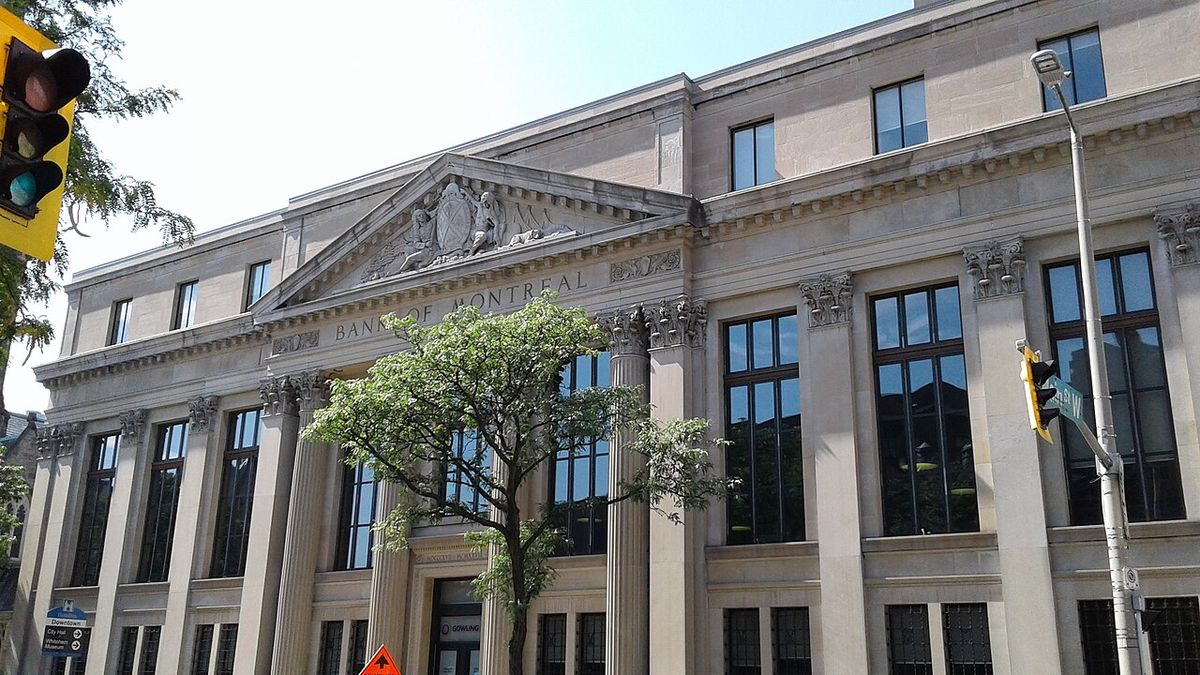
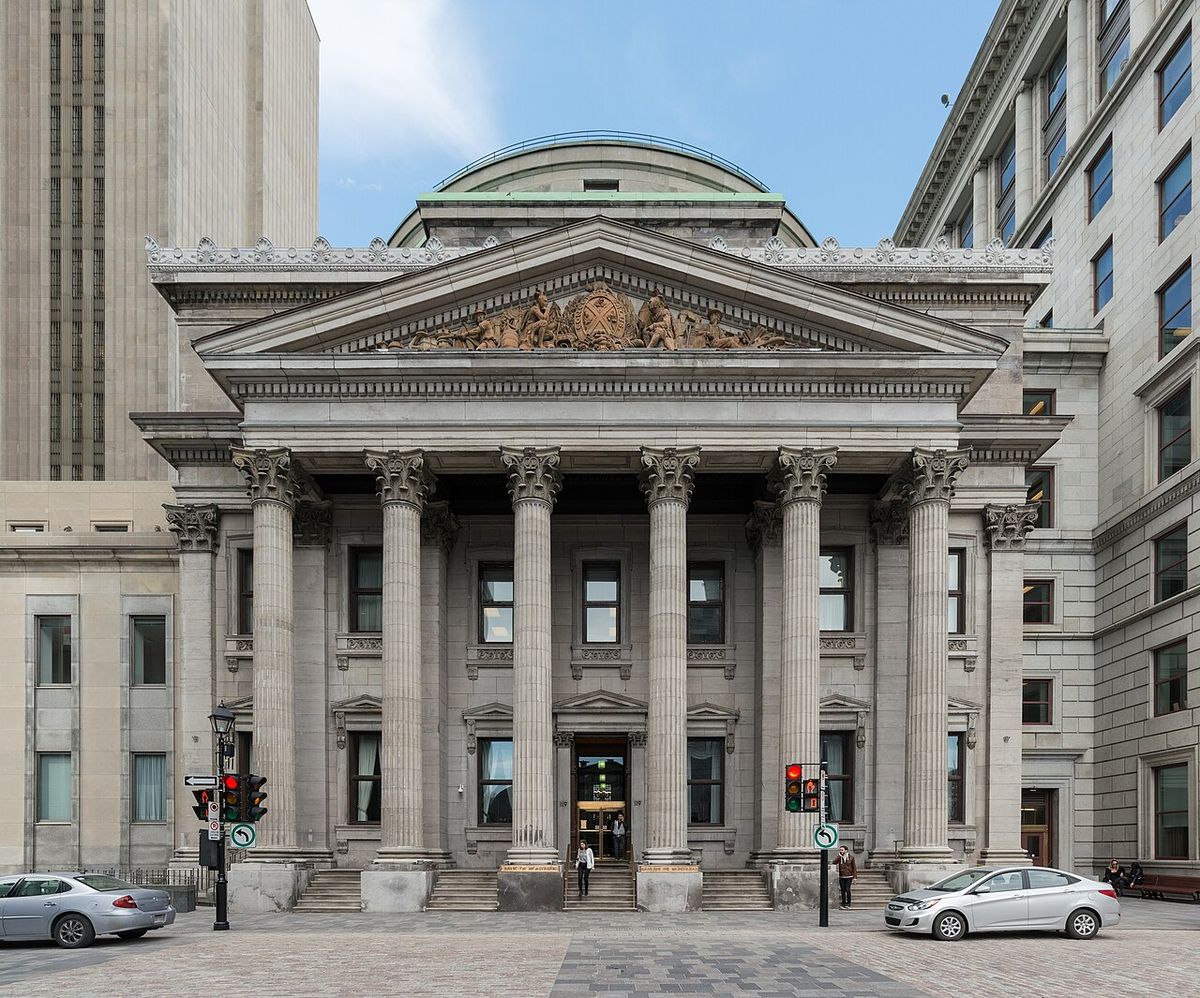
The Bank of Montreal operates from and has owned several buildings designated as historically significant at municipal, provincial, and federal levels. Its legal headquarters is the historic head office on Saint Jacques Street in Montreal, a building designed in part by British architect Andrew Taylor and modelled after a Georgian townhouse with a portico of Corinthian columns. Completed in 1847, this building remains the bank's official legal domicile. In 1960, the bank's operational headquarters moved to a 17 storey tower adjacent to this historic building before relocating to Toronto's First Canadian Place in 1977. The name First Canadian Place derives from the bank's historic slogan, The First Canadian Bank, introduced in 1969 and featured prominently in advertising during the 1970s, including television commercials with actor Leslie Nielsen.
Several former bank branches have been repurposed for notable cultural uses. A former Montreal branch, completed in 1894, was designated a National Historic Site of Canada in 1990 as a fine example of Queen Anne Revival architecture. Perhaps the most famous adaptation is the former branch at the corner of Front and Yonge Streets in Toronto, a Beaux Arts style building completed in 1885 by the architecture firm Darling & Curry. Since 1993, this building has housed the Hockey Hall of Fame. These structures reflect the bank's long standing presence and architectural patronage in Canada's urban centres, with many late 19th century branches also designed by architect Andrew Taylor.
Key Acquisitions and Strategic Transactions
The Bank of Montreal has expanded its operations through a series of strategic acquisitions over many decades. In the United States, BMO does business as BMO Financial Group and has substantial operations, particularly in the Chicago area. Notable acquisitions that increased its US presence include the purchase of Chicago-based Harris Bank in 1984 and Milwaukee-based Marshall & Ilsley in 2010. The bank has also acquired companies in niche financial sectors, such as purchasing AIG's Canadian life insurance business in 2009 and the Diners Club International's North American franchise in the same year. These purchases have helped BMO become a diversified financial services provider.
- 1903 to 1906: Acquired the Exchange Bank of Yarmouth, People's Bank of Halifax, and People's Bank of New Brunswick, expanding in Atlantic Canada.
- 1918 to 1925: Purchased the Bank of British North America (1918), Merchants Bank of Canada (1921), and Molson Bank (1925).
- 1984: Acquired Chicago based Harris Bank, establishing a major US retail banking foothold.
- 1987: Acquired stock brokerage Nesbitt, Thomson and Company, forming the basis of its wealth management division.
- 1994: Acquired Burns Fry, later merged with Nesbitt Thomson to create BMO Nesbitt Burns.
- 2009: Purchased AIG's Canadian life insurance business for ~CA$330 million, creating BMO Life Assurance Company.
- 2010: Acquired Milwaukee based Marshall & Ilsley, merging it with Harris Bank to form BMO Harris Bank.
- 2021: Announced acquisition of Bank of the West for US$16.3 billion, completed in February 2023.
- 2022: Acquired Radicle Group Inc., a sustainability and carbon emissions advisor.
Questions about Bank of Montreal
Is BMO the oldest bank in Canada?
Yes, the Bank of Montreal is Canada's oldest bank. It was founded on 23 June 1817 in Montreal, originally under the name Montreal Bank. The bank was established by a group of nine merchants and began operations in rented rooms on Rue Saint-Paul. It converted to a public company and adopted its current name in 1822.
Where is BMO's headquarters located?
BMO has two key headquarters locations. Its legal headquarters remains at its historic head office on Saint Jacques Street in Montreal, Quebec. However, its operational headquarters and executive offices have been located at First Canadian Place in Toronto, Ontario since 1977. Senior executives, including the chairman and president, work from the Toronto office.
What sports teams and events does BMO sponsor?
BMO sponsors several major sports properties. It is the title sponsor of BMO Field, the home stadium of Toronto FC, and a sponsor of CF Montréal and Los Angeles FC (BMO Stadium). The bank is a major sponsor of Skate Canada and title sponsor of the BMO Bank of Montreal Vancouver Marathon. In 2025, BMO also became a major sponsor of Canada's Northern Super League women's soccer league.
How large is BMO Financial Group?
BMO Financial Group is the eighth largest bank in North America by assets, with total assets of $1.5 trillion. The bank serves 13 million customers globally. It operates as a Canadian multinational investment bank and financial services company. BMO's operations are divided into three primary client groups: the Personal and Commercial Client Group for retail banking, the Investment Banking Group known as BMO Capital Markets, and the Private Client Group for wealth management. This structure allows BMO to serve a broad range of financial needs across its extensive network.
What did BMO acquire in 2023?
BMO completed the acquisition of Bank of the West from BNP Paribas in February 2023. This strategic acquisition was initially announced on 12 December 2021 for a purchase price of US$16.3 billion. The acquisition was intended to merge Bank of the West with BMO's existing US retail banking operations under BMO Harris Bank, which would at least double BMO's total presence in the United States. The plan was to fully absorb the Bank of the West brand into the BMO brand by September 2023, significantly expanding BMO's footprint in the American market.
Sources: Wikipedia and current public reporting, checked by the Yadude Books desk. Last updated 2026-10-27.