Nortel
Nortel Networks Corporation, commonly known as Nortel, was a Canadian multinational telecommunications and data networking equipment manufacturer. Founded in Montreal in 1895 as the Northern Electric and Manufacturing Company, it grew from a telephone equipment supplier into a global technology leader, at its peak accounting for over a third of the total valuation of the Toronto Stock Exchange. The company's dramatic bankruptcy in 2009, the largest in Canadian history, resulted in massive losses for investors, pensioners, and employees, and its assets were liquidated in a series of sales concluding in 2017. Nortel's story remains a significant and cautionary chapter in Canada's industrial and technological history.
Origins and Early History
The origins of Nortel are deeply intertwined with the invention of the telephone and the Bell System in Canada. Alexander Graham Bell conceived the telephone in Brantford, Ontario, in 1874, and Canada's first telephone factory was established there. Following the closure of that factory in 1881, the Bell Telephone Company of Canada created a mechanical production department in Montreal in 1882. To circumvent charter restrictions and utilize excess capacity, Bell Telephone spun off this manufacturing arm in 1895, incorporating it as the Northern Electric and Manufacturing Company Limited. The new company, initially 93 percent owned by Bell Telephone, was chartered to produce telephones for other companies and diversify into products like fire alarm boxes and police call equipment.
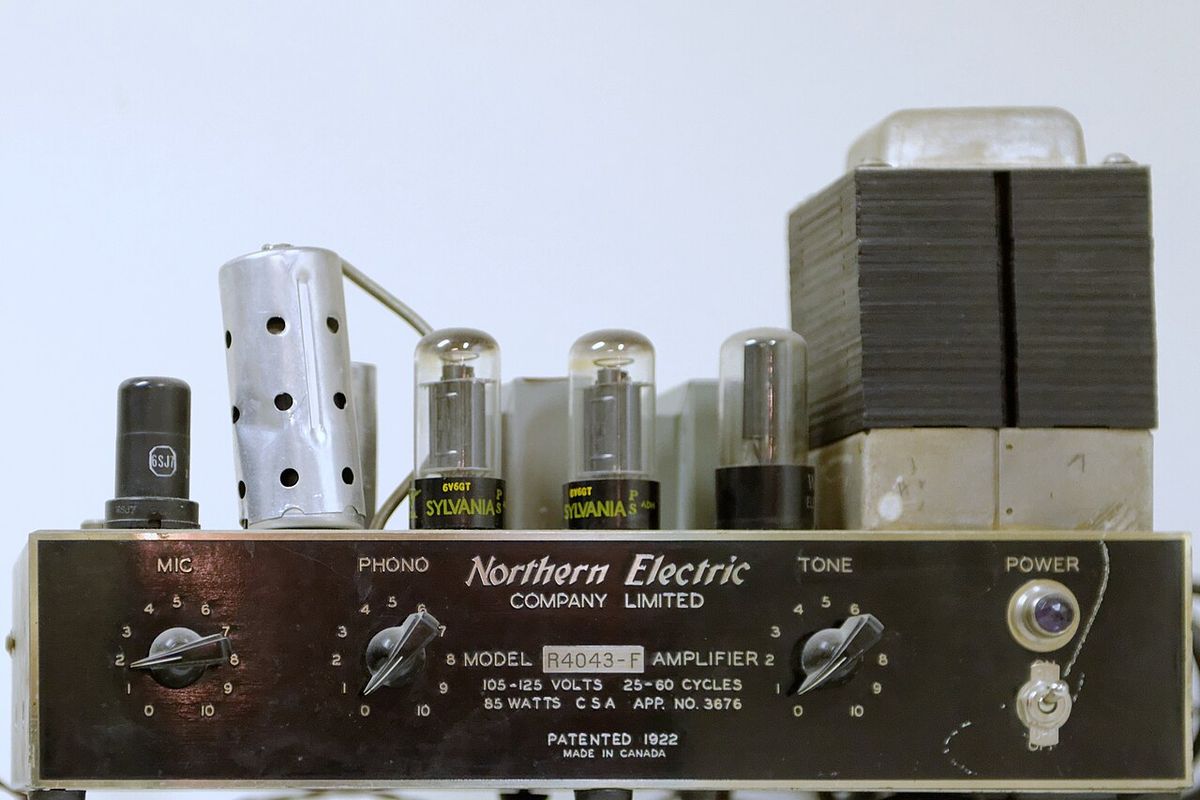
In December 1899, Bell purchased a cabling operation, named The Wire and Cable Company, which was later renamed the Imperial Wire and Cable Company in 1911. Northern Electric broadened its product line in 1900 by manufacturing Canada's first wind-up gramophones that played flat discs. The foundational merger occurred in January 1914, when Northern Electric and Manufacturing merged with Imperial Wire and Cable to form the Northern Electric Company, commonly known as Northern Electric. The combined company opened a major new manufacturing plant on Shearer Street in Montreal in January 1915, which served as its primary production centre for decades.
During the First World War, Northern Electric manufactured military equipment such as the Portable Commutator, a field telegraphic switchboard. In the 1920s, the company diversified into consumer electric appliances, producing kettles, toasters, washing machines, and electric stoves. It also entered broadcasting, operating an AM radio station, CHYC, from its plant in 1923, which was the first to provide entertainment to passengers on a transcontinental train. Later in the decade, Northern Electric created the first talking movie sound system in the British Empire for a Montreal theatre. The Great Depression severely impacted the company, with sales plummeting from $34 million in 1930 to $8.2 million in 1933 and employees dropping from 6,100 to 2,400.
Independence and the Shift to Digital Technology
A major change occurred in 1949 when a United States antitrust suit forced AT&T and its manufacturing subsidiary, Western Electric, to sell their stake in Northern Electric to Bell Canada. This separation, finalized in 1956, ended Northern Electric's reliance on licensed Western Electric designs and compelled it to develop its own products. The company established its own research and development capabilities, founding Northern Electric Laboratories in Belleville, Ontario, in 1957. Early proprietary achievements included the 6,100 km Trans-Canada Skyway microwave system in 1958. In 1964, Bell Canada acquired 100 percent of Northern Electric.
The real innovation breakthrough came through digital switching technology. After adapting an AT&T electronic switch for the Canadian market, Northern Electric developed its own SP-1 switching system, released in 1971, to target the independent telephone company market in the United States. That same year, Bell Canada and Northern Electric combined their R&D operations to form Bell-Northern Research (BNR), headquartered in Ottawa. Backed by BNR, the company focused intensely on digital technology. In 1972, it produced its first Private Branch Exchange (PBX) for business customers, called the Pulse. By the mid-1970s, 75 percent of Northern Electric's products were of its own design.
In March 1976, the company changed its name to Northern Telecom Limited and publicly committed to a digital future. It launched its "Digital World" product line, which included the fully digital DMS-100 central office switch capable of serving up to 100,000 lines. This product became a major revenue driver for nearly 15 years. The company's growth accelerated after the breakup of AT&T in 1984, and it became a significant supplier in Europe and China, as well as the first non-Japanese supplier to Nippon Telegraph and Telephone.
- 1949: AT&T/Western Electric forced to sell stake, leading to Northern Electric's independence.
- 1971: Release of the SP-1 digital switching system and formation of Bell-Northern Research (BNR).
- 1976: Company renamed Northern Telecom Limited and announces "Digital World" strategy.
- 1984: AT&T breakup opens the U.S. market, accelerating Northern Telecom's growth.
Peak, Acquisitions, and the Optical Boom
In 1983, Bell Canada Enterprises (BCE) was formed as the parent company of Bell Canada and Northern Telecom, with BNR jointly owned. As the company approached its centennial, it rebranded as Nortel in 1995 with ambitions to dominate global networking. A major strategic shift occurred in 1998 with the US$9.1 billion acquisition of Bay Networks, a leading router company. This move prompted another name change to Nortel Networks to emphasize its broader networking capabilities and caused BCE to cease being the majority shareholder. In 1999, Nortel outsourced several manufacturing operations and made a major acquisition in the optical networking space, purchasing Qtera Corporation for US$3.25 billion to bolster its long-haul optical transmission technology.
During the late 1990s telecom and internet bubble, speculators drove Nortel's stock price to extraordinary heights based on expectations of endless profits from fibre optic equipment. At its zenith in September 2000, Nortel's market capitalization reached C$398 billion, representing more than a third of the total valuation of the Toronto Stock Exchange. The company employed 94,500 people worldwide, with 25,900 in Canada. However, the market for optical equipment soon became saturated, and the collapse of major customer WorldCom further dented revenues. The bubble burst catastrophically for Nortel. By August 2002, its market capitalization had crashed to less than C$5 billion and its stock price plunged from C$124 to C$0.47.
Accounting Scandals and Leadership Turmoil
After the crash, CEO John Roth retired in 2001 and was succeeded by Chief Financial Officer Frank Dunn. Dunn presided over a drastic restructuring, laying off 60,000 staff and taking nearly US$16 billion in writedowns in 2001 alone. An unexpected return to profitability in early 2003 triggered US$70 million in bonuses to top executives, including US$7.8 million for Dunn. Suspicious of the results, the board initiated an internal review. In late 2003, Nortel announced it would restate approximately $900 million in liabilities, revealing improper revenue booking from 1998 to 2000. Executives returned $8.6 million in bonuses, and the scandal cost the company an estimated US$400 million in audit and retraining expenses.
On April 28, 2004, CEO Frank Dunn, CFO Douglas Beatty, and Controller Michael Gollogly were fired for financial mismanagement. They were later charged with fraud by the RCMP and acquitted in a 2012 trial. Civil charges from U.S. and Ontario regulators were dropped in 2014. Retired U.S. Admiral Bill Owens served as interim CEO after Dunn's firing. In 2005, Mike Zafirovski, former president of Motorola, was hired as the new CEO, with Nortel settling a Motorola lawsuit for $11.5 million related to his hiring. The company also paid US$575 million and 629 million shares to settle a class-action investor lawsuit in 2006. Additional restructuring continued, with job cuts and office closures, including the shutdown of its Calgary campus in 2009.
| Year | Key Event |
|---|---|
| 2001 | Frank Dunn becomes CEO, massive layoffs and writedowns |
| 2003 | Restatement of liabilities and bonus repayments |
| 2004 | Dunn, Beatty, Gollogly fired |
| 2006 | Settlement of class-action lawsuit |
| 2007 | SEC civil fraud settlement |
Bankruptcy and Liquidation
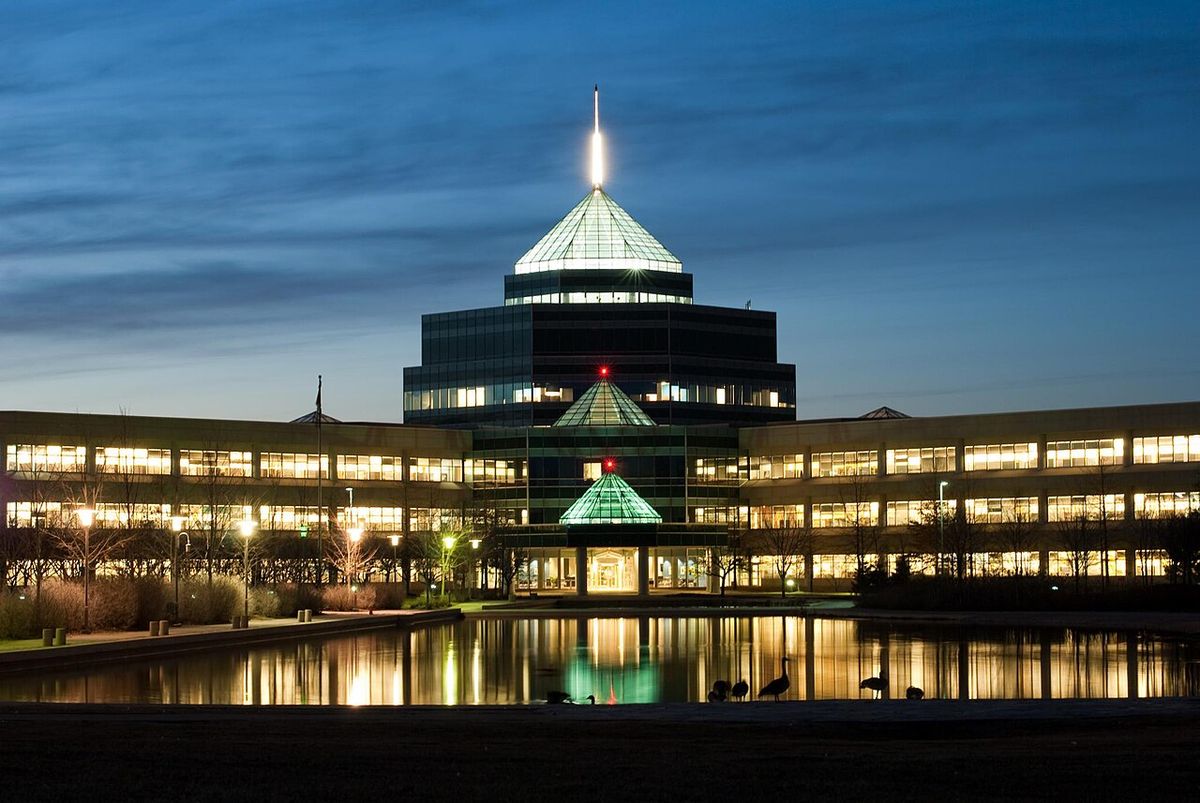
Nortel's financial position continued to deteriorate amid the global financial crisis. In January 2009, the company filed for bankruptcy protection in both Canada and the United States, triggering a 79 percent decline in its stock price. This initiated the largest bankruptcy case in Canadian history. The company was broken up and its assets sold off in a series of court-approved sales over the following years. Major business units and patent portfolios were sold to various competitors, generating total global sale proceeds of US$7.3 billion. The complex multinational bankruptcy proceedings concluded with a negotiated settlement approved by courts in the U.S. and Canada in 2017, which allocated the proceeds among creditors from the Canadian, American, and European Nortel entities. Its enterprise solutions business, which included products like PBX phone systems, was acquired by Avaya. For years afterward, many businesses continued to use reliable legacy Nortel phone systems, with support and upgrades available from third-party providers. The company's former headquarters were in Ottawa, with later operations based in Mississauga.
Technological Contributions and Legacy
Throughout its history, Nortel and its predecessors were responsible for several significant Canadian technological firsts and innovations. Its research into fibre optic cables began as early as 1966 at Northern Electric Laboratories. The company was a pioneer in digital switching, with the SP-1 system in 1971 and the fully digital DMS family in the late 1970s under the "Digital World" banner. The work of Bell-Northern Research in Ottawa was central to these advances, establishing Canada as a player in high-tech telecommunications R&D.
The legacy of Nortel is complex. It represents Canadian technological ambition and global business success, having been a national champion and a major employer. Its products formed the backbone of telecommunications networks across Canada and around the world. Conversely, its collapse is a stark case study in market speculation, strategic missteps, accounting fraud, and corporate governance failure. The bankruptcy devastated the retirement savings of many employees and investors, leaving a lasting impact on Canada's pension and investment landscape. The story of Nortel's rise and fall remains a critical subject for understanding the volatility of the technology sector and the major consequences of corporate mismanagement.
- Early 1900s: Manufactured Canada's first wind-up disc gramophones.
- 1966: Began research into fibre optic cable applications.
- 1971: Released the SP-1, an early digital switching system.
- Late 1970s: Launched the fully digital DMS-100 switch.
- 1998: Acquired Bay Networks, expanding into data networking.
Questions about Nortel
What was Nortel and what happened to it?
Nortel Networks Corporation was a major Canadian manufacturer of telecommunications and data networking equipment. After reaching a peak market value of C$398 billion in 2000, the company suffered a catastrophic collapse due to market saturation, the dot-com bubble burst, and an accounting scandal. It filed for bankruptcy protection in 2009 in the largest such proceeding in Canadian history. Its assets were liquidated in a series of sales, and a final settlement distributing US$7.3 billion in proceeds to creditors was approved by courts in 2017, ending the company.
When and where was Nortel founded?
The company that became Nortel was founded as the Northern Electric and Manufacturing Company in Montreal, Quebec, in 1895. It was incorporated on December 7, 1895. This company was formed by spinning off the manufacturing department of the Bell Telephone Company of Canada. The Northern Electric Company was later created in 1914 through a merger of Northern Electric and Manufacturing with the Imperial Wire and Cable Company.
Why was Nortel so important to Canada?
At its height, Nortel was a national champion and a symbol of Canadian technological prowess. It accounted for more than one-third of the total valuation of all companies on the Toronto Stock Exchange, making it disproportionately important to the Canadian economy and investment portfolios. It employed 94,500 people worldwide, including 25,900 in Canada, and its Bell-Northern Research division was a world-class centre for telecommunications innovation. Its bankruptcy had devastating ripple effects on Canadian pension funds, individual investors, and the technology sector.
What caused the Nortel accounting scandal?
Following the internet bubble crash, an internal review in 2003 revealed that Nortel had improperly booked approximately $3 billion in revenue between 1998 and 2000 to manipulate its financial results. This included moving more than $2 billion of revenue into later years to smooth earnings and meet Wall Street expectations. The scandal led to the firing of CEO Frank Dunn, CFO Douglas Beatty, and Controller Michael Gollogly in 2004. They were later charged with fraud but acquitted in a criminal trial. The company paid hundreds of millions in settlements and restatement costs.
What were some of Nortel's key products?
Nortel's most influential products were in digital switching and optical networking. Its "Digital World" line, launched in 1976, included the DMS-100, a fully digital central office switch that was a major revenue source. Earlier, the SP-1 switch (1971) helped it enter the U.S. market. The company was also a pioneer in fibre optic technology, which it heavily promoted during the 1990s boom. After acquiring Bay Networks in 1998, its product portfolio expanded to include routers and data networking equipment for enterprise customers.
Can I still use Nortel phone systems?
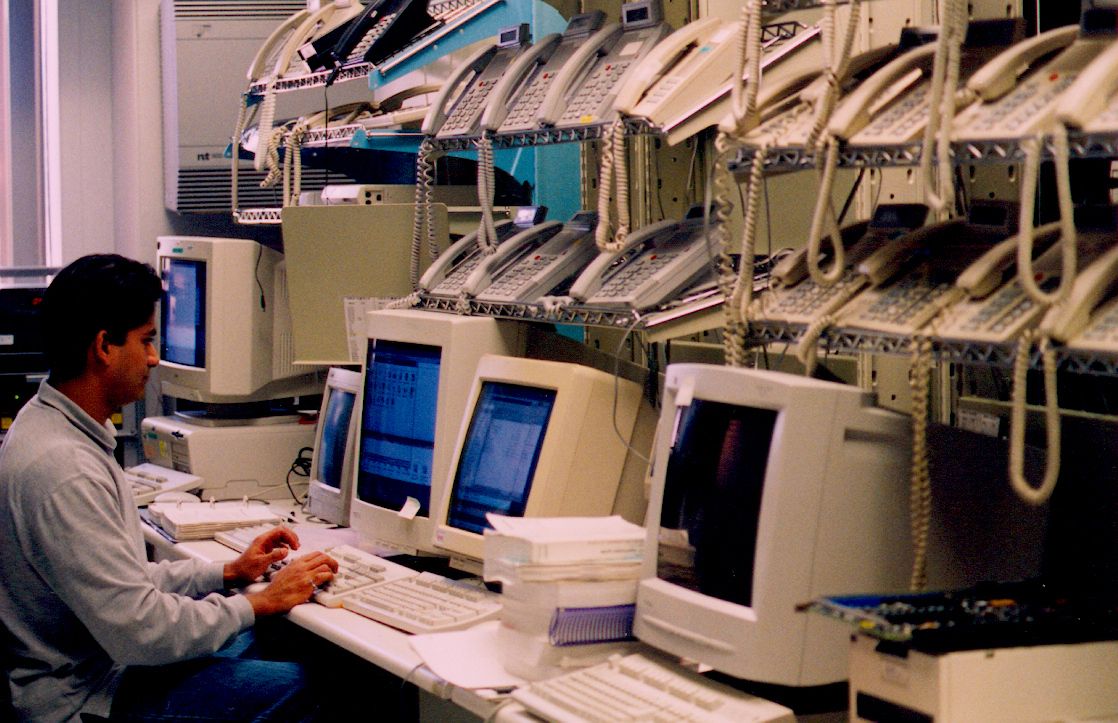
Yes, many businesses continue to use legacy Nortel telephone systems. Nortel systems are known for their long lasting reliability, offering practical benefits for offices. Support, upgrades, and maintenance for these systems are available through third party telecommunications providers. Following Nortel's bankruptcy, its enterprise solutions business was sold. This allows for the integration and gradual replacement of old Nortel equipment with compatible products from other manufacturers, providing a migration path for existing users.
Sources and further reading
- Nortel (Wikipedia)
- What happened to Nortel? The rise and fall of a Canadian ... (txo.com)
- Nortel (thecanadianencyclopedia.ca)
- Nortel Networks Support & Upgrades for Business Systems (network-telecom.com)
- Nortel Networks Corporation (osler.com)
Checked by the Yadude Books desk. Last updated 2026-10-29.