Stelco
Stelco Holdings Inc., commonly known as Stelco, is a major integrated steel producer with its corporate headquarters and primary operations based in Hamilton, Ontario. Founded in 1910 through the amalgamation of several smaller firms, the company has been a foundational pillar of Canadian heavy industry for over a century, directly shaping the economy of its home city. Its history is marked by periods of significant expansion, financial restructuring, and changes in ownership, including a period as U.S. Steel Canada and its 2024 acquisition by American manufacturer Cleveland-Cliffs. Today, Stelco operates two key facilities in Ontario, employing thousands and remaining a central yet contentious figure in discussions about Canadian industrial policy, trade, and employment.
Founding and Early 20th Century
The Steel Company of Canada, later known as Stelco, was formally established in 1910 through the consolidation of five established manufacturing firms. These predecessor companies were the Hamilton Steel and Iron Company, founded in 1900, the Canada Screw Company from 1866, the Montreal Rolling Mills from 1868, the Dominion Wire Manufacturing Company from 1883, and the Canada Bolt and Nut Company. This merger created an industrial powerhouse with diversified capabilities across various steel products. Charles S. Wilcox, who had been president of the Hamilton Steel and Iron Company, was appointed as the first president of the new consolidated entity, a role he held until 1916. Wilcox continued his involvement with the company as chairman of the board until his death in 1938, providing early leadership stability. The company's growth was integral to Hamilton's development as a major industrial centre, earning the city its enduring nickname of "Steeltown".
Mid-Century Expansion and Labour Relations
Throughout the mid-20th century, Stelco expanded its operations and solidified its position as a national industrial leader. Ross H. McMaster served as president from 1926 to 1945, overseeing the company through the Great Depression and the Second World War. His successor, Hugh G. Hilton, led the company from 1945 to 1957, and the company's main Hamilton facility was later named Hilton Works in his honour. A major moment in the company's labour history occurred in 1946 with a successful founding strike that led to the establishment of United Steelworkers Local 1005 at the Hamilton plant. This union has represented the majority of Stelco's hourly workers in Hamilton for decades and remains a key stakeholder in the company's operations. The post-war boom drove significant demand for steel, supporting sustained operations and employment at Stelco's facilities for many years.
Financial Struggles, Restructuring, and Sale to U.S. Steel
By the early 2000s, Stelco faced mounting financial difficulties within a challenging global steel market. The company sought and obtained court-ordered protection from its creditors under the Companies' Creditors Arrangement Act in 2004. Stelco exited this CCAA process on March 31, 2006, after restructuring its remaining operations into nine separate businesses and divesting several non-core units including Stelwire and Welland Pipe. This period of independence was short-lived, as on August 27, 2007, American steel giant U.S. Steel announced it would purchase Stelco for $1.9 billion, comprising $1.1 billion in cash and the assumption of $800 million in debt. The deal closed on October 31, 2007, and the company was renamed U.S. Steel Canada Inc., with its shares delisted from the Toronto Stock Exchange. This began an eight-year period of American ownership that would see major operational changes.
Key events during the U.S. Steel Canada period included the temporary shutdown of most Hamilton and Lake Erie operations in March 2009, idling over 2,000 workers. Market conditions prompted the full shutdown of the Hamilton Works on October 1, 2010, ending steel production at the site. The Hamilton steel-making and iron-making operations were permanently closed on December 31, 2013. On September 16, 2014, U.S. Steel Canada applied for CCAA protection again, citing financial struggles, and stated its intention to sell its remaining Hamilton operations. The company's Hamilton plant had not produced steel since 2011, though its coke ovens and cold rolling finishing works continued to operate during this time.
Return to Stelco and Public Offering
A turning point arrived in November 2016 when a deal was struck to sell U.S. Steel Canada to Bedrock Industries, a United States-based investment firm. As part of this transition, the company reclaimed its historic name, officially becoming Stelco once again on December 2, 2016. Under Bedrock's ownership, Stelco returned to public markets, executing an initial public offering that raised CA$200 million for the company. Stelco made its debut on the Toronto Stock Exchange on November 3, 2017, marking a new chapter as a publicly traded Canadian steel producer. Alan Kestenbaum, executive chairman of Bedrock, became the company's president in 2019, leading Stelco through this revitalized phase. In January 2021, the company added pig iron production capability to the blast furnace at its Lake Erie Works, enhancing the facility's flexibility and product range.
Acquisition by Cleveland-Cliffs and Recent Developments
The most recent major ownership change was announced in July 2024, when American steel manufacturer Cleveland-Cliffs agreed to acquire Stelco for approximately US$2.5 billion. The purchase was completed four months later, making Stelco a wholly owned subsidiary of the large American steel and iron ore producer. According to Cleveland-Cliffs, Stelco's third quarter in 2026 was its strongest since the 2024 acquisition, with the Canadian hot-rolled steel market showing substantial improvement. However, this period of reported strength coincided with significant workforce reductions. In September 2026, Stelco announced plans to idle part of its Hamilton plant and lay off up to 500 workers across its Hamilton and Nanticoke facilities, citing a nearly 25 per cent quarterly decline in demand for certain products and pressure from U.S. tariffs. This decision triggered a confrontation with the Canadian federal government.
Federal Industry Minister Mélanie Joly stated that Cleveland-Cliffs's purchase of Stelco included commitments to maintain employment levels through 2029 and that Ottawa was considering legal action under the Investment Canada Act. Cleveland-Cliffs CEO Lourenco Goncalves argued the layoffs were a temporary measure necessitated by an oversupplied market for galvanized steel in Canada and expressed willingness to sell Stelco or fight the government in court. The United Steelworkers reported that approximately 333 layoffs were expected in Hamilton and up to 50 at the Lake Erie Works. Goncalves stated that if the Canadian government acted to reduce galvanized steel imports, Stelco could immediately recall all temporarily laid-off workers, framing the issue as a trade policy problem rather than a financial one for the company.
Operations and Facilities
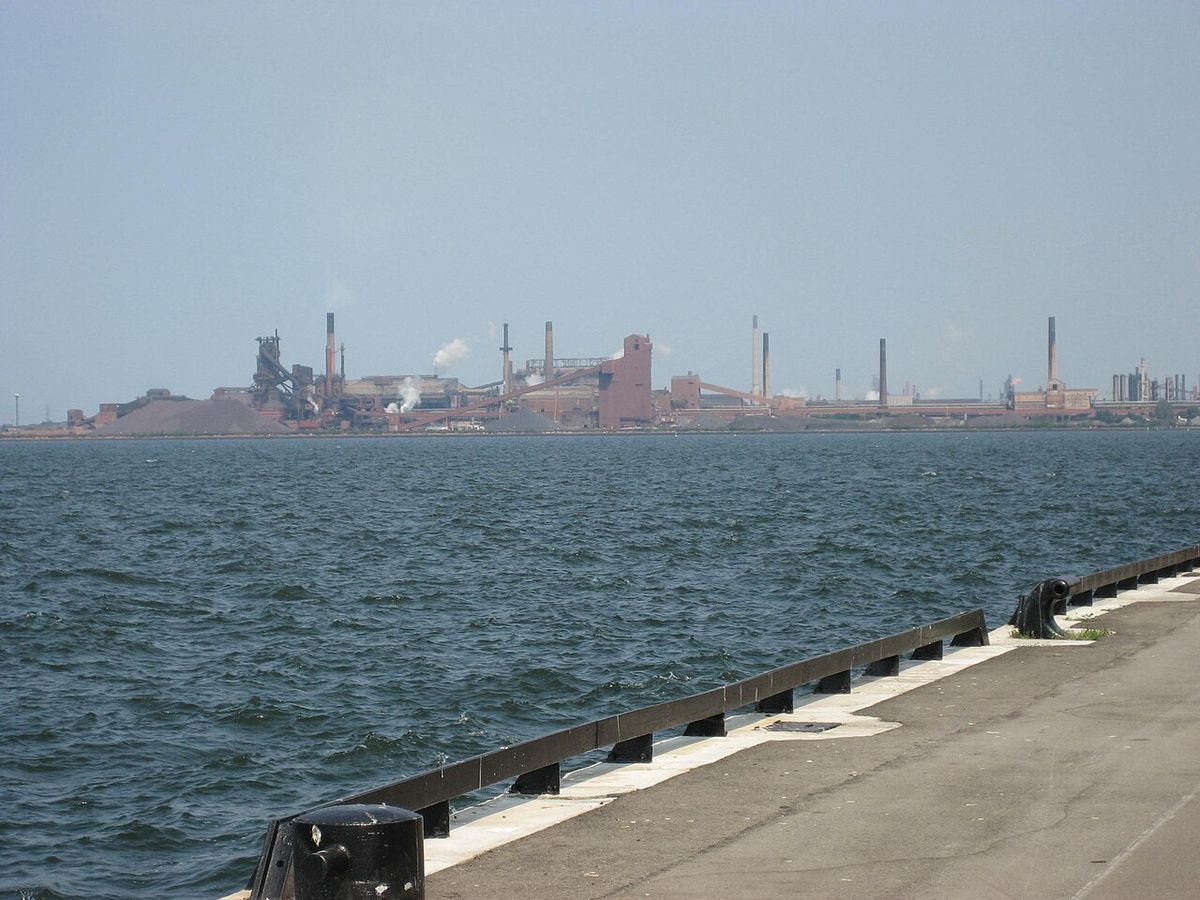
Stelco's primary manufacturing operations are concentrated at two integrated facilities in Ontario. The Hilton Works, located in Hamilton at 386 Wilcox Street, is also the site of the company's corporate head office. While the plant has not produced steel since 2011, its coke ovens and cold rolling finishing works remain operational, employing about 750 people. The company's larger and more modern facility is the Stelco Lake Erie Works in Nanticoke, Ontario, a greenfield site on the shore of Lake Erie. This plant employs approximately 1,400 people and is notable for its relatively newer design, which uses far less water in its processes compared to older facilities. Historically, Stelco's operations were more extensive, including Stelco McMaster Works in Contrecœur, Quebec, and Stelwire, but these were divested during the 2006 restructuring and are now part of ArcelorMittal.
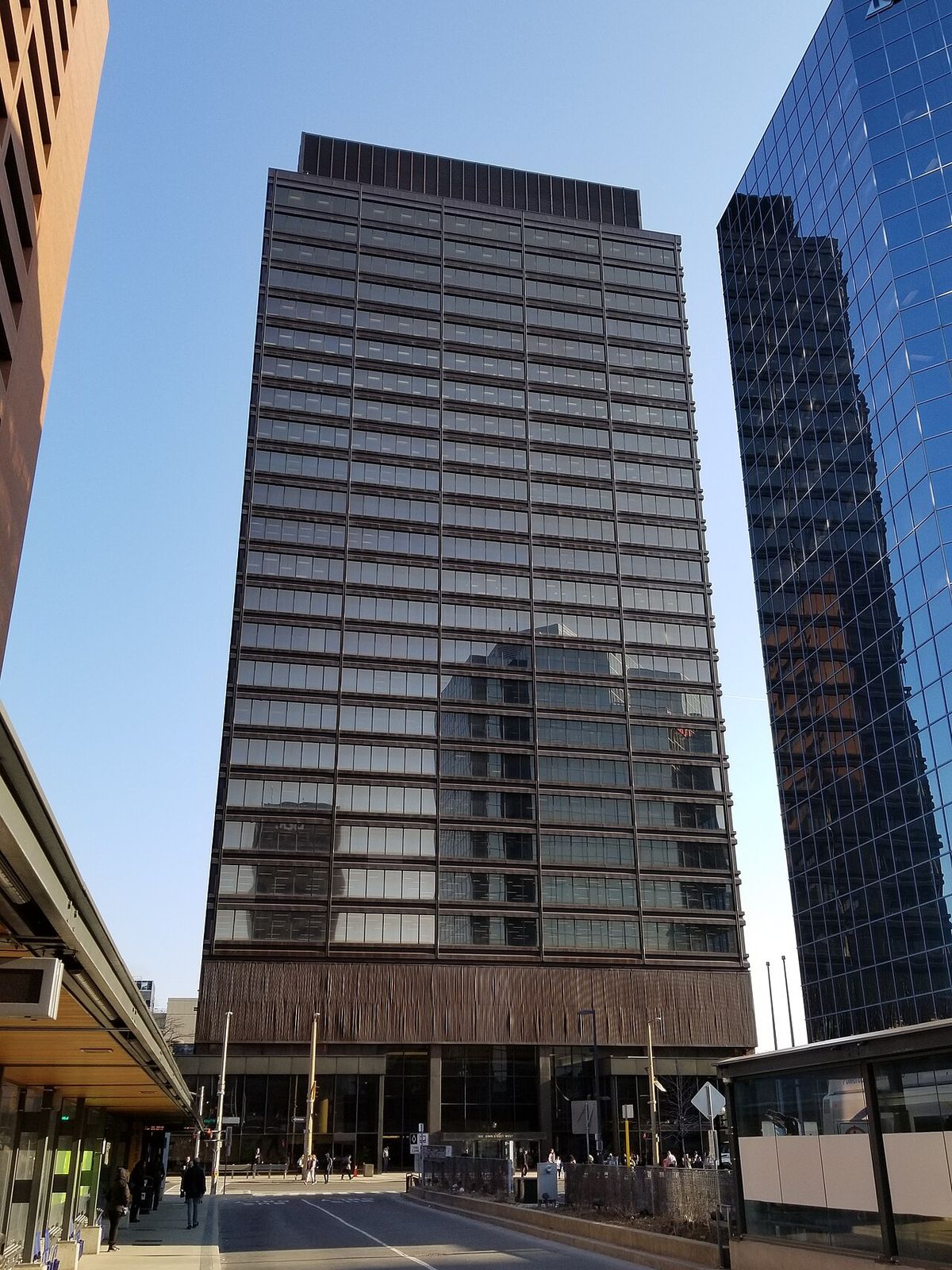
The company's historical headquarters were located in the Stelco Tower, an office building in downtown Hamilton now known as 100 King Street West, which the company completely vacated. Portions of Stelco's corporate archives are held by several institutions, including Library and Archives Canada, Brock University, and the Canadian Centre for Architecture. In a community engagement move, Stelco purchased a 40 per cent stake in the Hamilton Tiger-Cats professional football team in January 2022. The company's operational focus has shifted towards its Lake Erie Works, which houses the active blast furnace and represents the core of its current steelmaking capacity in Canada.
Environmental Record and Community Impact
Steelmaking in Canada has long been associated with industrial pollution, and Stelco's operations were historically a significant part of that narrative. In 1989, Stelco and its Hamilton rival Dofasco were listed among Ontario's "dirty dozen" polluters. For many years, both companies discharged liquid waste containing cyanide, phosphorus, ammonia, solvents, and phenols directly into Hamilton Harbour. A 1987 report indicated Stelco was still pumping more phenols and cyanide into the harbour than permitted levels. Since Stelco ceased primary steelmaking in Hamilton in 2011, its operations have received less media and regulatory attention regarding pollution, though its ongoing coke oven and finishing operations remain subject to environmental regulations.
Leadership and Governance
The leadership of Stelco has passed through numerous hands over its century-long history, reflecting its evolving corporate structure and challenges. Following founder Charles S. Wilcox, notable presidents included Ross H. McMaster (1926 to 1945) and Hugh G. Hilton (1945 to 1957). In the latter part of the 20th century, leaders such as John D. Allan (1976 to 1987) and Robert J. Milbourne (1991 to 2003) guided the company. The turbulent 2000s saw a rapid succession of presidents, including Courtney Pratt during the first CCAA process (2004 to 2006) and Rodney B. Mott (2006 to 2007). After the U.S. Steel acquisition, presidents included Douglas R. Matthews (2007 to 2009) and Michael A. McQuade (2014 to 2018). Alan Kestenbaum served as president from 2019 through the company's acquisition by Cleveland-Cliffs in 2024. The role of president has historically been central to steering the company through market cycles, labour negotiations, and ownership transitions. Stelco's presidents have included Charles Seward Wilcox from 1910 to 1916, followed by Robert Hobson and Ross H. McMaster. Hugh G. Hilton served as president from 1945 to 1957, and the role later included leaders such as J. Peter Gordon and John D. Allan. More recent presidents have included Courtney Pratt, Rodney B. Mott, and Alan Kestenbaum, who served from 2019 to 2024.
- Charles Seward Wilcox (1910 to 1916)
- Ross H. McMaster (1926 to 1945)
- Hugh G. Hilton (1945 to 1957)
- John D. Allan (1976 to 1987)
- Robert J. Milbourne (1991 to 2003)
- Courtney Pratt (2004 to 2006)
- Alan Kestenbaum (2019 to 2024)
Since 2007, Stelco has been a subsidiary of larger American corporations, first U.S. Steel and later Bedrock Industries and Cleveland-Cliffs. The company's strategic direction is set by its American parent companies. Day-to-day operations continue under local management at its Hamilton Works location. The company's current head office is co-located with the Hamilton Works at 386 Wilcox Street in Hamilton.
Financial and Market Performance
Stelco's financial performance has been volatile, closely tied to global steel prices, trade policies, and ownership strategies. Under Cleveland-Cliffs, the company was reported to have contributed positively to its parent's earnings in the third quarter of 2026. Cleveland-Cliffs' consolidated revenues for that quarter were $5.6 billion, an increase from $5.2 billion in the previous quarter, with the company recording a net income of $165 million compared to a net loss of $134 million in the second quarter. Adjusted EBITDA for Cleveland-Cliffs was $612 million in the third quarter, a significant improvement from $286 million the prior quarter. Market analysts noted that hot-rolled steel prices were up 66 per cent compared to the same period in 2025, and Canadian steel exports to the United States increased by 30 per cent quarter-over-quarter, though they remained below 2025 levels due to American tariffs.
| Metric | Q2 2026 | Q3 2026 |
|---|---|---|
| Consolidated Revenue (Cleveland-Cliffs) | $5.2 billion | $5.6 billion |
| Net Income (Loss) | ($134 million) | $165 million |
| Adjusted EBITDA | $286 million | $612 million |
In 2026, Stelco cited a decline in demand for galvanized and cold-rolled steel as the reason for layoffs affecting up to 500 workers in Hamilton and Nanticoke. The company's strategy focused on its more profitable hot-rolled products, leading to the idling of galvanizing lines in Hamilton. Management stated this was necessary to preserve the remaining approximately 2,000 Canadian jobs at its facilities. The company contends with Canadian government pressure over employment commitments made when Cleveland-Cliffs acquired Stelco in 2024.
Key Historical Milestones
Stelco was founded in 1910 by the amalgamation of several smaller firms. A significant labour event was the founding strike of Local 1005 of the United Steelworkers of America in 1946. The company filed for bankruptcy and was bought by U.S. Steel in 2007, and it was later sold to Bedrock Industries in 2016. In 2024, American steel manufacturer Cleveland-Cliffs acquired Stelco for approximately US$2.5 billion.
- 1910: The Steel Company of Canada is founded through the amalgamation of five predecessor firms.
- 1946: The founding strike establishes United Steelworkers Local 1005 at the Hamilton plant.
- 2004: Stelco enters CCAA bankruptcy protection.
- October 31, 2007: U.S. Steel completes its $1.9 billion acquisition of Stelco, renaming it U.S. Steel Canada.
- December 31, 2013: Permanent closure of steel-making and iron-making operations at Hamilton Works.
- December 2, 2016: The company reclaims the Stelco name after sale to Bedrock Industries.
- November 3, 2017: Stelco debuts on the Toronto Stock Exchange after a CA$200 million IPO.
- 2024: Cleveland-Cliffs acquires Stelco for approximately US$2.5 billion.
Stelco began as a Canadian industrial pioneer formed from a 1910 merger. The company faced financial difficulties, entering court-ordered creditor protection in 2004 and filing for bankruptcy in 2007. It has undergone several ownership changes, becoming a subsidiary of American corporations like U.S. Steel and later Cleveland-Cliffs. The company has experienced recurring cycles of restructuring and consolidation throughout its history.
Divested Operations and Former Assets
As part of its 2006 exit from CCAA bankruptcy protection, Stelco divested several non-core operations. These divestments included Stelwire, Norambar, and Welland Pipe. The sales were intended to focus the company on its primary steelmaking assets in Hamilton and Nanticoke. The remaining operations were restructured into nine separate operating businesses held by the corporate entity of Stelco.
- Stelwire: A wire manufacturing operation, divested in 2006 and later acquired by ArcelorMittal.
- Norambar (formerly Stelco McMaster Works): A steel plant in Contrecœur, Quebec, also divested in 2006.
- Welland Pipe: A pipe manufacturing business, sold during the 2006 restructuring.
- Stelco Tower (100 King Street West): The company's former downtown Hamilton headquarters, which Stelco has completely vacated.
- Two Hamilton steel mills: Sold to the German Max Aicher company in 2010, which reopened them as "Max Aicher North America."
These sales reflect a change in the company's scope. Stelco contracted from a more diversified industrial operation to a more focused producer. The company is now centred on its two remaining Ontario works: the Hilton Works in Hamilton and the Lake Erie Works in Nanticoke. Its operations previously also included facilities like Stelco McMaster Works in Quebec.
Questions about Stelco
Who owns Stelco?
Stelco is currently owned by Cleveland-Cliffs, a major American steel and iron ore producer based in Ohio. Cleveland-Cliffs acquired Stelco for approximately US$2.5 billion in 2024. Prior to this, Stelco was owned by Bedrock Industries (2016 to 2024), which took the company public, and before that by U.S. Steel (2007 to 2016). The company was originally founded as a Canadian-owned entity in 1910.
Is Stelco still making steel in Hamilton?
No, Stelco has not produced raw steel at its Hilton Works facility in Hamilton since 2011. The primary steelmaking and iron-making operations at the Hamilton plant were permanently closed on December 31, 2013. However, portions of the Hamilton facility remain operational, including the coke ovens and cold rolling finishing works, which employ about 750 people. The company's primary steel production now takes place at its more modern Lake Erie Works in Nanticoke, Ontario.
Why is Stelco laying off workers?
In September 2026, Stelco announced plans to lay off up to 500 workers, primarily from its Hamilton facility, with some also affected in Nanticoke. The company cited a decline of almost 25 per cent in demand for certain steel products in its traditional markets and pressure from U.S. tariffs on Canadian steel as key reasons. It specifically idled its galvanizing lines in Hamilton, stating the Canadian market for galvanized steel was oversupplied. The federal government contends these layoffs may violate job protection commitments made by Cleveland-Cliffs when it purchased Stelco in 2024.
What is the history of Stelco and U.S. Steel?
U.S. Steel purchased Stelco in 2007 for $1.9 billion, renaming it U.S. Steel Canada. This period was marked by operational downsizing, including the 2010 shutdown of steelmaking in Hamilton and the company's entry into creditor protection in 2014. U.S. Steel Canada was legally separated from its American parent in 2015 and was sold to Bedrock Industries in 2016, at which point the Stelco name was revived. The company's eight-year period under U.S. Steel ownership was a defining era of contraction and transition for the historic Canadian steelmaker.
What products does Stelco manufacture?
Stelco is an integrated steel producer, manufacturing a range of steel products. Its key product lines include hot-rolled steel, which saw improved market conditions in 2026, as well as cold-rolled and galvanized steel. The company added pig iron production capability to its Lake Erie blast furnace in January 2021, expanding its product mix. In response to market shifts, the company indefinitely idled its galvanizing lines in Hamilton in 2026 to focus production on its more profitable hot-rolled products.
How many people does Stelco employ in Canada?
The Hilton Works in Hamilton employs about 750 people. The larger Lake Erie Works in Nanticoke employs about 1,400 people. In late 2026, the company announced plans to lay off up to 500 workers across its Hamilton and Nanticoke operations. This included around 333 layoffs expected at the Hamilton plant and up to 50 at the Lake Erie Works. The company stated its goal was to preserve the remaining approximately 2,000 Canadian jobs following these workforce reductions.
Sources and further reading
- Stelco (Wikipedia)
- Stelco's U.S. owner says steelmaker had 'strongest' quarter ... (cbc.ca)
- Cleveland-Cliffs says Stelco had its 'strongest quarter ... (chch.com)
- Stelco (stelco.com)
- Ottawa gives Stelco 15 days to reverse Hamilton layoffs or ... (globalnews.ca)
Checked by the Yadude Books desk. Last updated 2026-10-30.