Via Rail
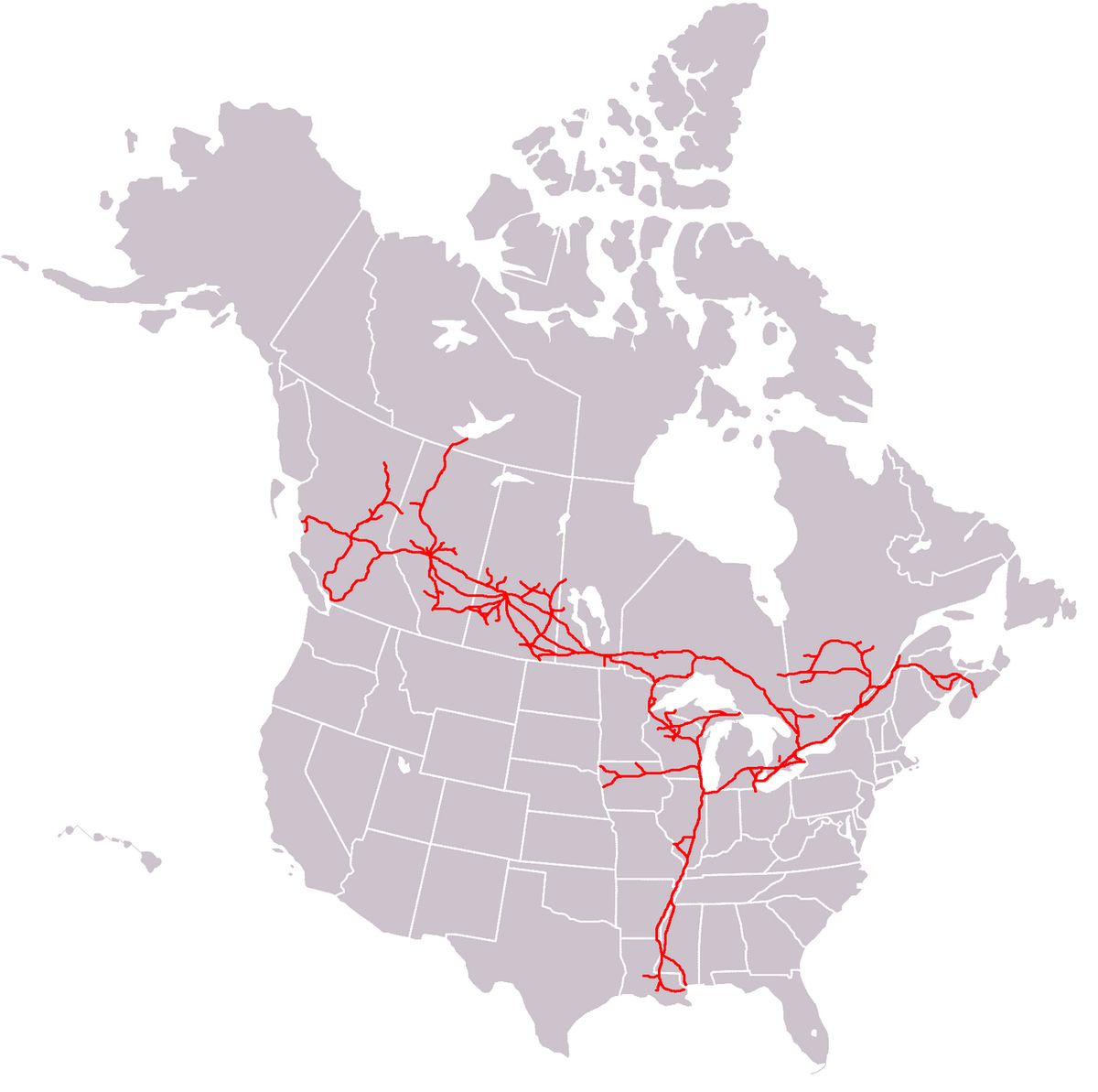
Via Rail Canada Inc., operating as Via Rail, is a federal Crown corporation responsible for Canada's national intercity passenger rail service. It operates a network of trains across eight provinces, connecting over 400 communities along 12,500 kilometres of track. In 2023, Via Rail carried approximately 4.1 million passengers, with the vast majority travelling within the busy Quebec City-Windsor Corridor. The corporation provides a key transportation link for urban centres and remote regions while aiming to deliver a safe, accessible, and environmentally responsible travel option for Canadians.
Formation and Corporate Structure
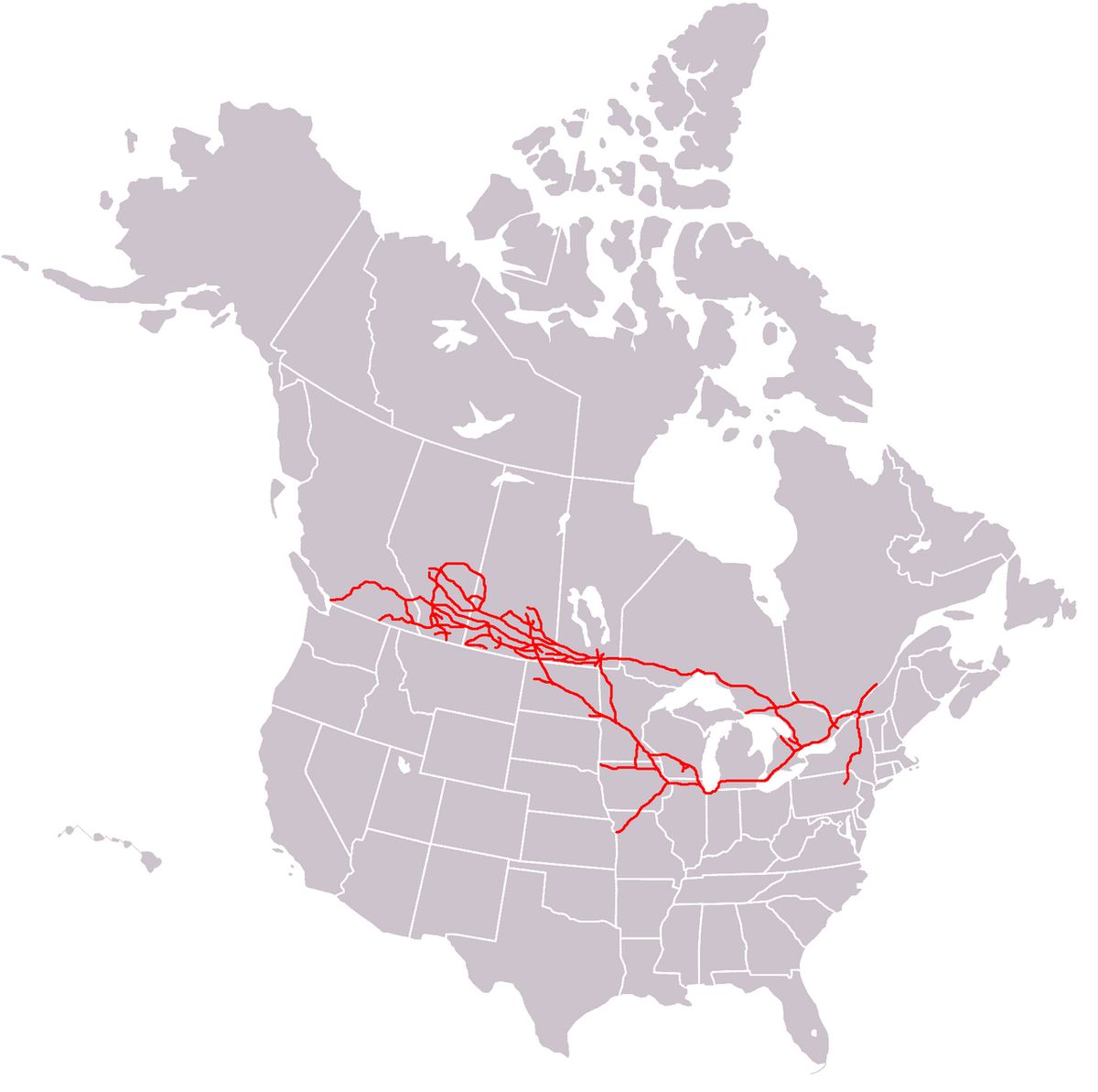
Via Rail was formally established on January 12, 1977, when Canadian National Railway (CN) spun off its passenger services into a separate Crown corporation. This move was the culmination of a federal promise to create a nationwide passenger rail carrier similar to Amtrak in the United States. Following months of negotiation, Via Rail assumed all Canadian Pacific Railway (CP) passenger train operations on October 29, 1978, acquiring a diverse fleet of locomotives and cars from both railways. At its inception, Via did not own significant trackage, instead paying right-of-way fees to CN and CP to operate over their networks. The corporation was created by an order in council rather than specific legislation, a distinction that has historically limited its ability to seek independent financing and made its funding subject to federal budget cycles.
The company's initial network was vast, with over 150 scheduled trains per week stretching from Sydney, Nova Scotia, to Prince Rupert, British Columbia, and north to Churchill, Manitoba. However, it inherited a tremendous variety of aging equipment in need of replacement. From the beginning, Via's mandate was to operate as a business, but its structure and reliance on government funding have often placed it in a position where political considerations influence operational decisions. This dynamic has been a persistent theme throughout its history, affecting service levels and long-term planning. Passenger train services not included in Via's creation were those offered by BC Rail, Algoma Central Railway, Ontario Northland Railway, Quebec North Shore and Labrador Railway, and various urban commuter services operated by CN and CP.
Historical Service Reductions and Funding Cycles
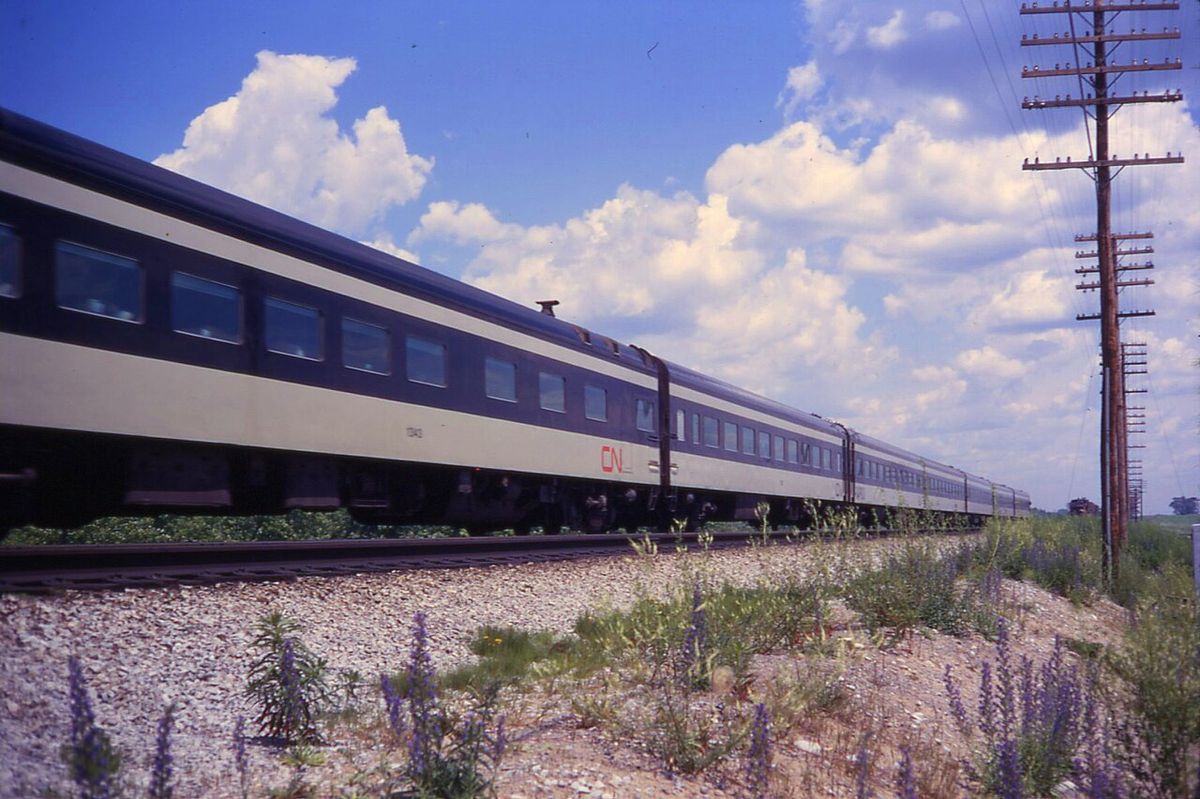
Via Rail's history has been marked by cycles of expansion and severe contraction tied to federal government budgets and political priorities. The first major cuts came in 1981 under Prime Minister Pierre Trudeau, when Transport Minister Jean-Luc Pépin's plan slashed Via's budget by 40 per cent. This led to the discontinuation of popular trains like the Super Continental and the Atlantic, reducing transcontinental service to a single train, The Canadian. The election of Brian Mulroney's Progressive Conservative government in 1984 brought a temporary reprieve, with funding to restore some services and refurbish equipment. However, by 1989, further budget cuts exceeding $1 billion were imposed, surpassing the 1981 reductions.
Even more dramatic service cuts were implemented on January 15, 1990, under Transport Minister Benoît Bouchard, reducing Via's operations by 55 per cent. This period saw the controversial rerouting of The Canadian from the CP mainline to a more northerly CN route, severing major western cities like Regina and Calgary from the passenger network. Further cuts in the mid-1990s under the Liberal government of Jean Chrétien saw the discontinuation of the Atlantic, a move viewed as politically motivated as it served cities represented by opposition Progressive Conservative MPs. The late 1990s brought modest funding increases under Transport Minister David Collenette, including the "Renaissance" program which purchased and adapted unused European railcars, though these faced early technical problems in Canada's climate.
- 1981: First major 40 per cent budget cut under Trudeau discontinues Super Continental and Atlantic.
- January 15, 1990: Operations reduced by 55 per cent under Bouchard. The Canadian rerouted.
- 1994: Atlantic service discontinued under Chrétien government. Ocean service preserved.
- Late 1990s: "Renaissance" program introduces fleet of adapted Nightstar cars.
- 2003: $700 million "Renaissance II" funding announced, then frozen by Paul Martin.
- 2012: Major service cuts: The Canadian reduced to twice weekly, The Ocean to thrice weekly.
- 2011 to 2013: Vancouver Island's Malahat and Gaspé services suspended indefinitely.
The 2003 funding freeze under Prime Minister Paul Martin created a significant backlog of deferred maintenance, leaving Via unable to replace life-expired equipment. A 2007 funding package of $691.9 million over five years was largely allocated to refurbishing 54 F40PH-2 locomotives. On October 11, 2007, Finance Minister Jim Flaherty announced this funding, with $519 million designated for capital projects. The 2009 Economic Action Plan added another $407 million to support improvements in the Montreal-Ottawa-Toronto corridor, focusing on increased frequencies and on-time performance.
Fleet Evolution and Technical Challenges
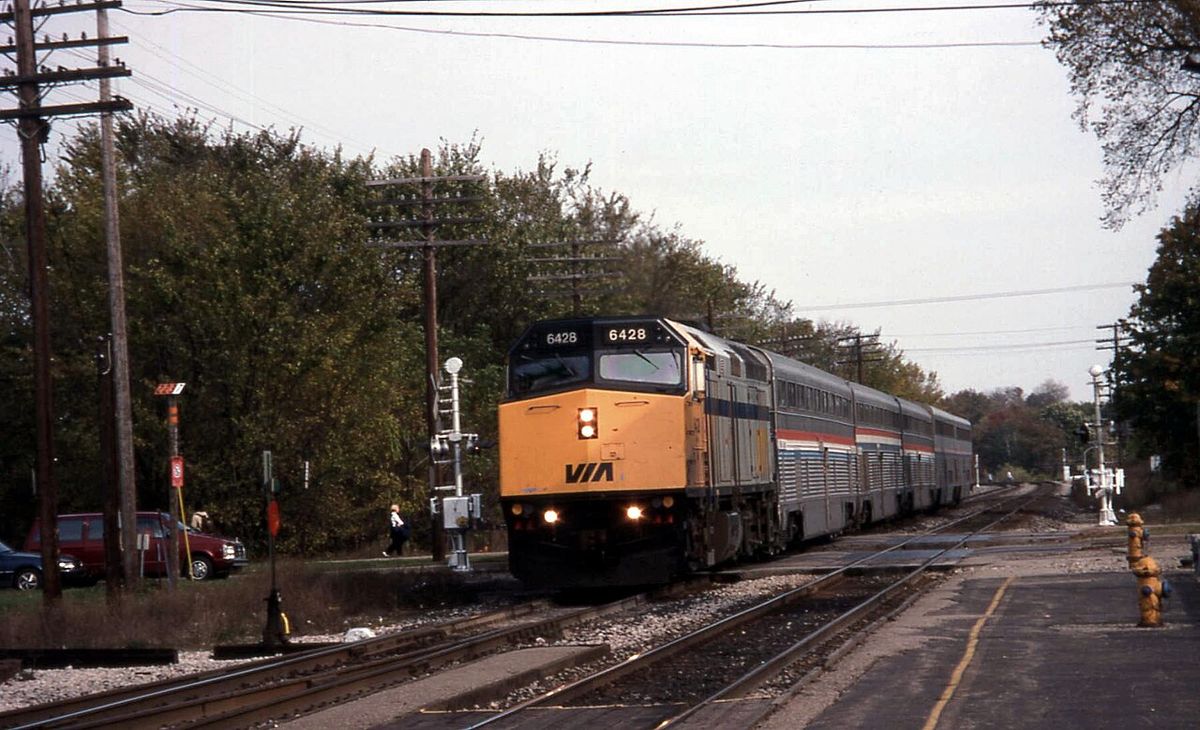
Via Rail's fleet has evolved from a collection of inherited CN and CP equipment to a more standardized, though often aging, roster. A significant early investment was the order of LRC (Light, Rapid, Comfortable) locomotives and tilting coaches from Bombardier Transportation in the early 1980s, which were intended for corridor services but proved mechanically troublesome. The active tilt technology was designed to increase speed on curves, but the locomotives faced persistent problems. By 1990 only a handful of LRC locomotives remained in service, and they were fully retired following the arrival of new GE Genesis locomotives in 2001. The 1990s saw the fleet consolidated with refurbished stainless steel cars, known as HEP-1 and HEP-2 rebuilds, and more reliable General Motors locomotives.
The "Renaissance" program of the late 1990s introduced a fleet of cars originally built for the UK's Nightstar sleeper services through the Channel Tunnel. These cars were swiftly nicknamed "déplaisance" by French-speaking employees due to early problems adapting the equipment for Canadian use. Doors and toilets froze in cold Atlantic Canada temperatures, causing delays and service interruptions. In the 2000s, a backlog of deferred maintenance grew due to funding instability, particularly affecting the aging fleet of F40PH-2 locomotives. Documents obtained in 2007 revealed delays due to equipment failures had risen by 60 per cent from the previous year, which the company attributed to problems with the aging F40 fleet.
New diesel-electric P42DC locomotives purchased from General Electric allowed the withdrawal of older units, including the remaining LRCs. In a significant modern development, in July 2026 Stadler Rail was awarded a contract to build 45 new locomotives for Via. A $357 million federal investment was announced for Via Rail to build a new assembly and maintenance facility in Montreal, marking a return of passenger locomotive assembly to Canada. This facility will handle the Canadian assembly of the new Stadler locomotives, part of a broader effort to modernize the national fleet.
Network Operations and Service Characteristics
As of December 2023, Via Rail operates 406 trains per week across its network. Ridership has shown resilience, with the corporation carrying approximately 4.1 million passengers in 2023, achieving an on-time performance of 85.4 per cent. The Quebec City-Windsor Corridor remains the core of its business, accounting for 96 per cent of all passengers. The company has announced a new five-year strategic plan titled "VIAction 2030," described as the blueprint for its next chapter. It continues to engage with the public through annual public meetings, with the 2026 meeting scheduled for July 16, 2026, to report on 2025 performance and financial results.
Recent initiatives focus on stabilizing operations, strengthening reliability, and modernizing the network. Projects include the launch of an integrated station project in Dorval to better connect rail, public transit, and the airport, and the reintroduction of onboard bicycle service in the Ottawa-Quebec corridor. The corporation also emphasizes its commitment to accessibility, aiming to be the number one transport solution for people with reduced mobility or other disabilities. Via Rail safely transported over four million passengers in 2024 and has been recognized with nine Safety Awards and three Environment Awards from the Railway Association of Canada.
| Route | Primary Endpoints | Service Frequency (Recent) | Key Characteristics |
|---|---|---|---|
| The Canadian | Toronto, Vancouver | 2 times weekly (full route) | Scenic transcontinental. Moved to CN route in 1990. |
| The Ocean | Montreal, Halifax | 3 times weekly | Serves St. Lawrence Valley, northern NB. Preserved in 1994 cuts. |
| Corridor Services | Quebec City, Windsor | Multiple daily | Uses LRC & Renaissance fleets. 96% of ridership. |
| Winnipeg, Churchill | Winnipeg, Churchill | Multiple weekly | Remote service to northern Manitoba. |
| Toronto, Sarnia | Toronto, Sarnia | 1 daily round-trip | Remnant of former Chicago International service. |
| Maple Leaf (with Amtrak) | Toronto, New York City | Daily | Joint service. Provides only rail link to Niagara Falls. |
Long-distance services like The Canadian and The Ocean attract international tourism and offer sleeper accommodations. Regional and remote services, such as the Winnipeg-Churchill train, provide critical transportation links to isolated communities. Services to Sarnia and the Niagara region were reduced to one daily round-trip in 2012, with Niagara Falls losing all dedicated Via service except the joint Amtrak Maple Leaf. The 2012 cuts also reduced corridor services west of Toronto and to Kitchener, London, and Windsor, though at least two daily round trips survived on those routes.
Notable Incidents, Controversies and Labour Relations
Beyond budgetary struggles, Via Rail has faced significant operational incidents and political controversies. On February 8, 1986, the eastbound Super Continental collided with a CN freight train near Hinton, Alberta, after the freight crew missed a signal light. The accident resulted in 23 fatalities. In the early 2000s, Via became entangled in the federal sponsorship scandal. The February 10, 2004 Auditor General's report revealed Via had been used as one of several government entities to funnel illicit advertising funds to Liberal Party supporters in Quebec. This led to the suspension of President Marc LeFrançois on February 24, 2004, and his firing on March 5 after he failed to adequately defend himself against the allegations.
The scandal also implicated Via CEO Jean Pelletier, who was fired on March 1, 2004, after he publicly belittled former Via employee Myriam Bédard, who had claimed she was fired for questioning billing practices. An arbitrator's report later concluded Bédard had voluntarily left Via. Labour relations have also periodically disrupted service. On July 21, 2009, Via began cancelling all trains in anticipation of a strike by locomotive engineers, who had been without a contract since December 31, 2006. The strike officially began at midnight on July 24, with full service resuming on July 27. Another major strike by the Canadian Auto Workers union, representing about 2,200 employees, was planned for July 4, 2010, but was called off after a three-year contract was reached.
Political interference has been a recurring criticism. The 1990 rerouting of The Canadian was officially justified as serving more remote communities, but the concentration of Progressive Conservative ridings along the CN route led to charges the move was political. Harvie André, a federal cabinet minister from Calgary, stated publicly that he did not care if he never saw a passenger train again. The 1994 cancellation of the Atlantic served cities represented by the only two Progressive Conservative MPs elected in 1993, while the Ocean was preserved running through the district of Transport Minister Douglas Young. The privatization of CN in 1995 also negatively affected Via service by creating an effective monopoly where Via trains had to yield to CN freight traffic.
Governance, Public Reporting and Future Plans
Via Rail operates as an independent federal Crown corporation with a mandate to operate the national passenger rail service on behalf of the Government of Canada. The corporation reports to Canadians through annual public meetings and published reports. The 2026 Annual Public Meeting was scheduled for July 16, 2026, at 4 p.m. Eastern Daylight Time, to be aired on its YouTube channel. During these sessions, leadership presents annual performance, financial results, and plans for the future, and the public is invited to submit questions in advance. The 2026 meeting focused on reporting 2025 performance and priorities including stabilizing operations and strengthening reliability.
The corporation's strategic direction is outlined in its "VIAction 2030" plan, described as the blueprint for its next chapter. Major capital initiatives include the new locomotive fleet from Stadler Rail and the associated Montreal assembly facility. Via Rail's mandate includes providing a service that is safe, accessible, efficient, reliable, sustainable and environmentally responsible. The company aims to be the primary transport solution for people with disabilities. It operates intercity trains connecting over 400 communities across Canada and ensures rail transportation services to regional and remote communities.
Persistent challenges include its dependence on freight railway-owned tracks, which affects scheduling priority. In 2014, MP Olivia Chow drafted a private member's bill that would have allowed the government to force freight carriers to give scheduling priority to passenger rail, though like most private member's bills it did not become law. The corporation's funding model, based on federal appropriations rather than legislative authority to borrow, continues to shape its capacity for long-term investment and service stability. Attracting international tourism forms an important part of Via Rail's long distance trans-continental services, which operate alongside its essential corridor network.
Questions about Via Rail
When was Via Rail founded?
Via Rail Canada was officially founded as a separate federal Crown corporation on January 12, 1977. It was created when Canadian National Railway (CN) spun off its passenger services. Later that year, on October 29, 1978, Via Rail assumed all passenger train operations from the Canadian Pacific Railway (CP), consolidating most of Canada's intercity passenger rail service under one public entity. The Via name and logo had begun appearing on CN equipment starting in 1976, and a single timetable combining CN and CP trains was published in September of that year.
How many passengers does Via Rail carry annually?
In 2023, Via Rail carried approximately 4.1 million passengers. The corporation reported safely transporting over four million passengers again in 2024. The vast majority of this ridership, about 96 per cent, is concentrated on the routes within the Quebec City-Windsor Corridor, which connects major urban centres in Ontario and Quebec with frequent train service. Yearly passenger levels on Canada's trains peaked at 60 million during World War II, before the advent of Via, and had dropped below five million by 1977.
Does Via Rail own the tracks its trains run on?
No, Via Rail owns very little of the track infrastructure it uses. As of 2023, 97 per cent of the 12,500 kilometres of track on which Via operates is owned and maintained by other railway companies, primarily Canadian National Railway (CN). Via Rail pays right-of-way fees to these companies, and this reliance on freight-owned tracks has historically been a challenge for maintaining consistent on-time performance. At its creation, Via was sometimes the only user of rural branch lines, and the 1995 privatization of CN strengthened the freight railways' control over the network.
What are Via Rail's main long-distance train routes?
Via Rail's flagship long-distance routes are The Canadian and The Ocean. The Canadian travels between Toronto and Vancouver on a scenic northern route through the Canadian Shield and Rockies, though its frequency has been reduced to twice weekly on the full route. The Ocean operates three times weekly between Montreal and Halifax, serving communities in Quebec and New Brunswick. These trains are key for tourism and serve remote communities along their paths. Other historic long-distance trains like the Super Continental and Atlantic were discontinued in various service cuts during the 1980s and 1990s.
Has Via Rail ordered new trains recently?
Yes, in July 2026, Stadler Rail was awarded a contract to build 45 new locomotives for Via Rail. The federal government has announced $357 million in funding for Via Rail to build a new assembly and maintenance facility in Montreal, Quebec, where the Canadian assembly of these locomotives will take place. This represents a significant modernisation investment in the fleet. Previous major orders included the problematic LRC fleet from Bombardier in the 1980s and the Renaissance cars in the late 1990s, which were adapted from European Nightstar coaches.
How can the public engage with Via Rail's corporate reporting?
Via Rail engages with the public through annual public meetings (APMs) where it presents performance, financial results, and future plans. The 2026 APM was scheduled for July 16, 2026, and was aired on the corporation's YouTube channel. The public is typically invited to submit questions in advance through the Via Rail website, with answers provided during or after the broadcast. Annual and quarterly reports are also published online. The 2025 annual report is available in the company's Media Centre, and past meetings have been pre-recorded due to public health considerations during the COVID-19 pandemic.
Sources and further reading
- Via Rail (Wikipedia)
- Corporate Information (corpo.viarail.ca)
- VIA RAIL TO HOLD ITS ANNUAL PUBLIC MEETING ON ... (newswire.ca)
Checked by the Yadude Books desk. Last updated 2026-10-26.