Resident Evil: Retribution
Resident Evil: Retribution is a 2012 action horror film written and directed by Paul W. S. Anderson, serving as the fifth instalment in the Resident Evil film series. The film continues the story of Alice, played by Milla Jovovich, as she is captured by the Umbrella Corporation and forced to escape from a vast underwater testing facility. For Canadian audiences, the film holds particular interest as principal photography was conducted entirely in Toronto, Ontario, utilizing the Cinespace Kipling studio facility and the city's Lower Bay subway station. The production contributed to the local film economy but was also marred by an on-set accident that injured several crew members.
Production and Canadian Filming
Principal photography for Resident Evil: Retribution commenced on October 10, 2011, and concluded on December 23, 2011, constituting a 55-day shoot. The production was based in Toronto, Ontario, primarily at the Cinespace Film Studios' Kipling Avenue facility. This marked a return to Canadian production for the series, following Resident Evil: Afterlife which was shot in Toronto using 3D technology. Director Paul W. S. Anderson and producer Jeremy Bolt opted to film the sequel in 3D as well, utilizing the Red Epic camera system which was noted for being 50 percent smaller than the equipment used on the previous film. The production also filmed in 4K resolution, aiming for high visual fidelity. A significant portion of the film's elaborate sets, including simulations of Tokyo's Shibuya Square, Moscow's Red Square, and a suburban American neighbourhood, were constructed within the Toronto studios. The abandoned Lower Bay subway station in Toronto famously doubled for the Moscow subway scenes depicted in the film.
The Toronto shoot was not without incident. On October 11, 2011, during the second day of filming, a platform collapsed on set, injuring 16 people. Toronto police reported that ten individuals required hospital treatment for injuries including bruises and broken bones. Emergency responders faced initial challenges as many of the injured were extras dressed in zombie costumes with simulated blood, complicating triage efforts. Despite this setback, filming continued on schedule. The production also involved a brief location shoot in Moscow in late November 2011 to capture a specific car chase sequence. The cast included several actors who wrapped filming at different times, with Kevin Durand and Shawn Roberts finishing in early December and Li Bingbing completing her work on December 14. A complex fight scene between Alice and Jill Valentine, choreographed to involve over 200 distinct moves, was filmed from December 14 until the end of the production schedule.
- The film's 55-day principal photography ran from October 10 to December 23, 2011.
- Sixteen people were injured in a platform collapse on set on October 11, 2011.
- The Red Epic 3D camera system used was 50 percent smaller than the Sony F35 used on Afterlife.
- Toronto's Lower Bay subway station was used to film the Moscow subway sequences.
- A location shoot for a car chase occurred in Moscow in late November 2011.
- The final fight scene between Alice and Jill involved over 200 choreographed moves.
Cast and Characters
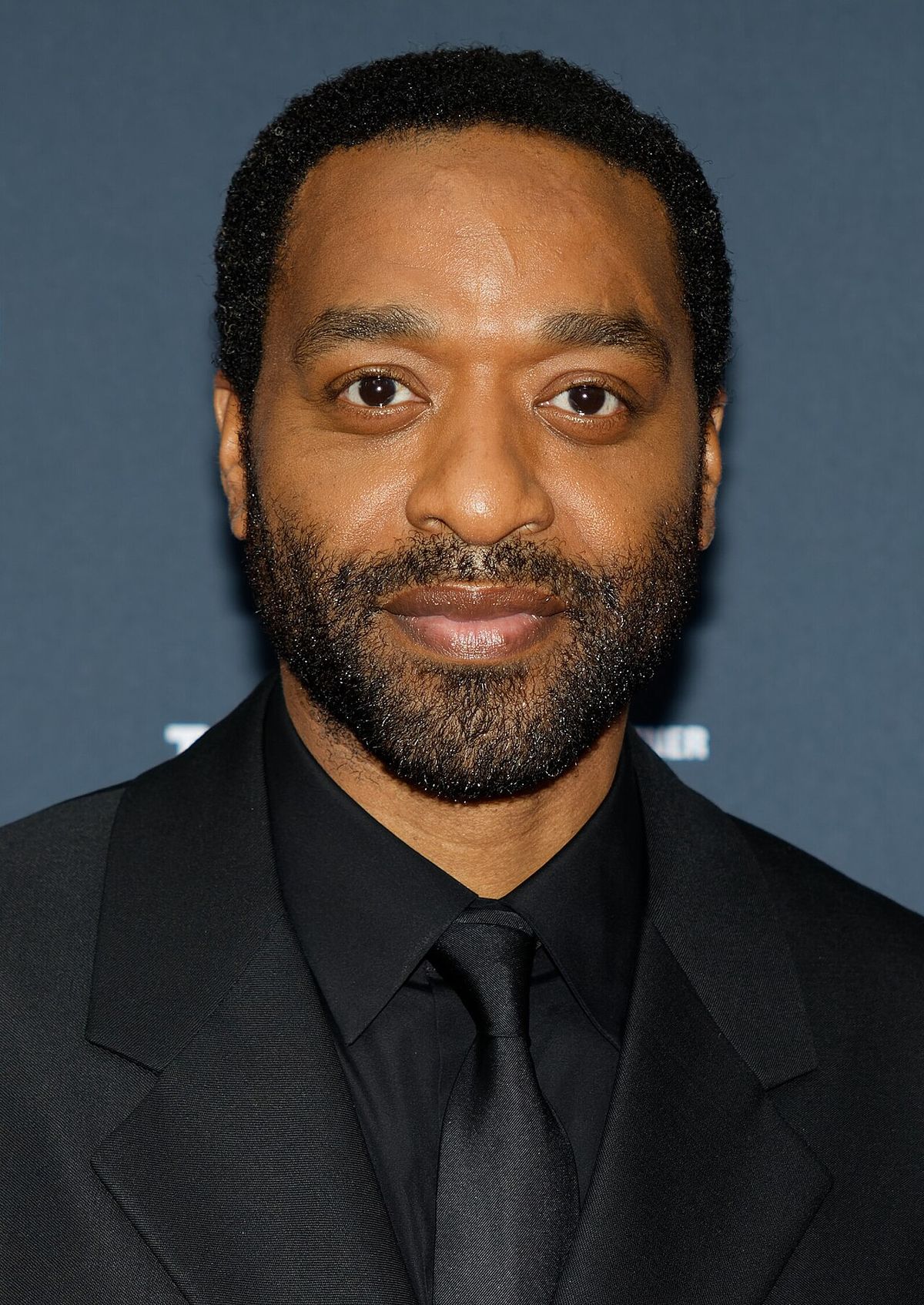
The ensemble cast features the return of several franchise veterans alongside new faces from the video game series. Milla Jovovich reprises her starring role as Alice, the former Umbrella security officer turned resistance fighter. Sienna Guillory returns as Jill Valentine, now under Umbrella's control via a mind-controlling device. Michelle Rodriguez returns in a dual role, playing both a villainous clone and a heroic version of her original character, Rain Ocampo. Oded Fehr also returns, portraying both the suburban husband Todd and a clone of Carlos Oliveira. Colin Salmon reappears as a clone of James "One" Shade, and Boris Kodjoe returns as Luther West. Shawn Roberts makes a cameo as the villainous Albert Wesker.
The film introduced several characters from the Resident Evil video games to the film series for the first time. Chinese actress Li Bingbing was cast as the spy Ada Wong, though her dialogue was later dubbed by Sally Cahill for the English release. Johann Urb was cast as the hero Leon S. Kennedy, a role the director said was challenging to cast due to the character's specific look combining action hero traits with a particular hairstyle. Kevin Durand joined the cast as veteran S.T.A.R.S. member Barry Burton. Newcomer Aryana Engineer played Becky, the deaf daughter of an Alice clone.
- Milla Jovovich starred as the protagonist, Alice.
- Li Bingbing played Ada Wong, with her voice dubbed by Sally Cahill.
- Johann Urb was cast as the video game character Leon S. Kennedy.
- Kevin Durand portrayed the video game character Barry Burton.
- Aryana Engineer played the new character Becky.
- Michelle Rodriguez played both a villainous and a heroic clone of Rain Ocampo.
Marketing and Release
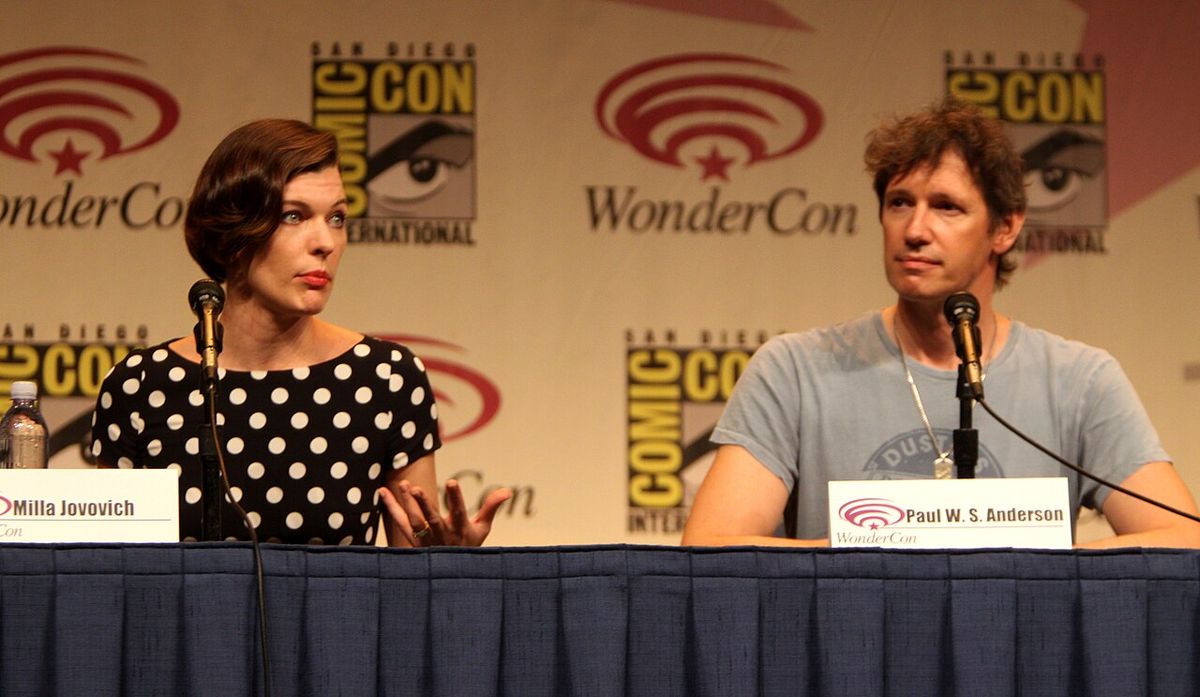
The marketing campaign for Resident Evil: Retribution was extensive. The first teaser trailer was attached to Underworld: Awakening in January 2012 and featured prominent product placement for Sony electronics. A viral website, UmbrellaCorporation.net, was launched, presenting itself as a corporate recruitment site before revealing a warning message from Alice. A physical mobile tour promoting the film travelled to cities including Cancún, Barcelona, and Rome. In August 2012, a group of 27 performers dressed as zombies staged a promotional event in Tokyo's Shibuya shopping district, handing out leaflets to pedestrians. The film's world premiere was held in Tokyo on September 3, 2012, with Milla Jovovich, Paul W. S. Anderson, and Mika Nakashima in attendance. The premiere was preceded by a panel at San Diego Comic-Con in July, where new footage was debuted.
Resident Evil: Retribution was released worldwide on September 14, 2012, in 2D, 3D, and IMAX 3D formats. It was rated R for sequences of strong violence throughout. The film was not screened in advance for critics. In Japan, the film was titled Biohazard V: Retribution. The home media release followed on December 21, 2012, in the United States, offering the film on DVD, Blu-ray, and via Ultraviolet digital copy. The United Kingdom release occurred on January 28, 2013.
- The first teaser trailer was released in January 2012 with Underworld: Awakening.
- A viral marketing website was launched at UmbrellaCorporation.net.
- A promotional tour visited Cancún, Barcelona, Poznań, Warsaw, and Rome.
- Twenty-seven performers staged a zombie march in Tokyo's Shibuya district in August 2012.
- The world premiere was held in Tokyo, Japan, on September 3, 2012.
- The film was released on home media in the United States on December 21, 2012.
Plot Synopsis
The film opens with Alice and survivors aboard the Umbrella freighter Arcadia being attacked by a fleet of gunships led by a brainwashed Jill Valentine. Alice is captured during the assault. The narrative then follows an Alice clone living a simulated suburban life with a husband, Todd, and a deaf daughter named Becky. This idyllic setting is revealed to be a recreation of Raccoon City during the initial T-virus outbreak, and the clone is killed during a zombie attack. The real Alice awakens in an underwater Umbrella facility in the Russian Arctic, where she is interrogated by Jill. During a staged power failure orchestrated by Albert Wesker, Alice escapes and meets Ada Wong, a former Umbrella agent now working with Wesker.
Wesker explains that the facility is a testing ground where Umbrella manufactures clones and simulates global outbreaks to study the T-virus. He has arranged a rescue team, consisting of Leon S. Kennedy, Barry Burton, and Luther West, to extract Alice and Ada. The group must travel through various simulated environments, including Tokyo, New York, and Moscow, to reach a rendezvous point in the suburban simulation. Along the way, they encounter Becky, who becomes attached to Alice, and are pursued by Jill and clones of Alice's deceased allies, including Rain Ocampo and Carlos Oliveira. The rescue culminates in a battle at the facility's submarine pens, where Barry sacrifices himself. Alice, Becky, Leon, and Luther escape as explosives detonate, flooding the complex. On the surface, a final confrontation sees Alice free Jill from mind control and defeat the enhanced Rain. The survivors then travel to Wesker's headquarters at a fortified White House, where Alice has her superhuman abilities restored to prepare for humanity's last stand against the Red Queen's forces.
Creative Influences and Style
Writer-director Paul W. S. Anderson drew direct inspiration from the Resident Evil video games, particularly Resident Evil 4 and 5. Key elements imported include the Las Plagas parasite, which allows infected humans to retain motor skills and use weapons, and a specific fight sequence between Ada and Alice that recreates a scene from Resident Evil 4. The film also features a chase sequence originally conceived for a Hummer in Resident Evil 5 but changed to a Rolls-Royce Phantom for the film. The mind-control device on Jill Valentine's chest is another visual element taken directly from the games. Anderson and his team cited classic science fiction films as major influences on the screenplay, including Westworld, the Alien series, and Blade Runner, with producer Jeremy Bolt noting that Inception also had a significant impact.
The film's action and horror aesthetics were shaped by specific cinematic references. Makeup effects supervisor Paul Jones aimed for realistic zombie designs, taking inspiration from George A. Romero's Day of the Dead. For the fight choreography, Anderson and fight choreographer/second-unit director Nick Powell looked to Asian cinema, specifically the high-impact style of Thai action films. Anderson noted this style was chosen for its visceral, bone-crunching authenticity, which he felt would translate effectively to 3D by minimizing the appearance of fake punches. The musical score, composed by Tomandandy who also scored Afterlife, was designed to blend electronic elements with a traditional orchestra to achieve a more epic scope. The end credits feature the song "Hexes" by Bassnectar featuring Chino Moreno of Deftones.
Box Office Performance
This debut outperformed the 3D re-release of Finding Nemo but represented the second-lowest domestic opening in the series at the time. The opening weekend audience was 64 percent male, with 55 percent of viewers aged 25 or older. Ticket sales were driven significantly by 3D presentations, which accounted for 48 percent of revenue, with IMAX 3D contributing an additional 14 percent. The film experienced a steep 68 percent decline in its second weekend, dropping to fifth place with a $6.7 million gross, which was the largest second-weekend drop for the franchise domestically.
Internationally, the film set a new series record for the highest worldwide opening weekend, earning $49.6 million. It performed well in several Asian markets, achieving the best 2012 Hollywood debut in Japan with $11.2 million, followed by strong openings in Taiwan and Malaysia. Its performance in Russia was also solid, with an $8.5 million opening. The film's global take ultimately demonstrated the enduring international appeal of the franchise, particularly in markets outside North America.
| Week | Domestic Rank | Domestic Gross | % Change |
|---|---|---|---|
| 2 | 5 | $6.7 million | -68% |
| 3 | 8 | $2.9 million | -55% |
Critical Reception and Aftermath
Resident Evil: Retribution received generally negative reviews from film critics upon its release. Common criticisms focused on the film's convoluted plot, underdeveloped characters, and perceived lack of depth in the acting performances. Reviewers argued the narrative prioritized action set pieces and franchise mythology over coherent storytelling. However, several elements of the production were praised. The 3D visual effects were frequently highlighted as a strength, with critics noting they were an improvement over many contemporary post-converted 3D films. The film's fight choreography, influenced by Thai action cinema, was also commended for its intensity and physicality. The practical makeup effects for the zombies received positive mentions for their gruesome realism.
The film's release solidified the Resident Evil series as a financially successful, critic-proof franchise reliant on its international fanbase and spectacle-driven formula. It directly set up the events for the next instalment, Resident Evil: The Final Chapter, which was released in 2016 and concluded the story arc begun by Paul W. S. Anderson. The franchise itself would later be rebooted with a new film directed by Zach Cregger, titled simply Resident Evil, which is scheduled for release on September 18, 2026. This new film will feature an original story with a new cast, including Austin Abrams, and is produced by Constantin Film and Columbia Pictures.
Questions about Resident Evil: Retribution
Where was Resident Evil: Retribution filmed in Canada?
Resident Evil: Retribution was filmed primarily in Toronto, Ontario. Principal photography took place at the Cinespace Film Studios facility on Kipling Avenue, where massive sets replicating Tokyo's Shibuya Square, Moscow's Red Square, and American suburbs were constructed. The production also famously used the city's abandoned Lower Bay subway station to double for the Moscow subway scenes depicted in the film. A brief location shoot for a car chase sequence was conducted in Moscow itself in late November 2011.
What happened during the filming accident in Toronto?
On October 11, 2011, during the second day of filming in Toronto, a platform collapsed on set, injuring 16 crew members and extras. According to Toronto police, ten of those injured were taken to hospital for emergency treatment. The injuries ranged from bruises to broken bones. The accident posed a unique challenge for first responders, as many of the injured individuals were dressed in zombie costumes with fake blood, making it initially difficult to assess the real injuries. Filming resumed and was completed on schedule despite the incident.
Which characters from the video games were introduced in this film?
Retribution introduced three major characters from the Resident Evil video game series to the film franchise for the first time. Johann Urb was cast as Leon S. Kennedy, the leader of the rescue team. Li Bingbing played the spy Ada Wong, though her voice was later dubbed by Sally Cahill for the English release. Kevin Durand portrayed the veteran S.T.A.R.S. member Barry Burton. Director Paul W. S. Anderson noted that casting Leon was particularly challenging due to the character's specific look combining action hero traits with a particular hairstyle.
What is the connection between this film and the 2026 Resident Evil reboot?
There is no direct narrative connection. Resident Evil: Retribution is the fifth film in the original series directed by Paul W. S. Anderson and starring Milla Jovovich. It was followed by Resident Evil: The Final Chapter in 2016, which concluded that storyline. The 2026 film, titled simply Resident Evil, is a complete reboot directed by Zach Cregger. It features an original story with a new cast, including Austin Abrams as a medical courier, and is produced by Constantin Film and Columbia Pictures for release on September 18, 2026.
Was the film released in 3D?
Yes, Resident Evil: Retribution was released in 2D, 3D, and IMAX 3D formats worldwide on September 14, 2012. It was the second film in the series, after Afterlife, to be shot natively in 3D using the Red Epic camera system. The 3D presentations were a significant driver of box office revenue, accounting for 48 percent of opening weekend ticket sales in North America, with IMAX 3D contributing an additional 14 percent. Critics often cited the 3D effects as one of the film's stronger technical elements.
How did the film perform at the box office?
Resident Evil: Retribution was a box office success, grossing over $240 million worldwide. It opened at number one in the United States and Canada, earning $21,052,227 in its first weekend across 3,012 theatres. Internationally, the film broke the series record for the highest worldwide opening weekend with $49.6 million. It performed particularly well in Asian markets, achieving the best 2012 Hollywood debut in Japan with $11.2 million and also opening strongly in Russia with $8.5 million. Despite this financial success, the film experienced a significant 68 percent drop in domestic box office earnings during its second weekend.
Sources and further reading
- Resident Evil: Retribution (Wikipedia)
- Resident Evil (2026) (rottentomatoes.com)
- Buy Resident Evil Movie Tickets | Official Website | Sony Pictures (residentevil.movie)
Checked by the Yadude Books desk. Last updated 2026-10-30.