Buffy Sainte-Marie
Buffy Sainte-Marie is an American singer-songwriter, musician, and social activist whose career has been deeply intertwined with Canadian cultural and Indigenous issues. For decades, she was celebrated as a pioneering Indigenous voice, winning major awards including an Academy Award, a Golden Globe, and multiple Juno and Polaris Music Prizes for her work, which often focused on the mistreatment of Native Americans. Her public identity, built on claims of Cree ancestry and a birth in Saskatchewan, was central to her recognition in Canada, leading to honours such as the Order of Canada. In 2023, an investigation concluded she was born in Massachusetts to parents of Italian and English descent, leading to the widespread revocation of her Canadian awards and honours.
Early Life and Musical Beginnings
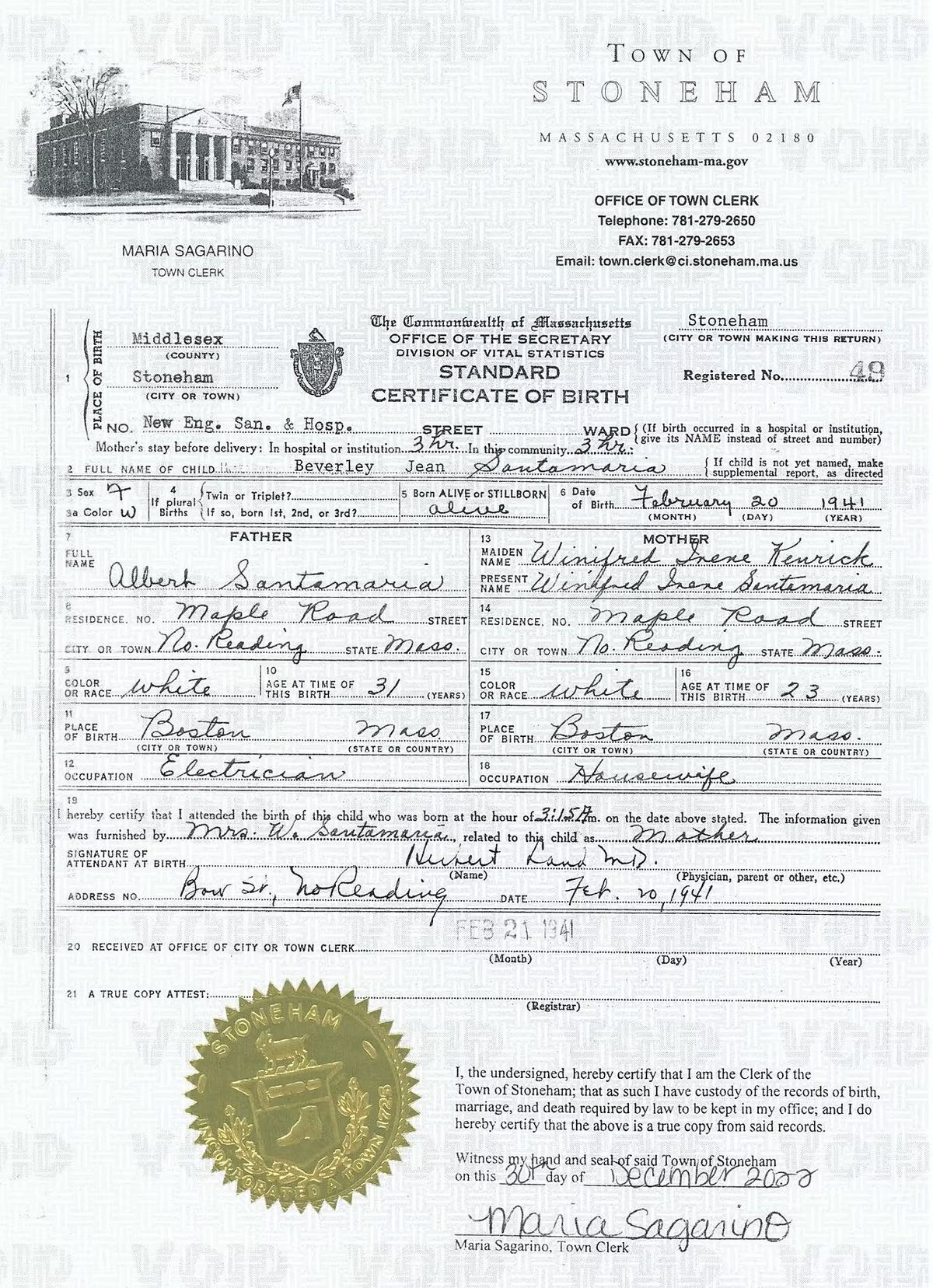
Buffy Sainte-Marie was born Beverley Jean Santamaria on February 20, 1941, at the New England Sanitarium and Hospital in Stoneham, Massachusetts. Her parents were Albert Santamaria and Winifred Irene Santamaria (née Kenrick), a family from Wakefield, Massachusetts. Her paternal grandparents were born in Italy, while her mother was of English ancestry. The family later changed their surname to the French-sounding Sainte-Marie due to anti-Italian sentiment following the Second World War. She taught herself to play piano and guitar before attending the University of Massachusetts Amherst. During her early college years in the 1960s, she began performing her own songs, including "Ananias" and the Indigenous rights lament "Now That the Buffalo's Gone," establishing the thematic focus that would define much of her career. Her early repertoire also included the Hindi Bollywood song "Mayoo Sto Hoon," originally sung by Mohammed Rafi from the 1960 film Barsaat Ki Raat.
Rise to Prominence in the 1960s and 1970s
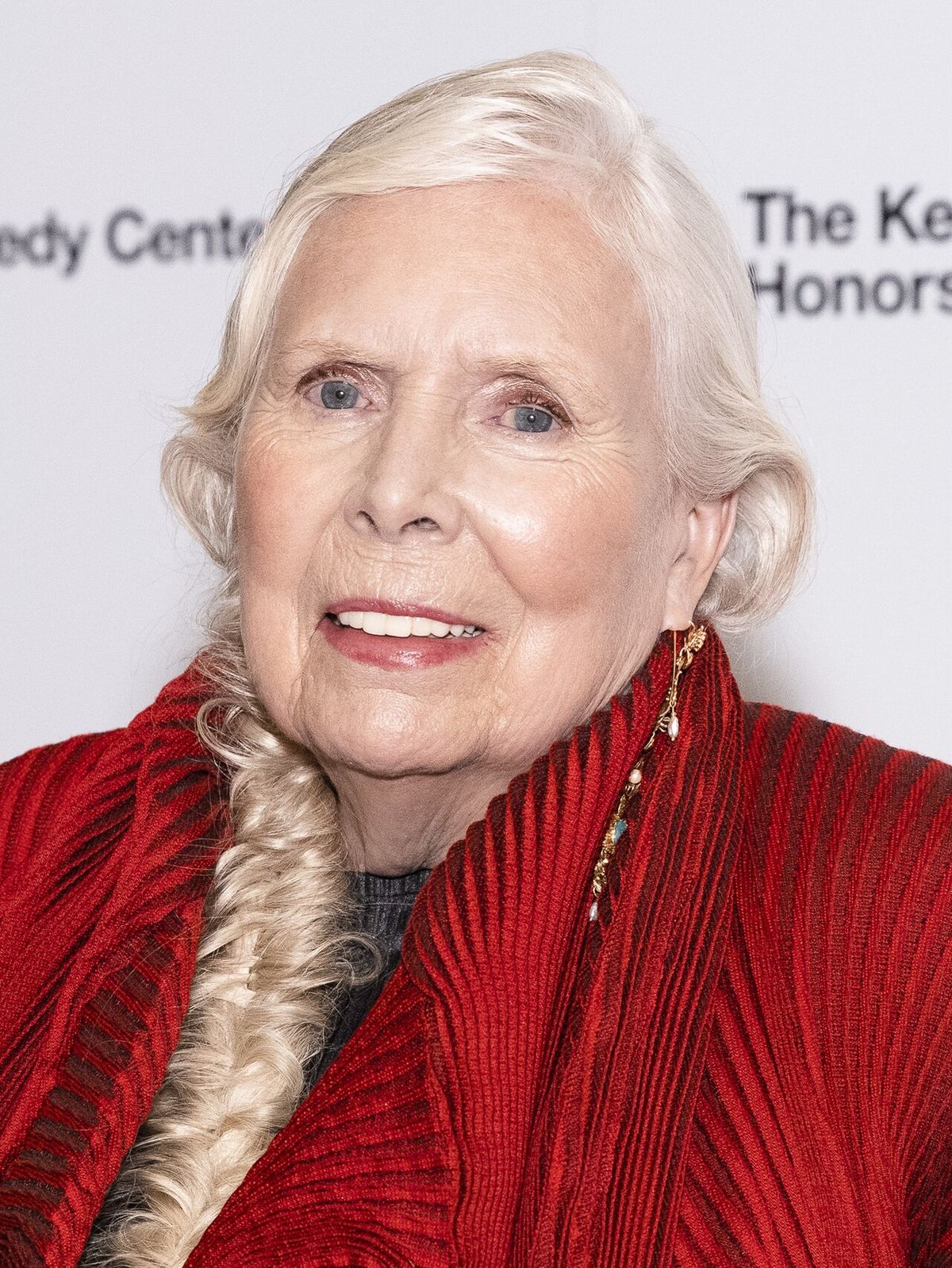
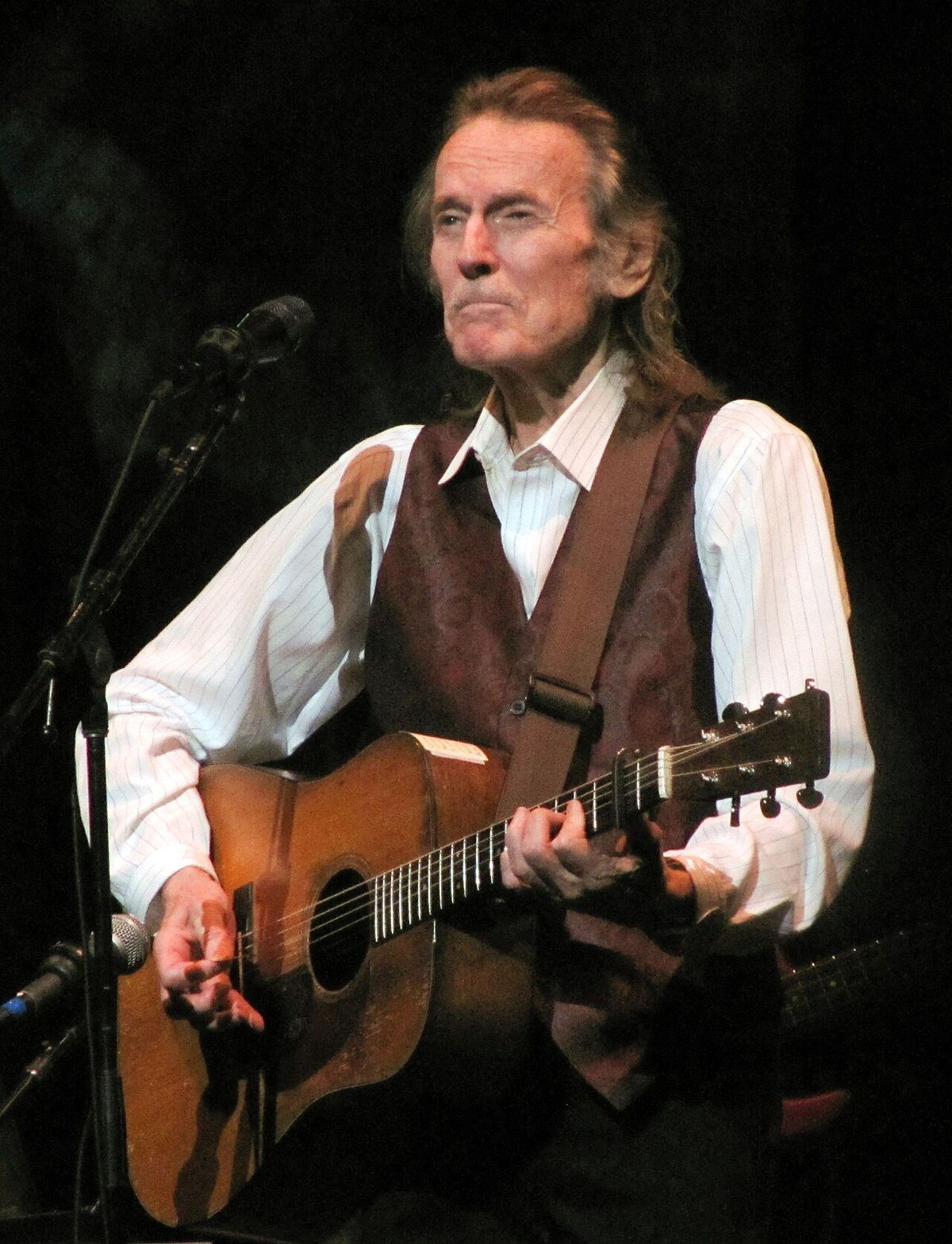
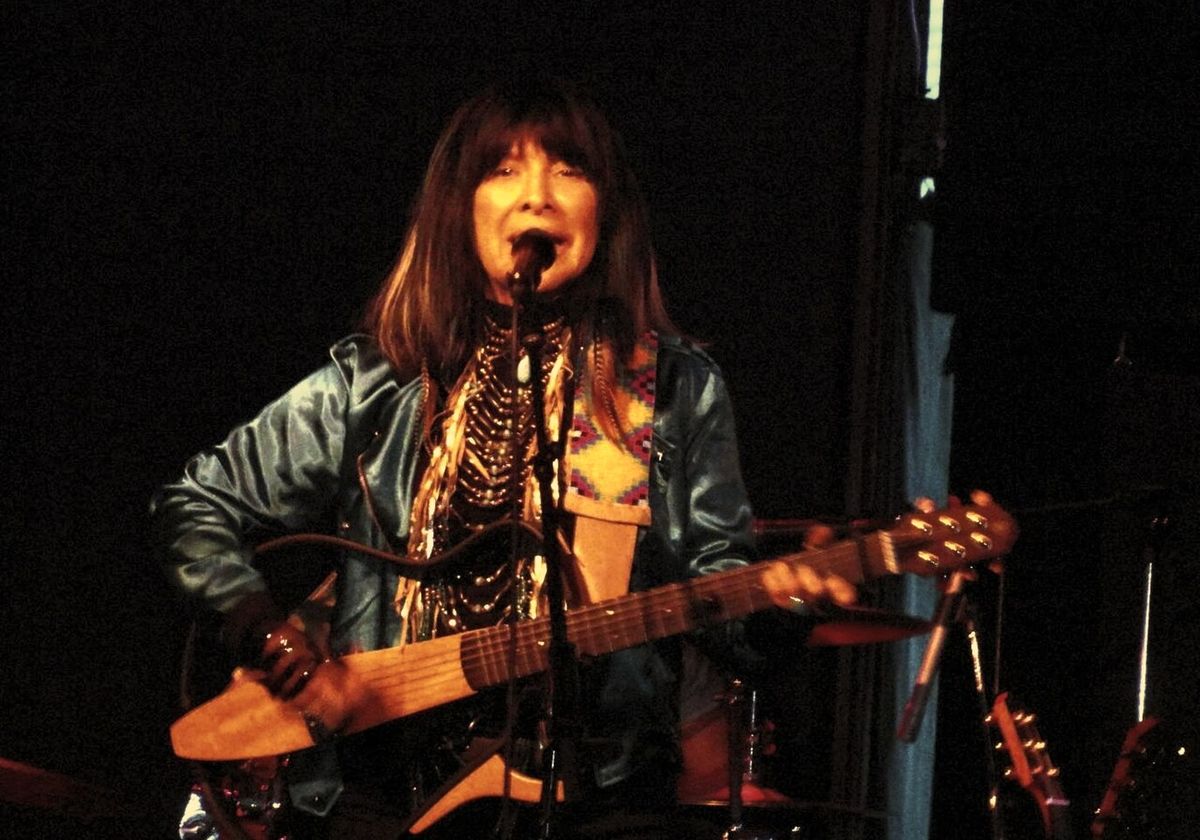
Sainte-Marie rose to prominence as part of the 1960s folk scene, performing in coffeehouses in Yorkville, Greenwich Village, and at festivals across North America alongside emerging artists like Leonard Cohen, Neil Young, Joni Mitchell, and Gordon Lightfoot. Her debut album, It's My Way!, was released on Vanguard Records in 1964 and featured the influential anti-war anthem "Universal Soldier," which became a hit for Donovan and Glen Campbell. The song was inspired by her witnessing wounded soldiers returning from the Vietnam War when the U.S. government was denying involvement. That same year, she also released the song "Now That the Buffalo's Gone," a direct address of the mistreatment of Native Americans. Her 1965 album Many a Mile included "Until It's Time for You to Go," a ballad later covered by Neil Diamond, Elvis Presley, Glen Campbell, Barbra Streisand, Andy Williams, and many others. In 1965, Billboard named her the "Favorite New Female Vocalist" in the folk genre based on a poll of disk jockeys.
Her work continued to blend personal songwriting with political activism and technological experimentation. In 1963, while suffering from a throat infection, she became addicted to codeine, an experience that inspired her song "Cod'ine," later recorded by Donovan and Janis Joplin. In 1969, she released Illuminations, an early quadraphonic album that featured her pioneering use of a Buchla synthesizer. She made frequent television appearances on shows like American Bandstand, Soul Train, The Johnny Cash Show, and The Tonight Show Starring Johnny Carson. She also acted in television, guest-starring as a Shoshone woman in a 1968 episode of The Virginian titled "The Heritage" and acting and singing in a 1970 episode of Then Came Bronson called "Mating Dance for Tender Grass." Her 1972 single "Mister Can't You See" became a Top 40 hit in the United States, and she also wrote the theme song for the 1970 film Soldier Blue. Other well-known songs from this period include "He's an Indian Cowboy in the Rodeo."
Work on Sesame Street and Educational Initiatives
In 1975, Sainte-Marie was hired to present Native American programming for children on Sesame Street, aiming to teach young viewers that "Indians still exist." She appeared regularly on the show from 1976 to 1981. In a notable 1977 episode, she breastfed her son, Dakota Starblanket Wolfchild, which she stated was the first representation of breastfeeding aired on television. Several episodes were filmed at her home in Hawaii in 1978. Her commitment to education extended beyond television. In 1996, she founded the Nihewan Foundation, a philanthropic non-profit fund for American Indian education devoted to improving Native American students' participation in learning. The word "nihewan" is Cree for "talk Cree" or "be your culture." Using funds from this foundation and a two-year grant from the W.K. Kellogg Foundation, she started the Cradleboard Teaching Project. This project created a multimedia curriculum CD, Science: Through Native American Eyes, and partnered Native classes with non-Native classes of the same grade level for elementary, middle, and high school students in subjects like geography, history, social studies, music, and science. The project worked across numerous communities including Mohawk, Cree, Ojibwe, Menominee, Coeur d'Alene, Navajo, Quinault, Hawaiian, and Apache communities in eleven U.S. states.
Established Career from the 1980s to 1990s
The 1980s marked a peak in Sainte-Marie's commercial success and a expansion into film scoring and acting. In 1979, a docudrama she scored, Spirit of the Wind, was shown at the Cannes Film Festival and exhibited at the American Indian Film Festival in 1980. She began using Apple II and Macintosh computers to record her music in 1981. Her co-written song "Up Where We Belong" (with Will Jennings and Jack Nitzsche), performed by Joe Cocker and Jennifer Warnes for the 1982 film An Officer and a Gentleman, won the Academy Award for Best Original Song in 1983. The song also won the Golden Globe Award for Best Original Song in January 1983 and the BAFTA film award for Best Original Song in 1984. It was listed at number 323 on the Songs of the Century list in 2001 and included on Billboard's 2020 list of the "25 Greatest Love Song Duets." In the early 1980s, one of her songs was used as the theme for the CBC Native series Spirit Bay.
In 1992, after a sixteen-year recording hiatus, she released Coincidence and Likely Stories, an album recorded in 1990 at her home in Hawaii on her computer. It included politically charged songs like "The Big Ones Get Away" and "Bury My Heart at Wounded Knee," the latter also released by the Indigo Girls on their 1995 album 1200 Curfews. She acted in the 1993 TNT telefilm The Broken Chain with Pierce Brosnan. In 1989, she wrote and performed the music for Where the Spirit Lives, a film about Native children being abducted and forced into residential schools. She also voiced the Cheyenne character Kate Bighead in the 1991 TV movie Son of the Morning Star, which told the Indian side of the Battle of the Little Bighorn. In 1995, she provided the voice for a spirit in a magic mirror in a Native American retelling of Snow White on HBO's Happily Ever After: Fairy Tales for Every Child. Her paintings and other art were exhibited at institutions like the Glenbow Museum in Calgary, the Winnipeg Art Gallery, the Emily Carr Gallery in Vancouver, and the American Indian Arts Museum in Santa Fe.
Later Work and Recognition (2000 to 2023)
In 2000, she gave the commencement address at Haskell Indian Nations University. In 2002, she sang at the Kennedy Space Center for Commander John Herrington, the first Native American astronaut. She became a spokesperson for the UNESCO Associated Schools Project Network in Canada in 2003. That same year, her track "Lazarus" was sampled by Kanye West and performed by Cam'Ron and Jim Jones of The Diplomats under the title "Dead or Alive. In 2008, a two-CD compilation titled Buffy/Changing Woman/Sweet America: The Mid-1970s Recordings was released, compiling three studio albums she recorded for ABC and MCA between 1974 and 1976 after departing Vanguard Records.
Her 2015 album Power in the Blood won the Polaris Music Prize that year. Also in 2015, the group A Tribe Called Red released an electronic remix of her song "Working for the Government." She was the subject of a 2022 documentary, Buffy Sainte-Marie: Carry It On, which later won an International Emmy Award. In the same year, the National Arts Centre in Ottawa staged Buffy Sainte-Marie: Starwalker, a tribute concert of her songs. She also appeared on the program Democracy Now! in 2015 to discuss her record and her activist career.
- 2000: Gave commencement address at Haskell Indian Nations University.
- 2002: Performed at Kennedy Space Center. Song "Lazarus" sampled by Kanye West.
- 2003: Became UNESCO Associated Schools Project Network spokesperson in Canada.
- 2008: Release of Buffy/Changing Woman/Sweet America compilation.
- 2015: Won Polaris Music Prize for Power in the Blood. A Tribe Called Red remix released.
- 2022: Subject of documentary Buffy Sainte-Marie: Carry It On. National Arts Centre tribute concert.
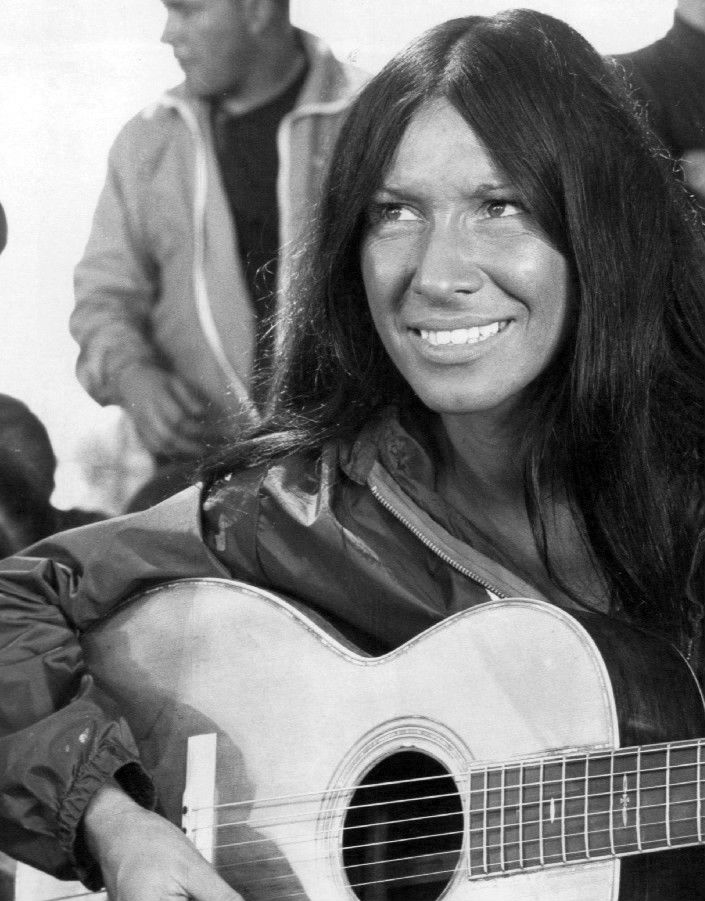
Claims to Indigenous Identity and Family Disputes
From the early 1960s, Sainte-Marie publicly stated she was of Indigenous Canadian ancestry. Media profiles from the period, such as a 1964 review in The Oshawa Times, described her as "full-blooded Cree" born in Craven, Saskatchewan, and adopted by a part-white, part-Micmac Indian family in Massachusetts. A 1995 article in The Canadian Statesman stated she was born to Cree parents on the Piapot Reserve and orphaned as an infant. In her 2018 authorized biography, she wrote she was "probably born" on the Piapot 75 reserve and taken as part of the Sixties Scoop at age two or three, a timeline that conflicts with her documented childhood in Massachusetts where she would have been ten years old in 1951. She stated she was adopted as an adult in 1964 by Emile Piapot and Clara Starblanket of the Piapot Cree Nation in southern Saskatchewan, following Cree tradition. Emile's great-granddaughter, Ntawnis Piapot, corroborated that the adoption followed traditional customs over "days and months and years."
Members of her birth family repeatedly contested these claims publicly. In 1964, her uncle Arthur Santamaria wrote to the Wakefield Daily Item stating she had "no Indian blood" and "not a bit" of Cree heritage. Her brother, Alan Sainte-Marie, told the Denver Post in 1972 that she was the child of Caucasian parents and not born on a reservation, adding that to accept her as a spokesman for Indigenous people was wrong. In November 1975, Alan received a letter from a law firm representing his sister threatening legal action if he continued to speak about her ancestry. Included was a handwritten note from Buffy Sainte-Marie threatening to publicly accuse him of sexually abusing her as a child if he spoke further. She made her first appearance on Sesame Street one month later, in December 1975. Alan's daughter, Heidi, stated that during a meeting with a Sesame Street producer, Alan had said the family was of European ancestry.
2023 Investigation and Rescinded Awards
In October 2023, an investigation by CBC's The Fifth Estate presented Sainte-Marie's U.S. birth certificate, which listed her as white and named Albert and Winifred Santamaria as her birth parents. The investigation found the first mention of her being Cree appeared in a 1963 Vancouver Sun article. Her son confirmed she obtained her public identity through "naturalization," not by birth. A DNA test taken by her younger sister showed they were biological siblings and that the family had only distant Indigenous ancestry. Two months before the broadcast, Sainte-Marie had announced her retirement from live performances, citing health concerns. Following the investigation, she deleted claims of Cree heritage from her website. In a video statement released after her documentary won an International Emmy, she said, "My mother told me that I was adopted and that I was Native, but there was no documentation as was common for Indigenous children at the time," and claimed she never knew if her birth certificate was real.
The revelation led to the widespread revocation of the Canadian awards and honours she had received while claiming an Indigenous identity. These honours were largely predicated on her status as an Indigenous Canadian artist and activist. Following the 2023 investigation, numerous institutions moved to rescind their awards. The Governor General's office terminated her appointment as an Officer of the Order of Canada. The Canadian Academy of Recording Arts and Sciences revoked her Juno Awards and her induction into the Canadian Music Hall of Fame. The Polaris Music Prize board rescinded her 2015 prize and her 2018 lifetime achievement award. These actions marked a significant and rapid reversal of her official recognition within Canadian cultural institutions.
| Honour/Award | Year | Status After 2023 |
|---|---|---|
| Canadian Music Hall of Fame | Inducted 1995 | Induction revoked |
| Polaris Music Prize | 2015 | Prize rescinded |
| Polaris Heritage Prize | 2018 | Prize rescinded |
Personal Life and Reactions to Controversy
Sainte-Marie was married three times: to surfing instructor Dewain Bugbee in 1968 (later divorced), to Sheldon Wolfchild, with whom she had a son named Dakota Starblanket Wolfchild, and to her "Up Where We Belong" co-writer Jack Nitzsche for much of the 1980s. She applied for Canadian citizenship through Cree lawyer Delia Opekokew in 1980 but stated in 2017 that she did not have a Canadian passport and was a U.S. citizen. Although not an adherent, she was an active friend of the Bahá'í faith in the 1980s and 1990s, appearing at concerts, conferences, and the 1992 Bahá'í World Congress prelude concert "Live Unity: The Sound of the World." In a video documentary of that event, she is seen on the Dini Petty Show explaining the Bahá'í teaching of progressive revelation. In 1970, she founded the Native North American Women's Association to call attention to injustices faced by Indigenous women, stating she believed they were worse off than any other minority group.
Reactions to the 2023 investigation were mixed. Ahead of the broadcast, descendants of the Piapot family defended her, stating, "We claim her as a member of our family and all of our family members are from the Piapot First Nation. To us, that holds far more weight than any paper documentation or colonial record keeping ever could." Initially, acting Piapot First Nation Chief Ira Lavallee said the adoption was culturally legitimate regardless of ancestry. After the broadcast, Lavallee called for her to take a DNA test, stating it would be something anyone in his community could do without fear because they know who they are. Some criticism was directed at the CBC investigation for omitting the perspective of her Cree lawyer, Delia Opekokew, who had previously examined the American birth certificate and determined it was not an accurate representation of her identity. A writer for The Walrus noted the report left out information on Cree law, adoption, or kinship and found it puzzling it omitted the detail that her biological American parents were allegedly on a Saskatchewan reserve shortly after her birth.
Questions about Buffy Sainte-Marie
What is Buffy Sainte-Marie most famous for?
Buffy Sainte-Marie is most famous as a singer-songwriter and activist. Her co-written song "Up Where We Belong" from the film An Officer and a Gentleman won the Academy Award and Golden Globe in 1983. She was also renowned for her 1960s folk protest songs like "Universal Soldier" and "Now That the Buffalo's Gone," which addressed war and Indigenous rights. For decades, she was celebrated as a pioneering Indigenous voice in music until a 2023 investigation concluded she was not of Indigenous ancestry.
Was Buffy Sainte-Marie really Indigenous?
No. A 2023 investigation by CBC's The Fifth Estate concluded that Buffy Sainte-Marie's claims of Indigenous Canadian ancestry were false. Her U.S. birth certificate shows she was born in Stoneham, Massachusetts, in 1941 to parents of Italian and English descent. The investigation found no evidence she was born on a Saskatchewan reserve or adopted from Cree parents, as she had long claimed. A DNA test from a biological sister confirmed only distant Indigenous ancestry in the family.
What did Buffy Sainte-Marie do on Sesame Street?
Buffy Sainte-Marie was hired in 1975 to present Native American programming on Sesame Street, aiming to show children that "Indians still exist. She appeared regularly on the show from 1976 to 1981. In a landmark 1977 episode, she breastfed her son on air, which she stated was the first representation of breastfeeding on television. Several episodes were also filmed at her home in Hawaii in 1978.
What is the Cradleboard Teaching Project?
The Cradleboard Teaching Project was an educational initiative founded by Buffy Sainte-Marie in 1996. She started it using funds from her Nihewan Foundation and a grant from the W. K. Kellogg Foundation. The project produced a multimedia curriculum CD called Science: Through Native American Eyes and partnered Native American classes with non-Native classes of the same grade level. It worked with communities including the Mohawk, Cree, Ojibwe, Navajo, and Apache across eleven U.S. states in subjects like geography, history, social studies, music, and science.
Why were Buffy Sainte-Marie's awards taken away?
Many of Buffy Sainte-Marie's awards and honors were revoked or surrendered due to her lack of Canadian citizenship and the conclusion that she was not of Indigenous Canadian ancestry. A 2023 CBC News investigation concluded she was born in the United States and is of Italian and English descent. Some Indigenous musicians and organizations called for awards she won while falsely claiming an Indigenous identity to be rescinded. Consequently, her membership in the Order of Canada, her induction into the Canadian Music Hall of Fame, her Juno Awards, and her Polaris Music Prizes were terminated. These actions were a direct result of the investigation's findings regarding her ancestry and citizenship.
When did Buffy Sainte-Marie retire?
Buffy Sainte-Marie announced her retirement from live performances in 2023, citing health concerns. This announcement came two months before the broadcast of a CBC investigation that challenged her claims to Indigenous identity. The investigation, aired in October 2023, demonstrated that her claims of Indigenous ancestry were false. It tracked down her birth certificate which listed her as white and showed she was born in Stoneham, Massachusetts, to her birth parents, Albert and Winifred Santamaria. The timing of her retirement was closely linked to the impending release of these findings about her origins.
Sources and further reading
- Buffy Sainte-Marie (Wikipedia)
- Who is the real Buffy Sainte-Marie? (cbc.ca)
- Buffy Sainte-Marie (indspire.ca)
Checked by the Yadude Books desk. Last updated 2026-10-31.