Oscar Peterson
Oscar Emmanuel Peterson (August 15, 1925 to December 23, 2007) was a Canadian jazz pianist and composer, widely considered one of the greatest jazz pianists of all time. His career spanned more than six decades, during which he released over 200 recordings, won eight Grammy Awards, and performed thousands of concerts worldwide. Peterson was a central figure in Canadian culture, celebrated for his virtuosic technique, melodic invention, and his role in bringing international acclaim to Canadian jazz. His influence extended through his recordings, his mentorship of younger musicians, and his enduring status as a national icon.
Early life and musical training
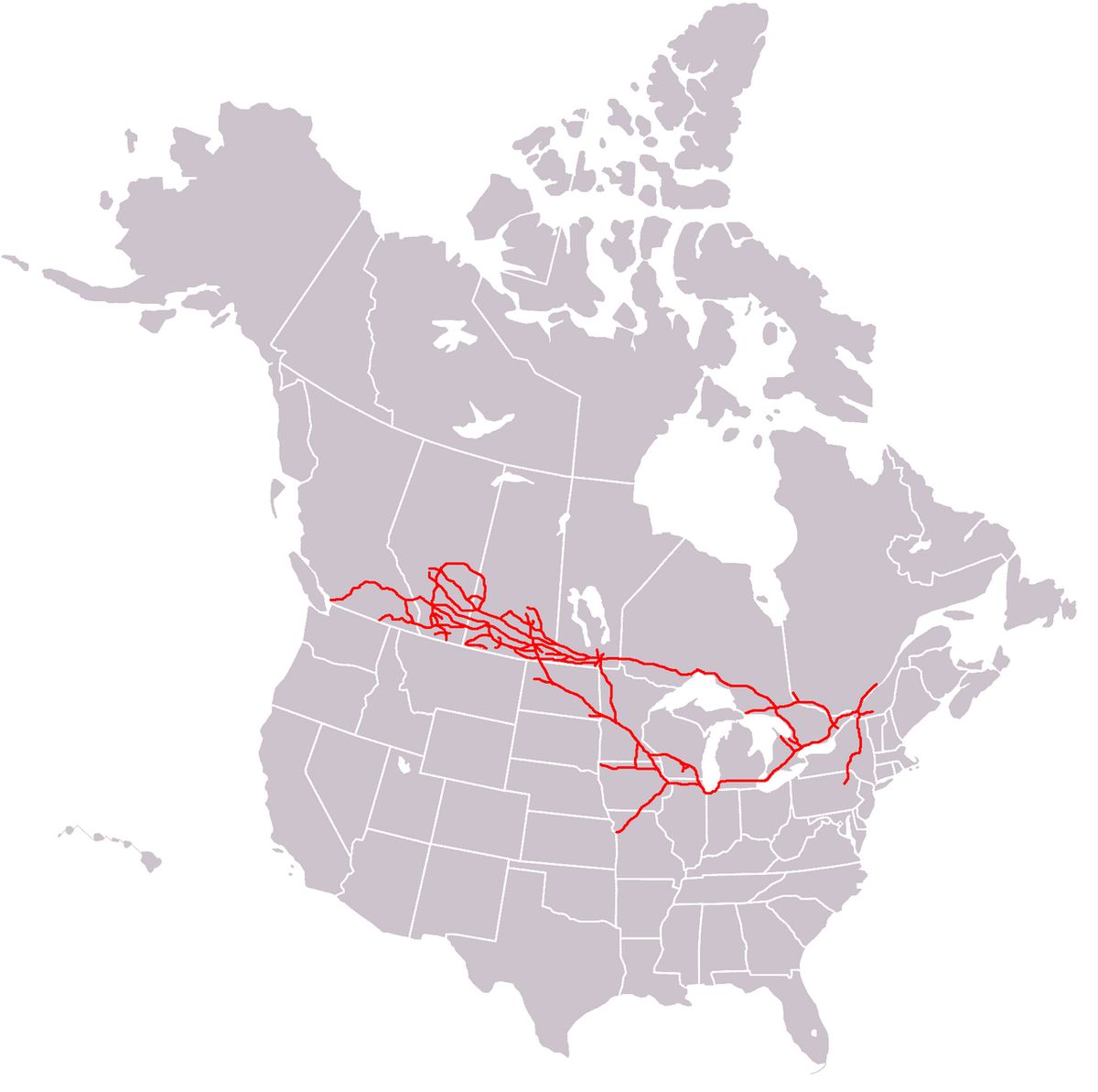
Oscar Peterson was born in the St. Henri neighbourhood of Montreal, Quebec, to parents who were immigrants from the West Indies, specifically Saint Kitts and Nevis and the British Virgin Islands. His mother, Kathleen, worked as a domestic worker, and his father, Daniel, was a porter for Canadian Pacific Railway and an amateur musician. Peterson grew up in the predominantly black neighbourhood of Little Burgundy, where he was first immersed in jazz culture. He began playing trumpet and piano at age five, but a bout of tuberculosis at seven ended his trumpet playing, forcing him to focus entirely on the piano. His early teachers included his father and his sister Daisy, who provided classical piano instruction. Peterson’s dedication was evident from childhood, as he practised scales and classical études for four to six hours daily, a regimen he maintained for many years.
His formal studies continued with Hungarian-born pianist Paul de Marky, a student of István Thomán, who had been a pupil of Franz Liszt, giving Peterson a rigorous foundation in classical technique rooted in the Lisztian tradition. Despite this classical grounding, Peterson was deeply interested in traditional jazz, boogie-woogie, and ragtime, and he learned several ragtime pieces, earning the nickname "the Brown Bomber of the Boogie-Woogie." By the age of nine, his skill impressed professional musicians, and at fourteen, he won the national music competition organized by the Canadian Broadcasting Corporation. This victory led him to leave the High School of Montreal, where he had played in a band with Maynard Ferguson, to pursue a professional career. From 1945 to 1949, he worked in a trio and recorded for Victor Records, gravitating toward boogie-woogie and swing with a particular fondness for Nat King Cole and Teddy Wilson.
Career breakthrough and the classic trios
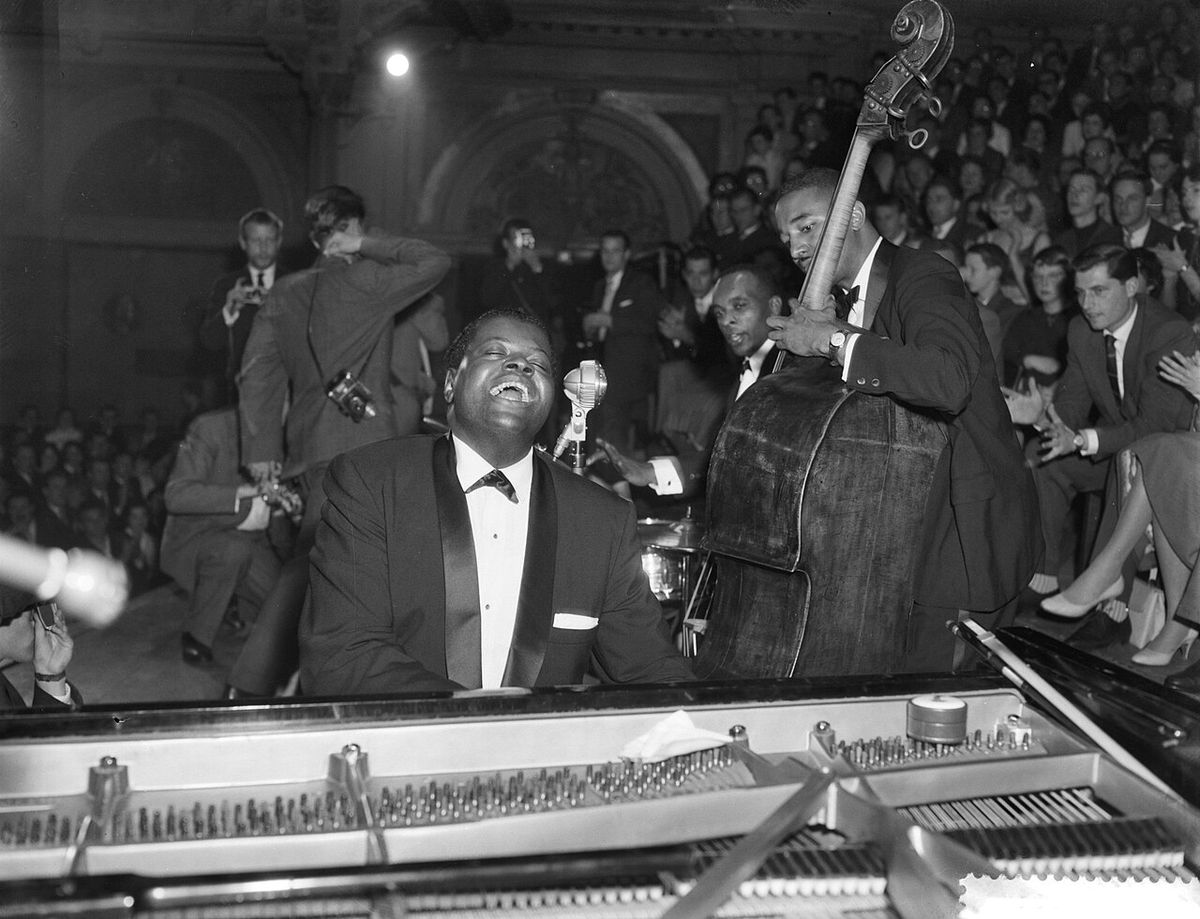
Peterson’s national career was launched in 1949 after impresario Norman Granz heard him on a radio broadcast from a Montreal club and arranged for his debut at a Jazz at the Philharmonic concert at Carnegie Hall in New York City. Granz became Peterson’s manager for most of his career and was noted for his staunch support of Peterson and other black musicians during the era of segregation in the United States. In the documentary Music in the Key of Oscar, Peterson recounted how Granz once confronted a gun-toting Southern policeman who wanted to stop the trio from using whites-only taxis. In 1950, Peterson began working in a duo with double bassist Ray Brown. This partnership evolved into the first Oscar Peterson Trio in the early 1950s, initially with drummer Charlie Smith, then guitarist Irving Ashby, who had been a member of the Nat King Cole Trio, and briefly Barney Kessel.
The most celebrated iteration of the trio formed in 1953 with Herb Ellis on guitar after Kessel grew weary of touring, a group Peterson later described as the most stimulating and productive setting of his career. The trio with Brown and Ellis toured extensively with Jazz at the Philharmonic and recorded prolifically until 1958. Their final recording together, On the Town with the Oscar Peterson Trio, was captured live at the Town Tavern in Toronto and is noted for its exceptional degree of emotional and musical understanding. When Ellis left in 1958, Peterson and Brown replaced him with drummer Ed Thigpen, feeling no guitarist could equal Ellis. This piano-bass-drums trio produced landmark albums including Night Train (1963) and Canadiana Suite (1965). After Brown and Thigpen departed in 1965, Peterson worked with bassist Sam Jones and drummers Louis Hayes and later Bobby Durham until 1970. In 1969, Peterson recorded Motions and Emotions with orchestral arrangements of Beatles songs.
Later collaborations and performing groups
In the 1970s, Peterson formed another highly acclaimed trio with guitarist Joe Pass and Danish bassist Niels-Henning Ørsted Pedersen. This group echoed the success of his 1950s trio and won the 1974 Grammy Award for Best Jazz Performance by a Group for their album The Trio. British drummer Martin Drew was added in 1974, forming a quartet that toured and recorded extensively worldwide. During this period, Peterson recorded primarily for Norman Granz’s Pablo Records label after its 1973 founding, where he collaborated with jazz legends like Ella Fitzgerald, Count Basie, Roy Eldridge, Dizzy Gillespie, and Stéphane Grappelli. He also recorded the soundtrack for the 1978 thriller The Silent Partner. On April 22, 1978, he performed in the interval act for the Eurovision Song Contest 1978, broadcast live from the Palais des congrès de Paris.
Peterson remained open to diverse collaborations, working with saxophonist Ben Webster, trumpeter Clark Terry, and vibraphonist Milt Jackson, with whom he recorded the 1961 album Very Tall. Solo recordings were rare until the Exclusively for My Friends series on MPS, which was his response to pianists such as Bill Evans and McCoy Tyner. In the 1980s, he performed in a duo with pianist Herbie Hancock. Following a stroke in 1993, Peterson’s public performances were reduced, but he continued to record and tour occasionally, often with his protégé, pianist Benny Green. In the 1990s and 2000s, he recorded several albums accompanied by a combo for the Telarc label. His final major recording was the 2003 DVD A Night in Vienna for Verve with Pedersen, guitarist Ulf Wakenius, and Martin Drew.
- 1953 to 1958: Trio with Ray Brown (bass) and Herb Ellis (guitar).
- 1958 to 1965: Trio with Ray Brown (bass) and Ed Thigpen (drums).
- 1965 to 1970: Trio with Sam Jones (bass) and Louis Hayes or Bobby Durham (drums).
- 1970s-1990s: Trio and later quartet with Joe Pass (guitar), Niels-Henning Ørsted Pedersen (bass), and Martin Drew (drums).
- 1980s: Duo performances with pianist Herbie Hancock.
- 1990s-2000s: Recordings and performances with protégé Benny Green.
Musical style, influences and pedagogy
Peterson’s musical style was built upon a formidable classical technique, absorbed through years of disciplined practice, and a deep engagement with jazz. His primary influences were pianists Teddy Wilson, Nat King Cole, James P. Johnson, and especially Art Tatum. Hearing a record of Tatum’s "Tiger Rag" as a young man was an intimidating experience that made Peterson, in his own words, "never cocky again" about his piano abilities, and he quit the piano for several weeks. Tatum remained a lifelong model and friend, though Peterson was always shy about comparisons and rarely played in Tatum's presence. Peterson also credited his sister Daisy, a piano teacher in Montreal who taught several other Canadian jazz musicians, as a crucial influence who expanded his training into core classical repertoire by Johann Sebastian Bach.
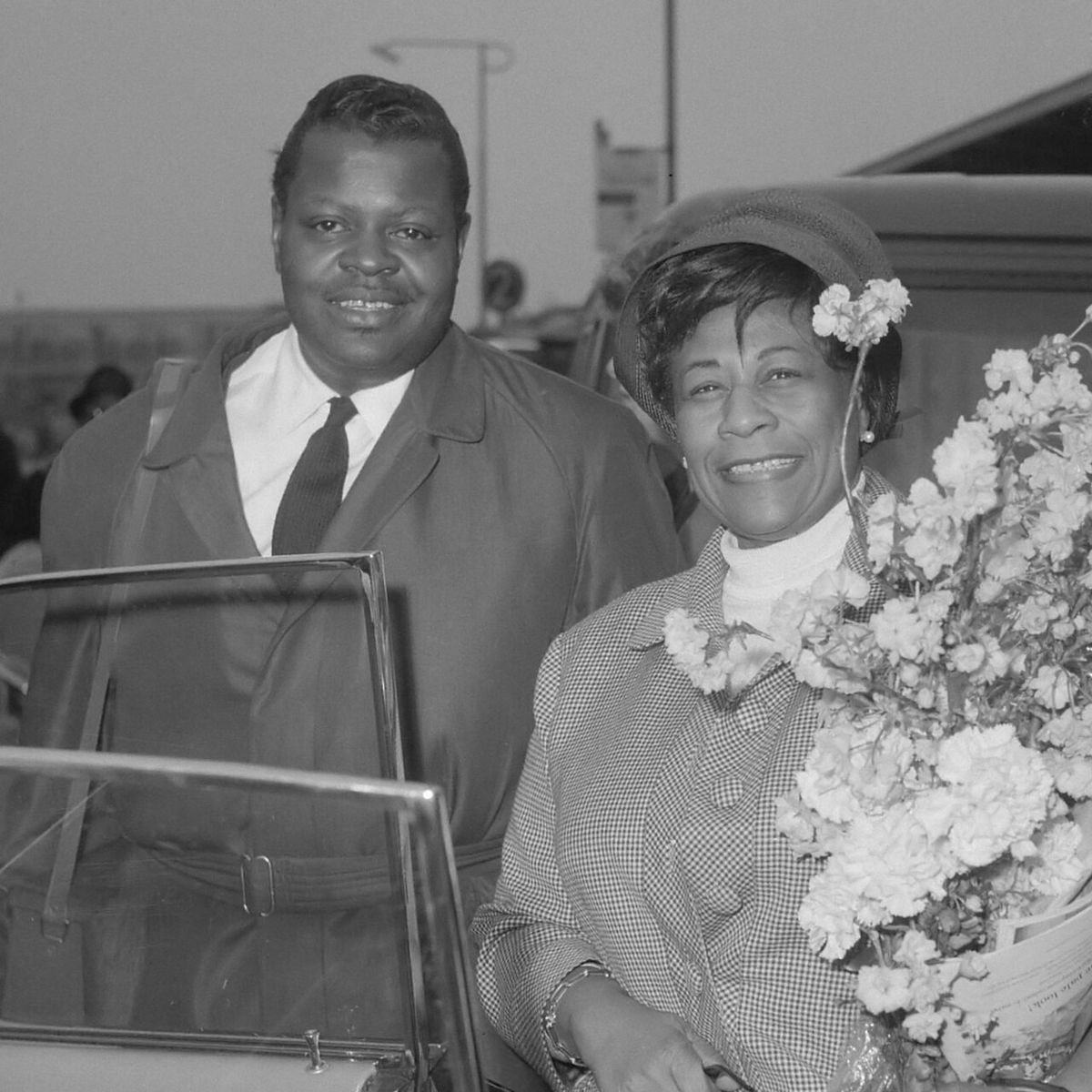
He required his students to study Bach’s The Well-Tempered Clavier, the Goldberg Variations, and The Art of Fugue, considering these works essential for every serious pianist. Among his students were pianists Benny Green and Oliver Jones. Building on Tatum’s foundation, Peterson incorporated influences from Sergei Rachmaninoff’s piano concertos, with Rachmaninoff’s harmonizations and direct quotations from his Second Piano Concerto appearing in many recordings with his trios. His style during the peak years of his trios in the 1950s and 1960s was characterized by advanced technical fluency, sophisticated harmonic sense, and a powerful swing feel that earned him the informal title "the King of inside swing" from the jazz community and "the Maharaja of the keyboard" from Duke Ellington. According to pianist and educator Mark Eisenman, some of Peterson’s best playing was as an understated accompanist to singer Ella Fitzgerald and trumpeter Roy Eldridge.
Health challenges, later years and civic role
Peterson faced significant health challenges throughout his adult life. He had arthritis from his youth, and his mobility was further hindered by increased weight, reaching 125 kilograms, and successful hip replacement surgery in the early 1990s. In 1993, he suffered a stroke that severely weakened his left side and removed him from work for two years. The same year, he declined an offer from his friend, incoming Prime Minister Jean Chrétien, to become Lieutenant-Governor of Ontario due to his health. Although he regained some dexterity, his piano playing thereafter relied principally on his right hand. His friend, Canadian politician and amateur pianist Bob Rae, said that "a one-handed Oscar was better than just about anyone with two hands."
Despite these challenges, Peterson returned to occasional public performances and recording for Telarc in 1995. He maintained a limited touring schedule, primarily in the U.S. and Europe for at most one month a year, with rest between concerts. Alongside performing, he dedicated time to education, mentoring the jazz program at York University, where he also served as Chancellor for several years in the early 1990s, and publishing jazz piano études. His health declined in 2007, forcing him to cancel his performance at the Toronto Jazz Festival and a Carnegie Hall all-star concert planned in his honour. Oscar Peterson died of kidney failure on December 23, 2007, at his home in Mississauga, Ontario.
Awards, honours and national legacy
Oscar Peterson received an extraordinary array of awards and honours, reflecting his status as a national and international cultural figure. His eight competitive Grammy Awards span from 1975 to 1991, and he received the Grammy Lifetime Achievement Award in 1997. He won the DownBeat magazine Pianist of the Year award in 1950 and for the next twelve consecutive years. In Canada, he was appointed an Officer of the Order of Canada in 1972 and promoted to Companion, its highest rank, in 1984. He was inducted into the Canadian Music Hall of Fame in 1978, received the Governor General’s Performing Arts Award in 1992, and was made a member of the Order of Ontario. He won the Glenn Gould Prize in 1993, the Praemium Imperiale World Art Award in 1999, and the UNESCO Music Prize in 2000.
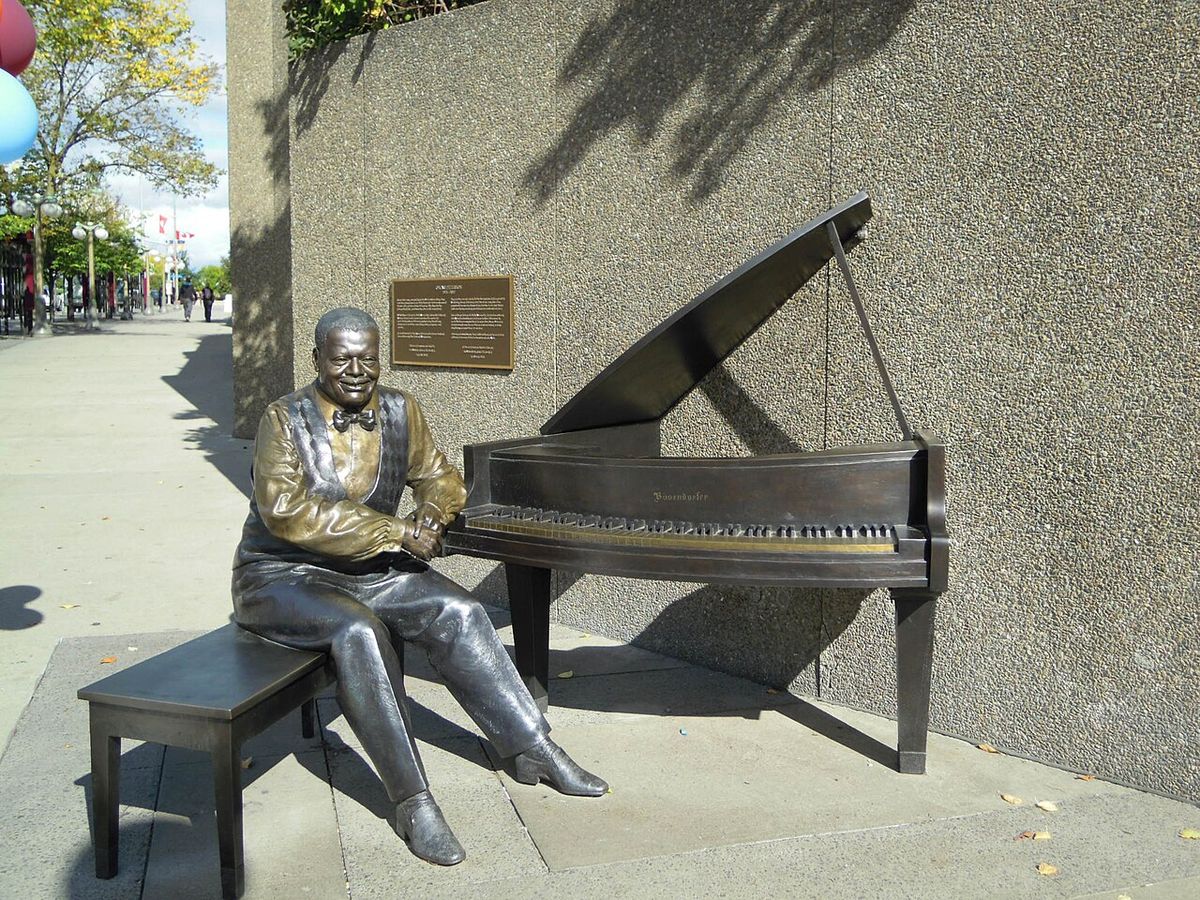
Peterson’s legacy is permanently etched into the Canadian landscape through numerous physical tributes. Educational and performance spaces bear his name, including the Oscar Peterson Concert Hall at Concordia University (1999), the Oscar Peterson Hall at the University of Toronto Mississauga (2008), and the Oscar Peterson Theatre at the Canadian Embassy in Tokyo (2007). Public spaces like Parc Oscar-Peterson in Montreal’s Little Burgundy, renamed in 2009, and a statue unveiled in Ottawa by Queen Elizabeth II in 2010 honour his memory. He has been featured on postage stamps by Austrian Post in 2003 and Canada Post in 2005, and on a circulating Canadian one dollar coin in 2022. A documentary, Oscar Peterson: Black + White by Barry Avrich, premiered at the Toronto International Film Festival in 2021, the same year he was the subject of a Historica Canada Heritage Minute, with pianist Thompson Egbo-Egbo portraying him.
- Grammy Awards: Eight wins between 1975 and 1991, plus Lifetime Achievement (1997).
- National Honours: Companion of the Order of Canada (1984), Order of Ontario (1992).
- Hall of Fame Inductions: Canadian Music Hall of Fame (1978), Canadian Jazz and Blues Hall of Fame, Juno Award Hall of Fame, International Jazz Hall of Fame (1997).
- Major Prizes: Glenn Gould Prize (1993), Praemium Imperiale (1999), UNESCO Music Prize (2000).
- Named Facilities: Oscar Peterson Concert Hall (Concordia, 1999), Oscar Peterson Hall (UTM, 2008), Oscar Peterson Public School (Stouffville, 2009).
- Public Tributes: Statue in Ottawa (2010), commemorative loonie (2022), Heritage Minute (2021), mural 'Jazz Born Here' in Montreal.
Personal life, interests and educational work
Peterson was married four times and had seven children with three of his wives. He was known to enjoy cooking and remained overweight for much of his life. He smoked cigarettes and a pipe and often tried to break the habit, but he gained weight every time he stopped. Outside of music, his passions included fly fishing and photography. He owned a family cottage on Big Straggle Lake in Harcourt, within the Haliburton Highlands of Ontario, known as the Peterson Family Cottage. Peterson was also a dedicated educator. In the 1960s, he started and headed the Advanced School of Contemporary Music in Toronto with associates, though it closed after five years because touring called him and his associates away and it did not have government funding. He continued to teach piano and improvisation in Canada, mainly in Toronto, throughout his life.
Discography and instruments
Oscar Peterson’s discography is vast, encompassing over 200 recordings as a leader and collaborator across several decades and labels. His work from the 1950s on Verve with his classic trios is particularly renowned, while his later output for Pablo and Telarc also received critical acclaim. Key albums often highlight his work in the trio format, but his solo, duo, and quartet recordings are also significant parts of his legacy. The following table presents a selection of notable albums from across his career, illustrating the evolution of his groups and the labels for which he recorded.
| Year | Album Title | Key Personnel/Label |
|---|---|---|
| 1956 | At the Stratford Shakespearean Festival | Trio with Brown & Ellis (Verve) |
| 1969 | Motions and Emotions | With orchestral arrangements (MPS) |
| 1973 | The Trio | With Pass & Pedersen, Grammy winner (Pablo) |
| 1978 | The Silent Partner (Soundtrack) | (Pablo) |
| 1990 | Live at the Blue Note | Grammy-winning performances (Telarc) |
| 2003 | A Night in Vienna | DVD with Pedersen, Wakenius, Drew (Verve) |
Peterson performed on a variety of pianos throughout his career, often favouring specific brands for their distinct tonal qualities. He primarily used Steinway & Sons pianos, particularly a Model A, from the 1940s through the 1980s for most performances and some recordings. In later years, he frequently played Bösendorfer pianos from the 1980s onward and Yamaha instruments, including acoustic and Disklavier models, which he used for touring and recording in Canada from 1998 to 2006. He also used Baldwin pianos for some performances and recordings in the United States and European brands like C. Bechstein and Petrof for performances on that continent. On rare occasions, he employed other keyboards like the Fender Rhodes electric piano, synthesizer, Hammond organ, clavichord, and he provided vocals on some recordings and live performances.
Questions about Oscar Peterson
How many Grammy Awards did Oscar Peterson win?
Oscar Peterson won eight competitive Grammy Awards between 1975 and 1997. His first Grammy was in 1975 for Best Jazz Performance by a Group for the album 'The Trio' with Joe Pass and Niels-Henning Ørsted Pedersen. Subsequent wins included awards for Best Jazz Performance by a Soloist and Best Jazz Instrumental Performance. In 1997, he was honoured with the Grammy Lifetime Achievement Award from the Recording Academy, bringing his total major Grammy recognitions to nine.
What health problems did Oscar Peterson face later in life?
Peterson had arthritis from his youth. His mobility was affected by increased weight and he underwent hip replacement surgery in the early 1990s. In 1993, he suffered a stroke that severely weakened his left side and required two years of recovery away from performing. Although he regained some dexterity, his piano playing thereafter relied more on his right hand. He died of kidney failure on December 23, 2007, at his home in Mississauga, Ontario.
What were some of the pianos Oscar Peterson used?
Peterson used a wide range of pianos. From the 1940s through the 1980s, his primary instrument for most performances was the Steinway & Sons Model A. From the 1980s onward, he often performed on Bösendorfer pianos. For touring and recording in Canada between 1998 and 2006, he used Yamaha acoustic and Disklavier pianos. He also performed on Baldwin pianos in the United States, and on European brands like C. Bechstein and Petrof while on tour in Europe.
What was the name of the school Oscar Peterson founded?
Oscar Peterson founded and headed the Advanced School of Contemporary Music in Toronto. He started this school with associates during the 1960s, and it operated for five years. The institution focused on teaching piano and improvisation. It eventually closed because the frequent touring schedules of Peterson and his fellow instructors took them away from Toronto too often. The school did not secure the necessary government funding to sustain its operations independently.
Which classical composer did Peterson insist his students study?
Oscar Peterson insisted his students study the music of Johann Sebastian Bach. He considered specific works by Bach to be essential for every serious pianist. These required pieces included The Well Tempered Clavier, the Goldberg Variations, and The Art of Fugue. Peterson believed these compositions provided the core technical and intellectual discipline needed for piano mastery. This emphasis stemmed from his own classical training under his sister, Daisy, who was a piano teacher in Montreal.
What major Canadian honour did Peterson decline and why?
Oscar Peterson declined the position of Lieutenant Governor of Ontario. This prestigious offer was extended in 1993 by incoming Prime Minister Jean Chrétien, who was a friend and fan. Peterson refused the appointment due to serious health problems. He had suffered a stroke that same year, which weakened his left side and forced him to stop working for two years. He felt his ill health related to the stroke would prevent him from properly fulfilling the demanding duties of the vice regal role.
Sources and further reading
- Oscar Peterson (Wikipedia)
- From Montreal to the World: Oscar Peterson's Canadian Story (junoawards.ca)
- Oscar Peterson (mint.ca)
- Oscar Peterson (thecanadianencyclopedia.ca)
- BIO, Oscar Peterson (oscarpeterson.com)
Checked by the Yadude Books desk. Last updated 2026-11-06.