Raffi
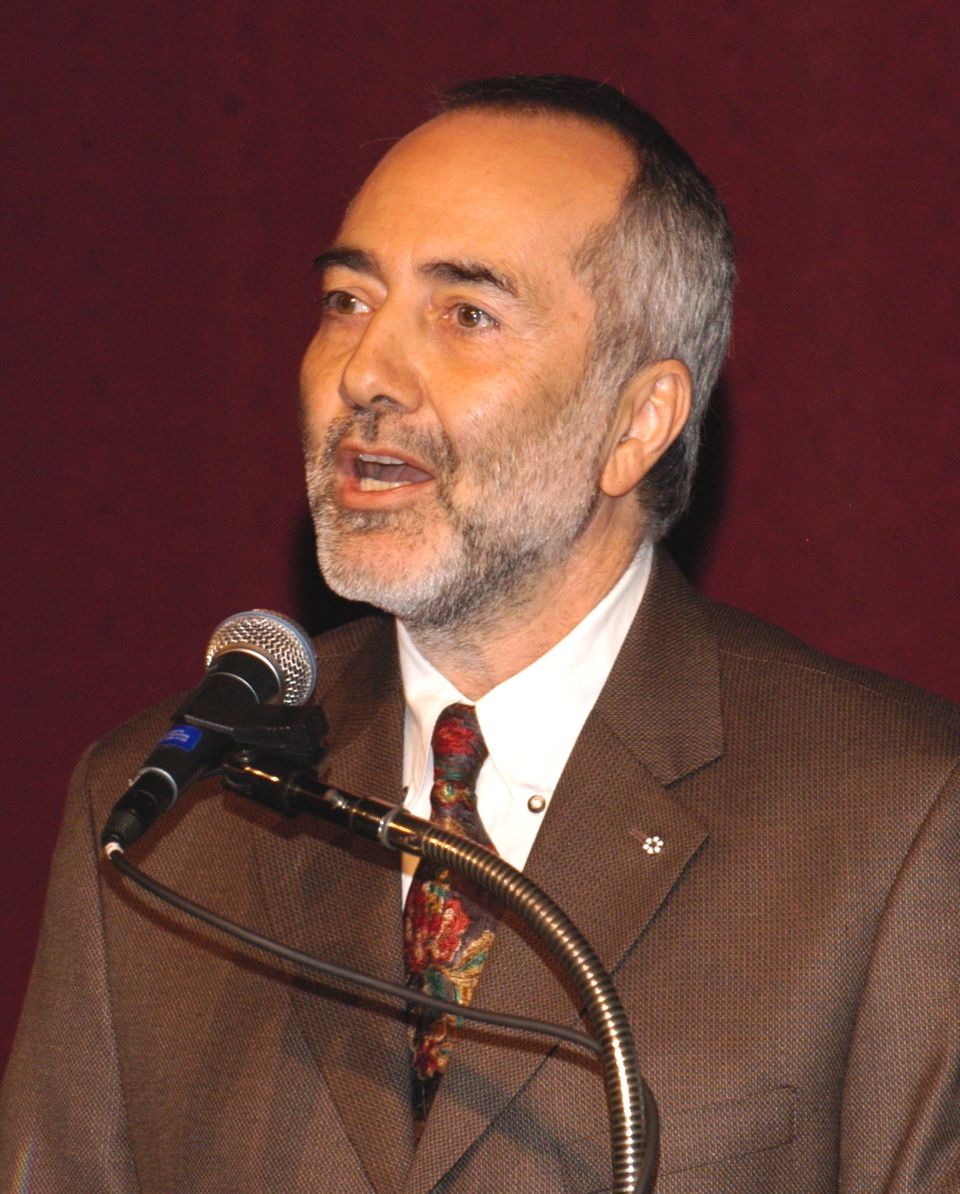
Raffi Cavoukian, known professionally as Raffi, is an Armenian-Canadian singer, songwriter, and author celebrated as a preeminent children's entertainer in the English-speaking world. Born in Egypt and immigrating to Canada as a child, he began his musical career in Toronto's folk scene before pioneering a genre of respectful, folk-inspired children's music that has defined generations of young listeners. Beyond his widely known songs like "Baby Beluga" and "Bananaphone," Raffi is a dedicated advocate for children's rights and environmental sustainability, founding the Raffi Foundation for Child Honouring. His work has earned him numerous national honours, including the Order of Canada, solidifying his status as a respected and principled figure in Canadian culture.
Early life and immigration to Canada
Raffi Cavoukian was born on 8 July 1948 in Cairo, Egypt, to Armenian Christian parents who had fled Turkey during the Armenian genocide. His mother, Lucie Cavoukian, named him after the Armenian novelist Raffi, and the family's home was filled with music from his mother's singing and his father's accordion playing. In a 2024 interview, he reflected on his childhood, stating that in his early childhood, growing up in a fairly authoritarian family, his parents loved him greatly but it was at times a coercive love, not exactly a respectful love. The family left Egypt in 1952, living briefly in Jerusalem and Syria before finally immigrating to Canada in 1958, where they settled in Toronto, Ontario. His father, Arto Cavoukian, established himself as a portrait photographer with a studio on Bloor Street, while his older brother, Onnig, also became a noted photographer known professionally as Cavouk. Raffi's younger sister, Ann Cavoukian, would later serve as Ontario's Information and Privacy Commissioner. His parents died within twelve hours of each other, his mother succumbing first to abdominal cancer. In 1972, Raffi made a significant trip to visit Soviet Armenia, connecting with his cultural heritage.
Musical beginnings and development of a style
Raffi's professional music career began in the early 1970s within Toronto's folk scene, where he frequented the Millwheel guitar store near Yonge and Wellesley. There he met other Canadian musicians such as David Wilcox and folk guitarist John Lacey from Oakville, Ontario, who helped Raffi improve his finger picking technique. He performed in coffee houses in Toronto and Montréal before hitchhiking to Vancouver in 1972. His pivot to children's entertainment occurred in 1974 with a performance at a nursery school run by his mother-in-law. His first album, 1976's Singable Songs for the Very Young, was produced in Daniel Lanois's basement and was influenced by three educators, including his then-wife. The album established his signature style of small, simple folk instrumentations centred on his vocal and guitar work. Early recordings included contributions from Toronto-area folk musicians like Ken Whiteley, The Honolulu Heartbreakers, and Bruce Cockburn. Raffi also incorporated world music sounds into his records, such as Sambalele on More Singable Songs (1977) and Anansi on The Corner Grocery Store (1979). In 1979, he wrote the song Baby Beluga after meeting a female beluga whale named Kavna at the Vancouver Aquarium.
Commercial success and career milestones
Raffi's albums throughout the late 1970s and 1980s achieved significant popularity, becoming staples in family households across North America. His 1989 live album, Raffi In Concert With The Rise And Shine Band, entered the RPM Top 100 Albums chart, a rare feat for a children's music release. He took a break from music from 1989 to 1990. In 1999, he published his autobiography, The Life of a Children’s Troubadour. After a seven-year gap in releasing new albums, he returned with Let's Play in 2002. Between 2003 and 2013, he took a hiatus from touring but remained active in recording and advocacy. He is the president of Troubadour Music Inc., a triple-bottom-line company he founded to produce and promote his work according to his ethical standards. Through this company, he has also released recordings for other artists, including Caitlin Hanford and Chris Whiteley. His discography includes numerous studio albums, live recordings, and compilations. As of 2017, he continues to perform occasionally across Canada and the United States. His most recent album is 2024's Penny Penguin, a collaboration with the Canadian trio The Good Lovelies. The following table lists a selection of his studio albums, demonstrating the breadth and timeline of his recording career.
| Year | Album Title | Notable Track(s) |
|---|---|---|
| 1975 | Good Luck Boy | His first album, not for children |
| 1976 | Singable Songs for the Very Young | Down By the Bay, Brush Your Teeth |
| 1977 | More Singable Songs | Shake My Sillies Out, Six Little Ducks |
| 1979 | The Corner Grocery Store | Anansi, title track |
| 1980 | Baby Beluga | Baby Beluga, All I Really Need |
| 1982 | Rise and Shine | Rise and Shine, The Wheels on the Bus |
| 1983 | Raffi's Christmas Album | Every Little Wish |
| 1985 | One Light, One Sun | Apples and Bananas, One Light, One Sun |
| 1994 | Bananaphone | Bananaphone |
| 2002 | Let's Play | Marked return after seven-year gap |
| 2014 | Love Bug | , |
| 2024 | Penny Penguin | Collaboration with The Good Lovelies |
Some of Raffi's best-known children's songs have become cultural touchstones. These signature tracks include "Bananaphone," "All I Really Need," and "Down by the Bay." He wrote the popular song "Baby Beluga" in 1979 after meeting a beluga whale named Kavna at the Vancouver Aquarium. His early albums, such as Singable Songs for the Very Young, featured simple folk instrumentations with his vocals and guitar.
- Bananaphone from the 1994 album of the same name.
- All I Really Need from the 1980 album Baby Beluga.
- Down by the Bay from his 1976 debut, Singable Songs for the Very Young.
- Shake My Sillies Out from the 1977 album More Singable Songs.
- Baby Beluga, his 1980 song inspired by the Vancouver Aquarium.
- The Wheels on the Bus from the 1982 album Rise and Shine.
- Apples and Bananas from the 1985 album One Light, One Sun.
Environmental and social advocacy through music
Parallel to his entertainment career, Raffi has been a dedicated advocate for environmental and social causes, often directing his message to the generation who grew up with his music, whom he calls Beluga Grads. His environmental advocacy began in 1989, leading to the 1990 album Evergreen, Everblue, which addressed climate change for an adult audience. He has released numerous cause-oriented singles over the decades. In 2004, he released Salaam Shalom, a song calling for an end to the Israeli-Palestinian conflict. In 2007, he wrote, recorded, and produced the single Cool It, a rockabilly call to action on global warming featuring Dr. David Suzuki in the chorus. It served as the theme song for Suzuki's Canadian tour on climate change. In February 2016, Raffi released Wave of Democracy in support of American Senator Bernie Sanders's run for the Democratic presidential nomination. In September 2019, he released Young People Marching, written for climate activist Greta Thunberg. During the COVID-19 pandemic, he released For All You Do in August 2020, featuring Lindsay Munroe and cellist Yo-Yo Ma, with proceeds from downloads and streams donated to Direct Relief to support healthcare workers globally. Raffi is also a member of the Canadian charity Artists Against Racism.
The Child Honouring philosophy and foundation
In 1997, Raffi developed the philosophy of child honouring, which he described in 2021 as a vision of an extraordinary social-change revolution with the universal human at its heart, and that universal human is the human child. In 2006, he described the ethic as a vision, an organizing principle, and a way of life, a revolution in values that calls for a redesign of every sphere of society. This philosophy is outlined in his Covenant for Honouring Children. In 2006, he co-edited the anthology Child Honouring: How to Turn This World Around with Dr. Sharna Olfman, featuring contributions from notable figures like Penelope Leach, Fritjof Capra, David Korten, Riane Eisler, and Barbara Kingsolver. The book's foreword was written by the 14th Dalai Lama. The musical album Resisto Dancing: Songs of Compassionate Revolution was released as a tie-in for the book. Iona Campagnolo, Lieutenant Governor of British Columbia, referred to child honouring in a 2006 speech as a vast change in the human paradigm. A central tenet is protecting children from commercial exploitation, a principle he has upheld by consistently refusing all commercial endorsement offers and ensuring his company never advertises directly to children. His advocacy in this area has led to several specific public actions and recognitions.
- In 2005, he sent an open letter to Ted Rogers of Rogers Wireless urging an end to marketing cell phones to children.
- He turned down a film proposal for Baby Beluga because the funding was based on exploitative advertising.
- In October 2006, he received the Fred Rogers Integrity Award from the Campaign for a Commercial-Free Childhood in Boston.
- In 2012, after the suicide of Amanda Todd, he co-founded the Red Hood Project for online child consumer protection.
- In 2013, he published the book Lightweb Darkweb: Three Reasons to Reform Social Media Before it Re-forms Us.
Awards, honours, and honorary degrees
Raffi's contributions to music and child advocacy have been recognized with numerous prestigious awards and honours from Canadian institutions. His national recognition began early with his appointment as a Member of the Order of Canada in 1983. He received the 125th Anniversary of the Confederation of Canada Medal in 1992, followed by the Canadian versions of the Queen Elizabeth II Golden Jubilee Medal in 2002 and Diamond Jubilee Medal in 2012. In 2001, he was appointed to the Order of British Columbia. The highest recognition came in 2025 when he was promoted to Companion of the Order of Canada, the award's highest level. Raffi has also been awarded several honorary degrees from Canadian universities, reflecting his impact beyond entertainment. These include a Doctor of Music from the University of Victoria, a Doctor of Letters from the University of British Columbia, a Doctor of Letters from Wilfrid Laurier University, and an Honorary Doctorate of Letters from Vancouver Island University in 2014. Other significant awards include the Fred Rogers Integrity Award in 2006, a Special Achievement Award at the SOCAN Awards in Toronto in 2000, and being named a Top 25 Canadian Immigrant Award Winner in 2010. A list of his major honours includes:
- Member of the Order of Canada (1983), promoted to Companion (2025).
- Order of British Columbia (2001).
- Fred Rogers Integrity Award (2006).
- 125th Anniversary of the Confederation of Canada Medal (1992).
- Queen Elizabeth II Golden Jubilee Medal (2002).
- Queen Elizabeth II Diamond Jubilee Medal (2012).
- Special Achievement Award, SOCAN Awards (2000).
- Top 25 Canadian Immigrant Award (2010).
Published works, filmography, and other media
Beyond his extensive musical catalogue, Raffi is a published author for both adults and children. His adult works include his 1999 autobiography, The Life of a Children’s Troubadour, the 2006 anthology Child Honouring he co-edited, and the 2013 book Lightweb Darkweb. For children, he has authored a popular series of Songs to Read picture books, adapting his lyrics into illustrated stories. Notable titles in this series include Down by the Bay (1987), illustrated by Nadine Bernard Westcott, Shake My Sillies Out (1987), Baby Beluga (1992) illustrated by Ashley Wolff, Five Little Ducks (1999), and Thanks a Lot (2021) illustrated by Jaime Kim. His filmography includes concert films and specials such as A Young Children's Concert with Raffi (1984), Raffi in Concert with the Rise and Shine Band (1988), and Raffi on Broadway (1993). He also provided a voice role in the animated film Ferngully: The Last Rainforest in 1992. A documentary, Raffi Renaissance, was released in 2007. His work has been parodied in popular culture, appearing as a character named Roofi in three episodes of The Simpsons in 2004, 2010, and 2015.
Personal life, principles, and public stance
Raffi married his high school classmate and kindergarten teacher Deborah Pike in 1975, and the couple divorced in 1991. He has never had children of his own, a fact he has openly discussed in the context of his universal advocacy for young people. He adopted a vegetarian diet in 1980, aligning his personal habits with his environmental values. For many years, he owned a home on Salt Spring Island in British Columbia, which he put on the market in 2024. Raffi has been an outspoken critic of political figures whose policies he believes harm children, including former American President Donald Trump, especially regarding the effects of his policies on children and youth. His personal and professional lives are deeply intertwined through his steadfast principles, particularly his refusal to commercialize his music for child-targeted advertising, which he views as a form of exploitation. This ethical stance has defined his business model and public persona for decades, making him a distinctive figure in the entertainment industry who prioritizes ethics over commercial gain.
Questions about Raffi
What is Raffi's most famous song?
Raffi's most famous song is Baby Beluga, released in 1980 on the album of the same name. He wrote the song after being inspired by a visit to the Vancouver Aquarium where he met a female beluga whale named Kavna. Another hugely popular and novelty song is Bananaphone from his 1994 album. Classics like Down by the Bay, Shake My Sillies Out, and All I Really Need also remain beloved staples of his repertoire, known by multiple generations of children and parents across Canada and beyond. His song The More We Get Together from his 1976 debut album is also widely recognized.
What is the Child Honouring philosophy?
Child Honouring is a philosophy and social movement conceived by Raffi in 1997 that places the well-being of children at the centre of societal values. It is described as a vision and organizing principle for redesigning every sphere of society to respect and protect children. The philosophy is outlined in a Covenant for Honouring Children and opposes the commercial exploitation of youth. In 2006, Raffi co-edited an anthology on the subject with Dr. Sharna Olfman, featuring chapters by experts like Fritjof Capra and Barbara Kingsolver and a foreword by the Dalai Lama. It forms the basis of the work done by his Raffi Foundation for Child Honouring.
What awards has Raffi won?
Raffi has received many of Canada's highest honours. He was appointed a Member of the Order of Canada in 1983 and was promoted to Companion, its highest rank, in 2025. He is also a recipient of the Order of British Columbia (2001). He has been awarded the 125th Anniversary of the Confederation of Canada Medal (1992), the Queen Elizabeth II Golden Jubilee Medal (2002), and the Diamond Jubilee Medal (2012). Other key recognitions include the Fred Rogers Integrity Award (2006) for his refusal to commercialize his music, several honorary doctorates from universities including UBC and UVic, and a Special Achievement Award from SOCAN in 2000.
Is Raffi still making music?
Yes, Raffi continues to create and release music. After a hiatus from touring between 2003 and 2013, he has remained active in the recording studio. He released the album Love Bug in 2014, Owl Singalong in 2016, Dog on the Floor in 2018, and Nursery Rhymes For Kinder Times with Lindsay Munroe in 2022. His most recent album is Penny Penguin, a collaborative project with the Canadian folk trio The Good Lovelies, released in 2024. He also continues to release advocacy singles, such as 2019's Young People Marching for Greta Thunberg and 2020's For All You Do for pandemic frontline workers.
Why does Raffi refuse to do commercials?
Raffi refuses all commercial endorsement offers as a core principle of his Child Honouring philosophy, which advocates for a child's right to live free from commercial exploitation. He believes marketing products directly to children is unethical. His company, Troubadour Music Inc., has never directly advertised or marketed to children. This stance led him to turn down a film proposal for Baby Beluga due to exploitative advertising funding and to send an open letter in 2005 urging Rogers Wireless to stop marketing cell phones to children. His consistency in this regard earned him the Fred Rogers Integrity Award from the Campaign for a Commercial-Free Childhood in 2006.
Where did Raffi grow up?
Raffi was born in Cairo, Egypt, in 1948 to Armenian parents who were survivors of the genocide. His family left Egypt in 1952, living for periods in Jerusalem and Syria before immigrating to Canada in 1958. They settled in Toronto, Ontario, where his father worked as a portrait photographer on Bloor Street. Raffi spent his formative years in Toronto, attending high school there before beginning his musical career in the city's folk scene in the early 1970s. He has also lived in Vancouver and, for many years until 2024, on Salt Spring Island in British Columbia.
Sources and further reading
Checked by the Yadude Books desk. Last updated 2026-10-31.