Trump Links Canada and Iran in Trade Remarks, Says Both 'Want a Deal Very Badly'
U.S. President Donald Trump drew controversial parallels between Canada and Iran during his Ireland visit, framing both nations as eager for agreements with Washington while trade talks with Ottawa and conflict negotiations with Tehran remain stalled.
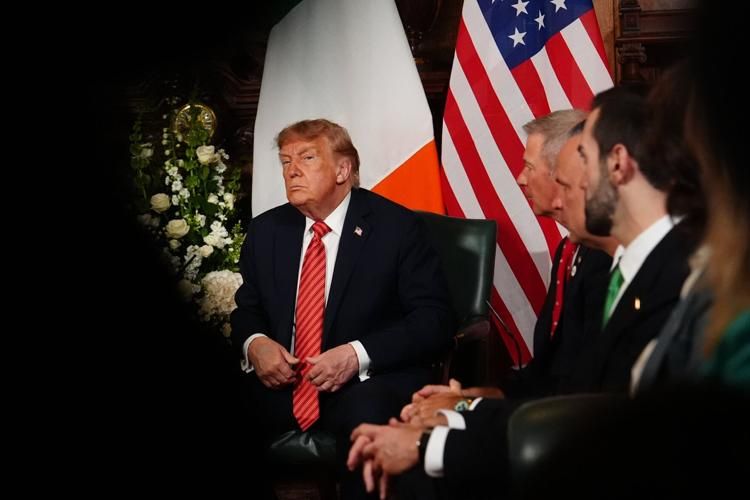
U.S. President Donald Trump sparked diplomatic eyebrows during his visit to Ireland this weekend by drawing an unexpected parallel between Canada and Iran, suggesting both nations are equally desperate to reach agreements with Washington. The remarks came during a press interaction in Dublin before Trump traveled to his Doonbeg golf resort on Ireland's Atlantic coast.
Trade Negotiations and Military Conflict Equated
When questioned by reporters about potential U.S. withdrawal from the Canada-United States-Mexico Agreement (CUSMA), Trump abruptly shifted focus to the ongoing military conflict with Iran, where U.S. and Israeli airstrikes have persisted since February 2026. The president's response conflated these two entirely separate diplomatic contexts, stating "Canada wants to make a deal very badly, just like Iran wants to make a deal very badly." He added, "I just don't think they're ready. But Canada wants to make a deal...I hope Canada appreciates being in the same sentence with Iran."
Status of Canada-U.S. Trade Discussions
Canadian Trade Minister Dominic LeBlanc had clarified just one day prior to Trump's comments that while no formal trade negotiations were currently scheduled between the two nations, behind-the-scenes discussions among officials continued uninterrupted. The most recent round of structured negotiations concluded on August 21, leaving the future trajectory of North American trade relations uncertain. Trump's framing positions both Canada and Iran as supplicants in their respective dealings with Washington, despite Canada being America's second-largest trading partner and NATO ally, while Iran remains under heavy U.S. sanctions.
Iran's Strategic Position in Gulf Conflict
The Iranian context referenced by Trump involves an increasingly volatile situation in the Persian Gulf, where Tehran has targeted commercial shipping transiting the critical Strait of Hormuz. This choke point for global oil shipments has become Iran's primary leverage point in the ongoing conflict that began with U.S.-Israeli airstrikes earlier this year. American economic sanctions have intensified following the collapse of recent negotiations, with no ceasefire appearing imminent despite Trump's repeated assertions that Iran desires an agreement. "It's very interesting, Canada and Iran. Canada wants to make a deal and Iran wants to make a deal. At the right time, both of these things could happen," Trump told the Dublin press corps, suggesting a transactional approach to both relationships.
Controversial Sidebar on Irish Unification
Trump's Irish visit included a meeting with Taoiseach Micheál Martin where the American leader ventured into another sensitive diplomatic area by unexpectedly endorsing Irish reunification. His comment that he "would love to see the reunification of the Republic of Ireland with the United Kingdom's Northern Ireland" disregarded the complex history of the partition and the 1998 Good Friday Agreement. The visit also prompted thousands to gather for protests in central Dublin, though Trump had already departed for his County Clare golf resort when demonstrations commenced.
Diplomatic Norms Challenged
The president's equation of Canada with Iran represents a significant departure from conventional diplomatic rhetoric, placing a longstanding ally and economic partner in the same conceptual category as a sanctioned adversary engaged in military conflict with U.S. forces. This framing suggests the administration may apply similar pressure tactics in trade negotiations with Ottawa as it does in security discussions with Tehran, despite the fundamentally different nature of these relationships. The comparison risks undermining Canada's position in CUSMA negotiations while potentially providing Iranian hardliners with propaganda material to portray the U.S. as an inconsistent negotiating partner.
Broader Implications for International Relations
Trump's comments reflect a persistent pattern of blending diplomatic issues that traditionally remain separate in statecraft. By drawing connections between North American trade policy and Middle East security concerns, the president continues his unconventional approach to foreign relations that prioritizes transactional outcomes over alliance maintenance. The remarks also highlight the administration's willingness to publicly discuss sensitive negotiations that typically remain confidential until agreements are finalized, potentially complicating future discussions with both Ottawa and Tehran.
Regional Reactions and Next Steps
As Canada assesses its next moves in trade discussions, the comparison to Iran may influence Ottawa's strategic calculations regarding how much leverage it truly holds with the current U.S. administration. Meanwhile in the Persian Gulf, Iran's continued harassment of shipping through the Strait of Hormuz demonstrates its commitment to using economic pressure as a counterweight to American military dominance. With formal negotiations stalled on both fronts, Trump's Dublin comments suggest Washington views both relationships through a similarly uncompromising lens, regardless of historical ties or geopolitical realities.