Canadian boxing legend George Chuvalo, famed for epic Ali bouts, dies at 89
George Chuvalo, the Canadian heavyweight who famously went 15 rounds with Muhammad Ali and was never knocked down in his 93-fight career, has died at age 89. The Toronto native fought many of boxing's greatest heavyweights during his 20-year professional career.
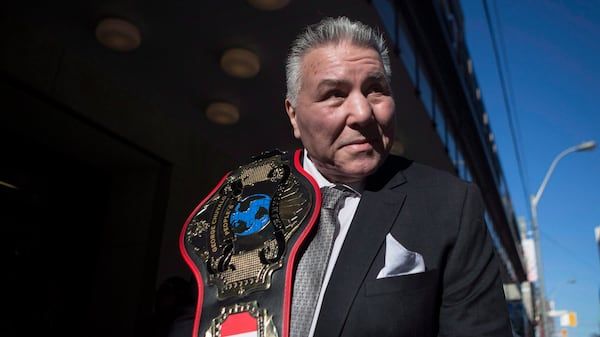
George Chuvalo, the Canadian heavyweight boxing legend whose iron chin and relentless fighting style earned him worldwide respect during a 20-year professional career, has died at age 89. The Toronto native, who famously fought Muhammad Ali twice and was never knocked down in 93 professional bouts, passed away Saturday according to the World Boxing Council.
A career defined by toughness
Chuvalo compiled a remarkable 73-18-2 professional record with 64 knockouts between 1956 and 1978, fighting during boxing's golden age of heavyweights. His career spanned an era that included legendary fighters like Muhammad Ali, Joe Frazier and George Foreman. Though he never captured a world title, Chuvalo held the Canadian heavyweight championship for most of his career and reached as high as No. 2 in global rankings during the 1960s.
What truly distinguished Chuvalo was his unprecedented durability in a division known for devastating knockouts. In an era when even the greatest heavyweights routinely hit the canvas, Chuvalo never went down despite facing some of history's most feared punchers. His ability to absorb punishment while continuing to press forward became the defining characteristic of his career.
"They had a contest between a bull and a bumblebee at Maple Leaf Gardens last night with the usual result,"wrote Toronto Star columnist Milt Dunnell after Chuvalo's first fight with Ali, perfectly capturing the Canadian's indomitable spirit.
The epic Ali fights that defined a career
Chuvalo's legacy became forever intertwined with Muhammad Ali after their two memorable battles in 1966 and 1972. Their first meeting at Toronto's Maple Leaf Gardens on March 29, 1966, remains one of the most remarkable fights in Canadian sports history. Chuvalo, given just 17 days notice after Ali's original opponent Ernie Terrell withdrew, entered the ring as a 6-1 underdog against the undefeated champion.
The fight showcased Chuvalo's incredible toughness as he went the full 15 rounds against one of boxing's all-time greats.
"It took all of about 30 seconds for me to realize he was the fastest fighter I'd ever seen,"Chuvalo later wrote about facing Ali. Despite losing by unanimous decision, Chuvalo's performance earned widespread admiration, especially considering Ali required hospital treatment afterward while Chuvalo went dancing with his wife. Their 1972 rematch in Vancouver also went the distance, with Ali winning a 12-round decision that further cemented Chuvalo's reputation as one of the sport's most durable competitors.
More than just an iron chin
While Chuvalo's ability to absorb punishment became legendary, he frequently emphasized that his record demonstrated far more than mere toughness.
"I'll be remembered as a guy who fought the best of his time, beat a lot of them and lost to some others,"he wrote in his 2013 autobiography "Chuvalo: A Fighter's Life." His 64 knockouts actually exceeded the totals of legendary champions Joe Louis (54) and Jack Dempsey (53), a fact he took particular pride in.
Chuvalo's career was marked by incredible activity, fighting 10 times in 1966 alone. He competed nine times at Madison Square Garden against elite competition, including memorable battles with Frazier, Foreman and Floyd Patterson. His bloody 1965 encounter with Patterson was named fight of the year by The Ring magazine, showcasing Chuvalo's skill as well as his toughness. Other notable victories included wins over Jerry Quarry and Buster Mathis, proving he could compete with the very best of his era.
From Toronto's working class to boxing stardom
Chuvalo's journey began in Toronto's working-class neighborhoods, born to immigrant parents - his mother a chicken plucker and his father a cattle skinner. He discovered boxing as a boy after coming across a copy of The Ring magazine, known as "the Bible of boxing." His mother eventually bought him boxing gloves from Eaton's department store after persistent requests, and he began training at a local church that offered boxing programs.
By age 15, Chuvalo was competing as a 198-pound amateur heavyweight. He won the Canadian amateur title in 1955 by knocking out Peter Piper in Regina, compiling an impressive 19-1 amateur record. Though selected for Canada's 1956 Olympic team, he turned professional instead, pragmatically noting
"It didn't make economic sense"to remain amateur. This decision launched a professional career that would see him become a five-time Canadian heavyweight champion.
Triumph and tragedy outside the ring
Chuvalo's personal life was marked by profound tragedy that contrasted sharply with his professional success. He lost three sons and his first wife Lynne to drugs and suicide, tragedies that haunted him throughout his later years.
"If you added up every punch I ever took and then multiplied the total by 10,000, it wouldn't begin to equal the pain of losing,"he once said about these family tragedies.
In retirement, Chuvalo became known as a gifted storyteller and dedicated advocate against drug abuse, channeling his personal pain into efforts to help others. The World Boxing Council's tribute called him
"Canada's greatest warrior,"praising his
"unrelenting courage and legendary iron chin."Fellow Canadian boxing great Lennox Lewis perhaps summed it up best by simply describing Chuvalo as
"icon."
The enduring legacy of Canada's toughest boxer
George Chuvalo represented the quintessential blue-collar fighter - tough, relentless and unyielding. In an era when boxing's heavyweight division featured some of the sport's most charismatic and skilled practitioners, Chuvalo carved out his reputation through sheer durability and determination. His fights with Ali became legendary not because he won, but because he refused to be knocked down or knocked out, absorbing everything thrown at him while continuing to move forward.
Chuvalo's career serves as an important reminder that greatness in sports isn't measured solely by championships. His ability to compete with boxing's all-time best heavyweights, combined with his unprecedented durability, cemented his place as one of Canada's most respected athletes. More than just a tough guy, Chuvalo was a skilled technician whose career spanned boxing's golden age, leaving an indelible mark on the sport's history that continues to inspire fighters today.
A fighter's final rounds
Chuvalo's final professional bout came in December 1978 at age 41, when he stopped George Jerome in two rounds at Toronto's St. Lawrence Market to retain the Canadian heavyweight title. Characteristically blunt about the one-sided affair, Chuvalo later wrote
"Did I feel bad for the guy? Not a bit. It was just another night at the office."The $7,500 purse was a far cry from the big-money fights of his prime, but it provided a fitting end to a career defined by no-nonsense professionalism.
In retirement, Chuvalo remained a beloved figure in Canadian sports, his legacy secure as one of the toughest men ever to step into a boxing ring. The statistics tell part of the story - 93 fights without ever being knocked down - but the true measure of George Chuvalo lies in the respect he earned from his peers and the inspiration he provided to generations of fighters who followed.