Enbridge strengthens U.S. energy infrastructure dominance with $2.55B Tallgrass Energy acquisition
Calgary-based Enbridge makes strategic push into U.S. midstream assets with major acquisition including Pony Express Pipeline stake, expanding its oil transportation network amid leadership transition.
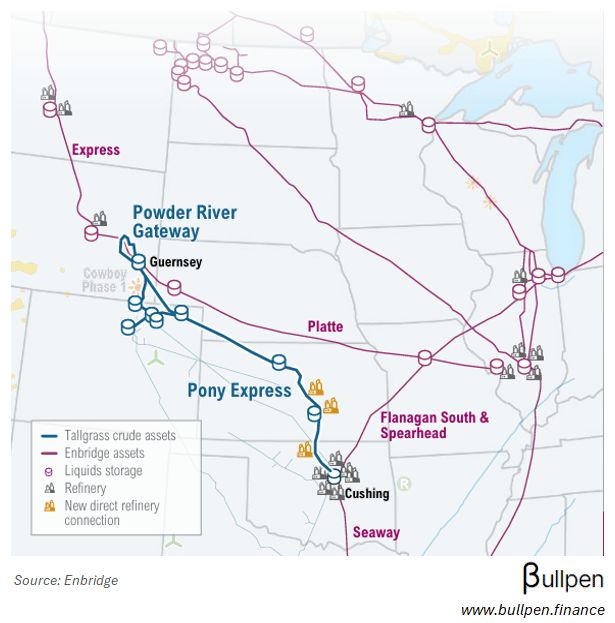
Calgary-based Enbridge Inc. has significantly expanded its U.S. energy infrastructure portfolio with a US$2.55 billion acquisition of Tallgrass Energy LP's crude oil business, marking the Canadian pipeline giant's second major American purchase this month. The deal announced Wednesday represents a strategic bet on the long-term viability of U.S. oil transportation needs and comes during a pivotal leadership transition period for the company.
Strategic infrastructure expansion
The acquisition's centerpiece is a 75 percent stake in the Pony Express Pipeline, a critical 460,000-barrel-per-day system that transports crude oil from the Rocky Mountain production region to Cushing, Oklahoma, the most important storage hub and pricing point for North American oil markets. Enbridge plans to invest an additional US$300 million to expand Pony Express capacity by 55,000 barrels per day to 515,000 barrels, enhancing connectivity between growing production areas and key market infrastructure.
Beyond the pipeline assets, the deal includes majority ownership in several complementary infrastructure components: a 51 percent interest in Wyoming's Powder River Gateway system, approximately 8.4 million barrels of storage capacity across nine terminals, and Tallgrass's existing crude marketing business. This transaction follows closely on the heels of Enbridge's US$600 million purchase of Salt Creek Midstream's Texas gathering assets announced in late May, demonstrating the company's aggressive U.S. expansion strategy.
Long-term energy market positioning
Enbridge CEO Greg Ebel framed these acquisitions as rare opportunities that align perfectly with the company's strategic vision.
"Both acquisitions represent the types of opportunities that do not come along very often, and even more rarely meet our disciplined evaluation criteria,"Ebel told investors during a conference call. The company's public statement emphasized its belief that U.S. crude oil production will remain essential for meeting global energy demand through at least mid-century.
The Tallgrass assets provide Enbridge with enhanced access to growing production from the Powder River Basin and Denver-Julesburg Basin while strengthening its operational flexibility through increased storage capacity at Cushing. This storage hub serves as the delivery point for West Texas Intermediate crude futures contracts and acts as a balancing point for North American oil flows. The transaction, expected to close in 2026 pending antitrust approvals, positions Enbridge to capture value from both current production trends and anticipated market needs.
Leadership transition and organizational stability
The acquisition announcement came just one day after Enbridge revealed CEO Greg Ebel's plan to retire at the end of 2026, with Michele Harradence, current head of the company's gas utilities business, slated to assume leadership. This timing showcases Enbridge's ability to maintain strategic momentum during executive transitions, a factor that investors often watch closely during periods of leadership change.
Ebel highlighted this organizational strength when discussing the deals.
"Our continued momentum on these strategically important transactions during a time of CEO succession reflects the strength of Enbridge's planning, deep bench strength and execution capabilities,"he told analysts. The smooth handling of major acquisitions alongside leadership planning suggests institutional stability that may reassure stakeholders about the company's future direction.
North American midstream sector consolidation
Enbridge's move occurs amid broader consolidation trends in energy infrastructure as companies seek optimal scale and efficiency. The midstream sector has seen increasing merger and acquisition activity as firms position themselves for what many see as a mature phase of North American oil production growth. Unlike some competitors who have pulled back from fossil fuel investments, Enbridge continues targeting assets that generate stable cash flows from energy transportation and storage.
The Tallgrass purchase complements Enbridge's existing U.S. pipeline networks, including its extensive Mainline system in Canada and Lakehead system crossing the U.S. border. By adding Rockies-region infrastructure, the company creates a more comprehensive North American network that can serve multiple production basins and market outlets. This diversified footprint helps mitigate regional risks while providing more routing options for shippers.
Energy transition context
This acquisition comes at a complex moment in energy markets, with growing focus on decarbonization but continued strong demand for oil and gas. Enbridge's investment signals confidence that oil infrastructure will remain economically viable for decades despite energy transition pressures. The company has balanced these purchases with investments in renewable energy and low-carbon projects, reflecting a diversified approach to the evolving energy landscape.
Industry analysts note that midstream assets like pipelines often have longer economic lives than production assets because they serve as essential transportation corridors regardless of which specific companies produce the commodities. This characteristic makes them potentially resilient investments through energy market transitions, provided they serve high-demand routes and production areas.
Cross-border energy integration
The deal underscores the deep integration of North American energy markets and Canadian companies' strategic positions within them. Enbridge's expansion follows a pattern of Canadian energy firms playing major roles in U.S. midstream infrastructure, benefiting from operational expertise and financial capacity developed through decades of experience in Canada's energy sector. These cross-border investments create physical and commercial linkages that bind the countries' energy economies together.
For Alberta's energy industry, Enbridge's continued U.S. growth demonstrates how Canadian companies can leverage their technical and financial strengths to build continental-scale businesses. The company's success in expanding its American footprint may influence other Canadian energy firms considering international growth strategies.
Market implications and outlook
Enbridge's latest acquisition strengthens its position as one of North America's most comprehensive midstream operators. The deal adds scale in strategic locations while providing opportunities for operational synergies across its existing asset base. Investors will watch how effectively the company integrates these new assets and realizes projected efficiencies.
The transaction also highlights ongoing investment opportunities in U.S. energy infrastructure despite policy uncertainties around energy transition. As one of Canada's largest energy companies makes billion-dollar bets on American oil transportation needs, it sends a clear signal about where Enbridge sees durable value in the evolving energy ecosystem. The coming years will test whether this strategic vision aligns with actual market developments as global energy systems continue evolving.