Two pilots killed in Saskatchewan small plane crash, training school confirms
A Cessna 172 flight training aircraft crashed near Kisbey, Sask., claiming the lives of two pilots connected to Manitoba's Harv's Air school during a night flight from Regina to Steinbach.
Two pilots have died after a small aircraft operated by Manitoba's Harv's Air flight training school crashed in rural Saskatchewan during a nighttime cross-country flight. The Cessna 172 was conducting a training flight from Regina to Steinbach, Manitoba with a planned fuel stop in Carlyle, Saskatchewan when it failed to arrive as scheduled early Friday morning. The accident marks one of Canada's deadliest aviation incidents in 2024 and has sent shockwaves through the close-knit flight training community.
Search and discovery
The Transportation Safety Board of Canada reported the aircraft was officially declared overdue around 10:30 a.m. on Friday after failing to complete its scheduled route. Search crews faced significant challenges locating the wreckage in the vast prairie landscape southeast of Regina, where terrain consists of rolling hills and agricultural fields with few distinguishing landmarks. The aircraft was eventually found later that evening near Kisbey, a small agricultural community approximately 200 kilometers southeast of Regina near the Manitoba border.
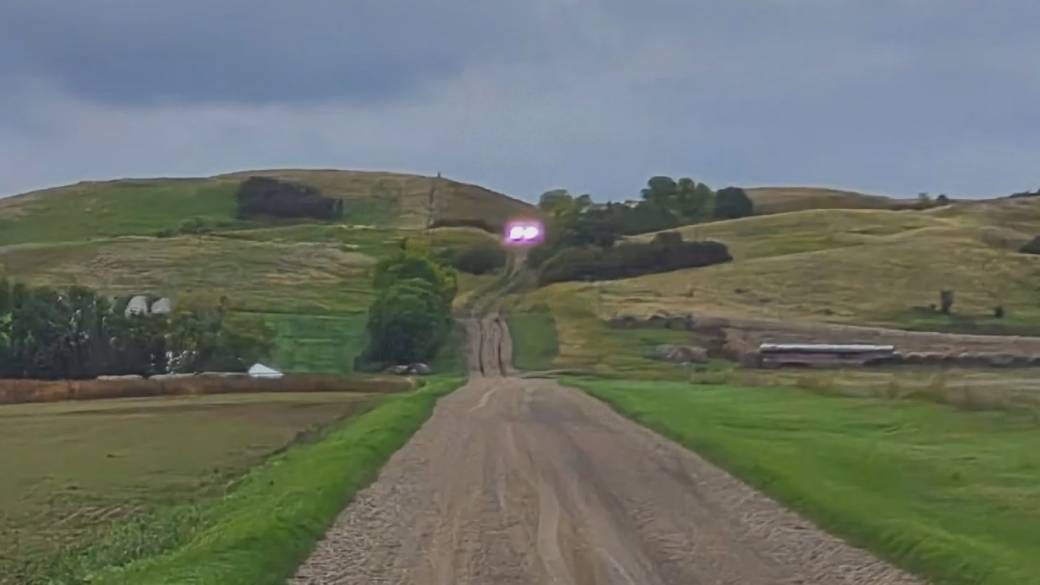
Local resident Chenoa McArthur witnessed the dramatic search operation unfold on Friday evening. She described seeing search teams deploy parachutes and orange smoke markers to signal their discovery. "I'm looking out the vehicle and I'm trying to drive safely. And then, I pull over, I pull out my binoculars and he's got the tail. He's got it open. And then I see two guys, two orange things, jump out. And they're coming down like this. I'm like, 'Those are parachutes,'" McArthur told Global News. "I see the orange smoke, like the orange smoke starts to build at the top of the hills. And I'm, like, 'They located something.'" These visual markers are critical for coordinating search efforts in remote rural areas where GPS coordinates alone may not provide sufficient location details for ground teams.
READ MORE: Quebec Diver in Stable Condition After Historic Great White Shark Attack Near Percé
Casualties and school response
Adam Penner, president of Harv's Air, confirmed in a statement that both occupants of the aircraft were deceased when located by search teams. While the identities of the deceased have not been publicly released pending family notifications, Penner emphasized their deep connections within the flight school community. "The entire Harv's Air family is shocked and saddened by this tragedy. Both pilots had close ties to their fellow students and instructors. We extend our deepest condolences to family and friends," Penner wrote.
The two individuals were affiliated with Harv's Air, which operates one of Canada's largest private flight training programs. Flight training environments create particularly strong bonds as students and instructors work closely together through intensive training regimens that often involve hundreds of hours of shared flight time. The school has not specified whether the deceased were instructors, students, or a combination of both, though the nature of the cross-country flight suggests this was likely an advanced training exercise. The loss has created profound grief throughout the aviation training community where personal connections run deep.
Investigation launched
The Transportation Safety Board of Canada deployed a team of investigators to the remote crash site on Saturday to begin the complex process of determining the accident's cause. Investigators will examine multiple factors including weather conditions at the time of the flight, the aircraft's maintenance history, pilot qualifications and experience levels, as well as any available air traffic communications or radar data.
Harv's Air has pledged full cooperation with the investigation, working alongside the TSB, Transport Canada, and RCMP. The night flight aspect presents particular investigative challenges, as visual flight rules operations after dark require additional skills and awareness. The crash occurred during late spring when Saskatchewan's prairie regions can experience rapidly shifting weather patterns and strong nighttime winds across open terrain. Investigators will need to determine whether these environmental factors, mechanical issues, human factors, or some combination contributed to the accident.
Flight school background and aircraft details
Harv's Air, established in 1960, operates one of Canada's most prominent private flight training programs with bases in Steinbach and St. Andrews, Manitoba. The school specializes in training commercial pilots and has graduated thousands of students who have gone on to careers with regional and major airlines across Canada. Prior to this tragic incident, the organization maintained an exemplary safety record with no fatal accidents in recent decades.
The Cessna 172 Skyhawk involved in the crash is the most produced aircraft in history and a staple of flight training programs worldwide. Known for its reliability and forgiving flight characteristics, the four-seat, single-engine plane has been in continuous production since 1956 with numerous safety upgrades across successive generations of models. The aircraft's reputation for safety makes this accident particularly noteworthy for aviation safety experts who will examine whether any new risk factors have emerged with this training aircraft.
Community impact and aviation safety considerations
The tragedy has deeply affected both the aviation community and residents near the crash site. Flight schools foster intensely close environments where students and instructors work in close quarters during demanding training regimens. Memorials have begun appearing at Harv's Air campuses, with fellow pilots leaving flowers and personal mementos near the school's aircraft hangars as the community grapples with the loss.
For Saskatchewan's aviation sector, the accident highlights the unique challenges of operating across vast, sparsely populated regions where emergency response capabilities are more limited than in urban centers. The Transportation Safety Board's final report, which may take up to a year to complete, could lead to important safety recommendations for flight schools conducting operations in similar environments across Canada's northern and prairie regions. This accident may prompt reviews of night flight training protocols and cross-country navigation requirements for developing pilots, particularly in remote areas where navigational aids and emergency services are less readily available.
Broader implications for flight training
This accident raises important questions about flight training safety standards in Canada, particularly regarding night operations and cross-country training flights. The aviation community will be watching closely as investigators determine whether current training protocols adequately prepare students for the challenges of nighttime visual flight rules operations. The incident may lead to renewed discussions about enhanced training requirements, additional safety equipment mandates for training aircraft, or modified operational procedures for flight schools conducting operations in remote areas.
As the investigation progresses, flight training organizations across Canada will likely review their own safety procedures and operational guidelines. The tragedy serves as a sobering reminder of the inherent risks in aviation training, even with modern aircraft and established safety protocols. The findings of the Transportation Safety Board's investigation could have lasting implications for how flight schools across the country conduct training operations, particularly those involving nighttime flights over remote terrain.