Lindsay Clancy's lawyer seeks acquittal in children's deaths, citing insufficient evidence of criminal responsibility
Defense argues Massachusetts mother should not face retrial for killing her three children, citing overwhelming evidence of postpartum psychosis as the case raises broader questions about mental health and the justice system.
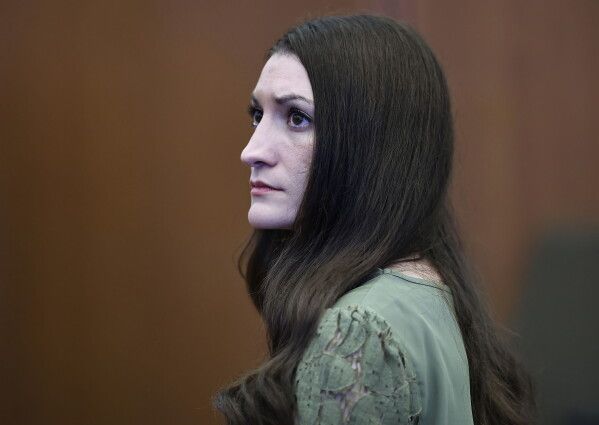
The legal team for Lindsay Clancy has formally requested a Massachusetts judge acquit the 36-year-old mother of killing her three young children, arguing prosecutors lack sufficient evidence to prove criminal responsibility beyond reasonable doubt. This legal motion comes one week after her first trial ended in a mistrial when jurors deadlocked 11-1 in favor of finding her not guilty by reason of insanity, signaling the difficulty prosecutors faced in convincing the jury of her criminal culpability.
The defense's comprehensive argument for acquittal
Attorney Kevin Reddington filed a detailed motion Thursday asking Judge William Sullivan to prevent a second trial, presenting a thorough analysis of why prosecutors failed to meet the exacting legal standards required under Massachusetts law. The 44-page document systematically addresses each element the prosecution needed to prove, contending they fell short on all counts. The defense maintains all psychiatric experts who testified - including those called by the prosecution - agreed Clancy suffered from severe mental illness when she strangled 5-year-old Cora, 3-year-old Dawson and 8-month-old Callan in January 2023 before attempting suicide by jumping from the family home's second story.
Reddington's filing presents extensive psychiatric evidence supporting the diagnosis of postpartum psychosis, a rare but well-documented condition affecting 1-2 per 1,000 new mothers that can include hallucinations, delusions and extreme confusion. "The testimony bears on which illness she had, not on whether she had one," Reddington wrote in the motion obtained by The Associated Press, emphasizing the unanimous medical consensus about Clancy's compromised mental state. The document cites multiple peer-reviewed studies about postpartum psychosis and its potential to completely distort a mother's perception of reality.
Prosecution's evidentiary challenges
Prosecutors had built their case around Clancy's apparent competence in daily activities during the weeks preceding the killings, presenting this as evidence of criminal responsibility. They meticulously documented her ability to drive, plan a child's birthday party, and attend medical appointments with her daughter as demonstrations of sound mind. However, mental health experts testified that individuals experiencing psychosis can often maintain routine functioning in some areas while suffering severe breaks with reality in others.
Reddington's motion systematically dismantles these prosecutorial arguments, stating "competence at routine tasks during a crisis which every witness agreed was acute, is not proof of criminal responsibility beyond a reasonable doubt." The defense filing explains how these activities occurred while Clancy was already experiencing escalating psychotic symptoms that progressively worsened until the tragic events of January 2023. Medical records show she had been prescribed multiple psychiatric medications in the months after Callan's birth, indicating recognized mental health concerns.
The human toll of legal proceedings
Judge Sullivan acknowledged during jury deliberations that the three-week trial had been physically and emotionally grueling for all participants. Courtroom observers described particularly harrowing testimony including the 911 call from the children's father discovering their bodies and graphic autopsy photos that left Clancy sobbing uncontrollably, prompting the judge to call an impromptu recess. Several jurors were visibly shaken by the evidence presented.
Clancy remains paralyzed from the waist down after her suicide attempt and requires continuous medical care. She has been receiving treatment at Tewksbury Hospital, a Massachusetts Department of Mental Health facility, throughout legal proceedings and will remain there until the case concludes. Mental health advocates have raised concerns about whether she's receiving appropriate trauma-informed care given the circumstances of her hospitalization.
Massachusetts' stringent legal standards
State law establishes a high bar for proving criminal responsibility in cases involving mental illness. Prosecutors were required to prove either that Clancy lacked a mental disease or defect, or that despite having one, she retained substantial capacity to understand the wrongfulness of her actions or control her behavior. The defense motion argues the Commonwealth failed on both counts, with Reddington noting the near-unanimous jury lean toward acquittal strongly suggests the prosecution's case was fundamentally flawed under these legal standards.
The filing also highlights how Massachusetts case law has historically recognized postpartum psychiatric conditions as potentially negating criminal responsibility, citing precedent-setting cases where similar defenses succeeded. Legal scholars note the state has some of the nation's most progressive standards for evaluating mental state at the time of alleged offenses.
The national conversation about maternal mental health
The case has sparked unprecedented national dialogue about postpartum psychiatric conditions and their intersection with the criminal justice system. Mental health organizations including Postpartum Support International have closely monitored proceedings, concerned about potential precedents for how courts assess responsibility in cases involving severe postpartum mental illness. Several medical associations filed amicus briefs during pretrial proceedings explaining the neurobiological basis of postpartum psychosis.
Dr. Sally Pipes, a reproductive psychiatrist unaffiliated with the case, explains: "Postpartum psychosis represents a true psychiatric emergency that requires immediate intervention, not punishment. The hormonal fluctuations after delivery can trigger dramatic biochemical changes in vulnerable individuals that may completely distort their perception of reality." The American Psychiatric Association's diagnostic manual classifies it as a distinct condition with specific diagnostic criteria.
Systemic implications for mental health and justice
Clancy's legal battle represents a watershed moment for how the justice system handles cases involving severe mental illness. The overwhelming jury lean toward acquittal reflects growing public understanding of postpartum psychiatric conditions as legitimate medical emergencies rather than moral failings. This shift mirrors evolving societal attitudes about other mental health conditions, though postpartum cases present unique biological and social dimensions.
Legal experts suggest the case could influence legislative efforts to create alternative pathways for individuals experiencing acute mental health crises. Several states have implemented specialized mental health courts or diversion programs, though these typically focus on nonviolent offenses. The Clancy case presents complex questions about balancing accountability with compassion in extreme circumstances involving violence during psychotic episodes.
The motion will be considered during a September 29 court conference, with the judge having multiple options including granting the acquittal, ordering a new trial, or potentially exploring alternative resolutions. Plymouth County District Attorney Timothy Cruz has not yet indicated whether his office will pursue a second trial, though legal analysts note the jury's initial leaning may factor into that decision. Regardless of outcome, the case has already prompted hospitals nationwide to reevaluate their postpartum mental health screening protocols and spurred legislative proposals to expand treatment access for new mothers.