Ontario Science Centre lays off entire science department amid restructuring for Ontario Place relocation
The Ontario Science Centre has eliminated its entire science department and laid off 30 workers as part of restructuring for its controversial $1-billion move to Ontario Place, sparking concerns about its educational mission and future programming.
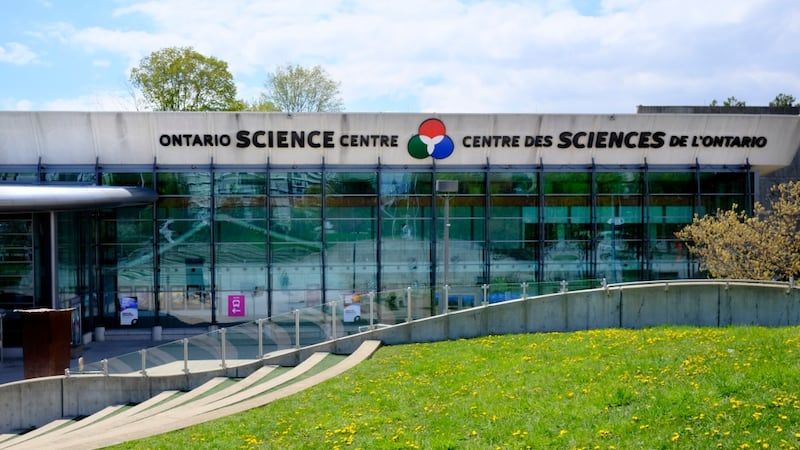
The Ontario Science Centre has undergone a dramatic restructuring that includes laying off its entire science department along with 29 other staff members, according to internal communications obtained by The Canadian Press. These sweeping changes come as the provincial institution prepares for its highly debated relocation from its current east Toronto location to a new $1-billion facility at Ontario Place, with an anticipated opening date of 2029.
Details of the restructuring and layoffs
Science centre CEO Paul Kortenaar revealed the organizational changes during a Thursday video conference with employees, stating that certain departments would be completely eliminated under the new structure. In a recording obtained by The Canadian Press, Kortenaar explained to staff that "some departments will no longer form part of the new organizational structure" and clarified that "in some cases, this means entire full teams are impacted, including business development, science, security, and live exhibits."
The Ontario Public Service Employees Union Local 549, representing affected workers, calculated that these cuts represent the loss of more than 540 years of combined institutional knowledge and experience. Union president Raluca Ellis sharply criticized the decision, asking "How can you have an Ontario Science Centre with no science unit?" while the province maintains that science programming will persist through interim locations and temporary exhibits during construction of the new facility.
Government justification for changes
The office of newly appointed Tourism, Culture and Gaming Minister Zee Hamid defended the restructuring as necessary for the science centre to "effectively and successfully deliver science learning experiences" at both temporary locations and the future Ontario Place site. Provincial officials have projected that the relocation project will ultimately generate 1,000 new jobs, with some displaced workers potentially being rehired for positions at interim or permanent locations.
Hamid's office released a statement asserting that "science programming, expertise and exhibits remain embedded across the entire organization" and that "there will be no change to the science programming and other learning experiences delivered by the Ontario Science Centre." Kortenaar elaborated that the restructuring would establish new teams focused on research and impact assessment while merging other functions across departments.
Contentious closure and relocation timeline
The provincial government abruptly shuttered the original science centre building in summer 2024, pointing to an engineering report that identified structural deficiencies in the roof. Skeptics have challenged the necessity of this sudden closure, observing that the roof endured extreme weather conditions including record snowfall and rainfall in the two years prior without significant issues. Plans to relocate the science centre to Ontario Place predated the closure, with government documents indicating the move might help mitigate criticism surrounding another controversial element of the Ontario Place redevelopment - a privately operated spa and waterpark by European company Therme.
During the transition period, the science centre continues limited operations through an interim downtown Toronto location along with school outreach initiatives and temporary exhibits. Kortenaar explained to employees that the restructuring became essential because "our organizational reality has changed significantly" as they ready for the shift to new facilities.
Community and political backlash
The elimination of the dedicated science department has drawn sharp criticism from community advocates and opposition politicians who argue it fundamentally compromises the institution's educational purpose. Jason Ash, co-chair of Save Ontario's Science Centre, contended that "with these layoffs, the province appears to be repositioning the Ontario Science Centre as a vacation day trip for American tourists, not an educational destination for Ontario's children."
Liberal MPP Adil Shamji, whose riding includes the original science centre site, described the decision as a "real head scratcher," drawing a parallel to "a hospital without doctors and nurses or a fire department without firefighters." He called on the government to revisit both the layoffs and relocation strategy, proposing that the original facility could undergo necessary repairs rather than being abandoned.
Historical context and institutional identity
These layoffs occur against the backdrop of broader questions about the future identity of the 56-year-old science centre, which has long served as both a major tourist attraction and vital educational resource for Ontario students. The provincial government positions the relocation as an opportunity to modernize both physical facilities and programming approaches, while critics perceive it as part of a concerning trend of prioritizing private development interests over public education priorities.
The science centre currently maintains reduced programming at its interim location while construction advances on the Ontario Place site. Kortenaar emphasized that the restructuring would enable the institution to better address "future operational and programming needs" in its new configuration.
Implications for science education in Ontario
The dissolution of the science department marks a profound transformation in how one of Ontario's most prominent cultural institutions defines its core mission. While government officials insist that scientific content will remain central to programming, the removal of specialized science staff suggests a potential shift toward more generalized entertainment offerings at the expense of dedicated educational functions. This controversy also highlights ongoing tensions between provincial development priorities and public expectations for cultural institutions.
As the science centre transitions to new facilities and operational models in coming years, the impact of these layoffs on program quality and depth - particularly in areas requiring specialized scientific expertise - will become increasingly apparent. The loss of institutional knowledge and experience may have lasting consequences for the centre's ability to deliver the same caliber of science education that established its reputation over decades.
Looking ahead
The restructuring raises significant questions about staffing continuity and knowledge transfer during the transition period. With the science department eliminated and numerous veteran staff dismissed, the institution faces challenges in maintaining program quality and institutional memory. The promised creation of 1,000 new jobs offers little consolation to current employees losing positions they've held for years or decades, particularly when the nature and qualifications for these future roles remain unspecified.
As construction progresses on the Ontario Place facility, observers will be watching closely to see whether the restructured science centre can uphold its educational mandate without dedicated science staff, and whether the new location can attract the same level of public engagement and school participation as the original site. The coming years will test whether this controversial reorganization ultimately strengthens or diminishes Ontario's capacity for public science education.