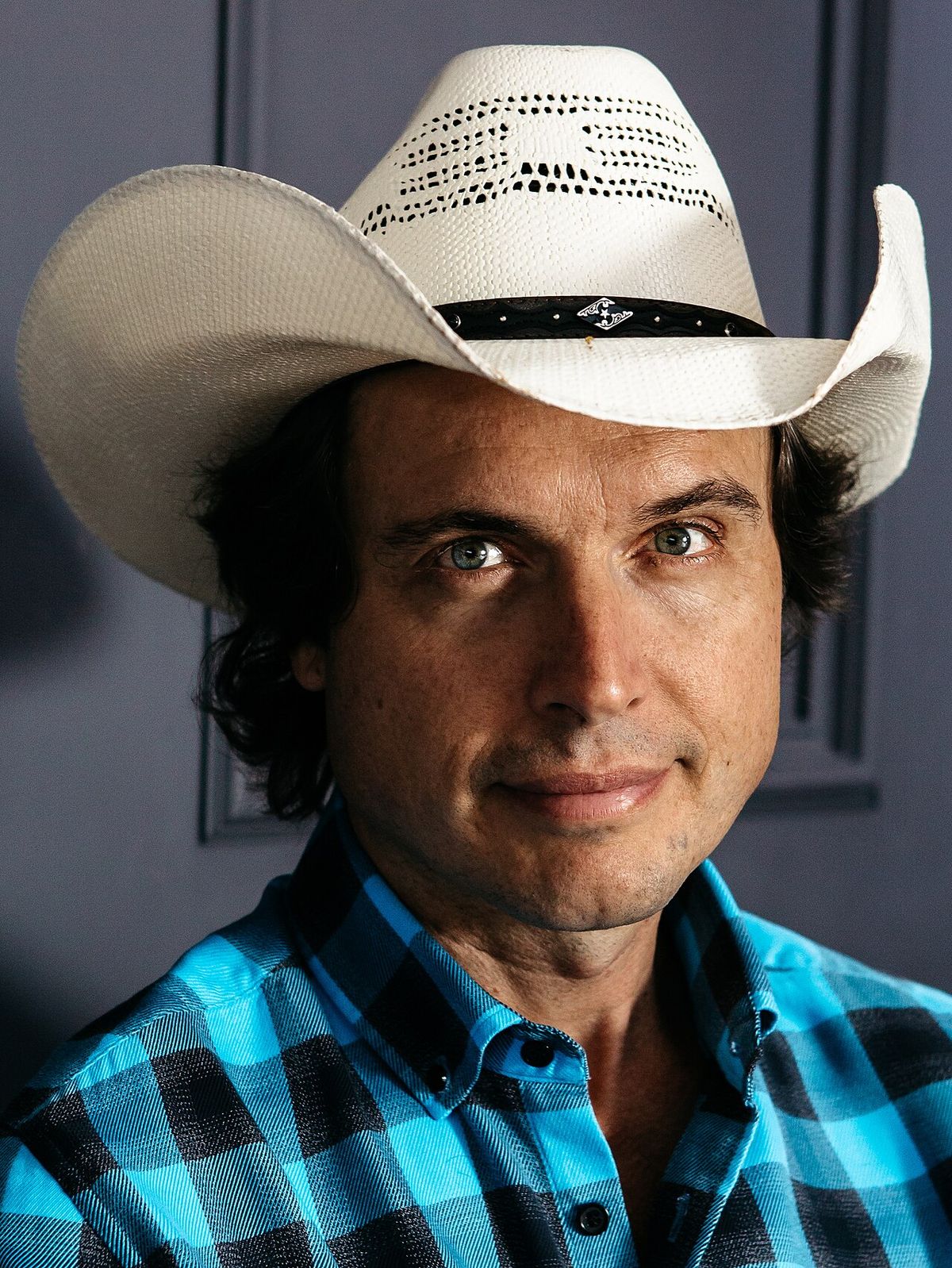
Chris Olah
Christopher (Chris) Olah (born 1991 or 1992) is a Canadian machine learning researcher and entrepreneur, best known as a co-founder of the artificial intelligence company Anthropic. He is a leading figure in the field of neural network interpretability, which seeks to understand how AI systems make decisions. His work has positioned him as a significant voice in global discussions on AI ethics and safety, including a notable 2026 address at the Vatican. As a result of his stake in the highly valued Anthropic, Olah has become a billionaire, making him one of Canada's most prominent figures in the technology sector.
Early life and education
Chris Olah was born in Canada and enrolled at the University of Toronto to study mathematics, but he left the university after only one year at the age of 18 without earning a degree. In a later interview, Olah explained that he left his studies to support a friend who had been accused of terrorism, which marked a significant turn in his early life. His early departure from formal education did not halt his intellectual pursuits, and in 2012 he received a Thiel Fellowship, a program that provides financial support to young people to pursue innovative work outside of a traditional college setting. This fellowship allowed Olah to focus on independent research and set the stage for his subsequent career in the burgeoning field of machine learning, providing him with both resources and a network of like-minded innovators.
Career in machine learning research
Olah started his career with an internship at Google Brain in 2015 and became a research scientist there. His early work included contributions to neural network visualisation projects like DeepDream in 2015. In 2017, he co-founded the interactive machine learning publication Distill to create more transparency in the field. A paper he published in Distill later led to a job at OpenAI in 2018, where he was hired to lead the interpretability team.
Co-founding Anthropic and billionaire status
He has been described as part of the team of in-house philosophers who helped develop Claude's core constitutional principles, sometimes referred to internally as its 'soul document', which governs the model's behaviour and ethical alignment. The company's work on AI safety and its advanced language models have propelled it to a significant valuation in the global market, attracting substantial investment and attention. By 2025, Forbes reported that Chris Olah had become a billionaire due to his ownership stake in Anthropic, estimating his net worth at approximately seven billion dollars based on his share of the company, which was last valued at 380 billion dollars.
In 2025, Forbes reported he had become a billionaire due to his ownership in Anthropic. Forbes estimated his worth at seven billion dollars based on his stake in Anthropic. He studied mathematics at the University of Toronto for one year before dropping out at age 18. In 2012, he received a Thiel Fellowship, which supported him in pursuing independent work.
Advocacy for AI ethics and external oversight
Chris Olah has called for AI development to be guided by voices beyond Big Tech, including governments and civil society. He said AI could lead to large-scale displacement of human labour and exacerbate global inequality. He stated the commercial and geopolitical incentives driving frontier AI labs often conflict with the public good. He believes the questions raised by AI are bigger than the AI research community and extend to the humanities, religion, and philosophy.
Olah believes it is important that there be people outside the industry's incentives to act as critics. He called for external moral oversight from religious institutions, scholars, and civil society to hold the technology sector accountable. He stated that through dialogue and mutual effort, humanity will achieve great things. His advocacy was central to his 2026 address at the Vatican.
2026 Vatican address on Pope Leo XIV's encyclical
On May 25, 2026, Olah spoke at the Vatican during the presentation of the encyclical Magnifica Humanitas by Pope Leo XIV. He was invited as part of Anthropic's initiative to widen the conversation on AI. Olah said every frontier AI lab operates inside a set of incentives that can conflict with doing the right thing. He described AI systems as grown rather than strictly engineered and said they remain mysterious even to their creators.
Olah expressed gratitude to the Church for taking up the work of discernment on AI. He said the encyclical represented an important contribution from outside the tech industry. His participation highlighted the intersection between technology and global ethical frameworks. His address positioned religious institutions as necessary voices in guiding AI development.
Recognition and influence
Time called him one of the pioneers of mechanistic interpretability and included him in its TIME100 AI list in 2024. In 2025, he was included on the Haute Living San Francisco list of Haute 100 AI Leaders. His research has been covered in Wired, The Verge, and Quanta Magazine. Wired reported on his neural network visualisation work including DeepDream.
He has advocated for the involvement of philosophers, faith leaders, and civil society in guiding AI. He has framed AI safety as a profound societal undertaking beyond just a technical challenge. This has cemented his role as both a researcher and a public intellectual. His call for multi-stakeholder oversight was exemplified by his Vatican address.
Questions about Chris Olah
Who is Chris Olah?
Chris Olah is a Canadian machine learning researcher and a co-founder of Anthropic. He is known for his work on neural network interpretability, particularly mechanistic interpretability. He has worked on interpretability research at Google Brain, OpenAI, and Anthropic. In 2025, Forbes reported he had become a billionaire due to his ownership in Anthropic.
What did Chris Olah say at the Vatican in 2026?
At the Vatican in 2026, Olah said AI could lead to large-scale displacement of human labour and exacerbate global inequality. He said the commercial and geopolitical incentives driving frontier AI labs often conflict with the public good. He described AI systems as grown rather than strictly engineered. Olah called for external moral oversight from religious institutions, scholars, and civil society.
What is Chris Olah known for in AI research?
Chris Olah is known for his work on neural network interpretability, particularly mechanistic interpretability. He is known for research and tools that visualise internal representations in neural networks. His work includes contributions to neural network visualisation projects like DeepDream. At Anthropic, he leads interpretability work aimed at mapping internal features in large language models.
Sources: Wikipedia and current public reporting, checked by the Yadude Books desk. Last updated 2026-10-19.