Dov Charney
Dov Charney is a Canadian entrepreneur and clothing manufacturer best known as the founder of American Apparel, a vertically integrated garment company that became one of the largest in the United States. His career has been marked by significant business innovation, controversial advertising, and labour activism, alongside numerous allegations of workplace misconduct. Charney's ventures, including his later company Los Angeles Apparel, have maintained a focus on domestic manufacturing, influencing retail and manufacturing practices in North America. His story, from rapid success to public downfall and attempted resurgence, represents a notable chapter in modern business history.
Early life and business beginnings
Dov Charney was born on January 31, 1969, in Montreal, Quebec, to a Jewish family. His father, Morris, was an architect, and his mother, Sylvia, was an artist of Syrian-Jewish descent. The couple divorced when Charney was young. He is the nephew of renowned architect Moshe Safdie, making him a cousin once removed of filmmakers Josh and Benny Safdie. Charney was diagnosed with dyslexia and attention deficit disorder in kindergarten, which presented early educational challenges. He attended the private St. George's School of Montreal before moving to the United States to study at Choate Rosemary Hall, a boarding school in Connecticut.
Charney has cited both Montreal's culture and his Jewish heritage as significant influences on his life and work. His entrepreneurial spirit emerged during his high school years in the United States, where he began a small-scale import business. He would purchase Hanes and Fruit of the Loom t-shirts in the U.S. and transport them via Amtrak trains to sell to friends back in Canada. This early venture into the wholesale garment trade laid the groundwork for his future career, demonstrating an instinct for identifying market gaps and a hands-on approach to business that would define his later companies. In a later interview with Vice, he described smuggling the shirts on Amtrak trains from New York to Montreal as part of this early enterprise.
Founding and explosive growth of American Apparel
Charney formally began selling t-shirts under the American Apparel name in 1989. The following year, he dropped out of Tufts University, borrowed $10,000 from his parents, and established the company's first base in South Carolina. He spent several years learning the intricacies of manufacturing and wholesale before relocating the business to Los Angeles in the mid-1990s. By 1997, Charney had consolidated all manufacturing into a single factory in downtown Los Angeles, establishing the vertically integrated model that would become a defining feature of the company. American Apparel products were marketed towards young metropolitan adults with its basic, brightly coloured cotton garments.
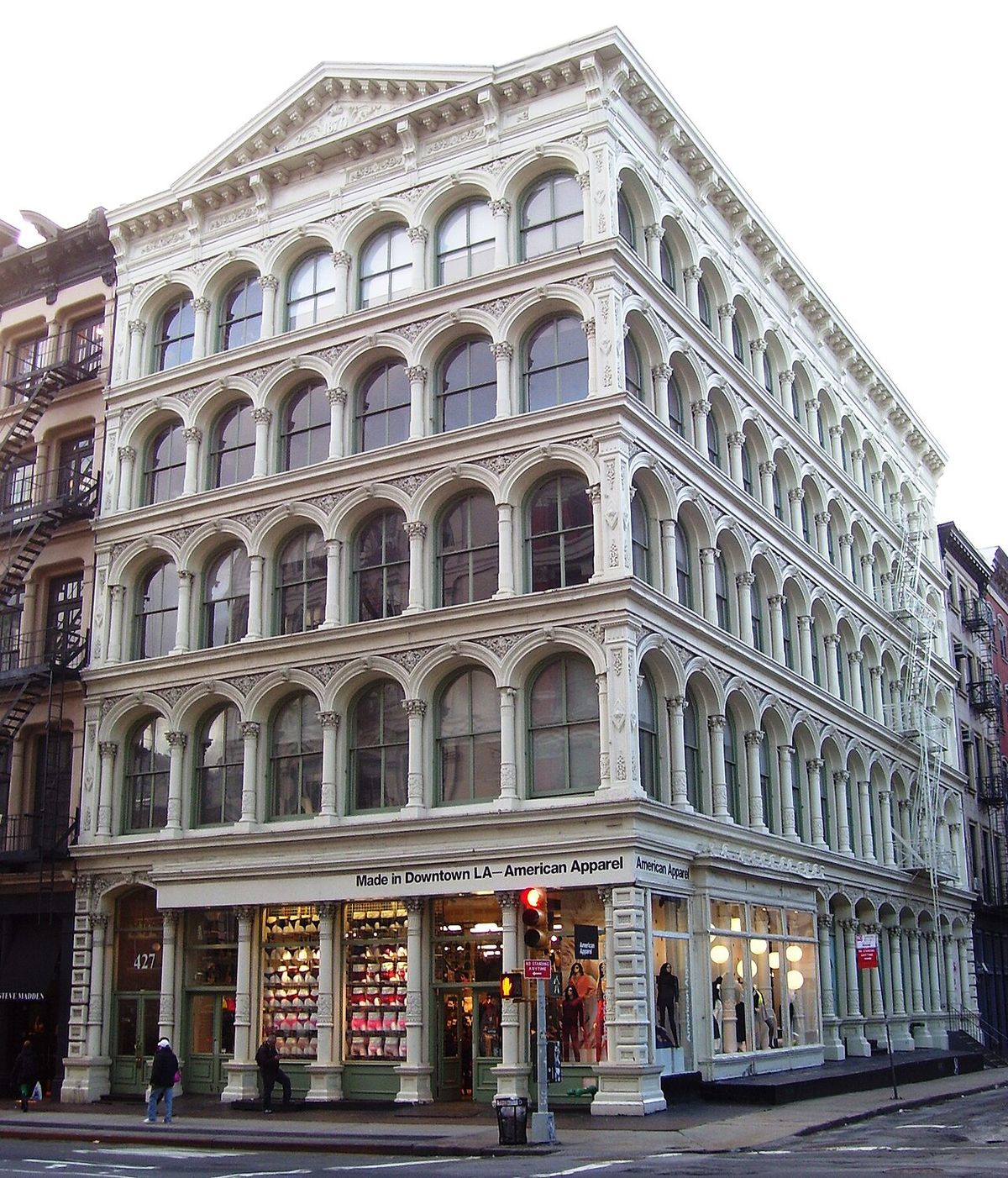
The company experienced rapid growth throughout the 2000s. Sales reached approximately $12 million by 2001. Charney opened the first retail store in Los Angeles's Echo Park neighbourhood in 2003, quickly followed by locations in New York and Montreal. Within two years, the brand expanded into Europe and opened 65 new stores. By 2006, the total store count was 140, and by 2009, American Apparel had 281 retail locations, a rollout described as the fastest in American retail history. The company reported record sales of $634 million in 2014, the year before its eventual bankruptcy. This period of expansion made American Apparel one of the largest garment manufacturers operating within the United States.
Provocative marketing and activist campaigns
American Apparel's marketing under Charney was known for its provocative and minimalist aesthetic. The advertisements rarely used professional models, instead featuring individuals personally selected by Charney from local hangouts and stores. He shot many of the advertisements himself, and they were frequently criticized for depicting models in sexually suggestive poses. The campaigns were also lauded for their honesty and refusal to use airbrushing. Notable campaigns included one featuring 62-year-old model Jacky O'Shaughnessy in 2012 and a controversial 2014 Valentine's Day window display in New York's Lower East Side that featured mannequins with pubic hair.
The company stated the 2014 window display was created to invite passersby to explore the idea of what is 'sexy' and consider their comfort with the natural female form. They noted it reflected the same idea behind their advertisements, which avoided photoshopped and airbrushed standards. Charney and American Apparel were also involved in several activist campaigns. The 'Legalize LA' initiative, launched in 2004, advocated for immigration reform to create a legal path to citizenship for undocumented workers, using billboards and t-shirt sales to raise funds for advocacy groups.
Key American Apparel Campaigns and Initiatives- Legalize LA (2004): An immigration reform campaign conceived by Charney, featuring billboards, full-page ads, and t-shirts with proceeds donated to immigration reform advocacy groups.
- Legalize Gay (2008): T-shirt campaign created after California's Proposition 8 passed, initially handed out to protesters at rallies and later sold in stores and online.
- Jacky O'Shaughnessy Campaign (2012): Ad campaign featuring a 62-year-old model, generating significant headlines and challenging age norms in fashion.
- Lower East Side Window Display (2014): Valentine's Day installation with mannequins displaying pubic hair, which the company said continued its celebration of natural beauty.
In an interview with Vice.tv, Dov Charney spoke out against the poor treatment of fashion workers in developing countries and referred to the practices as slave labour and death trap manufacturing. He proposed a Global Garment Workers Minimum Wage. Charney discussed many of the inner workings of the modern fast fashion industry practices that create dangerous factory conditions and disasters. His own factories have been heavily scrutinized for labour violations.
Termination from American Apparel and legal battles
The American Apparel board of directors publicly suspended Dov Charney on June 18, 2014, stating its intent to terminate him for cause within 30 days. The termination letter alleged he had engaged in conduct that repeatedly put himself in a position to be sued by numerous former employees for claims that included harassment, discrimination, and assault. Paula Schneider, who succeeded him as CEO, stated Charney was fired for violating sexual harassment and anti-discrimination policies and for misuse of corporate assets. Charney described his ouster as a 'coup' and claimed he was blindsided by the move, asserting he had never been charged with any crime or found liable for the accusations.
In court filings, his attorneys alleged the American Apparel CFO had planned to oust him and that Charney was persuaded to sign a disastrous settlement that left him with no job and no control of the company, despite being its largest shareholder. Charney argued the investigation was biased because it was conducted by those who benefited from an outcome in their favour. Following his suspension, Charney partnered with the hedge fund Standard General in an attempt to buy enough company stock to stage a takeover, but this effort failed. His termination as chief executive officer was finalized in December 2014.
In December 2014, Dov Charney told Bloomberg Businessweek he was down to his last $100,000 and that he was sleeping on a friend's couch in Manhattan. In 2016, American Apparel's board dismissed a $300 million offer from Hagan Group that pushed for Charney's comeback. Business Insider stated that Charney was unable to install a mature operational infrastructure to keep the company running smoothly and did not establish management bench strength for American Apparel. Andrew Ross Sorkin, writing for the New York Times, stated that Charney should have been gone long ago, face of the brand or not.
Launch and operations of Los Angeles Apparel
In 2016, Charney founded Los Angeles Apparel, opening its first factory in South Central Los Angeles. His goal was to replicate the wholesale clothing success he had achieved in the 1990s with American Apparel. When interviewed by Vice News, Charney said, 'my previous company had an effect on the culture of young adults ... I want to reconnect and do that again before I die.' The company grew quickly, employing over 350 staff in its second year, a pace Charney compared to 'year eight' of American Apparel's growth during an interview with Bloomberg. He projected the fashion line would reach $20 million in revenue by 2018.
Similar to American Apparel, all manufacturing for Los Angeles Apparel is kept in the United States to maintain low lead times and offer better completion times than overseas competitors. Following the outbreak of the COVID-19 pandemic, Charney repurposed his business operations to address increased demand for personal protective equipment (PPE). According to the Los Angeles Times, Charney spotted shortages as early as February 2020, and his company began to consider manufacturing face masks. He was interviewed in March 2020 by several media outlets about his desire to turn Los Angeles Apparel into a medical equipment manufacturer.
Los Angeles Apparel began manufacturing cloth face masks and medical gowns at its South Central facility. Charney told The New York Times he aimed to create 300,000 masks and 50,000 gowns each week. In an interview, he said he was 'losing money on the venture,' as he was giving many of them away. However, in 2020, public health officials ordered the factory shut down due to 'flagrant violations of mandatory public health infection control orders.' The shutdown came after 300 workers at the facility were infected with COVID-19 and four workers died. A key client for Los Angeles Apparel is Kanye West's Yeezy brand, for which Charney serves as CEO, producing items including t-shirts, hoodies, windbreakers, trench coats, shorts, joggers, footwear, and socks.
Allegations of sexual misconduct and workplace practices
Dov Charney has been the subject of several sexual harassment lawsuits, with at least five filed since the mid-2000s. The accusations include sexual harassment, sexual assault, making racist remarks, and engaging in abusive behaviour against numerous employees. He has been accused of sexually harassing employees as young as 17. Many of these lawsuits were dismissed by courts or forced into private, mandatory arbitration due to employment agreements that required workers to sign documents releasing Charney and American Apparel from all legal claims. These agreements prevented lawsuits alleging workplace abuse from entering the public court system.
Charney has consistently denied all allegations, accusing lawyers in the lawsuits of extortion. He has said numerous times that he sees no problem with sexually pursuing his employees. One of the most publicized incidents occurred in 2004, when journalist Claudine Ko published an essay in Jane magazine describing how Charney began masturbating in front of her during an interview. The article generated extensive press coverage. In a later follow-up, Ko wrote that her article had been misconstrued, stating her encounter with Charney 'was being used to feed a flawed cliche where men are evil and omnipotent while women are mute victims lacking free will.'
Ko questioned who was really exploited, concluding 'American Apparel got press, I got one hell of a story. And that's it.' She has never claimed Charney masturbating in front of her was non-consensual. Beyond workplace allegations, Charney's personal finances came under strain. He filed for personal bankruptcy in 2022, having owed creditors tens of millions of dollars. He lives in Garbutt House, a mansion atop a hill in the Silver Lake neighbourhood of Los Angeles.
Labour conditions and scrutiny at Charney's factories
While Charney publicly criticized poor treatment of garment workers in developing countries, his own factories faced heavy scrutiny for labour violations. At American Apparel, workers were made to sign agreements releasing Charney and the company from all legal claims against him or the company. These claims forced employees to go through mandatory arbitration, an internal process, which prevented lawsuits alleging workplace abuse from entering the public court system. This practice was a point of significant controversy, as it was seen as silencing potential victims and keeping allegations private.
The labour issues continued at Los Angeles Apparel. In 2020, public health officials ordered the shut-down of the factory due to 'flagrant violations of mandatory public health infection control orders.' Charney was able to sidestep initial lockdown measures and keep employees from unemployment benefits by reopening as an essential business making and selling masks. However, 300 workers were infected with COVID-19, and 4 workers died before the factory was ordered to close. This incident highlighted the tension between Charney's stated ethical manufacturing goals and the practical realities and allegations concerning worker safety in his own facilities.
Media portrayal, cultural impact, and documentary
Dov Charney's rise and fall have cemented his status as a controversial and influential figure in modern business. His story is the subject of the 2025 American documentary film 'Trainwreck: The Cult of American Apparel,' directed by Sally Rose Griffiths. The film premiered on Netflix on July 1, 2025, as part of the streaming service's 'Trainwreck' documentary series. This portrayal examines the intense culture and rapid expansion of American Apparel under his leadership, as well as the circumstances leading to its collapse and his subsequent ventures.
Charney's impact on the fashion and manufacturing industries is significant in several areas. He demonstrated that a vertically integrated, domestically focused apparel company could achieve massive scale, challenging the prevailing offshoring model of the time. His provocative and inclusive advertising, which avoided professional models and airbrushing, reshaped brand marketing in the 2000s and generated constant media attention. Simultaneously, his management practices and the numerous allegations against him have become a case study in corporate governance failures and the complexities of founder-led companies. His subsequent venture with Los Angeles Apparel shows his enduring commitment to his original manufacturing philosophy, even as it has faced serious operational and ethical challenges, including the production of goods for Kanye West's Yeezy brand.
Questions about Dov Charney
What is Dov Charney known for?
Dov Charney is known as a Canadian entrepreneur and clothing manufacturer. He is the founder of American Apparel, which was one of the largest garment manufacturers in the United States until its bankruptcy in 2015. He was fired from American Apparel in 2014 due to allegations of sexual harassment and assault. He subsequently founded Los Angeles Apparel, which produces Kanye West's line Yeezy.
Why was Dov Charney fired from American Apparel?
The American Apparel board suspended and then terminated Dov Charney in 2014 for alleged misconduct. The company stated he was fired for cause, citing violations of sexual harassment and anti-discrimination policies, as well as misuse of corporate assets. The termination letter alleged his conduct had repeatedly put the company at risk of lawsuits from former employees for harassment, discrimination, and assault. Charney denied the allegations, called his ouster a 'coup,' and claimed the investigation was biased because it was conducted by those who benefited from his removal.
What is Los Angeles Apparel and how is it connected to Kanye West?
Los Angeles Apparel is the clothing manufacturing company Dov Charney founded in 2016 after leaving American Apparel. It is based in South Central Los Angeles and continues Charney's focus on domestic manufacturing. A significant client is Kanye West's Yeezy brand. Los Angeles Apparel produces items for Yeezy including t-shirts, hoodies, windbreakers, trench coats, shorts, joggers, footwear, and socks. Charney serves as the CEO for the Yeezy production, with West, a longtime friend, owning the Yeezy brand itself.
What were the controversies surrounding American Apparel's advertising?
American Apparel under Charney's leadership was known for its simple and provocative ads, which rarely used professional models. He shot many of the advertisements himself and was criticized for featuring models in sexually provocative poses. The campaigns were also lauded for honesty and lack of airbrushing. In 2012, the company made headlines with an ad campaign featuring 62-year-old model Jacky O'Shaughnessy.
What happened to Los Angeles Apparel during the COVID-19 pandemic?
During the COVID-19 pandemic, Los Angeles Apparel pivoted to manufacturing personal protective equipment (PPE), such as cloth face masks and medical gowns. Charney stated the company aimed to produce 300,000 masks and 50,000 gowns per week, though he said he was losing money by giving many away. However, in 2020, public health officials ordered the factory shut down due to 'flagrant violations' of infection control orders. The shutdown came after 300 workers at the facility were infected with COVID-19 and four workers died.
Is there a documentary about Dov Charney?
Yes, Dov Charney is the subject of a documentary film. The documentary is titled Trainwreck: The Cult of American Apparel and it is an American film directed by Sally Rose Griffiths. It premiered on the streaming service Netflix on July 1, 2025. The film is part of a series called Trainwreck. This media project explores his life and career within the context of his company American Apparel.
Sources and further reading
- Dov Charney (Wikipedia)
- Founder Dov Charney moves to reassert control of ... (cbc.ca)
- American Apparel CEO Dov Charney fired: the fall of a ... (theguardian.com)
- Lessons from the Indefensible Dov Charney, Mark Lipton (marklipton.com)
- Charney, Dov (encyclopedia.com)
Checked by the Yadude Books desk. Last updated 2026-10-21.