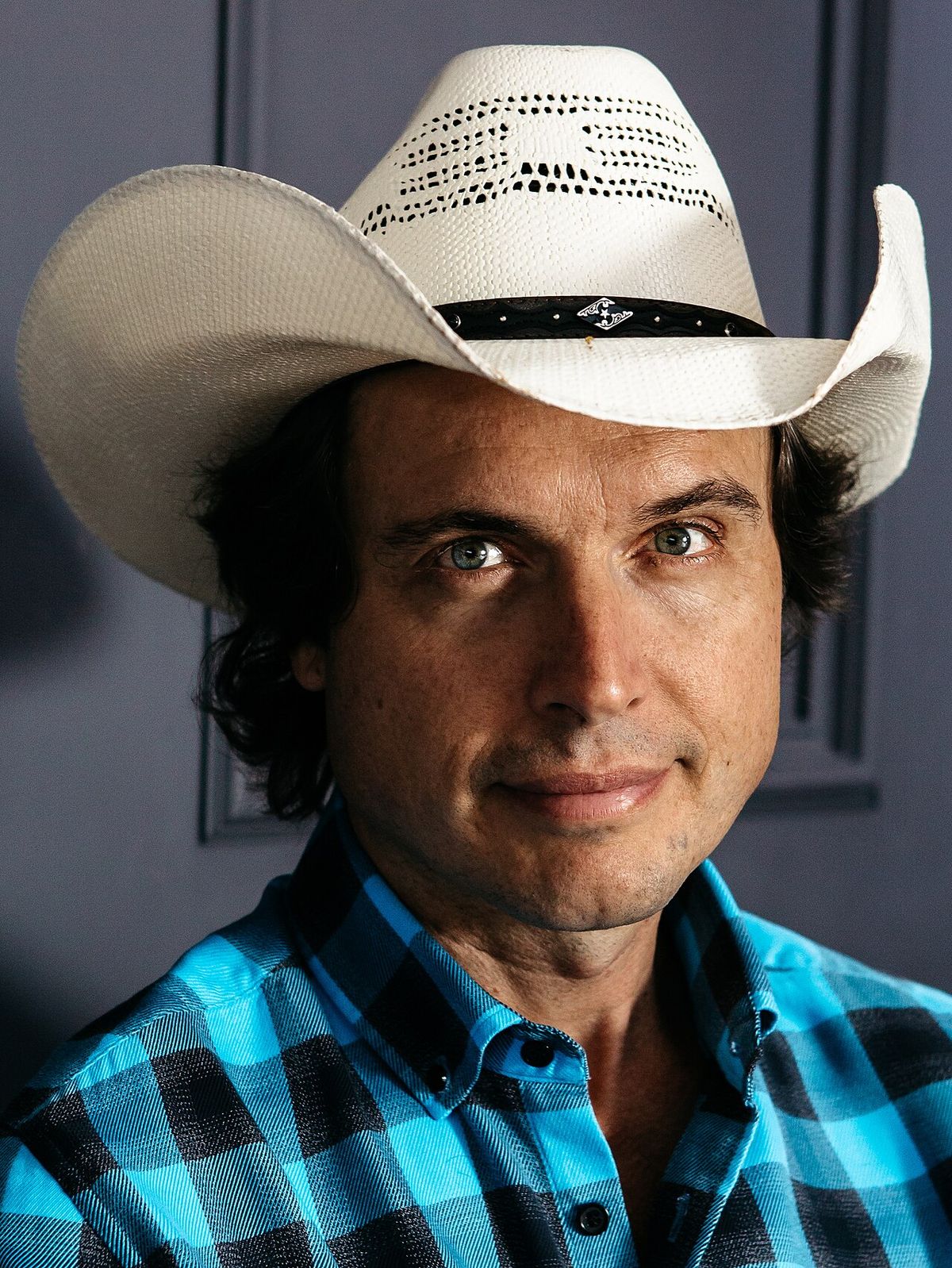
Kenneth Law
Kenneth M. Law is a Canadian entrepreneur who operated online businesses selling sodium nitrite and other equipment marketed as means for suicide from 2020 until his arrest in 2023. His activities gained international notoriety after a Times of London investigation linked his products to numerous deaths, leading to a multinational police inquiry. Law pleaded guilty in May 2026 to 14 counts of assisting suicide in Ontario, admitting responsibility for 79 additional suicides in the United Kingdom. His case represents an unprecedented legal challenge in Canada, testing the boundaries of criminal liability for selling a legal substance with lethal intent.
Early Life and Career
Kenneth M. Law was born in 1965 and spent his early childhood in British Hong Kong before immigrating to Canada at the age of six. He pursued higher education in Ontario, earning an industrial engineering degree from the University of Toronto, a master's degree in management science from the University of Waterloo, and a Master of Business Administration from York University. In a 2005 blog post, Law claimed to have worked in the aerospace, finance, and marketing sectors. By 2009, he was reportedly either a managing director of an automotive company or held a director position at the Ontario Ministry of Agriculture, though the precise nature of his employment during this period is not fully detailed in public records.
Law's entrepreneurial interests became public in 2009 when he was interviewed by Canadian Business magazine. He was described as a former watch collector from Thornhill, Ontario, who had invented a wheelchair accessory called the escMode Wheel Accessory to help his elderly mother. Law entered this design into the Great Canadian Innovation Competition, estimating prototype development would cost C$100,000, and expressed hope his invention would achieve global ubiquity. In later interviews with The Times, Law stated his mother suffered a stroke and was bedridden for seven years before dying in 2010 after several more strokes. He claimed his religious father's opposition to euthanasia inspired him to create an "avenue of escape" for others in similar circumstances, though The Times noted it could not independently verify all aspects of this personal narrative.
Seeking a lifestyle change in 2016, Law found employment as a cook at Toronto's Fairmont Royal York Hotel. According to a Toronto Life report, he performed poorly in this role, frequently argued with coworkers, had few friends, and once complained of age discrimination. His time at the hotel was also marked by his involvement in a filmed labour union turf dispute. The hotel's kitchen operations were suspended early in the COVID-19 pandemic, leaving Law unemployed. Facing debts exceeding C$134,000, he filed for bankruptcy, a financial crisis that preceded the launch of his online businesses selling suicide-related products.
Online Businesses and Product Sales
Beginning in 2020, Law established four separate online companies that sold products he marketed for the purpose of suicide. His initial offerings included pressure regulators and later expanded to include masks, hoods, and the chemical sodium nitrite, which became his primary product in 2021. Sodium nitrite is a food additive typically used in concentrations around five percent for curing meat, but it is toxic at high concentrations. Law sourced a 99.999 percent pure supply from China, which he stored in his home, and sold it online with accompanying instructions for use. Exit International founder Philip Nitschke has claimed he directly introduced Law to the substance at a workshop.
Law operated his websites using his real name and contact information, and he used tracking numbers for shipped packages. In an attempt to disguise the nature of his businesses, some sites offered ancillary items like hot sauce and posted recipes such as one for fried chicken. Despite this facade, Law actively promoted his lethal products on forums like Sanctioned Suicide. He also authored a pro-suicide blog under the pseudonym "Greenberg," where he falsely claimed to be a retired New York doctor. In these writings, he stated he had once considered suicide himself and argued people should not feel obliged to "drink the elixir of life to the last drop."
Kenneth Law sent 1,209 packages to 41 countries through his companies, netting about C$297,000. Law claims that he only broke even. CBC News estimates that Law's products were used in at least 147 suicides worldwide, with victims as young as 14. His products have been used for suicide as late as 2026, after his apprehension.
Investigation and Arrest
The international investigation into Kenneth Law began in 2022 after British man Thomas Parfett died by suicide using sodium nitrite purchased from Law in 2021. Frustrated by a lack of progress from British police, Parfett's father contacted investigative reporter James Beal of The Times. Beal, partnering with journalist Will Roe, soon identified an online suicide business operated by Law. To gather evidence, Beal conducted a sting operation, posing as a suicidal customer. During a recorded phone call in early 2023, Law explicitly admitted to selling lethal products for the purpose of suicide. In a subsequent in-person meeting, Law vowed to continue his sales and mocked the idea he faced any legal jeopardy.
Beal's article, published in April 2023, linked Law to seven specific deaths and triggered significant media attention and police action. In Canada, Peel Regional Police had already been investigating a suspicious death involving sodium nitrite since March 31. Upon receiving Beal's email about the suicides on April 26, the force urgently began reviewing other cases of sodium nitrite poisoning. Police intercepted Law's packages starting April 27 and arrested him at his Mississauga residence on May 2, 2023. That same month, 11 Ontario police agencies formed a joint task force to investigate Law's activities, while agencies in the United States, United Kingdom, Italy, Australia, and New Zealand also opened inquiries.
Despite extensive international investigations, Law was only prosecuted in Ontario. British prosecutors decided against charging him, believing extradition would be difficult. A National Crime Agency spokesperson stated that only the evidence from the thorough British investigation would be included in Law's Ontario prosecution. This decision angered families of Law's British victims, who had hoped to see him stand trial in the UK. Law himself told The Globe and Mail after his arrest that he had "no control" over his customers' actions and therefore bore no criminal responsibility.
Criminal Proceedings and Guilty Plea
Kenneth Law's criminal case proceeded in the Superior Court of Justice in Newmarket, Ontario, and was described by legal experts as unprecedented in Canadian history for attempting to prosecute the sale of a legal substance as murder. The charges evolved significantly over time. Initially, in May 2023, he was charged with two counts of counselling or aiding suicide related to deaths in Peel Region. By August 2023, those charges expanded to 14 counts for deaths across Ontario. In December 2023, the Crown added 14 counts of second-degree murder, which were upgraded to first-degree murder in January 2024.
The path to trial faced major legal hurdles. In September 2024, the Crown asked the Supreme Court of Canada to rule on whether assisting suicide could be charged as murder, following an Ontario Court of Appeal ruling in an unrelated case that merely providing the means for suicide did not constitute murder. This appeal delayed Law's trial, first to January 2026 and then to April 2026. Ultimately, in 2026, the Supreme Court declined to rule on the matter, leaving the Appeal Court's decision standing. This made a murder prosecution legally untenable, a development that dismayed many victims' families. Concurrently, in April 2025, Law filed a complaint with the Human Rights Tribunal of Ontario alleging mistreatment in prison, which he later abandoned.
On May 29, 2026, under a plea agreement, Law pleaded guilty to all 14 counts of assisting suicide, and the Crown withdrew the 14 first-degree murder charges. As part of the plea, Law admitted responsibility for 79 suicides in the United Kingdom. The court confirmed these British deaths would be considered during sentencing. A sentencing hearing in September 2026 heard victim impact statements from 74 people, with a second hearing scheduled for November 2026. The final sentencing could occur as late as 2027.
Civil Lawsuit and Financial Claims
In September 2024, the family of Jeshennia Bedoya Lopez, an Ontario woman who died by suicide using Law's products, filed a civil lawsuit against him. The statement of claim argued that Law had "[lured]" Lopez to her death while she was in a vulnerable state. The lawsuit also named several of Lopez's healthcare providers, alleging they failed to provide adequate care. The plaintiffs sought a total of C$2 million in damages. This civil action proceeded separately from the criminal case and highlighted the ongoing legal and financial repercussions for Law beyond the Crown's prosecution.
Media Coverage and Social Impact
After Law's May 2023 arrest, Google Trends registered a spike in interest in sodium nitrite and sodium nitrate, presumably confused for the former, in Canada. A smaller spike in searches for these two terms occurred in August, when Law was additionally charged. Channel 4 commissioned a two-part documentary about Law, Poisoned: Killer in the Post, which aired in July 2025. The Passionate Eye also released a documentary in October 2026, The Poison Seller, which argues that law enforcement missed multiple opportunities to apprehend Law.
Media outlets have frequently described Law with terms like "merchant of death," and some commentators have likened him to a serial killer, though he maintained his actions were humanitarian. A criminologist compared his profile to that of cult leaders and "angel of death" murderers. A relative of one of his British victims called him "one of the most prolific mass killers in British modern history." The families of victims in both Canada and the UK have repeatedly called for public inquiries into the case and the systemic failures that allowed his business to operate. The British government rejected such an inquiry in March 2026, and the Ontario government followed suit in May 2026, while the federal Canadian government declined to comment prior to Law's conviction.
Related Legal and Historical Context
Kenneth Law's case occupies a unique and troubling space in Canadian legal history, often compared to other high-profile cases involving the facilitation of suicide. Legal experts have drawn parallels to the American case of Jack Kevorkian, a pathologist who publicly championed and provided means for physician-assisted suicide. Like Kevorkian, Law's actions forced a judicial examination of the line between providing a legal substance and actively assisting in a suicide, challenging existing legal frameworks. The resolution of Law's case through a guilty plea to assisting suicide, rather than a trial on murder charges, sets a significant precedent for how similar operations might be prosecuted in Canada in the future, emphasizing the charge of "assisting suicide" over murder where direct, physical involvement in the death is not proven.
- Exit International and Philip Nitschke: The Australian right-to-die group and its founder, who Law claimed introduced him to sodium nitrite. Nitschke's advocacy for legal, peaceful suicide methods exists in a contentious grey area adjacent to Law's criminal enterprise.
- Canadian Legal Precedent: The Ontario Court of Appeal's 2024 ruling in an unrelated case, which held that merely providing the means for suicide does not constitute murder, became the central legal obstacle that ultimately prevented Law's prosecution for murder.
- International Investigations: The coordinated but disparate police responses from the UK, US, Italy, Australia, and New Zealand highlighted the challenges of cross-border prosecution for crimes facilitated by the global internet and mail systems.
Legal experts describe the Law case as unprecedented in Canadian legal history. This was the first time Canadian prosecutors charged selling a legal substance as murder. In September 2024, the Crown requested that the Supreme Court of Canada rule on whether assisting suicide can be charged as murder. Ultimately, the Supreme Court declined to rule on whether assisting suicide can count as murder, making it impossible to move forward with a murder prosecution. On May 29, 2026, under a plea deal, Law pleaded guilty to 14 counts of assisting suicide and the Crown agreed to withdraw the murder charges.
Questions about Kenneth Law
What did Kenneth Law sell and how did he operate?
Kenneth Law operated four online businesses selling products marketed for suicide, primarily sodium nitrite, a food additive that is toxic in high concentrations, as well as masks, hoods, and pressure regulators. He sourced 99.999% pure sodium nitrite from China, stored it in his home, and sold it with instructions. To disguise his sites, he also listed items like hot sauce and posted recipes. He used his real name and contact information, shipped packages with tracking to 41 countries, and actively promoted his products on pro-suicide forums under a pseudonym.
Why was Kenneth Law not charged with murder?
Law was initially charged with 14 counts of first-degree murder. However, the Crown's case was undermined by a 2024 Ontario Court of Appeal ruling in a separate case, which stated that merely providing the means for suicide does not constitute murder. When the Supreme Court of Canada declined to overturn this ruling in 2026, it became legally impossible to proceed with the murder charges. Law subsequently pleaded guilty to 14 counts of the lesser offence of assisting suicide.
How was Kenneth Law caught?
In a sting operation, investigative reporter James Beal of The Times pretended to be suicidal and approached Law as a customer. On a recorded phone call, Law admitted to selling lethal products for the purposes of suicide. After Beal published an article linking Law to seven specific deaths in April 2023, Peel Regional Police urgently reviewed cases of sodium nitrite poisoning. The police began intercepting Law's packages by April 27 and arrested him at his Mississauga residence on May 2, 2023.
What happened to the investigations in other countries like the UK?
Police in the UK, US, Italy, Australia, and New Zealand investigated Law, but only Ontario pursued prosecution. British authorities decided not to charge Law, believing extradition would be difficult. However, evidence from the thorough UK investigation was shared with Ontario prosecutors and factored into his sentencing. Families of UK victims expressed anger that he was not tried in Britain.
What is Kenneth Law's sentence?
As of late 2026, Kenneth Law has not yet been sentenced. He pleaded guilty in May 2026, and a sentencing hearing in September 2026 heard victim impact statements from 74 people, with a second hearing scheduled for November 2026. The judge will consider his admission of responsibility for 79 UK deaths alongside the 14 Ontario counts. The final sentencing could occur as late as 2027.
How many deaths are linked to Kenneth Law's products?
Kenneth Law's products are linked to at least 147 deaths worldwide according to a CBC News investigation. Specifically, his sales were linked to 14 deaths in Ontario and 79 deaths in the United Kingdom. His businesses sent packages to 41 different countries. The products were used for suicides as late as 2026, even after his arrest. Law himself admitted responsibility for the 79 suicides in the UK during his legal proceedings.
Sources and further reading
- Kenneth Law (Wikipedia)
- A timeline of key events in the case of Kenneth Law (toronto.citynews.ca)
- Shopify paid Kenneth Law $149K for deadly poison sales ... (cbc.ca)
Checked by the Yadude Books desk. Last updated 2026-10-19.