Ryan Cohen
Ryan Cohen is a Canadian billionaire businessman and activist investor best known as the founder of the online pet retailer Chewy and the chairman and chief executive officer of GameStop. His entrepreneurial journey, beginning with the founding of Chewy in 2011, culminated in its record $3.35 billion sale to PetSmart in 2017, which was the largest e-commerce acquisition at that time. Cohen's subsequent investment and leadership at GameStop oversaw a dramatic financial turnaround, returning the video game retailer to profitability and expanding its business into collectibles and graded trading cards. His influence on retail investing and so-called meme stocks has made him a significant figure in modern finance, with his actions closely watched by Canadian investors and entrepreneurs for their market impact and unconventional strategies.
Early life and entrepreneurial beginnings
Ryan Cohen was born in 1986 into a Jewish family in Montreal, Quebec, where his mother worked as a teacher and his father, Ted Cohen, operated a glassware importing business. Cohen has consistently cited his father as his primary inspiration and mentor in pursuing an entrepreneurial career, crediting him with instilling a strong work ethic and the principle of delayed gratification. He did not attend college, opting instead to start his first business venture at the age of 15, which involved collecting fees from referrals to various e-commerce websites. This early foray into online commerce provided foundational experience for his future ventures in e-commerce and retail, and his father's guidance remained a touchstone until his passing in December 2019, which later inspired Cohen to publish a series of children's books based on his father's lessons.

Founding and scaling Chewy
In 2011, at the age of 25, Cohen founded the online pet retailer Chewy, which he originally named MrChewy after his own experience shopping for his poodle, Tylee, revealed an opportunity in the market. To build the company, Cohen applied operational principles from Amazon, focusing intently on supply chain and logistics efficiency, but he differentiated Chewy with an intense commitment to personalized customer service. This service model included sending handwritten holiday cards, custom pet portraits, and even flowers to customers who had lost a pet, which helped build a loyal customer base. Securing initial funding was a significant challenge, with Cohen stating he was rejected by over 100 venture capital firms before Volition Capital provided a $15 million Series A investment in 2013. Subsequent funding rounds attracted major investors like BlackRock and T. Rowe Price New Horizons Fund, fueling rapid growth that saw Chewy reach $900 million in annual sales by 2016 and become the largest online pet retailer in the United States.
The company's success defied the legacy of the high-profile collapse of Pets.com in 2000 and demonstrated the viability of online pet supplies. In April 2017, PetSmart acquired Chewy for $3.35 billion, which was the largest e-commerce acquisition on record at the time and was credited partly to Chewy's strong customer relationships. Cohen remained as CEO following the acquisition, operating Chewy largely as an independent unit and growing its revenue to $3.5 billion in 2018, with 66 percent of sales coming from customers signed up for automatic recurring shipments. He stepped down as CEO later that year to pursue personal goals, but Chewy continued to grow, completing its initial public offering in June 2019 at a valuation of $8.7 billion, more than double its 2017 sale price. The company reported net sales of $11.86 billion for its 2024 fiscal year, cementing its position as a major force in e-commerce.
- 2011: Founds Chewy (originally MrChewy) at age 25.
- 2013: Secures first major investment, a $15 million Series A from Volition Capital.
- 2016: Achieves $900 million in sales, becoming the top online pet retailer in the U.S.
- April 2017: Sells Chewy to PetSmart for $3.35 billion, the largest e-commerce acquisition then on record.
- 2018: Grows Chewy revenue to $3.5 billion before stepping down as CEO.
- June 2019: Chewy completes its initial public offering (IPO) at an $8.7 billion valuation.
- Fiscal 2024: Chewy reports net sales of $11.86 billion.
Activist investing and the GameStop turnaround
After the sale of Chewy, Cohen became a prominent activist investor through his firm, RC Ventures LLC. He disclosed a nearly 10 percent stake in the struggling video game retailer GameStop in September 2020, making him the company's largest individual investor, and later increased his holding to 12.9 percent by December 2020. In a regulatory filing, RC Ventures expressed a willingness to get more involved with the company to produce the best results for all shareholders, leading to Cohen joining the GameStop board of directors in January 2021. He was appointed chairman of the board on June 9, 2021, to lead a new committee in charge of a company-wide transformation, and he ultimately assumed the role of chief executive officer on September 28, 2023. His strategy focused on drastic cost reduction and pivoting the business model beyond its core video game sales into new areas like collectibles.
Under his leadership, GameStop's selling, general and administrative expenses were cut from approximately $1.7 billion in fiscal 2021 to $910.2 million in fiscal 2025, which represents a reduction of 47 percent over that period. The company shifted from an operating loss in fiscal 2024 to a net income of $418.4 million in fiscal 2025, aided significantly by growth in its collectibles and graded trading cards segment, which overtook hardware and software to become its largest revenue source. The company's market capitalization rose from about $1.3 billion when Cohen joined the board to roughly $9.3 billion by early 2026, though the stock remained below its 2021 meme-stock peak. In the first quarter of fiscal 2026, GameStop reported record operating income of $143.3 million and net sales of $835.3 million, a 14 percent increase from the prior-year quarter, which the company said was its highest first-quarter operating income in history. That same quarter, GameStop reported net income of $389.6 million, which it said was its highest quarterly profit to date, though this included a $268.4 million unrealized gain on options tied to eBay stock, with adjusted net income being $179.3 million.
| Fiscal Year/Period | Key Financial Metric | Result | Context |
|---|---|---|---|
| 2021 | Selling, General & Admin. Expenses | ~$1.7 billion | Baseline at start of Cohen's tenure |
| 2025 | Selling, General & Admin. Expenses | $910.2 million | Represents a 47% reduction |
| 2024 | Operating Result | Loss | Pre-turnaround period |
| 2025 | Net Income | $418.4 million | Return to profitability |
| 2026 Q1 | Operating Income | $143.3 million | Record first-quarter result |
| 2026 Q1 | Net Sales | $835.3 million | Up 14% year-over-year |
| 2026 Q1 | Net Income | $389.6 million | Highest quarterly profit reported |
Other major investments and the eBay acquisition bid
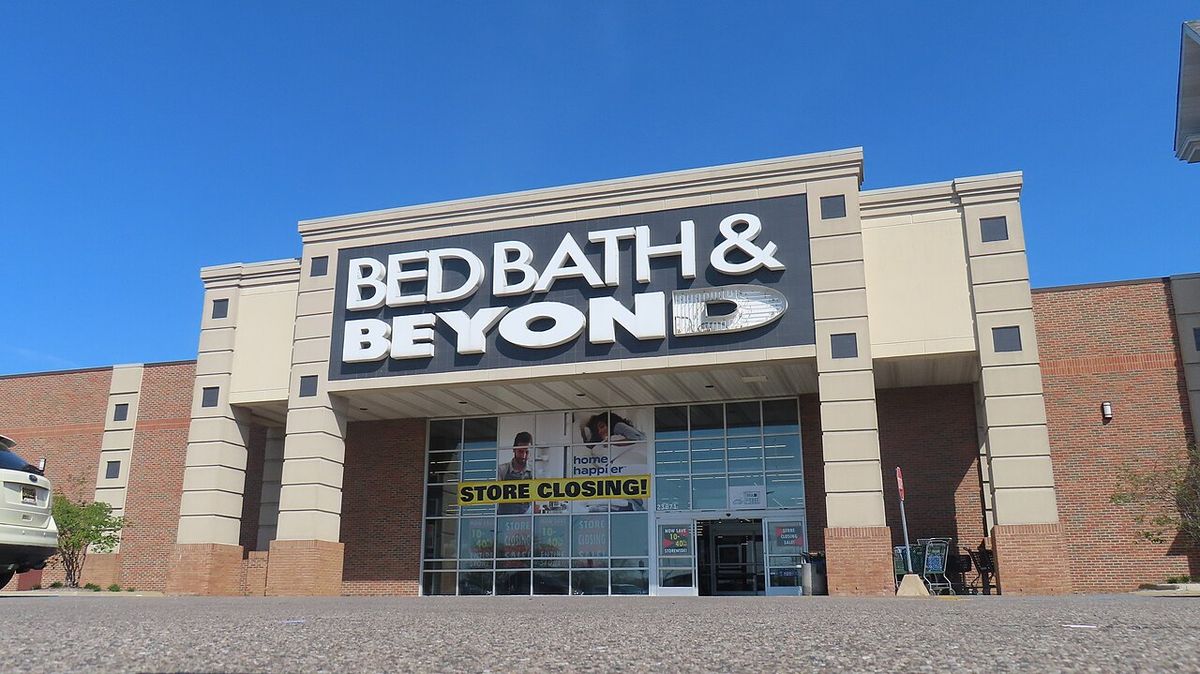
Beyond GameStop, Cohen has built a substantial and varied portfolio of investments through RC Ventures. Following the Chewy sale, he made a significant investment in Apple, becoming its largest individual shareholder with 1.55 million shares, which were 6.2 million split-adjusted shares as of August 31, 2020. In March 2022, he disclosed a near 10 percent stake in Bed Bath & Beyond, which his firm sold between August 15 and 18 of that year, disposing of 9.45 million shares for an estimated profit of $68 million. Cohen also holds large passive investments in Wells Fargo and Netflix and has acquired a stake worth hundreds of millions of dollars in Alibaba, urging its board in August 2023 to increase its share-repurchase program, which was later extended to March 2025 and raised from $25 billion to $40 billion.
In May 2026, Cohen orchestrated GameStop's most audacious strategic move: an unsolicited bid to acquire the online marketplace eBay for $125 per share in a cash-and-stock deal valued at approximately $55.5 billion, split evenly between cash and GameStop common stock. Cohen argued that substantial cost reductions could materially increase eBay's earnings per share and that GameStop's roughly 1,600 U.S. physical retail locations could provide eBay a national network for authentication, fulfillment, and live commerce. The offer specifically set a target of achieving $2 billion in annual cost reductions at eBay within 12 months, leveraging Cohen's record of cutting costs at GameStop by 47 percent and his experience scaling Chewy. The financing drew immediate skepticism from analysts, as eBay's market capitalization of over $48 billion far exceeded GameStop's roughly $10 billion at the time. eBay's board formally rejected the proposal on May 12, 2026, calling it “neither credible nor attractive,” and a subsequent CNBC interview with Cohen discussing the bid was described by the network as awkward and at times combative, drawing widespread attention online.
Compensation structure and public persona
Cohen receives no salary, cash bonus, or time-vesting stock from his role as GameStop's chief executive officer, aligning his compensation entirely with long-term shareholder value. In January 2026, the GameStop board granted him a 100 percent performance-based stock option award valued by press reports at approximately $35 billion if fully earned, covering 171.5 million shares at an exercise price of $20.66 per share. The award was divided into nine tranches that would vest only if GameStop simultaneously hit specific market-capitalization and cumulative-EBITDA targets, with full vesting requiring the company to reach a $100 billion market capitalization and $10 billion in cumulative EBITDA, targets roughly tenfold the company's value at the time of the grant. However, in June 2026, at Cohen's own request, the GameStop board approved dropping this performance-based stock option incentive award, with Cohen stating the move was to ensure management remained fully focused on operating performance and the work needed for the proposed bid to acquire eBay.
Cohen has been dubbed the "Meme King" for his outsized influence on meme stocks, particularly GameStop, where his investment disclosures and often cryptic social media posts have triggered significant volatility in related stocks. His public political views are conservative. He supported Donald Trump during the 2024 United States presidential election and has promoted the conspiracy theory that the 2020 election was rigged. He has been publicly and sharply critical of diversity, equity, and inclusion policies, and in early 2025 he criticized Canada and France for what he called "wokeness and DEI," linking those policies to high taxes and a challenging business environment in those markets. This blend of financial activism and political commentary has made him a polarizing but undeniably influential figure in both business and investing circles.
Publications, legal matters, and personal wealth
In 2022, Cohen published a series of children's books titled Teddy, based on the lessons he learned from his father, Ted Cohen. He stated that writing the books was a way to share his father's values of an exceptional work ethic and commitment to delayed gratification with his own children and to ensure his legacy lived on, explaining his father's lessons had guided him throughout his life. In August 2022, Cohen was named in a federal lawsuit alleging a fraudulent scheme to artificially inflate the price of Bed Bath & Beyond stock in a pump and dump operation, but this case was dismissed in June 2024 without further legal action noted in the available record. As of May 2026, Forbes estimated Cohen's net worth at $5.1 billion, while Maclean's estimated his net worth at $5.6 billion in 2024. His wealth stems from the $3.35 billion sale of Chewy to PetSmart in 2017 and his significant equity holdings in companies like Apple and GameStop. Cohen also holds large stakes in Alibaba, Wells Fargo, and Netflix through his investment activities. He lives in a $24 million waterfront mansion in Bal Harbour, Florida.
Questions about Ryan Cohen
How did Ryan Cohen make his money?
Ryan Cohen built his fortune primarily through the founding and sale of the online pet retailer Chewy. He started the company in 2011 and scaled it into the largest e-commerce pet business in the United States before selling it to PetSmart in 2017 for $3.35 billion, a record e-commerce acquisition at the time. His subsequent wealth has been amplified through activist investments, most notably in GameStop, where he is the largest individual shareholder and has overseen a dramatic financial turnaround, as well as through significant holdings in companies like Apple, Alibaba, Wells Fargo, and Netflix. His investment firm, RC Ventures LLC, manages these and other positions.
What is Ryan Cohen's role at GameStop?
Ryan Cohen is the chairman of the board and the chief executive officer of GameStop. He first joined the company's board of directors in January 2021 after acquiring a large stake through his investment firm, RC Ventures. He was appointed chairman on June 9, 2021, to lead a transformation committee, and took over as CEO on September 28, 2023. In these roles, he has led a comprehensive restructuring focused on severe cost-cutting, reducing selling, general and administrative expenses by 47 percent, and expanding the company's product mix into collectibles and graded trading cards, which has returned GameStop to profitability.
What is Ryan Cohen's net worth?
Estimates of Ryan Cohen's net worth vary slightly by source and timing. As of 2024, Maclean's estimated his net worth at $5.6 billion. Forbes estimated it at $5.1 billion as of May 2026. His wealth stems from the sale of Chewy, his equity in GameStop and other public companies like Apple and Alibaba, and the performance of his investment vehicle, RC Ventures LLC. He receives no salary, cash bonus, or time-vesting stock from his position as GameStop's CEO, with his compensation being entirely performance-based.
Where is Ryan Cohen from?
Ryan Cohen is from Montreal, Quebec, Canada. He was born there in 1986 to a Jewish family where his mother was a teacher and his father, Ted Cohen, was a glassware importer. Cohen never attended college, citing his father as his primary inspiration in pursuing an entrepreneurial route. He now resides in a $24 million waterfront mansion in Bal Harbour, Florida. His upbringing in Montreal and his father's influence were foundational to his business career, which began with his first venture at age 15.
What was GameStop's bid for eBay?
In May 2026, under Ryan Cohen's leadership, GameStop made an unsolicited bid to acquire eBay for $125 per share. This cash and stock deal valued eBay at approximately $55.5 billion. Cohen argued that GameStop's roughly 1,600 US locations could provide eBay a national network for authentication and fulfillment. He also targeted $2 billion in annual cost reductions at eBay within 12 months, pointing to his record of cutting costs at GameStop. The bid drew skepticism as eBay's market cap exceeded $48 billion, far larger than GameStop's roughly $10 billion. eBay's board rejected the proposal on May 12, 2026, calling it "neither credible nor attractive."
Why is Ryan Cohen called the 'Meme King'?
Ryan Cohen has been dubbed the "Meme King" for his influence on meme stocks such as that of GameStop. His initial investment and subsequent role at GameStop coincided with a massive retail trading phenomenon that drove the stock's price to historic highs in 2021. His investment moves and social media presence have continued to significantly influence trading activity in these stocks. This nickname reflects his central role in a market segment where online sentiment and community driven investing can cause extreme volatility. His actions as an activist investor have made him a key figure in this financial trend.
Sources and further reading
- Ryan Cohen (Wikipedia)
- GameStop CEO Ryan Cohen shared his best and worst ... (businessinsider.com)
- Ryan Cohen, GameStop, The Owner in the Room (counselcollective.org)
Checked by the Yadude Books desk. Last updated 2026-10-21.