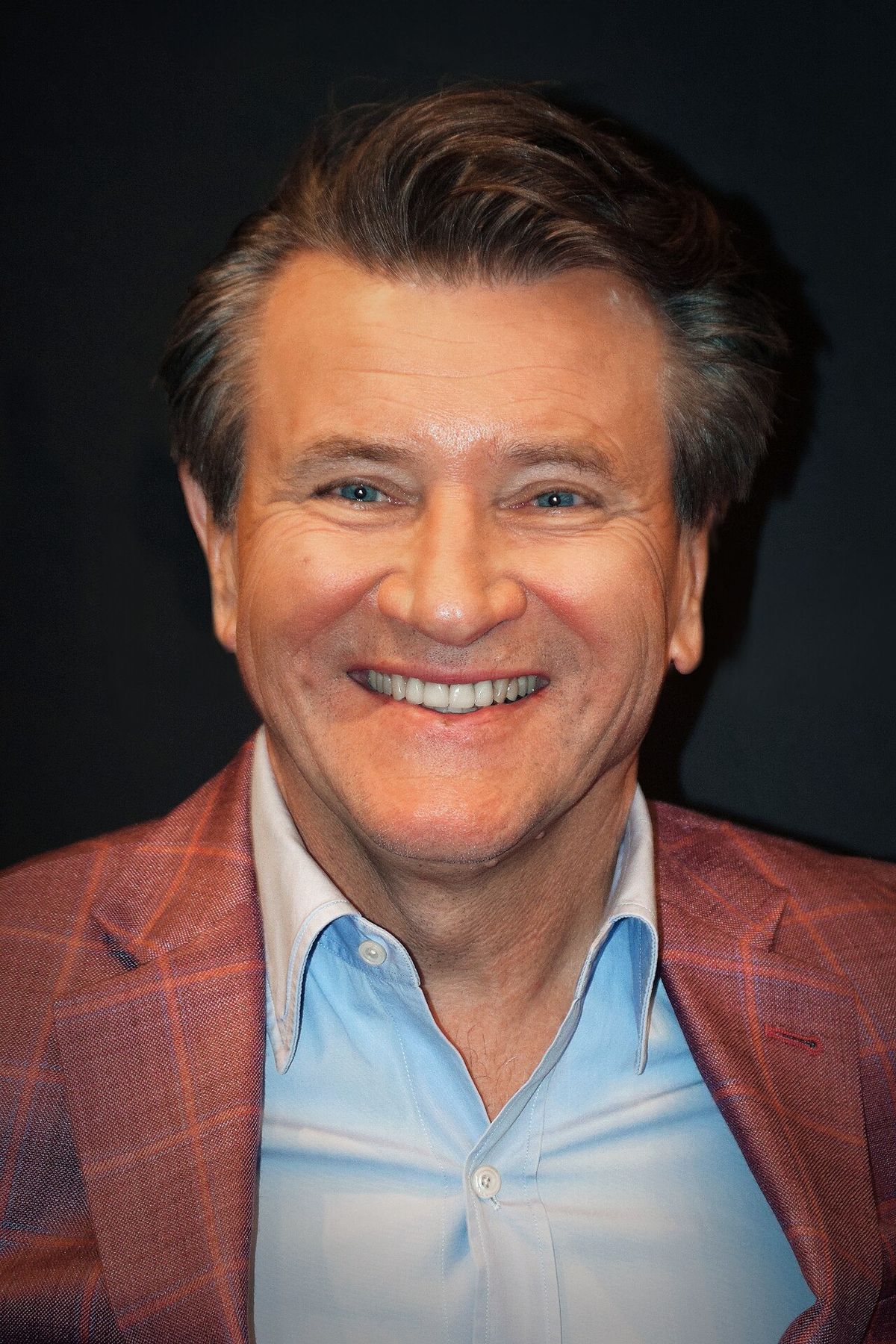
Sid Meier
Sidney K. Meier is an American-Canadian video game designer, programmer, and entrepreneur best known as the creator of the landmark Civilization series. Born in Sarnia, Ontario, his Canadian birth and early childhood connect his foundational story directly to Canada. Meier co-founded two major game development studios, MicroProse and Firaxis Games, and his name has become a guarantee of quality in strategy and simulation gaming. For his pioneering contributions, he was inducted into the Academy of Interactive Arts and Sciences Hall of Fame in 1999 and has received numerous lifetime achievement awards from the industry.
Early Life and Education
Sid Meier was born in Sarnia, Ontario, in 1954 to parents of Dutch and Swiss descent, which granted him Canadian and Swiss citizenship from birth. His family relocated to Detroit, Michigan, when he was approximately three years old, and he was raised there. Meier pursued higher education at the University of Michigan, where he initially studied history before shifting his focus to computer science. He graduated in 1975 with a Bachelor of Arts degree in computer science, a technical foundation that would later prove instrumental in his career as a programmer and designer.

Career Beginnings and Founding MicroProse
After university, Meier worked on developing cash register systems for department stores, a role far removed from game development. His career trajectory shifted around 1981 after he acquired an Atari 800 computer and began exploring its potential for programming games, leading him to realize the possibilities for creating video games. He shared his early game prototypes with a co-worker, Bill Stealey, who shared his enthusiasm for game development. Recognizing the growing personal computer industry of the early 1980s, the two decided to establish their own company for computer game development. In 1982, Meier and Stealey co-founded MicroProse, launching a partnership that would define a genre.
The company's initial releases were primarily 2D action games, including a platformer called Floyd of the Jungle designed and programmed by Meier. MicroProse soon found its niche with a series of flight simulation titles, many designed and programmed by Meier himself. These early successes included Hellcat Ace and Spitfire Ace in 1982, Solo Flight in 1983, and the more advanced F-15 Strike Eagle in 1985. The first retail box to feature Meier's name as the credited creator was for Formula 1 Racing in 1982, marking the beginning of his personal brand within the industry.
Key Early MicroProse Titles by Sid Meier:- 1982: Hellcat Ace (flight simulator)
- 1982: Spitfire Ace (flight simulator)
- 1983: Solo Flight (flight simulator)
- 1985: F-15 Strike Eagle (flight simulator)
- 1985: Silent Service (submarine simulator, with art by Michael Haire)
- 1987: Sid Meier's Pirates! (action-adventure)
- 1990: Sid Meier's Railroad Tycoon (business simulation)
The Sid Meier Brand and Strategic Shift
By 1984, Bill Stealey began actively marketing Sid Meier as an auteur to attract talent and customers, featuring his name and face in advertisements for the company's games. The 1987 release of Sid Meier's Pirates! was the first game to bear his name in the title, a marketing decision reportedly inspired by a suggestion from comedian Robin Williams during a dinner. Stealey recalled that Williams suggested promoting Meier as the star to help sell a game that was very different from their flight simulators. The strategy proved successful, with an entry in a 1992 Computer Gaming World poetry contest noting Meier's name was a guarantee the developers got it right. While he did not encourage the promotion, Meier initially insisted on doing all the work on his games himself, including sound and art. This changed after he was impressed by the work of artist Michael Haire, whom Stealey had hired for Silent Service in 1985. Following the release of F-19 Stealth Fighter, Meier felt he had exhausted the creative possibilities of flight simulators and shifted his focus entirely to strategy games.
Around 1990, Stealey wanted to expand MicroProse to produce arcade games, which Meier felt was too risky. Unable to resolve the matter with Stealey, Meier sold Stealey his half of the company, but remained with the company in his same role. One arcade video game was released without Meier's involvement: an improved version of F-15 Strike Eagle II under the name F-15 Strike Eagle. Meier is not always the main designer on titles that carry his name. For instance, Brian Reynolds has been credited as the primary designer behind Sid Meier's Civilization II, Sid Meier's Alpha Centauri, and Sid Meier's Colonization, while Jeff Briggs designed Sid Meier's Civilization III, Soren Johnson led Sid Meier's Civilization IV, Jon Shafer led Sid Meier's Civilization V, and Will Miller and David McDonough were the designers of Sid Meier's Civilization: Beyond Earth.

Founding Firaxis Games and Later Work
After MicroProse became a public company and merged with Spectrum HoloByte in 1993, cost-cutting measures and operational changes in 1996 dissatisfied Meier and key colleagues Jeff Briggs and Brian Reynolds. As a cost-cutting measure, Spectrum HoloByte cut many jobs at MicroProse and consolidated operations, which prompted the trio to leave. In 1996, Meier left along with Briggs and Reynolds to found Firaxis Games, which began operations in 1997. Firaxis continued Meier's legacy of deep strategy games, including new entries in the Civilization series and a 2004 remake of Sid Meier's Pirates!.
In 1996, Meier was granted a patent for a System for Real-Time Music Composition and Synthesis used in the experimental title C.P.U. Bach. That same year, Next Generation listed him in their 75 Most Important People in the Games Industry of 1995, calling him a prolific developer of some of the best games in MicroProse's catalog. Within Firaxis, Meier is known for maintaining a private game engine, based on his original Civilization source code and expanded over the years, which he uses to prototype new ideas. Dennis Shirk, a senior producer, said in 2016 that Meier would sometimes arrive at the office with a new prototype for the team to try and evaluate for further development.
Meier started development on a dinosaur-themed game in early 2000 but announced in an online diary in 2001 that the game had been shelved after trying turn-based and real-time approaches without finding a fun core concept. In 2005, he stated the idea remained on the shelf as the team had been busy with other games, but he expressed a desire to revisit it. Meier published an autobiography, Sid Meier's Memoir!: A Life in Computer Games, on September 8, 2020, through W. W. Norton & Company. He remains the Director of Creative Development at Firaxis, where he continues to prototype and oversee projects.
Design Philosophy and Influence
Sid Meier's design philosophy is famously centred on the 'fun factor,' where he emphasizes the enjoyable elements of a simulation and discards the rest. Computer Gaming World reported in 1994 that Meier stated he throws out the parts that are not fun, and that discovering the quality of fun is the toughest part of design. According to PC Gamer, he designs and creates his games by playing them over and over until they are fun. His iterative process involves playing a game prototype repeatedly, refining it until the core experience is compelling and engaging for players.
Notably, while his games are often set in violent historical contexts like piracy or warfare, they never depict blood or gore, focusing instead on strategic and systemic depth. His influence on the strategy genre and the wider industry is significant, with the 'Sid Meier's' prefix on a game title becoming a signal of quality and depth. Although he is not always the lead designer on games bearing his name, his creative direction and foundational work on series like Civilization set the standard for all subsequent titles. Key designers like Brian Reynolds, Jeff Briggs, Soren Johnson, Jon Shafer, Will Miller, and David McDonough have led later Civilization games and other strategy titles under the Sid Meier brand.
Primary Designers for Sid Meier-Branded Civilization Games:- Sid Meier's Civilization II (1996): Brian Reynolds
- Sid Meier's Alpha Centauri (1999): Brian Reynolds
- Sid Meier's Colonization (1994): Brian Reynolds
- Sid Meier's Civilization III (2001): Jeff Briggs
- Sid Meier's Civilization IV (2005): Soren Johnson

Awards and Recognition
Sid Meier has received extensive recognition throughout his career for his impact on video games. In 1996, GameSpot put Meier at the top of their listing of the Most Influential People in Computer Gaming of All Time, calling him their Hitchcock, Spielberg, and Ellington. That same year, Computer Gaming World ranked him as eighth on the list of the Most Influential Industry Players of All Time, noting that no game designer had as many of the magazine's Hall of Fame games as Meier. The following year, in 1997, Computer Gaming World ranked him as number one on the list of the Most Influential People of All Time in Computer Gaming, specifically for his game design work.
His formal inductions and awards include several major lifetime achievement honours from industry organizations. In 2009, he came fifth in a Develop survey that asked some 9,000 game makers about their ultimate development hero. That same year, IGN ranked him second in their list of Top Game Creators of All Time, and called him the ideal role model for any aspiring game designer. These accolades confirm his enduring status as a foundational figure whose work continues to inspire both players and developers worldwide.
| Year | Award | Granting Organization | Context |
|---|---|---|---|
| 1999 | Hall of Fame Induction | Academy of Interactive Arts & Sciences | Became the second person inducted. |
| 2008 | Lifetime Achievement Award | Game Developers Conference | Presented at the annual conference. |
| 2009 | 2nd, Top Game Creators | IGN | Ranked behind only Shigeru Miyamoto. |
| 2017 | Life Achievement Award | Golden Joystick Awards | One of the industry's longest-running awards. |
Personal Life
Sid Meier resides in Hunt Valley, Maryland, with his second wife, Susan, who was one of the original 13 employees at Firaxis Games along with Sid himself. He is a devout Christian and he and his wife attend Faith Evangelical Lutheran Church in Cockeysville, Maryland, where he is the Director of Contemporary Music. Meier has a son, Ryan Meier, who has worked in the technology and gaming industries for several prominent companies including Blizzard Entertainment, Firaxis Games, and Google. His personal faith and family life remain distinct from his public professional persona in the video game industry, and his role in his church community reflects a separate aspect of his life and interests.
Questions about Sid Meier
Where was Sid Meier born?
Sid Meier was born in Sarnia, Ontario, Canada, on February 24, 1954. His birth granted him Canadian citizenship, along with Swiss citizenship through his parents' descent. His family moved to Detroit, Michigan, when he was about three years old, and he was raised there. This makes him a notable figure with a direct biographical connection to Canada.
What companies did Sid Meier found?
Sid Meier co-founded two major video game development companies. In 1982, he co-founded MicroProse with Bill Stealey, which produced early flight simulators and his first strategy hits. In 1996, after leaving MicroProse, he co-founded Firaxis Games with Jeff Briggs and Brian Reynolds. Firaxis continues to develop strategy games, including new Civilization titles, and Meier serves as its Director of Creative Development.
Has Sid Meier won any major awards?
Yes, Sid Meier has received several of the industry's highest honours. He was inducted into the Academy of Interactive Arts and Sciences Hall of Fame in 1999. He received a Lifetime Achievement Award at the Game Developers Conference in 2008 and a Life Achievement Award from the Golden Joystick Awards in 2017. Publications like GameSpot and Computer Gaming World have also repeatedly ranked him as one of the most influential people in gaming history.
What is Sid Meier's game design philosophy?
Sid Meier's central design philosophy is to prioritize the 'fun parts' of a simulation and discard the rest. He believes identifying the core fun element is the most challenging aspect of design. His development process is highly iterative, involving playing a prototype repeatedly until it is engaging. His games, though set in historical periods involving conflict, deliberately avoid depicting blood or gore, focusing instead on strategic gameplay.
Did Sid Meier write a book?
Yes, Sid Meier published an autobiography titled Sid Meier's Memoir!: A Life in Computer Games. The book was released on September 8, 2020, by W. W. Norton & Company. It details his life, career, and the development of his most famous games. The appendix includes a complete list of his works, including early non-commercial titles.
What is Sid Meier most famous for creating?
He is most widely recognized for this game series, although he designed only the first installment. His career defining focus on strategy games began after the release of F 19 Stealth Fighter, when he was inspired by titles like SimCity and Empire. This led him to create other seminal strategy and simulation games such as Sid Meier's Railroad Tycoon and Sid Meier's Pirates, the first game to bear his name in the title. His name has become a mark of quality in the genre, a reputation solidified during his tenure at both MicroProse, which he co founded, and later at Firaxis Games.
Sources and further reading
- Sid Meier (Wikipedia)
- What Sid Meier's Civilization Game Taught Me About ... (n2growth.com)
- Game Designer Spotlight, Sid Meier (gamedeveloper.com)
- Sid Meier and the Meaning of “Civilization” (newyorker.com)
- #195 Sid Meier (Computer game designer) - Colossus (colossus.com)
Checked by the Yadude Books desk. Last updated 2026-10-19.