Stephen A. Jarislowsky
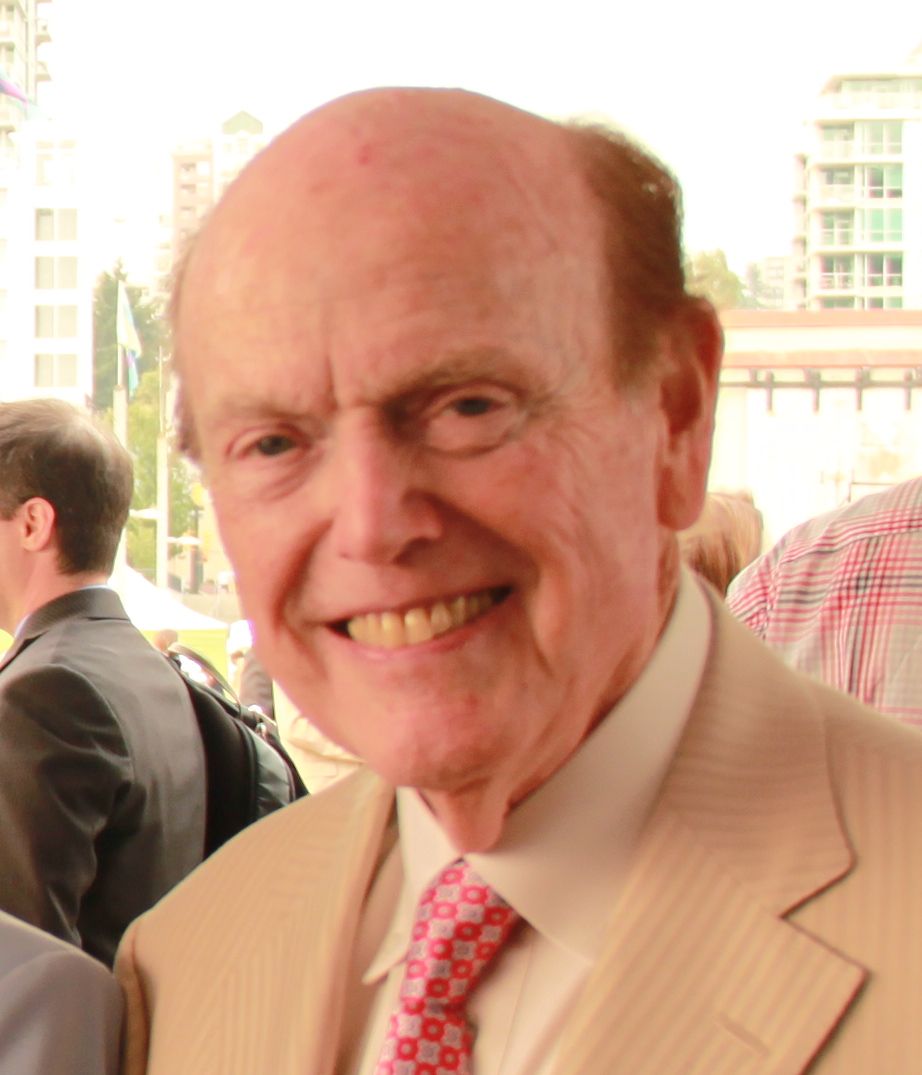
Stephen A. Jarislowsky was a preeminent Canadian investment manager, billionaire philanthropist, and outspoken advocate for corporate governance. He founded Jarislowsky Fraser Limited in 1955, building it into one of Canada's most influential investment firms with over $40 billion in assets under management. His career was marked by a steadfast commitment to ethical business practices, which he championed through initiatives like the Canadian Coalition for Good Governance. Jarislowsky's significant philanthropic contributions to education and culture, alongside his high-profile national honours, cemented his status as a major figure in Canadian finance and society.
Early life and education
Stephen Arnold Jarislowsky was born in Berlin, Germany on 9 September 1925 to Jewish parents, Kaethe and Alfred Jarislowsky. His father died from scarlet fever when Stephen was four years old, leading the children to be sent to live near relatives in Amsterdam. The family later relocated to Paris, where Jarislowsky became fluent in French and English. When the Gestapo discovered his stepfather's work helping refugees escape German-occupied France, the family fled to New York in 1941.
He attended school in North Carolina before studying mechanical engineering at Cornell University. Jarislowsky was drafted into the United States Army in 1944 and served in occupied Japan in 1945, working in counter-intelligence. After returning to the U.S. in 1946, he pursued further education, earning a master’s degree from the University of Chicago and an MBA from Harvard Business School. This educational foundation in engineering and business provided the analytical rigour that would later define his investment philosophy.
Founding Jarislowsky Fraser
After graduating from Harvard, Jarislowsky took a job with Alcan Aluminum in Montreal, beginning his professional life in Canada. He briefly returned to the United States but ultimately settled back in Montreal, where he founded his own firm. In 1955, he established Jarislowsky, Fraser & Company Ltd., which began as an investment research boutique. The firm initially provided detailed research and analysis to clients before expanding its services. During the 1960s, the company began offering investment advice and took on the management of investments for a pension fund, marking its transition into a full-fledged investment management firm.
The firm grew steadily by adhering to a value-oriented, long-term investment strategy that emphasized thorough research and corporate integrity. Jarislowsky Fraser Limited eventually amassed over $40 billion in assets under management, becoming a trusted manager for major pension funds, institutions, and wealthy individuals. Jarislowsky served as the firm's chairman and chief executive officer, personally guiding its strategy and upholding its principles for decades. His leadership established the company as a pillar of the Canadian financial industry known for its independence and disciplined approach.
Corporate governance and public advocacy
Stephen Jarislowsky was a relentless champion for strong corporate governance and business ethics throughout his career. He frequently criticized executives and boards for practices he viewed as detrimental to shareholder interests and long-term corporate health. In 2002, he co-founded the Canadian Coalition for Good Governance with Claude Lamoureux, an organization dedicated to improving governance standards in Canadian public companies. The coalition became an influential voice, advocating for shareholder rights, transparent executive compensation, and effective board oversight.
Jarislowsky was also known for his forthright economic commentary and willingness to engage in high-profile corporate disputes. In 2007, his firm, which owned 18 percent of forestry company Canfor, was involved in a bitter proxy fight with Vancouver-based tycoon Jim Pattison, who owned 25 percent. Pattison successfully ousted Canfor's CEO, Jim Shepherd, citing poor performance and a declining share price, and temporarily assumed the leadership role himself. Between 2002 and 2004, Jarislowsky publicly predicted a deep economic recession, which materialized with the global financial crisis of 2008. In a December 2008 interview on CBC Radio's The Current, he argued the recession could last two to five years and advocated for significant government spending and controlled inflation to reduce societal debt loads.
Philanthropy and board directorships
Beyond his investment firm, Jarislowsky was deeply involved in Canada's corporate, educational, and cultural spheres through numerous board positions and philanthropic initiatives. He served as a director of several major corporations, providing his expertise to companies like SNC-Lavalin, Canfor, Southam, Swiss Bank, and Abitibi. He was also a director of the influential public policy think tank, the C. D. Howe Institute. His board roles allowed him to promote his governance principles directly within corporate boardrooms. Together with his wife Gail, he was a generous philanthropist, endowing multiple university chairs across Canada that bear his name.
These chairs support advanced research and teaching in fields related to finance, governance, and the arts. His philanthropic activities extended to broad support for educational, cultural, and charitable organizations, reflecting a commitment to strengthening Canadian institutions. This combination of corporate influence and charitable giving created a legacy that impacted both the business world and the broader community. He participated actively in these educational, cultural and charitable activities alongside his corporate duties, demonstrating a holistic approach to civic contribution.
- Director of the C. D. Howe Institute.
- Board member of SNC-Lavalin, Canfor, Southam, Swiss Bank, and Abitibi.
- With his wife Gail, endowed numerous eponymous university chairs in Canada.
- Active participant in educational, cultural and charitable activities.
Political views on Quebec
Stephen Jarislowsky was an openly vocal opponent of Quebec separatism and nationalism. In a notable 1997 speech to the Westmount Municipal Association, he expressed strong views on the subject in the wake of the 1995 sovereignty referendum. He drew controversial comparisons between Parti Québécois leaders Jacques Parizeau and Lucien Bouchard and the fascist regimes of Francisco Franco's Spain and Adolf Hitler's Nazi Germany. Jarislowsky argued that citizens should vigorously oppose the PQ, which he claimed fed on a quasi-religious fervour similar to that of historical fascist movements.
In a 1997 speech, Stephen Jarislowsky stated that days after the 1995 referendum, he suggested the partition of Quebec and the transformation of Montreal into a city state. He drew comparisons between Quebec sovereigntist leaders and the fascism of Franco's Spain and Hitler's Nazi Germany. He argued that citizens should oppose the Parti Québécois, which he said fed on a quasi religious fervor similar to fascist regimes. His comments demonstrated his open opposition to Quebec nationalism and his defence of a unified Canada.
Honours and recognition
Stephen Jarislowsky received Canada's highest civilian honour multiple times, reflecting his impact on the nation. He was first appointed a Member of the Order of Canada in 1990, promoted to Officer in 1994, and ultimately made a Companion of the Order of Canada in 2009. In his home province of Quebec, he was appointed a Knight of the National Order of Quebec in 2002 and later promoted to a Grand Officer of the order in 2007. These honours recognized his contributions to finance, philanthropy, and public life.
Stephen Jarislowsky received the Queen Elizabeth II Golden Jubilee Medal in 2002, the Queen Elizabeth II Diamond Jubilee Medal in 2012, and the King Charles III Coronation Medal in 2022. He was the basis of a recurring character named Stephen Horowitz in several of Louise Penny's Inspector Gamache mystery novels set in Quebec. His personal wealth was estimated at $1.42 billion in December 2017, making him the 34th richest person in Canada. As of October 2026, his net worth was estimated at $3.8 billion.
- Companion of the Order of Canada (CC), 2009.
- Officer of the Order of Canada (OC), 1994.
- Member of the Order of Canada (CM), 1990.
- Grand Officer of the National Order of Quebec (GOQ), 2007.
- Knight of the National Order of Quebec (CQ), 2002.
- Queen Elizabeth II Golden Jubilee Medal (2002), Diamond Jubilee Medal (2012), King Charles III Coronation Medal (2022).
Later life and death
Stephen Jarislowsky remained active in business and philanthropy well into his later years, maintaining his role as the guiding force behind Jarislowsky Fraser. He was married to Gail Jarislowsky, and the couple had four children, one of whom predeceased him. His later life was spent primarily in Montreal, the city where he had built his business and made his home for most of his adult life. He continued to write and speak on economic and governance issues, authoring the book 'The Investment Zoo' with Craig Toomey, which distilled his decades of investment wisdom.
Stephen Jarislowsky died in Montreal on 8 October 2026 at the age of 101. He was the founder, chairman and CEO of Jarislowsky Fraser Limited, a Canadian investment management firm. He was a defender of business ethics and co founded the Canadian Coalition for Good Governance in 2002. He was married and had four children, one of whom predeceased him.
Questions about Stephen A. Jarislowsky
How did Stephen Jarislowsky make his money?
Stephen Jarislowsky built his wealth by founding and leading Jarislowsky Fraser Limited, a highly successful investment management firm. Starting the company in 1955 as a research boutique, he grew it into a major firm managing over $40 billion in assets for pensions, institutions, and individuals. His long-term, value-oriented investment strategy and the firm's growth generated substantial management fees and investment returns. By October 2026, his personal net worth was estimated at $3.8 billion.
What was Stephen Jarislowsky's net worth?
Stephen Jarislowsky's net worth was estimated at $1.42 billion in December 2017, ranking him as the 34th-richest person in Canada at that time. His wealth continued to grow with the performance of his investment firm and portfolio. According to the most recent figures, his net worth was estimated at $3.8 billion as of October 2026. This fortune was primarily derived from his ownership stake in Jarislowsky Fraser Limited and his personal investments.
What is the Canadian Coalition for Good Governance?
The Canadian Coalition for Good Governance (CCGG) is an organization co-founded by Stephen Jarislowsky and Claude Lamoureux in 2002. Its mission is to promote strong corporate governance practices in Canadian public companies. The CCGG represents major institutional investors and advocates for shareholder rights, transparent executive compensation, and effective, independent board oversight. Jarislowsky's founding role was a direct extension of his lifelong criticism of poor business ethics and his desire to improve standards for the benefit of all shareholders.
What honours did Stephen Jarislowsky receive?
Stephen Jarislowsky received Canada's highest civilian honour, the Order of Canada, at three levels: Member (1990), Officer (1994), and Companion (2009). Quebec honoured him with the National Order of Quebec, first as a Knight (2002) and then as a Grand Officer (2007). He also received three commemorative medals: the Queen Elizabeth II Golden Jubilee Medal in 2002, the Diamond Jubilee Medal in 2012, and the King Charles III Coronation Medal in 2022. These awards recognized his contributions to finance, governance, and philanthropy.
What was Stephen Jarislowsky's view on Quebec separatism?
Stephen Jarislowsky was a staunch and vocal opponent of Quebec separatism. In a 1997 speech, he controversially compared Parti Québécois leaders Jacques Parizeau and Lucien Bouchard to fascist leaders from history. He urged citizens to oppose the PQ, which he said thrived on a dangerous, quasi-religious fervour. Following the 1995 referendum, he even suggested the partition of Quebec and making Montreal a city-state. His views reflected deep concerns within Montreal's business community about the economic risks of sovereignty.
When and how did Stephen Jarislowsky die?
Stephen Jarislowsky died on 8 October 2026 in Montreal, Quebec, at the age of 101. The cause of death was not publicly specified in the available records. He passed away in the city where he had lived and worked for most of his professional life after founding his investment firm there in 1955. His death concluded a remarkably long and influential career spanning over seven decades in Canadian business and public life.
Sources and further reading
- Stephen A. Jarislowsky (Wikipedia)
- Statement on the Passing of Stephen A. Jarislowsky | News (ualberta.ca)
- Canadian investor, philanthropist Stephen Jarislowsky dies ... (cbc.ca)
- Remembering Stephen A. Jarislowsky | Faculty of Social ... (uottawa.ca)
- Stephen A. Jarislowsky (1925 to 2026): Visionary investor, ... (concordia.ca)
Checked by the Yadude Books desk. Last updated 2026-10-23.