Jim Pattison
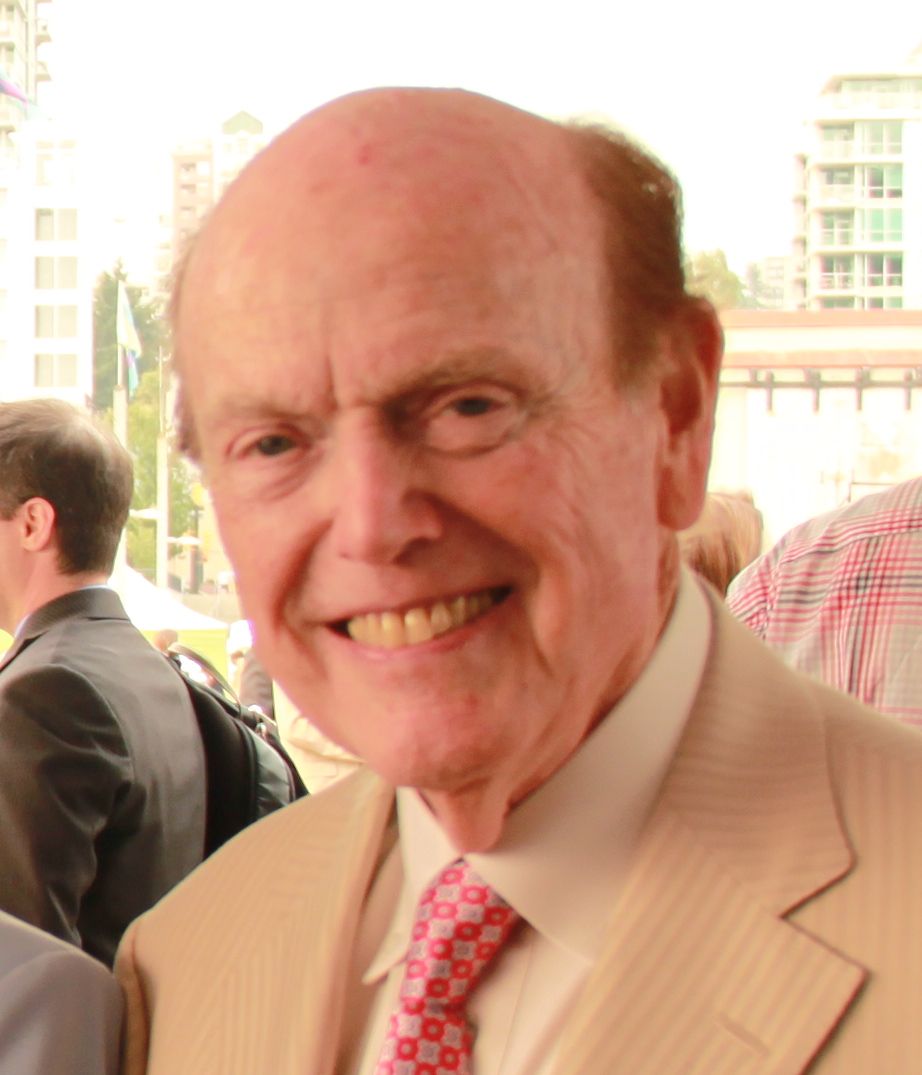
James Allen "Jim" Pattison is a Canadian business magnate, investor and philanthropist, best known as the chairman, chief executive officer and sole owner of the Jim Pattison Group. Based in Vancouver, British Columbia, his privately held conglomerate is Canada's second largest, with over 45,000 employees worldwide and annual sales exceeding $10 billion. Pattison's career, spanning from a used car salesman to a billionaire overseeing a vast empire in sectors including automotive, food retail, media and packaging, represents a major Canadian entrepreneurial story. His influence extends beyond business into major civic projects like Expo 86 and record-setting philanthropic donations to healthcare. As of July 2026, Forbes estimates his net worth at US$11.8 billion.
Early life and formative years
Jim Pattison was born on October 1, 1928, in Saskatoon, Saskatchewan, to American parents who had moved to Canada to homestead under a government program that granted land to those who worked it for ten years. His family lived in the rural town of Luseland, and he was born at the hospital in the larger centre of Saskatoon. When Pattison was six years old, the family relocated to East Vancouver, British Columbia, though he continued to spend summers in Saskatchewan. The Great Depression had a severe impact on the family's finances after his father, a partner in a Luseland car dealership, lost everything. Forced to move to Vancouver for economic survival, Pattison's father earned a living repairing pianos door-to-door for two dollars per job, with young Jim accompanying him to help. The family lived in a rented attic room costing two dollars per month, and his mother homeschooled him in the evenings.
Pattison's strong work ethic was evident from his youth, as he held numerous jobs to contribute to the family. His first summer job was playing trumpet at a children's church camp, followed by seasonal fruit picking of raspberries, cherries and peaches while in high school. During his high school years at John Oliver Secondary School, he also sold doughnuts in the school parking lot, sold seeds door-to-door, delivered newspapers, and worked as a page boy at Vancouver's Georgia Hotel. He graduated from John Oliver in 1947 and initially took on various labour jobs, including work in a cannery, a packing house, and as a bridge labourer in the mountains. He later worked as a dining car attendant for the Canadian Pacific Railway before finding his direction at a gas station with an attached used-car lot. While washing cars there, he sold a car in the absence of the regular salesman, discovering a natural talent for sales that would define his career. He used his summer earnings from selling used cars at one of Vancouver's largest lots to pay for his tuition at the University of British Columbia's Sauder School of Business, though he did not complete his degree, leaving three classes short of a four-year bachelor of commerce.
Building a business empire
Pattison leveraged his early sales success into summer jobs selling used cars, first at Richmond Motors in 1948 and then at Kingsway, a major Vancouver used car dealer, in 1949. His boss at Kingsway gave him a car to drive to university, which allowed him to sell used cars on campus, as he later told a reporter. His earnings helped pay for his commerce studies at the University of British Columbia's Sauder School of Business, though he left three classes short of completing his four-year degree to focus on business. The important moment for his entrepreneurial career came in 1961 when he secured a $40,000 loan from a Royal Bank manager, exceeding the branch's normal limit, to open a Pontiac dealership on Main Street in Vancouver near his children's elementary school. To complete the financing, he sold his house, assigned the cash surrender value of his life insurance policy to General Motors, and took a $190,000 loan from GM for preferred shares in the new company. This bold move paid off, and within 25 years his dealership was selling more cars than anyone else in Western Canada.
From this automotive foundation, Jim Pattison began a relentless acquisition strategy, building the Jim Pattison Group into a sprawling conglomerate active in 25 divisions according to Forbes, including packaging, food, and forestry products. The company's divisions expanded far beyond cars into diverse sectors across North America and globally. By March 2018, the group owned 25 car dealerships, Peterbilt truck dealerships, and Pattison Agriculture, the second-largest John Deere dealer in Canada with 19 locations in Saskatchewan and Manitoba. His entry into the media business began with the purchase of Vancouver AM radio station CJOR with five partners, growing into the Broadcast Group, which by 2018 was the largest western-based radio and TV company in Canada with 43 radio stations and three TV stations in British Columbia, Alberta, Saskatchewan, and Manitoba. Other notable acquisitions included the Ripley's Believe It or Not! franchise and, on February 15, 2008, the purchase of the GWR organization, known for its Guinness World Records franchise, which publishes the world's best-selling copyrighted book in over 100 countries and 37 languages. The group also once owned the Vancouver Blazers of the World Hockey Association.
Pattison has remained intensely hands-on and engaged in his business operations throughout his life. In late 2018, at age 90, he conducted extensive visits to Pattison Agriculture dealerships across Western Canada, driving a pickup truck for thousands of kilometres. When asked by a Bloomberg reporter if he ever took vacations, he replied, "Well, I get 365 days. If you like your work, it’s not work." His active pursuit of new investments continued into his nineties. In September 2020, at age 91, the Jim Pattison Group reported $10.9 billion in revenue and 48,000 employees. The group's activities occasionally drew public scrutiny, as in 2026 when Jim Pattison Developments announced intentions to sell a 550,000 square foot warehouse to a US government contractor. The company claimed it was not aware the warehouse was to be used as an ICE detention camp, and on January 30, 2026, it cancelled the deal after sustained public pressure from BC Green Party leader Emily Lowan and BC’s largest private sector union, UFCW 1518.
Civic leadership and Expo 86
Beyond his corporate pursuits, Jim Pattison has played a major role in major civic projects for British Columbia and Canada. His most celebrated contribution was his leadership of Expo 86, the World's Fair held in Vancouver. Pattison served as the chief executive officer and president of the Expo 86 Corporation, dedicating almost full-time effort over a five-year period without compensation to organize the event. The citation for his Order of British Columbia award noted that while others had the initial vision, "it was Jimmy Pattison who was the expediter, the one more than anyone else who made it happen. He demanded much of his team but no more than he himself was prepared to give." His demanding leadership and personal commitment were widely credited with the fair's successful execution, which presented Vancouver on the world stage and spurred significant urban development. Pattison also contributed his expertise to other major national events, serving on the committee for the 2010 Vancouver Olympic and Paralympic Winter Games.
His business acumen and governance focus led him into corporate battles as a significant shareholder, notably in the forestry sector. Owning approximately 30% of Canfor shares, he was in a dispute over governance with money manager Stephen A. Jarislowsky, whose firm owned 18% of the company. Pattison won the dispute and ousted CEO Jim Shepherd over Canfor's poor performance and declining share price, replacing him on an interim basis with Jim Shepard, who was no relation to the previous CEO. This action demonstrated his willingness to engage directly in the management of companies within his investment portfolio to protect and enhance their value.
Philanthropy and major donations
Jim Pattison has been a prolific philanthropist throughout his life, adhering to a personal principle of giving away 10% of his income, as noted in a Globe and Mail article. The Jim Pattison Foundation was rated by Imagine Canada in 2008 as the eighth largest giver of charitable grants by a private foundation in Canada. His philanthropic focus has heavily emphasized healthcare, resulting in large donations to hospitals across Western Canada. In 1999, he donated $20 million to Vancouver General Hospital, followed by a $5 million gift to Lions Gate Hospital in 2008. In 2008, he also made a $1,000,000 donation as a matching gift for funds raised for the Apostolic Church of Pentecost’s creation of a church planting endowment fund. In 2011, he contributed $5 million to add his name and to match public donations for a $10 million 100-day fundraising campaign in Surrey, British Columbia for the new Jim Pattison Outpatient Care and Surgery Centre run by Fraser Health.
The scale of his giving increased dramatically in the 2010s, setting new Canadian records for private healthcare donations. In July 2013, he donated up to $5 million to the Victoria Hospitals Foundation for its "Building Care Together" campaign to purchase equipment for the new patient care tower at Royal Jubilee Hospital, resulting in the naming of the ground floor lobby as The Jim Pattison Atrium and Concourse. His two largest donations came in 2017. In March, he donated $75 million to the construction of the new St. Paul's Hospital in Vancouver, a Canadian record for a private donation to a healthcare provider. Just two months later, on May 30, he and his foundation announced a $50 million donation to the new Children's Hospital of Saskatchewan in Saskatoon, the largest private donation in the province's history. The hospital, which opened on September 29, 2019, was named the Jim Pattison Children's Hospital in his honour.
Other charitable acts have supported community and cultural institutions. In April 2009, his Save-On-Foods company donated $100,000 to CBC Television to rent high-definition television trucks for broadcasting Vancouver Canucks away playoff games in St. Louis, after CBC stated it could not afford the cost due to economic conditions and government funding cuts. During a March 2018 interview, Pattison linked his philanthropy directly to his company's success, stating, "We’ve got the base of our company, it’s taken us 57 years to build, where we can do some serious things and give serious money away as time goes by. The bigger we get the more money we make, and the more we can give away. We’re just getting into it."
Personal life and interests
Jim Pattison married Mary Hudson, whom he first met at a Swift Current church camp when both were 13 years old. Hudson was from Moose Jaw, Saskatchewan. Some 66 years later in 2018, Pattison commented on their lasting marriage, saying, "The secret [to a successful marriage] is to marry somebody from Saskatchewan. Then you won’t have a problem!" The couple has three children together. Beyond his business and philanthropic pursuits, Pattison maintains a variety of personal interests. He is an avid yachtsman and owns the Nova Spirit, a 150-foot superyacht valued at approximately $25 million. He has also remained dedicated to music throughout his life, finding joy in playing the piano, organ, and trumpet well into his nineties.
Jim Pattison made a notable purchase at a Los Angeles auction on November 17, 2016. He paid $4.8 million for the Jean Louis dress worn by Marilyn Monroe. Monroe wore this dress when she sang "Happy Birthday, Mr. President" to President John F. Kennedy at his 45th birthday celebration. This acquisition reflects Pattison's interest in historical memorabilia.
Honours and recognition
Jim Pattison has received numerous prestigious honours for his business leadership, community service and philanthropy. These accolades reflect his national and provincial stature as a leading Canadian figure. His inductions into hall of fames and receipt of lifetime achievement awards chronicle a career built on salesmanship, entrepreneurship and civic duty. He was also listed as No. 177 on the 2015 Forbes list of the world's richest people and was considered the richest Canadian at that time.
- Order of Canada (Officer, 1987): One of the country's highest civilian honours, recognizing a lifetime of outstanding achievement and service.
- Order of British Columbia (1990): The province's highest honour, awarded for excellence and achievement benefiting the people of British Columbia.
- Entrepreneur of the Year, Lifetime Achievement Award (2000): Recognized for a career of exceptional entrepreneurial success.
- International Horatio Alger Award (2004): A United States award honouring individuals who have succeeded despite adversity and who are committed to philanthropic causes.
- Young Presidents Organization Canadian Icon Award (2007): Acknowledged as a leading figure in Canadian business.
- Induction into the Canadian Business Hall of Fame: Honoured for his enduring impact on Canadian commerce.
- Induction into the Canadian Professional Sales Association Hall of Fame: Recognized for his mastery and promotion of the sales profession.
- Induction into Canada's Walk of Fame (December 2018): Recognized for his national contributions alongside other celebrated Canadians from various fields.
In 2015, Jim Pattison was considered to be Canada's fourth richest person. He was listed as number 177 on the Forbes list of the world's richest people that year and was also listed then as the richest Canadian. According to Forbes, his net worth was $2.1 billion in March 2009 and $5.7 billion in late 2018, when Bloomberg News described him as Canada's third richest man. As of July 2026, his net worth is estimated at US$11.8 billion by Forbes.
Business philosophy and legacy
Jim Pattison's business philosophy is deeply rooted in hands-on management, relentless work ethic, and a long-term view of building value. He famously stated that if you like your work, it is not work, explaining his lifelong dedication to his business pursuits without traditional vacations. His approach involves direct engagement with operations, as demonstrated by his lengthy driving tours to visit farm equipment dealerships in his nineties. This philosophy extends to his view of corporate growth and philanthropy, where he sees the increasing scale of the Jim Pattison Group as enabling greater charitable giving, a cycle he described as just getting into in 2018. His leadership style during Expo 86, where he demanded much from his team but gave even more of himself without pay, exemplifies this commitment to seeing major projects through to completion.
The structure of the Jim Pattison Group itself is a key part of his legacy, remaining a privately held company with Pattison as its sole owner, chairman and chief executive officer. This allows for strategic decisions without shareholder pressure and facilitates the reinvestment of profits into new acquisitions and divisions. The group's diversification across stable industries like food retail, automotive, packaging and media has created a resilient conglomerate capable of weathering economic cycles. His early bet on the automotive sector, financed by personal risk including selling his house, established a template for confident, leveraged growth that characterized later expansions into broadcasting, agriculture and entertainment franchises.
Pattison's legacy in Canadian business is also marked by his role as a major employer, with his group providing jobs for over 45,000 people worldwide as noted by Forbes, and reported as 48,000 in September 2020. His influence on the corporate environment of Western Canada is particularly strong, through his media holdings, grocery chains, and agricultural equipment dealerships that serve rural communities. His record of philanthropy, especially in healthcare, has physically shaped communities with hospitals and care centres bearing his name, ensuring his impact is felt directly by the public. The naming of the Jim Pattison Children's Hospital in Saskatoon, the city of his birth, creates a lasting link between his entrepreneurial success and community benefit, solidifying his status as a defining figure in Canadian commerce and charity.
Questions about Jim Pattison
What is Jim Pattison's net worth?
As of July 2026, Forbes estimates Jim Pattison's net worth at US$11.8 billion. His net worth was $2.1 billion in March 2009 and $5.7 billion in late 2018. Bloomberg News described him as Canada's third richest man in late 2018. His wealth comes from his sole ownership of the Jim Pattison Group.
What companies does the Jim Pattison Group own?
The Jim Pattison Group owns a vast array of companies across more than 25 divisions. Key holdings include the Save-On-Foods and Overwaitea Foods grocery chains, numerous car and Peterbilt truck dealerships, Pattison Agriculture (the second-largest John Deere dealer in Canada with 19 locations), and the Broadcast Group of 43 radio stations and three TV stations in Western Canada. The group also owns global franchises like Guinness World Records, publisher of the world's best-selling copyrighted book, and Ripley's Believe It or Not!. It has interests in packaging, food, and forestry products and once owned the Vancouver Blazers hockey team.
What is Jim Pattison's most famous philanthropic donation?
In March 2017, Jim Pattison made a $75 million donation to the construction of the new St. Paul's Hospital in Vancouver, setting a Canadian record for a private donation to a healthcare provider. Just two months later, in May 2017, he and his foundation donated $50 million to the new Children's Hospital of Saskatchewan, the largest private donation in that province's history. That hospital was named the Jim Pattison Children's Hospital in his honour upon its opening on September 29, 2019. Other major gifts include $20 million to Vancouver General Hospital in 1999.
What role did Jim Pattison play in Expo 86?
Jim Pattison was the chief executive officer and president of the Expo 86 Corporation. He led the organization of Expo 86 in Vancouver. He dedicated almost full-time effort over a five-year period without compensation. His Order of British Columbia citation noted he was the expediter who made it happen.
Where did Jim Pattison grow up and go to school?
Jim Pattison was born in Saskatoon, Saskatchewan in 1928 and his family lived in Luseland. They moved to East Vancouver, British Columbia when he was six, though he spent summers back in Saskatchewan. He attended John Oliver Secondary School in Vancouver, graduating in 1947 after jobs like selling doughnuts at school and working as a hotel page boy. He later attended the University of British Columbia's Sauder School of Business but left three classes short of completing his four-year bachelor of commerce degree to focus on his car sales business, using his summer earnings from selling used cars to pay his tuition.
What awards and honours has Jim Pattison received?
Jim Pattison has received many of Canada's highest honours, including being appointed an Officer of the Order of Canada in 1987 and a member of the Order of British Columbia in 1990. He was inducted into Canada's Walk of Fame in December 2018. Other recognitions include the International Horatio Alger Award from the United States in 2004, the Entrepreneur of the Year Lifetime Achievement Award in 2000, and inductions into the Canadian Business Hall of Fame and the Canadian Professional Sales Association Hall of Fame. He also received the Governor General’s Commemorative Medal for the 125th Anniversary of Canada.
Sources and further reading
- Jim Pattison (Wikipedia)
- About Us (jimpattison.com)
- Jim Pattison (horatioalger.ca)
- Jim Pattison: An empire built on honesty and hard work (buildcanada.com)
Checked by the Yadude Books desk. Last updated 2026-10-20.