Stephen Elop
Stephen Elop is a Canadian business executive best known for his tenure as the chief executive officer of Nokia from 2010 to 2014, the first non-Finnish leader in the company's history. His time at the Finnish telecommunications giant was defined by a controversial strategic shift to Microsoft's Windows Phone platform, encapsulated in his internal 'burning platform' memo, and was marked by significant financial losses and market share decline for Nokia. Elop's earlier career included senior leadership roles at major technology firms including Adobe Systems, Juniper Networks, and Microsoft, where he led the Business Division. His professional journey, which includes a significant educational foundation at McMaster University, represents a notable chapter in global technology leadership with particular resonance for Canada's engineering and business communities.
Early life and education
Stephen Elop was born on 31 December 1963 in Ancaster, Ontario, as the second of three children in a family with a strong technical background. His mother worked as a chemist while his father was an engineer at Westinghouse Electric Corporation, and both parents continued to reside in Ancaster. Elop credited his grandfather, a wireless operator who used Morse code on ships during both World Wars, with being an early influence who taught him much about technology. He enrolled at McMaster University in Hamilton, Ontario in 1981 to study computer engineering and management, a program that combined technical and business disciplines. During his first year, Elop authored the user operating manual, known as the Orange Book, for the campus's new VAX-11/780 computer system, demonstrating an early aptitude for technical communication. He also participated in laying approximately 22 kilometres of Ethernet cable across the McMaster campus, contributing to the creation of one of Canada's earliest computer networks. Elop graduated in 1986, earning his bachelor's degree as the second-ranked student in his class, a significant academic achievement.

Career beginnings: Soma, Lotus and Boston Chicken
Elop began his professional career at a Toronto-based software development firm named Soma Inc. following his graduation from McMaster University. When Soma was acquired by the American software company Lotus Development Corporation, Elop transitioned to the new parent company, taking on the role of director of consulting. In 1992, he moved into a chief information officer position at Boston Chicken, a restaurant chain, where he oversaw the company's information technology systems and strategy. His tenure at Boston Chicken lasted until 1998 when the company filed for Chapter 11 bankruptcy protection, marking an early career experience with a major corporate restructuring. This period provided Elop with foundational experience in both software services and the operational challenges of a large consumer-facing business, setting the stage for his later executive roles in the technology sector.
Macromedia and Adobe Systems
Elop joined Macromedia in 1998, beginning a seven-year period where he ascended through several senior leadership positions within the web and IT department. His roles at the company included general manager of the e-business division, executive vice president of worldwide field operations, and chief operating officer. In January 2005, Elop was appointed chief executive officer of Macromedia, a position he held for three months until the announcement in April 2005 that Adobe Systems would acquire the company. During his leadership, Macromedia continued to develop and release major software suites like Macromedia Studio 8, and he is credited with pushing products like Flash Player into the mobile market and Dreamweaver to become a widely used web editor. The acquisition by Adobe was valued at $3.4 billion in stock and was considered successful for Macromedia shareholders, with the company's share price rising to $41.86 upon the deal's announcement, notably above its prior market value of $33.45.
Stephen Elop remained with the combined entity as president of worldwide field operations at Adobe Systems following the acquisition. He tendered his resignation in June 2006 and left on 5 December 2006. During his time at Adobe, Elop was paid a $500,000 salary with a $315,000 bonus and a $1.88 million severance package. Earlier, at Macromedia, Elop was nicknamed 'The General' due to his military-style haircut, and he commuted from his Canadian home in Limehouse, Ontario, to work in California.
- Joined Macromedia's Web/IT department in 1998.
- Served as CEO of Macromedia from January to April 2005.
- Announced Adobe's $3.4 billion acquisition of Macromedia in April 2005.
- Became president of worldwide field operations at Adobe after the merger.
- Resigned from Adobe in June 2006, leaving on 5 December 2006.
Juniper Networks and Microsoft Business Division
After leaving Adobe, Elop served as the chief operating officer of Juniper Networks from January 2007 to January 2008, a tenure lasting exactly one year. During this short period, he was credited with driving an internal operational overhaul and improving the company's efficiency, factors that contributed to a 75 percent rise in Juniper's stock price throughout 2007. Juniper's CEO, Scott Kriens, had intended to name Elop as his successor, but Elop revealed he was leaving to join Microsoft, a decision he later described as his toughest professional moment. Elop began his role at Microsoft on 11 January 2008 as the head of the Microsoft Business Division, responsible for flagship products including Microsoft Office and Microsoft Dynamics, and he served as a member of the company's senior leadership team. Leading Microsoft's largest division by revenue, Elop oversaw the successful launches of Office 2010, the cloud-based Office 365, and Windows Azure, initiatives that delivered record profits for the division. He earned a reputation as an effective operator and change agent, with Businessweek crediting him with accelerating Microsoft's shift to cloud-based software to maintain its market dominance.
- COO of Juniper Networks from January 2007 to January 2008.
- Juniper's stock price rose 75 percent during his tenure in 2007.
- Joined Microsoft as head of the Business Division on 11 January 2008.
- Oversaw the launch of Office 2010, Office 365, and Windows Azure.
- Formed an alliance with Nokia on 12 August 2009 to bring Office Mobile to Symbian.
Tenure as Nokia CEO
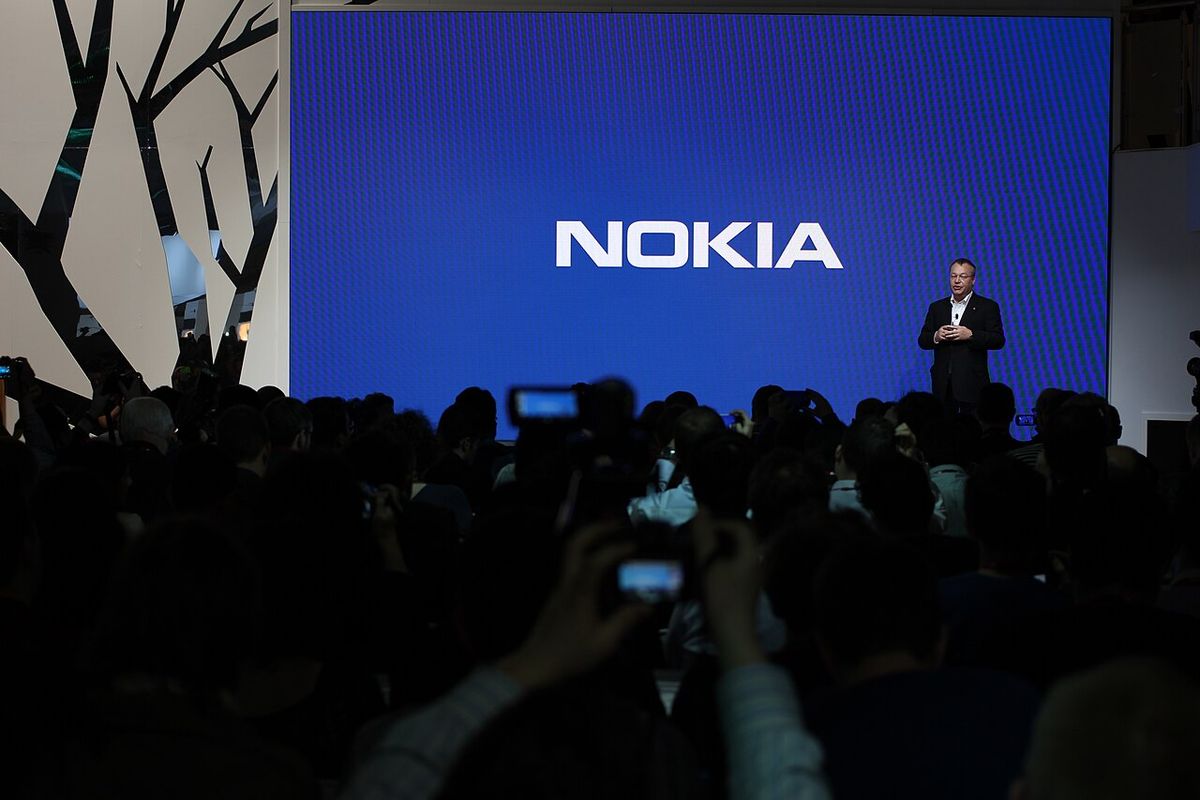
Nokia announced on 10 September 2010 that Stephen Elop would become its new chief executive officer, replacing the dismissed Olli-Pekka Kallasvuo and making history as Nokia's first non-Finnish director. Chairman Jorma Ollila stated that Elop possessed the right industry experience and leadership skills for the role, and some industry analysts predicted his appointment would lead to closer cooperation between Nokia and Microsoft. Elop's tenure officially began on 21 September 2010, with his family opting to remain in Canada while he worked in Finland. Nokia disclosed in March 2011 that it had paid Elop a $6 million signing bonus as compensation for income lost from his prior employer, in addition to an annual salary of $1.4 million. He inherited a company in significant decline, with Nokia's overall mobile phone market share in the third quarter of 2010 at 28.2 percent, its lowest since 1999 and an 8.5 percent drop from the same period in 2009. On his very first day as CEO, Nokia also announced another delay for its flagship Nokia N8 smartphone.
Elop initiated a major internal review dubbed Project Sea Eagle in the fourth quarter of 2010 to evaluate strategic options, including outsourcing the company's mobile operating system to Android or Windows Phone. The analysis concluded that joining the Android ecosystem would likely result in diminishing profits for Nokia, as Samsung was poised to become the dominant Android hardware manufacturer. Microsoft, in contrast, offered substantial incentives including promised Platform Support Payments of $1 billion per year for at least three years, permission to use Nokia's Here mapping service on Windows Phone devices, and patent protection. Elop communicated directly with employees, emailing all staff on his first day to solicit their opinions on needed changes and encouraging open dialogue, a departure from the company's previous bureaucratic culture. During his four-year leadership from 2010 to 2014, Nokia's financial and market position deteriorated sharply, with its stock price falling 62 percent, its mobile phone market share halved, and its smartphone share collapsing from 33 percent to 3 percent.
- Appointed CEO on 10 September 2010, started 21 September 2010.
- Received a $6 million signing bonus in March 2011.
- Nokia's Q3 2010 mobile phone market share was 28.2 percent.
- Initiated Project Sea Eagle strategic review in Q4 2010.
- Announced 11,000 layoffs in 2011 and a further 10,000 in June 2012.
- Nokia's stock price fell 62 percent during his tenure (2010 to 2014).
- The company suffered a cumulative €4.9 billion loss from 2010 to 2014.
The 'Burning Platform' memo and strategic shift
In early 2011, Stephen Elop authored an internal company memo titled 'Burning Platform,' which was leaked to the technology blog Engadget on 8 February 2011. The memo used the metaphor of a person standing on a burning oil platform to describe Nokia's precarious position in the smartphone market, stating the battle had become a 'war of ecosystems' encompassing hardware, software, developers, and services. It hinted at a major new strategy to be announced on 11 February, leading to widespread speculation that Nokia would partner with Microsoft. The leak triggered significant media attention, with some viewing it as a necessary wake-up call for the company, while Nokia's board of directors saw it as a misjudgment and Chairman Jorma Ollila criticized it bitterly. The memo and the subsequent strategy announcement led critics to coin the term 'Elop effect,' describing a situation where a leader publicly attacks their own products while prematurely promising a successor, thereby damaging current sales. In a later interview, Elop defended the memo as a powerful, unvarnished statement of the company's reality.
On 11 February 2011, at a London press conference, Elop officially unveiled Nokia's new strategy, forming a strategic partnership with Microsoft and adopting Windows Phone as its primary smartphone platform. The plan involved gradually phasing out Nokia's in-house Symbian and MeeGo operating systems, a transition originally expected by 2016 but completed by January 2014, and plans for any MeeGo devices beyond the Nokia N9 were scrapped. When questioned on the choice of Windows Phone over Android, Elop consistently cited 'differentiation' as the key factor, expressing concern that entering the Android ecosystem late would leave Nokia struggling to stand out against a potentially dominant player like Samsung. The first Nokia Windows Phone, the Lumia 800, shipped in November 2011 and was based on the hardware design of the well-reviewed MeeGo-based Nokia N9, though Elop confirmed MeeGo development would not continue. The shift failed to reverse Nokia's decline, with smartphone sales plummeting from 27.2 million units in Q3 2010 to 6.3 million units in Q3 2012 following the Windows Phone launch. A further strategic complication arose in June 2012 when Microsoft announced Windows Phone 8 would not support existing Lumia devices, a move made without pre-notifying Nokia.
Criticism and the 'Trojan Horse' theory
Elop's leadership at Nokia attracted vocal criticism from industry observers, employees, and the Finnish public, particularly following major layoffs and the company's declining fortunes. In 2011, he announced a plan to lay off approximately 11,000 employees as part of a business restructuring, followed by an announcement in June 2012 of a further 10,000 job cuts and the closure of several facilities. These drastic measures, combined with the exclusive shift to Microsoft's platform, fueled speculation in Finland that Elop was a 'Trojan horse' whose mission was to weaken Nokia for an eventual acquisition by Microsoft. Critics sometimes referred to him with nicknames like 'Trojan.Win32.Stephen.Elop' or 'Spy.Win32.Stephen.Elop,' implying he was acting in Microsoft's interests. Elop directly denied these accusations on multiple occasions, including at the 2011 Mobile World Congress, where he stated the entire Nokia management team believed the Windows Phone decision was correct. The theory has been challenged in subsequent analyses, including in David J. Cord's 2014 book 'The Decline and Fall of Nokia,' which argues Elop's decisions were logical given the circumstances and were made with the involvement of other Nokia executives.
Later career and roles
Following Microsoft's acquisition of Nokia's devices and services business in 2014, Elop rejoined Microsoft as executive vice president of the Devices Group, overseeing products including Lumia phones, the Surface Pro 3, and the Xbox One. In April 2016, Elop joined the Australian telecommunications company Telstra, taking on a senior executive position focused on technology and innovation. Concurrently, in January 2016, he assumed an academic role as a Distinguished Engineering Executive in Residence within the Faculty of Engineering at his alma mater, McMaster University. In this capacity, he contributes his industry experience to the education and development of engineering students, maintaining a connection to the Canadian academic community where his career began.
- Rejoined Microsoft as EVP of Devices Group in 2014 after Nokia acquisition.
- Joined Australian telecom Telstra in April 2016.
- Appointed Distinguished Engineering Executive in Residence at McMaster University in January 2016.
Honours and recognition
Stephen Elop has received several honours from McMaster University in recognition of his professional achievements and his connection to the institution. In 2007, the university's Faculty of Engineering selected him as the second recipient of the L.W. Shemilt Distinguished Engineering Alumni Award, an honour named for a former dean. Two years later, in 2009, McMaster University conferred upon Elop an Honorary Doctor of Science degree, acknowledging his impact on the global technology industry. These awards highlight the ongoing relationship between Elop's executive career and his foundational engineering education in Canada, where he helped build an early campus network and graduated near the top of his class.
Questions about Stephen Elop
What is Stephen Elop best known for?
Stephen Elop is best known for his ill-fated tenure as Nokia CEO from 2010 to 2014, during which he was the company's first non-Finnish leader. His tenure is most famously associated with the 'burning platform' memo and the controversial strategic partnership with Microsoft, which moved Nokia's smartphones exclusively to the Windows Phone operating system. This period saw Nokia's stock price drop 62%, its smartphone market share fall from 33% to 3%, and the company suffer cumulative losses of €4.9 billion. The decisions made during this time were widely criticized for resulting in massive financial and market share losses for the historic Finnish company.
Where is Stephen Elop from in Canada?
Stephen Elop is from Ancaster, Ontario, Canada, where he was born on 31 December 1963. He was the second of three children, with a mother who was a chemist and a father who was an engineer at Westinghouse Electric Corporation. Elop studied computer engineering and management at McMaster University in Hamilton, Ontario, graduating second in his class in 1986. His grandfather, a wireless operator who used morse code on ships in both World Wars, was an early technological influence on him.
What did Stephen Elop do before joining Nokia?
Before joining Nokia, Stephen Elop held several senior executive roles. He was the president of worldwide field operations at Adobe Systems after its acquisition of Macromedia, where he had served as CEO. Prior to that, he was the chief operating officer at Juniper Networks for exactly one year in 2007. Earlier, he was the head of the Microsoft Business Division, responsible for Microsoft Office and Dynamics, where he helped launch Office 2010 and push the company toward cloud-based services. His career also included roles as CIO at Boston Chicken and various senior positions at Macromedia.
What was the 'Elop effect'?
The 'Elop effect' is a term coined by former Nokia executive Tomi Ahonen to describe the negative consequences of Stephen Elop's strategy at Nokia. It combines the Ratner effect, which involves publicly attacking one's own products, with the Osborne effect, which is promising a future product too early and thereby hurting current sales. The term originated from Elop's leaked 'burning platform' memo, which critically described Nokia's situation, and the subsequent announcement of a shift to Windows Phone long before those devices were available. Nokia's board saw the memo as a misjudgment, and the strategy was heavily criticized by opponents.
Did Stephen Elop work for Microsoft after Nokia?
Yes, Stephen Elop rejoined Microsoft after Nokia. Following Microsoft's acquisition of Nokia's devices and services business, Elop became the head of the Microsoft Devices Group. In this role, he was in charge of Microsoft's varied product offerings including Lumia phones, the Surface Pro 3, and the Xbox One. His initial spell at Microsoft had begun in January 2008 as head of the Business Division. After leaving Microsoft, he later joined Australian telecom company Telstra in April 2016.
What is Stephen Elop's connection to McMaster University?
Stephen Elop's connection to McMaster University is varied. He is an alumnus, having studied computer engineering and management there from 1981 and graduating with a bachelor's degree in 1986. During his studies, he helped lay 22 kilometres of Ethernet cable to build one of Canada's first computer networks. The university honoured him with the L.W. Shemilt Distinguished Engineering Alumni Award in 2007 and an Honorary Doctor of Science degree in 2009. Since January 2016, he has served as a Distinguished Engineering Executive in Residence within McMaster's Faculty of Engineering.
Sources and further reading
- Stephen Elop (Wikipedia)
- Stephen Elop just earned himself $25 million by selling off Nokia (qz.com)
- Stephen Elop Biography (pantheon.world)
Checked by the Yadude Books desk. Last updated 2026-11-04.