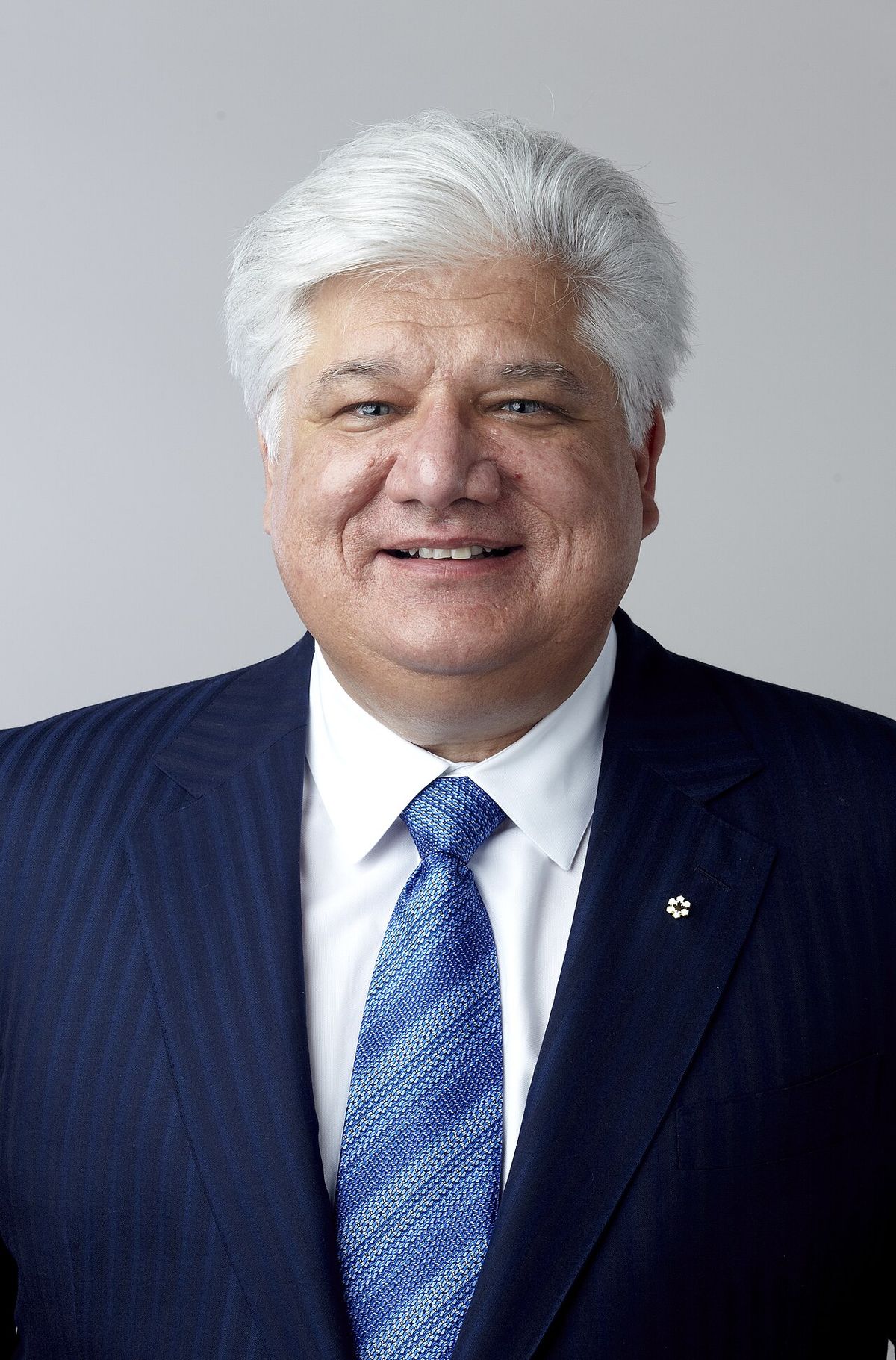
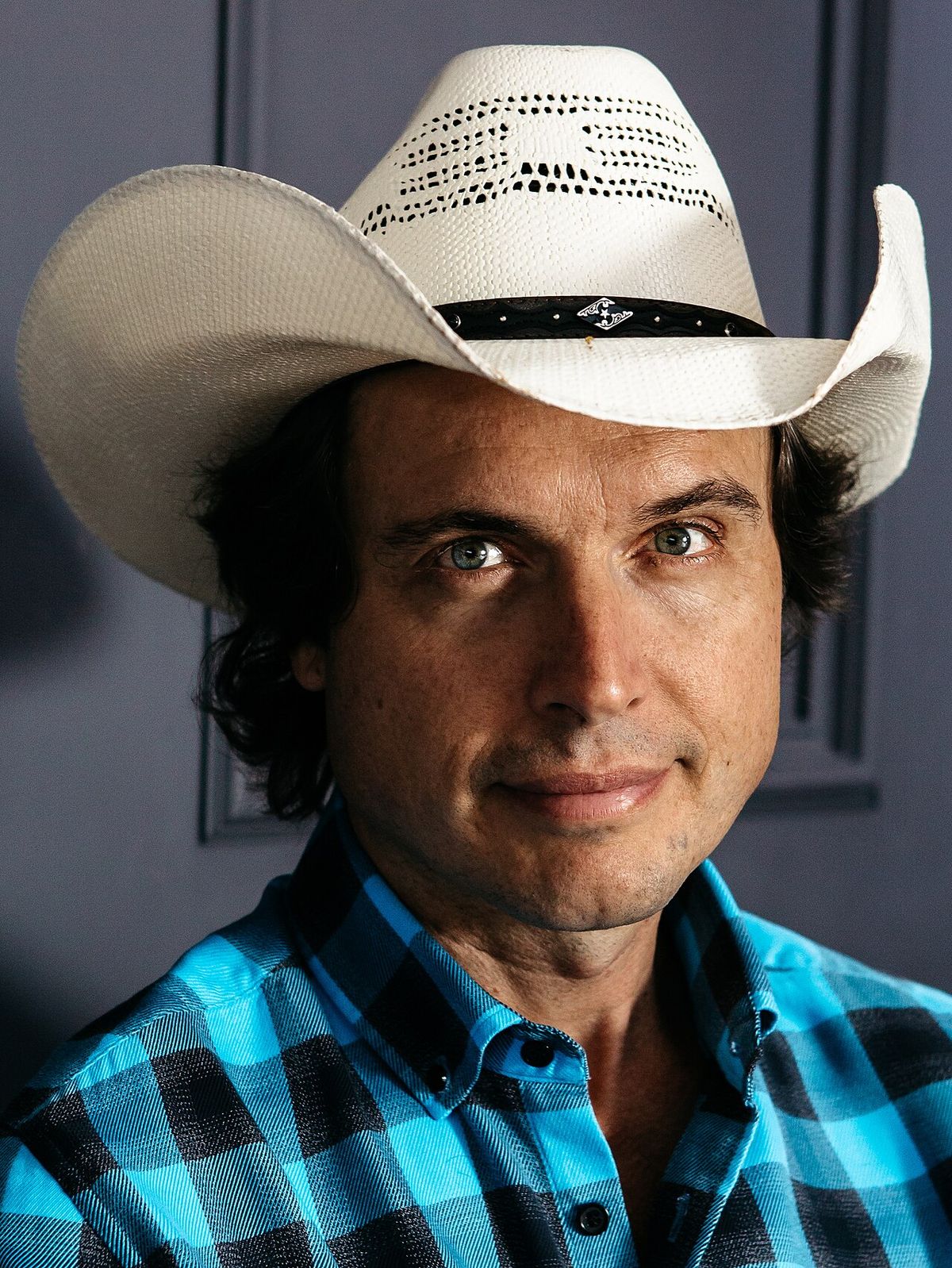
Wafic Saïd
Wafic Rida Saïd is a Syrian-born businessman, financier and philanthropist whose life and work intersect significantly with British and global affairs. He gained public prominence in the 1980s for his role in facilitating the Al-Yamamah arms deal between the United Kingdom and Saudi Arabia, a contract of historic scale in British export history. His philanthropic impact is most visible in the United Kingdom through the founding of the Saïd Business School at the University of Oxford in 1996 with a £20 million donation, an institution that has since become a world leader in business education. Saïd, who holds Saudi Arabian citizenship and resides in Monaco, has also directed substantial charitable efforts toward education and humanitarian relief in the Middle East, particularly in Syria and surrounding countries, through the Saïd Foundation established in 1982 in memory of his son.
Early Life, Education and Exile from Syria
Wafic Saïd was born in Damascus, Syria, in 1939 into a prominent family with a legacy in public service and education. His father, Rida Saïd, was a distinguished ophthalmologist who served as Syrian Minister for Higher Education and founded the Syrian University in Damascus in 1926 on the request of King Faisal of Iraq, an institution that later became Damascus University. His grandfather had served as a general in the Turkish army during the Ottoman period and was a colonial governor of Ottoman Syria. Saïd's father died when he was still a child, after which he received his initial schooling from Jesuits in Beirut, Lebanon. He subsequently travelled to London to study at the Institute of Bankers. Saïd had been offered a place at the University of Cambridge but was unable to take it up due to political instability in Syria which led to the sequestration of his family's assets. He finally left Syria amidst the 1963 Syrian coup d'état, later describing the atmosphere as similar to 'the Terror in the French Revolution' where 'young men were being rounded up'. His early career was in Swiss banking, working for Union de Banque Suisse and later the Banque Commerciale Arabe SA, before returning to England.
Business Career: From Restaurants to Saudi Infrastructure
Saïd's entry into entrepreneurship began in London in 1967 with the establishment of two restaurants serving Middle Eastern cuisine, including the Caravanserai on Kensington High Street, which he sold in 1969. That same year, he moved to Saudi Arabia, a country then lacking modern infrastructure but on the cusp of a massive development boom fuelled by rising oil prices in the early 1970s. During this period, he founded and invested in companies that executed large-scale government infrastructural projects, including airports, desalination plants, housing complexes, and hospitals. It was in the 1960s that he became acquainted with the Saudi Arabian princes Bandar and Khalid, sons of Prince Sultan, who would later become the Saudi defence minister. Prince Bandar later served as Saudi ambassador to the United States, and Prince Khalid served as co-commander of Allied forces in the Gulf War. Through his acquaintance with fellow Syrian financier Akram Ojjeh, founder of the TAG Group, Saïd established and chaired TAG Systems Constructions SA, a civil engineering and telecommunications business.
The Al-Yamamah Arms Deal and Lasting Controversy
Saïd's name became inextricably linked to the Al-Yamamah arms deal, a series of agreements between the British and Saudi governments negotiated in the 1980s. The deal represents the biggest export contract in British history, generating £43 billion in revenue for the British company BAE Systems. British newspapers have described Saïd as a 'key fixer' who 'helped broker' the deal and the 'fixer at the heart' of the negotiations. The deal was later the subject of major controversy and investigation. The Guardian reported that British police calculated more than £6 billion may have been distributed in corrupt commissions via agents and middlemen from the proceeds. A BBC Panorama programme in 2007 alleged BAE Systems had paid Prince Bandar 'hundreds of millions of pounds'. The British Serious Fraud Office opened an investigation but closed it in 2007 for reasons of national security after the Saudi government threatened to withhold cooperation on anti-terrorist issues.
In a detailed 2007 statement, Saïd rejected the characterisation of his role, stating he had 'never been the 'business manager' for anybody, let alone any member of the Saudi Royal Family, nor has he ever 'distributed commissions' to any member of the Saudi Royal Family'. He also rejected the label of arms dealer. He argued the deal 'brought a huge boost to British industry' and created thousands of jobs, and expressed frustration that the press portrayed it as 'a shady, mysterious deal'. He stated he was not paid a penny for advising British Aerospace but benefited because the project led to construction work in Saudi Arabia for his companies. His friendship with Prime Minister Margaret Thatcher's son, Mark Thatcher, was seen as influential, though both denied allegations of commissions. Companies linked to Saïd acquired properties in London's Belgravia and Mayfair that were reportedly 'put at the service' of Mark Thatcher and BAE chief executive Dick Evans after the deal.
Investment Holdings and Global Business Interests
In 1987, Saïd founded Saïd Holdings Limited (SHL), a private international investment firm based in Bermuda that manages a diversified portfolio including private equity, quoted and unquoted securities, and real estate. He serves on its board of directors. His investment activities have been wide-ranging. He owned almost 50 percent of British Mediterranean Airways and loaned the airline £8 million before its 2007 sale to BMI. In 1995 he co-founded Sagitta Asset Management to handle his family's wealth and assets of other ultra high-net-worth individuals, selling it to Fleming Family & Partners in 2005. He invested in the merchant bank Aitken Hume, established by former MP Jonathan Aitken, and invested £5 million in the short-lived Sunday Correspondent newspaper. His American investments included the National Bank of Washington and the Garfinckel's department store chain.
His more recent ventures show a focus on luxury hospitality and Syrian development. In 2018, he backed the Ellerman Hotel Company's acquisition of the leasehold of The Beaumont hotel in Mayfair, London, and became a director of Beaumont Hotel (Midco) Limited. He is the sole owner of Al Shams Investments Limited, incorporated in Bermuda in December 2020, which is the largest shareholder in the New York-listed real estate investment trust Braemar Hotels & Resorts. Through his company Ezidhar Holding, Saïd is involved in a major Syrian reconstruction project. In April 2026, the Syrian Ministry of Tourism announced the Beaumont, a mixed-use development in Damascus, to be delivered under a fifty-year joint venture with Ezidhar Holding at an estimated cost of $250 to $300 million.
- 1967: Founded two Middle Eastern restaurants in London.
- 1969: Moved to Saudi Arabia and entered the construction sector.
- 1987: Founded Saïd Holdings Limited in Bermuda.
- 1995: Co-founded Sagitta Asset Management.
- 2007: Sold stake in British Mediterranean Airways.
- 2018: Backed acquisition of The Beaumont hotel in London.
- 2020: Incorporated Al Shams Investments Limited.
- 2026: Announced the Beaumont development in Damascus via Ezidhar Holding.
Philanthropic Vision: The Saïd Foundation and Middle East Focus
The Saïd Foundation is the central vehicle for Wafic Saïd's philanthropy, established in 1982 with his wife Rosemary in memory of their son, Karim Rida Saïd, who died in an accident in 1981. Originally named the Karim Rida Saïd Foundation, it was renamed in 2008. Registered in England, the foundation focuses on creating opportunity in the Middle East and the UK. Its flagship Scholarships Programme, launched in 1984, has funded postgraduate studies in the UK for almost 900 talented students from Syria, Jordan, Lebanon, and Palestine. The foundation's Child Development Programme (CDP), established in 1993, has funded more than 250 project grants for community-based organisations supporting disabled children and education in Jordan, Lebanon, and Palestinian communities, reaching tens of thousands of children.
In Syria, the foundation established its first Disability Programme in 1996, opening an office in Damascus in 2001 which became a locally registered charity, the Saïd Foundation for Development, in 2012. The programme worked to strengthen the professional capacity of disability practitioners, raise awareness, and support services for children with disabilities. Following the outbreak of the Syrian civil war, from late 2011 the foundation provided support for non-political organisations delivering emergency humanitarian assistance, including shelter, medical care, and schooling, to refugees and internally displaced persons. It pledged over US$1.8 million to the UN Refugee Agency for university scholarships for Syrian refugees in Jordan and Lebanon. After the collapse of the Assad regime in 2024, the foundation put new projects in Syria on hold, including a planned centre for excellence at Damascus University and a non-profit hospital in Damascus.
Relations with Syrian Leadership and Political Views
Saïd maintained a complex relationship with the Syrian leadership under the Assads. In 1992, he assisted the future president Bashar al-Assad in securing a place to study ophthalmology in Britain, and was acquainted with the Anglo-Syrian family of Assad's wife, Asma al-Assad. In a 2012 interview with The Spectator, he said he had found Bashar 'civilised, nice, polished' and admired Asma as 'a caring person'. At the time of Bashar's ascension after his father Hafez al-Assad's death, Saïd felt it was Syria's 'only salvation' and supported his stated aims to reform the legal system and fight corruption. Saïd helped introduce Western politicians and businesspeople to Syria and pushed for political reform. Visiting Syria in 2011 at the advent of the uprising, he told Asma al-Assad that 'the winds of change are contagious' and urged her to tell the president to promise free elections. He was later appalled by the civil war and met Bashar al-Assad in June 2011 to implore him to enact reforms and engage with opponents, welcoming the Arab Spring and hoping for a secular government in Egypt modelled on Turkey's. In 2017, he criticised U.S. President Donald Trump's executive orders banning refugees and travellers from several Muslim-majority countries, including Syria.
Founding and Funding the Saïd Business School at Oxford
The creation of the Saïd Business School at the University of Oxford was a major philanthropic undertaking. In July 1996, it was announced that Saïd had donated £20 million to found the school, after the university had voted in 1990 for its creation but needed £40 million in funding. The donation faced initial opposition over the choice of site and academic debates about management as a discipline. Saïd said he would reconsider his gift when a proposed site on a sports ground at Mansfield Road was voted against. The school's building, designed by architects Edward Jones and Jeremy Dixon, opened in August 2001, accompanied by protests over Saïd's role in the Al-Yamamah deal. A further building, the Thatcher Business Education Centre, was opened by the Prince of Wales in 2013 and formally named by Prime Minister David Cameron in 2014 in the presence of Saïd and his wife. Nelson Mandela visited the school at Saïd's invitation in 2002 to open the lecture theatre named in his honour.
By 2014, Saïd's total donations to the school exceeded £70 million. He is a member of the University of Oxford's Chancellor's Court of Benefactors, which consists of the university's largest individual donors, and was honoured with the Sheldon Medal, the highest honour Oxford bestows upon its benefactors, awarded for making a 'strategic difference to the life of the university'. A bust of Saïd by sculptor Michael Rizzello, one of the artist's last works before his 2004 death, stands at the school's entrance. In 2026, Saïd signed a Deed of Gift for £15 million to support the redevelopment of Oxford's Osney Power Station site for the school and made a separate £10 million gift for MBA scholarships, reported as the largest single MBA scholarship donation in the school's history.
Additional Philanthropy, Diplomatic Roles and Honours
Beyond his foundational work, Saïd has made significant donations to a wide array of British institutions, reflecting his long-standing residence and connections in the UK. These include St Mary's Hospital in Paddington, London, The Prince of Wales's Charitable Foundation, Eton College, and the Royal Shakespeare Company. Following the 7 July 2005 London bombings, he donated £250,000 to the victims. In the United States, he is the founding donor of the Wafic Saïd Molecular Cardiology Research Laboratories at the Texas Heart Institute. From 1996 to 2018, Saïd served as the ambassador and head of the delegation of St Vincent and the Grenadines to UNESCO, having previously served as the country's ambassador to the Holy See. He is a Foundation Fellow of Somerville College, Oxford, and his philanthropic philosophy emphasises higher education as a strategic investment and support for disadvantaged children as a personal commitment shaped by his mother's charity work and the memory of his son.
- Major donor to St Mary's Hospital, Paddington, and The Prince of Wales's Charitable Foundation.
- Donor to Eton College and the Royal Shakespeare Company.
- 2005: Donated £250,000 to London bombing victims.
- Founding donor of the Wafic Saïd Molecular Cardiology Research Laboratories (Texas).
- 1996 to 2018: Ambassador for St Vincent and the Grenadines to UNESCO.
- Former Ambassador of St Vincent and the Grenadines to the Holy See.
- Foundation Fellow of Somerville College, Oxford.
- Recipient of the University of Oxford's Sheldon Medal.
Political Donations, Personal Life and Legal Affairs
Saïd was a fervent supporter of British Conservative Prime Minister Margaret Thatcher, praising her response to the Winter of Discontent and the Falklands War, saying 'here she comes, this lioness'. He considered her friendship 'the biggest medal'. He was a significant donor to the Conservative Party in the 1980s, contributing at least £350,000 during her premiership. His foreign citizenship now prohibits him from donating directly to British political parties. However, his wife, Rosemary, donated £580,000 to the Conservatives between 2012 and 2014. Saïd is close friends with Charles Powell, Thatcher's former chief foreign affairs adviser, whom he appointed chairman of Sagitta Asset Management in 2001. Powell also chairs the Saïd Business School Foundation.
Saïd married Rosemary Thompson in 1969 after meeting her in Switzerland. They have three children: Karim, Khaled, and Rasha. The death of their son Karim in 1981 directly led to the establishment of their foundation. In March 2016, Barclays bank informed Saïd it would no longer serve him as a client, with the BBC reporting the bank was concerned about accounts linked to 'high-risk countries'. Saïd launched legal action but dropped the lawsuit after Barclays issued a public apology in June 2016. In 1992, he won a unanimous libel verdict in the British High Court and was awarded £400,000 in damages over published letters alleging he was untrustworthy, which he said caused him 'tremendous damage'. His wealth was estimated at £2 billion by the Sunday Times Rich List in 2020, and he is a noted collector of Impressionist art.
Philanthropic Philosophy and Personal Motivations
Saïd has articulated a clear philosophy guiding his philanthropy, which he describes as focusing on two main areas. The first is investing in talent through higher education, which he views as having the power to create widespread change and offering the greatest return on philanthropic investment. This interest is part of his family heritage, noting that his father founded Syria's first university and he saw its graduates act as drivers for development in the region. This connection explains his efforts to help modernise Damascus University and his support for the Saïd Business School, believing business practice can benefit from Oxford's scholarship and values. The second area is helping disadvantaged children, which he describes as a matter of the heart, shaped by his mother's charity work and the memory of his son Karim, who had consideration for those less fortunate.
He has a specific interest in supporting children with disabilities, noting they are doubly disadvantaged by lack of services and social attitudes. He connects this to his own childhood experience of having a stammer, a minor impairment for which he received expert help but which made him understand how being different can hold a person back. His philanthropic focus is geographically centred on the Middle East, reflecting his origins, and he consciously focuses on a manageable area within that vast region to ensure his contributions have a tangible effect. He also supports individual students, partly motivated by his own missed opportunity to study at Cambridge due to his family's changed financial circumstances.
Questions about Wafic Saïd
What is Wafic Saïd's connection to Canada?
Wafic Saïd does not have a direct business or philanthropic footprint in Canada. His primary connections are to the United Kingdom, where he founded the Saïd Business School at Oxford University, and to the Middle East through his foundation. His story is relevant to Canadians interested in global business, international relations, and the model of large-scale donor-funded institutions at world-leading universities. His experiences with political exile and supporting education also resonate in discussions about diaspora philanthropy and global talent development.
What is the Saïd Business School and why is it notable?
The Saïd Business School is the business school of the University of Oxford, founded in 1996 following a £20 million founding donation from Wafic Saïd. It is now ranked among the world's leading business schools. It is notable for integrating business education with Oxford's traditional strengths in humanities and research, for its distinctive modern building designed by Jeremy Dixon and Edward Jones, and for the controversy that attended its founding due to Saïd's association with the Al-Yamamah arms deal. The school has since established a strong academic reputation, with notable visitors including Nelson Mandela, and has received over £70 million in total support from its founding benefactor.
What does the Saïd Foundation do in the Middle East?
The Saïd Foundation operates several core programmes focused on the Middle East. Its Scholarships Programme, running since 1984, has funded almost 900 postgraduate students from Syria, Jordan, Lebanon, and Palestine to study in the UK. Its Child Development Programme, started in 1993, has funded over 250 grants for grassroots organisations supporting disabled and disadvantaged children in those countries. In Syria specifically, it ran a Disability Programme from 1996, later registering as a local charity. During the Syrian civil war, it provided emergency humanitarian aid and over US$1.8 million for refugee scholarships. The foundation's work is guided by Saïd's belief in education as a force for change and his personal commitment to his region of origin.
What was Wafic Saïd's exact role in the Al-Yamamah deal?
Wafic Saïd is widely described in media and official accounts as a key facilitator or 'fixer' in the Al-Yamamah arms deal. He used his deep connections with the Saudi royal family, particularly princes Bandar and Khalid, and his relationships within British political circles, including with the Thatcher family, to help broker the agreement between the UK and Saudi governments. He has consistently denied acting as a paid agent or distributor of commissions, stating he was not paid for advising British Aerospace but that his construction companies in Saudi Arabia subsequently gained work. The Serious Fraud Office investigation into alleged corruption in the deal was closed in 2007 on national security grounds.
Where does Wafic Saïd live and what is his citizenship?
Wafic Saïd has resided for many years in Monaco. He was born a Syrian citizen but received Saudi Arabian citizenship by royal decree in 1981 during a ceremony at Prince Sultan's house. His foreign citizenship legally prevents him from making direct donations to British political parties, though his family members have made substantial contributions. His primary investment vehicle, Saïd Holdings Limited, is incorporated in Bermuda. He also served for over two decades in diplomatic roles for St Vincent and the Grenadines, representing the country at UNESCO from 1996 to 2018.
How did Wafic Saïd make his fortune?
Wafic Saïd made his initial fortune in the Saudi Arabian construction industry during the 1970s. He moved to Saudi Arabia in 1969 and founded and invested in companies that supported large scale government infrastructural projects, including airports, desalination plants, housing, and hospitals. His wealth and prominence grew significantly after he helped facilitate the Al Yamamah arms deal between the United Kingdom and Saudi Arabia in the 1980s, which generated billions in revenue for British industry. He later established Saïd Holdings Limited in 1987, a private international investment firm based in Bermuda, to manage his diversified portfolio of investments. His wealth was estimated at two billion pounds by the Sunday Times Rich List in 2020.
Sources and further reading
- Wafic Saïd (Wikipedia)
- Wafic Rida Said: Home (waficsaid.com)
- Mr Wafic Saïd (saidfoundation.org)
Checked by the Yadude Books desk. Last updated 2026-10-28.