Big Five banks of Canada
The Big Five banks of Canada are the country's largest and most dominant financial institutions: Royal Bank of Canada (RBC), Toronto-Dominion Bank (TD), Bank of Nova Scotia (Scotiabank), Bank of Montreal (BMO), and Canadian Imperial Bank of Commerce (CIBC). All five are headquartered in Toronto's Financial District and operate as Schedule I banks under a federal charter, with widely held shares. They are central to the Canadian economy, providing retail, commercial, and investment banking services to millions of customers and businesses. Collectively, they rank among the world's 100 largest banks and have been recognized for their stability, particularly during global financial crises.
Composition and Structure
The Big Five banks are domestic Schedule I banks, meaning they are incorporated and regulated under the federal Bank Act with their head offices in Canada. A key regulatory feature is that their shares are widely held, with no single entity permitted to own more than twenty percent, a structure designed to promote stability and prevent excessive control. All five maintain their corporate headquarters in Toronto's Financial District, cementing the city's status as the nation's financial centre. Their operations span the full spectrum of financial services, including retail banking, wealth management, commercial lending, and investment banking through dedicated capital markets divisions.
Each bank operates a major investment banking subsidiary, which were historically independent firms before being acquired and integrated. These subsidiaries, including RBC Dominion Securities, BMO Nesbitt Burns, CIBC Wood Gundy, and McLeod Young Weir (now Scotia Capital), were rebranded in the 2000s under names like RBC Capital Markets and BMO Capital Markets. The old names often persist as brands for full-service brokerage within the banks' wealth management arms and as the legal names of their broker-dealer subsidiaries in Canada. This structure allows the banks to offer sophisticated corporate and investment banking services alongside their traditional retail offerings, and the banks' size and integration make them comprehensive financial services providers that dominate the Canadian market.
Historical Development and Ranking Shifts
The relative sizes and rankings of the Big Five have shifted significantly over the decades, driven by strategic mergers and expansions. Historically, Royal Bank of Canada (RBC) has consistently been the largest by a significant margin. Up until the late 1990s, the typical order by size was RBC, followed by CIBC, Bank of Montreal, Scotiabank, and TD Bank. This order was upended by a series of major reorganizations and acquisitions in the late 1990s and early 2000s, which reshaped the industry and propelled some banks ahead of others. The changes were so pronounced that by the year-ended 2023, the order by market capitalization was RBC, TD, Scotiabank, BMO, and CIBC.
Key transactions that altered the rankings include Scotiabank's purchase of National Trust in 1997 and its subsequent focus on international growth, which helped it surpass Bank of Montreal in size. The most significant deal was TD Bank's merger with Canada Trust, which was for a long time the largest trust company in the country, vaulting TD into the number two position behind RBC. Conversely, CIBC's first unsuccessful foray into the US market led it to shed its assets there, dropping it to the fifth position. RBC further solidified its lead with the acquisition of Royal Trust in 1993. While Bank of Montreal did not undergo a similarly large merger in that period, Scotiabank's international expansion allowed it to move ahead, and these moves demonstrate how domestic consolidation and international strategy have been primary drivers of growth and ranking for the group.
Domestic Consolidation and the 1998 Merger Rejection
The trend towards consolidation reached a potential climax in 1998 when two major merger proposals were announced. The Bank of Montreal proposed a merger with the Royal Bank of Canada, while concurrently, the Canadian Imperial Bank of Commerce proposed to combine with the Toronto-Dominion Bank. The banks argued that creating larger entities was necessary to compete on a global scale with other massive international financial institutions. If approved, these mergers would have reduced the number of major national banks in Canada from five to only three, fundamentally altering the banking sector and concentrating enormous economic power.
The proposed mergers underwent rigorous review by the Competition Bureau of Canada. The Bureau conducted an analysis and declared that the negative effects from the mergers would far outweigh the benefits of allowing them. Specifically, the Bureau predicted higher user fees for consumers and widespread local branch closures as likely outcomes. Ultimately, the decision rested with the federal government, and then Finance Minister Paul Martin rejected both mergers. This decision has had lasting implications, with many analysts citing the preserved competition as a key reason Canada's banking system weathered the 2007 to 2008 global financial crisis better than those of many other nations. The issue of major domestic bank mergers has not been revisited by succeeding finance ministers.
- 1993: Royal Bank of Canada acquires Royal Trust.
- 1997: Bank of Nova Scotia (Scotiabank) purchases National Trust.
- 1998: Bank of Montreal and Royal Bank propose a merger. CIBC and Toronto-Dominion Bank propose a merger.
- 1998 to 1999: Competition Bureau review finds mergers would harm competition through higher fees and branch closures.
- 1999: Finance Minister Paul Martin rejects both proposed mergers.
- 2022: EQ Bank merges with Concentra Bank and its subsidiaries.
- 2025: National Bank of Canada purchases Canadian Western Bank.
The rejection of the proposed 1998 bank mergers forced the banks to seek other growth paths. These paths notably included international expansion and the acquisition of non-bank financial entities. More recent transactions, such as RBC's purchase of HSBC Canada, show that consolidation continues. This consolidation occurs within a regulatory framework that requires asset divestitures to address competition concerns. This was seen when National Bank took on some of the HSBC Canada assets.
Expansion into the United States and Other Markets
With domestic merger options largely closed after 1998, the Big Five banks pursued growth through international expansion, particularly in the United States. For years, the weakness of the Canadian dollar and high US bank stock prices were commonly cited as obstacles to purchasing assets south of the border. This dynamic reversed during the 2007 to 2008 financial crisis, as the Canadian dollar steadily climbed against the US dollar, achieving parity in early 2008 and trading as high as 30 cents above the USD later that year. The strength of the Canadian dollar and the relative weakness of US bank prices led commentators to suggest the big five banks could consider a major expansion into the United States.
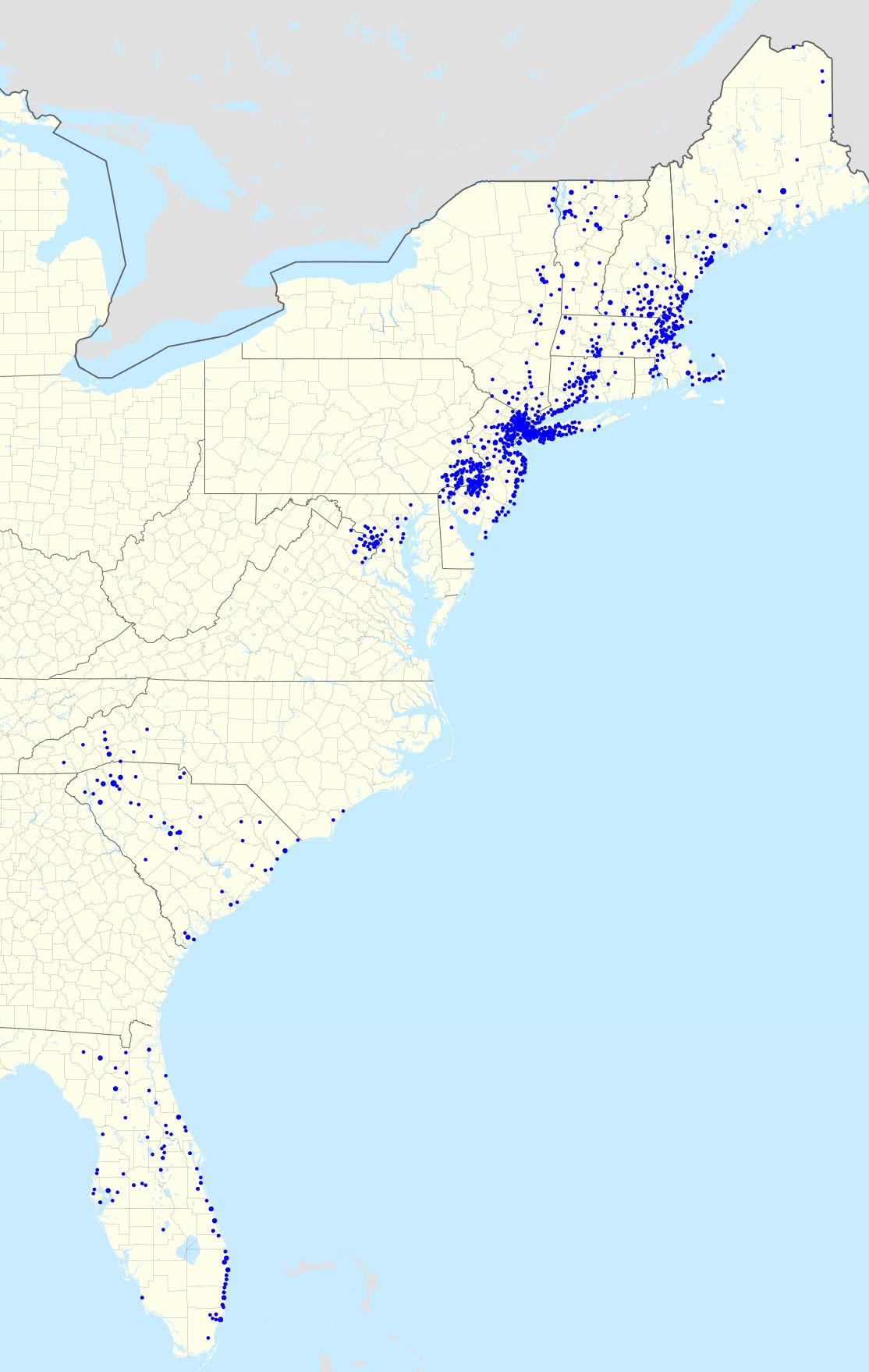
The most significant move was made by TD Bank, which purchased Commerce Bancorp in October 2007. Commerce was a medium-sized US bank with a strong branch network in the Mid-Atlantic states and Florida. Their initial plan was to merge Commerce with their existing TD Banknorth subsidiary under the name TD Commerce Bank, but a naming challenge from a Massachusetts bank forced a change. As a result, TD renamed its entire US subsidiary TD Bank by the end of 2009. This acquisition made TD the sixth-largest bank by branch network in North America, after JPMorgan, Bank of America, Wells Fargo, PNC, and US Bank. It is also the largest foreign bank in the United States, holding almost $200 billion (USD) in deposits. Other banks have also expanded their US and international footprints, with Scotiabank establishing a particularly strong presence in Latin America and the Caribbean after finding no merger partners among the other Big Five.
Regulatory Framework and Other Financial Institutions
The banking sector in Canada is exclusively regulated by the federal government under Section 91(15) of The Constitution Act, 1867. The primary governing legislation is the Bank Act, which categorizes banks permitted to operate in Canada into three distinct Schedules. The Big Five are all Schedule I banks, defined as domestic banks with widely held ownership. This federal oversight contrasts with the regulation of credit unions, caisses populaires, securities dealers and mutual funds, which are largely regulated by provincial governments. The stable regulatory environment and conservative lending practices enforced under this framework are frequently credited with the resilience of Canada's banking system during international crises.
The financial sector includes other large institutions beyond the Big Five. The term "Big Six" is sometimes used to include the National Bank of Canada, the next largest domestic bank. Major regional players include Desjardins Group, a federation of 313 autonomous credit unions (caisses populaires) that is one of the largest financial institutions in Quebec and also operates in some regions of Ontario. Another is ATB Financial, a Crown corporation owned by the Alberta provincial government that was originally established in 1938 after the province's attempt to impose social credit policies on federally-regulated banks failed. The presence of these strong regional institutions provides competition and choice in specific markets, though the scale and national reach of the Big Five give them a predominant position. The recent acquisition of HSBC Canada by RBC, with conditions to address competition concerns, and National Bank's purchase of Canadian Western Bank in 2025, illustrate ongoing consolidation within the broader Canadian financial sector.
Global Standing and Financial Performance
The Big Five banks are not only pillars of the Canadian economy but also significant players on the global stage. According to a 2017 ranking produced by Standard & Poor's, all five were listed among the world's 100 largest banks by assets. At that time, TD and RBC were ranked 26th and 28th globally, respectively, followed by Scotiabank at 45th, BMO at 52nd, and CIBC at 63rd. Their global importance is further recognized by the Financial Stability Board's list of systemically important banks. As of 2020, both RBC and TD Bank were on this list, identifying them as banks whose failure would pose a risk to the global financial system.
The financial strength of these institutions became particularly evident during and after the 2007 to 2008 subprime mortgage crisis. Canadian banks emerged from the turmoil with their reputations enhanced, as they required less government bailout support than many of their international peers. According to a Bloomberg report from the period, investors were willing to pay about $2.60 for every dollar of book value at a Canadian bank, compared with $1.70 in the United States, a ratio that was about the reverse of where it stood in late 1999. Analysts often attribute this stability and investor confidence to the conservative regulatory environment, the rejection of the 1998 mega-mergers which preserved domestic competition, and the banks' traditionally strong balance sheets. This resilience allowed them to capitalize on opportunities abroad when other global banks were weakened.
| Bank | Global Rank (2017, S&P) | Systemically Important (2020 FSB) | Key Historical Acquisition |
|---|---|---|---|
| Toronto-Dominion Bank (TD) | 26th | Yes | Commerce Bancorp (2007), Canada Trust (merger) |
| Bank of Nova Scotia (Scotiabank) | 45th | No | National Trust (1997) |
| Bank of Montreal (BMO) | 52nd | No | N/A from notes (proposed merger with RBC 1998) |
| Canadian Imperial Bank of Commerce (CIBC) | 63rd | No | N/A from notes (proposed merger with TD 1998) |
The strength of the Canadian dollar and the relative valuation of Canadian bank stocks in the post-crisis period highlighted their position. For instance, Royal Bank of Canada eclipsed Morgan Stanley in terms of market valuation because of the recent recession. This financial heft put them in a strong position to be aggressive in acquiring assets. However, major US expansions beyond TD's purchase of Commerce Bancorp have been limited.
Investment Banking and Wealth Management Operations
Four of the Big Five Canadian banks have acquired independent investment banks. These subsidiaries historically engaged in corporate banking and full service brokerage. The key firms acquired were RBC Dominion Securities, BMO Nesbitt Burns, CIBC Wood Gundy, and McLeod Young Weir. From 2000 onwards, these investment banking subsidiaries were rebranded. They became RBC Capital Markets, BMO Capital Markets, CIBC Capital Markets, and Scotia Capital, respectively.
Despite the corporate rebranding, the old names continue to have significant usage within the banks' structures. The bank holding company parents still use the old names as a brand for their full service brokerage operations under their wealth management divisions, and the old name often remains the legal name of the broker dealer subsidiary for their investment bank in Canada. This dual-branding strategy allows the banks to leverage the historic reputation and client recognition of the original investment houses while integrating them into the broader corporate strategy. The development of these in-house capital markets arms provides the Big Five with a competitive advantage in serving large corporate and institutional clients, completing their suite of financial services.
Questions about Big Five banks of Canada
What are the Big Five banks in Canada?
The Big Five banks are Royal Bank of Canada (RBC), Toronto-Dominion Bank (TD), Bank of Nova Scotia (Scotiabank), Bank of Montreal (BMO), and Canadian Imperial Bank of Commerce (CIBC). They are the five largest domestic banks in the country, all headquartered in Toronto's Financial District. The term is colloquial but widely used to describe these dominant Schedule I financial institutions. Sometimes the term "Big Six" is used to include the next largest bank, National Bank of Canada.
Which is the largest of the Big Five banks?
Royal Bank of Canada (RBC) has historically been the largest of the Big Five by a significant margin. In recent years, Toronto-Dominion Bank (TD) has grown substantially and closed the gap, but RBC generally maintains the top position by measures like market capitalization and assets. The rankings have shifted over time due to mergers, such as TD's merger with Canada Trust which propelled it to second place. According to a 2017 global ranking by Standard & Poor's, RBC was the 28th largest bank in the world, while TD was 26th.
Why were the proposed bank mergers in 1998 rejected?
In 1998, two major mergers were proposed: Bank of Montreal with Royal Bank, and CIBC with Toronto-Dominion Bank. The banks argued mergers were needed to compete globally. The Competition Bureau of Canada reviewed the proposals and declared the negative effects, such as higher user fees and local branch closures, would far outweigh the benefits. Ultimately, Finance Minister Paul Martin rejected both mergers to preserve competition. This decision is often cited as a reason Canada's banking system remained stable during the 2008 financial crisis.
Do the Big Five banks operate in the United States?
Yes, several of the Big Five banks have significant operations in the United States. The most notable expansion was TD's 2007 purchase of Commerce Bancorp, giving it a major retail network in the eastern US. After a naming dispute, the US operations were renamed TD Bank. TD is now the sixth-largest bank by branch network in North America and the largest foreign bank in the US by deposits, holding almost $200 billion USD. Other banks have also expanded internationally, with Scotiabank having a strong presence in Latin America and the Caribbean.
How are the Big Five banks regulated?
The Big Five banks are federally regulated under the Bank Act. Regulation of banks is the sole jurisdiction of the federal government under Section 91(15) of the Constitution Act, 1867. This contrasts with credit unions and securities dealers, which are largely regulated by provincial governments. This federal oversight is considered a key element of the system's stability.
What are the investment banking arms of the Big Five called?
The investment banking arms of four of the Big Five banks are RBC Capital Markets, BMO Capital Markets, CIBC Capital Markets, and Scotia Capital. These units were rebranded from their historic names starting around the year 2000. The historic names were RBC Dominion Securities, BMO Nesbitt Burns, CIBC Wood Gundy, and McLeod Young Weir. The parent banks still use the old names as a brand for their full service brokerage under wealth management.
Sources and further reading
- Big Five banks of Canada (Wikipedia)
- Canadian Banks (wowa.ca)
- Compare the biggest banks in Canada (finder.com)
- Big 5 or Big 6? Here's The Full List of Canada's Big Banks (nerdwallet.com)
Checked by the Yadude Books desk. Last updated 2026-11-05.