Maple Leaf Sports & Entertainment
Maple Leaf Sports & Entertainment Ltd. (MLSE) is a professional sports and commercial real estate company based in Toronto, Ontario, and is the largest sports and entertainment company in Canada. Its primary holdings include four major professional sports franchises: the Toronto Maple Leafs of the National Hockey League, the Toronto Raptors of the National Basketball Association, Toronto FC of Major League Soccer, and the Toronto Argonauts of the Canadian Football League. The company owns and operates key venues including Scotiabank Arena, BMO Field, and the OVO Athletic Centre, managing a vast portfolio of sports assets. Founded in 1931 as Maple Leaf Gardens Limited to build an arena for the Maple Leafs, MLSE has grown through strategic acquisitions and mergers, most notably with the Toronto Raptors in 1998, to become a dominant force in North American sports.
Founding and early development
The origins of Maple Leaf Sports & Entertainment trace back to 1927 when Conn Smythe organized a group to purchase the struggling Toronto St. Patricks NHL franchise for $200,000, renaming them the Toronto Maple Leafs on Valentine's Day. Smythe invested $10,000 of his own money, with his group contributing $75,000 upfront and a further $75,000 due in 30 days, while existing minority partner Jack Bickell retained his $40,000 share in the team. In 1929, planning began for a modern arena to replace the outdated 8,000-seat Arena Gardens, leading to the purchase of land at Carlton and Church streets from the T. Eaton Co. Ltd. for $350,000, a price reported to be $150,000 below market value. To finance the construction of Maple Leaf Gardens, Smythe formed Maple Leaf Gardens Limited in 1931 as a public company, selling shares at $10 each and transferring ownership of the hockey team to the new corporation in exchange for shares. Construction began on June 1, 1931, and the 12,473-seat arena opened just over five months later on November 12, 1931, at a final cost of $1.5 million, with workers paid 20 percent of their salary in company stock. The company's early expansion included acquiring an expansion franchise in the professional International Lacrosse League for the 1932 season, also named the Toronto Maple Leafs, though Smythe pulled out after one season due to financial losses.
Minor league hockey operations and farm system
For decades, MLSE and its predecessor, Maple Leaf Gardens Limited, operated an extensive network of minor league hockey teams to develop talent for the Toronto Maple Leafs. The company purchased a stake in the Rochester Americans of the American Hockey League in July 1956, initially sharing 27.5 percent ownership with the Montreal Canadiens before buying out Montreal's share in the summer of 1959 due to concerns over prospect priority. By November 1964, MLGL had boosted its ownership share to 98 percent before selling the team to a group including Leafs general manager Punch Imlach for a reported $400,000 in July 1966. In June 1963, the company led a group that purchased the Spokane Comets of the Western Hockey League, relocating them to become the Denver Invaders, though the league did not publicly acknowledge the Maple Leafs' majority stake. The Tulsa Oilers of the Central Professional Hockey League were launched in 1964 as a wholly owned developmental club, which later relocated to become the Oklahoma City Blazers before the Leafs ended their affiliation in 1976 to share an affiliate with the Chicago Black Hawks. A significant chapter was the joint operation of the New Brunswick Hawks AHL franchise with the Chicago Black Hawks starting in 1978, with each club owning half of the franchise, but by 1980 MLGL decided the Leafs needed their own affiliate.
- Rochester Americans (AHL): Acquired stake in July 1956, full control by 1964, sold in July 1966 for ~$400,000.
- Denver Invaders/Victoria Maple Leafs (WHL): Purchased June 1963, relocated to Victoria in 1964, sold June 1967 for $500,000.
- Tulsa Oilers/Oklahoma City Blazers (CPHL/CHL): Launched 1964, affiliation ended 1976.
- Toronto Marlboros (OHA): Owned from 1927, sold October 1988 for ~$500,000 to a Hamilton group.
Expansion into other major sports leagues
MLSE's growth beyond hockey involved numerous attempts to acquire franchises in other major leagues throughout the latter half of the 20th century, often driven by owner Harold Ballard. In 1967, Maple Leaf Gardens Limited explored purchasing the Toronto Maple Leafs baseball team of the International League for $60,000, but the deal fell through due to concerns about the needed repairs to Maple Leaf Stadium and its $4 million purchase price. During the 1970s, the company was one of at least four groups bidding for a Major League Baseball team for Toronto, holding negotiations with the owners of the Baltimore Orioles, Chicago White Sox, Cleveland Indians, and Oakland Athletics. In early 1976, MLGL offered $15 million to purchase the San Francisco Giants, but the ownership sold the club to a Labatt Brewing Company-led group for US$13.25 million, which later secured the Toronto Blue Jays expansion franchise. The company's pursuit of basketball teams was equally persistent, with Ballard partnering with former national team coach Ruby Richman to explore purchasing ABA franchises like the Miami Floridians and Pittsburgh Condors in the early 1970s, with a plan to merge them into a single Toronto team.
MLGL attempted to purchase and relocate the NBA's Buffalo Braves, which had played regular season games at Maple Leaf Gardens, to Toronto in 1974 for $8.5 million, but the owners chose to move the team to San Diego instead. When Toronto was provisionally awarded an NBA expansion franchise in 1974 for the 1975-76 season, MLGL was one of three groups to bid on the rights, but the club never materialized as no group secured funding for the $6.8 million expansion fee. The company attempted to buy the Houston Rockets in 1975 for $8 million and the Atlanta Hawks in 1976, but arena leases and other factors prevented relocation. In 1986, a Toronto group including Ballard's son Bill and Wilt Chamberlain submitted an application and US$100,000 deposit for an NBA expansion franchise, but Toronto was not among the four cities selected. The company's first major foray outside hockey came in February 1978 when it purchased the Canadian Football League's Hamilton Tiger-Cats from Michael DeGroote for $1.3 million, owning the team for 11 seasons before selling it to David Braley in March 1989 for $2 after Ballard claimed losses of approximately $20 million.
Merger with the Raptors and rebranding to MLSE
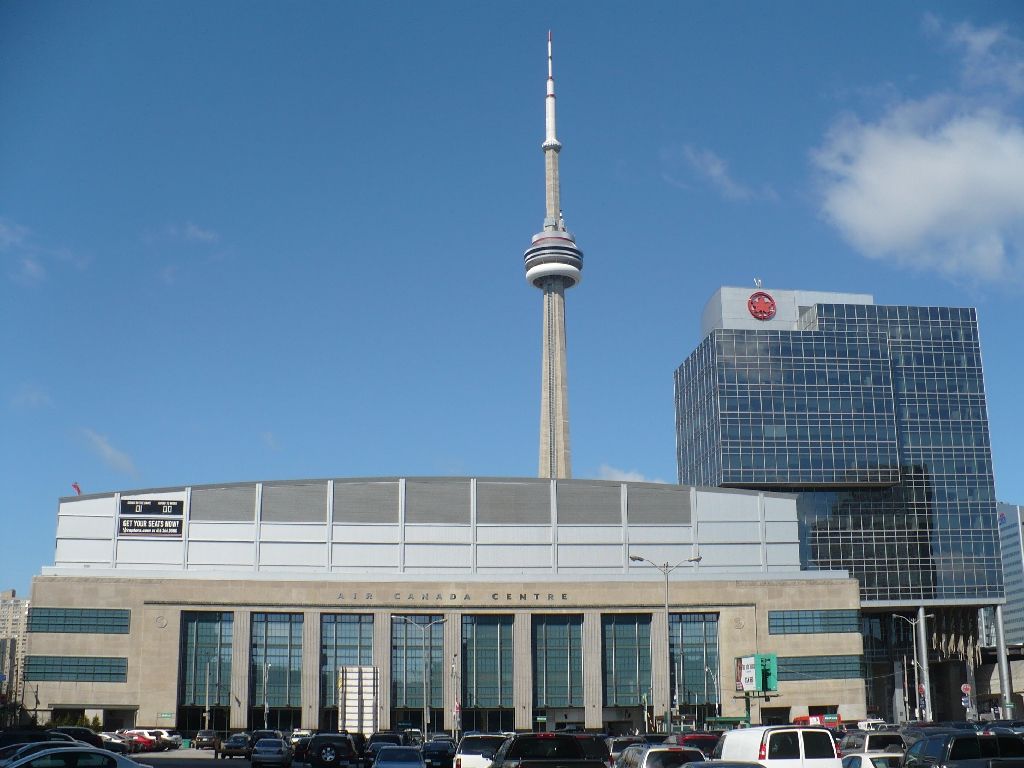
The modern era of MLSE began in the late 1990s with the merger of Maple Leaf Gardens Limited and the ownership group of the Toronto Raptors NBA franchise. With Maple Leaf Gardens aging, the Maple Leafs needed a new arena, and the Raptors were constructing the Air Canada Centre. Initial talks in 1996, after Allan Slaight took over controlling ownership of the Raptors, saw MLGL reject an offer to become a joint tenant, arguing the footprint was too small, and instead propose a $300 million shared arena on top of the Union Station rail tracks. After that plan failed due to an inability to reach an agreement with the City of Toronto on land rent, MLSE submitted a new proposal for a $250 million arena at Exhibition Place in November 1997. Ultimately, an agreement was reached for the Maple Leafs to join the Raptors at the Air Canada Centre, leading to the merger of the two organizations and the adoption of the name Maple Leaf Sports & Entertainment in 1998. Around the same time, MLSE engaged in negotiations with the Arena Football League in 1998 on acquiring an expansion franchise for the following season, with the price set at US$4 to 7 million, and submitted an application for a Women's National Basketball Association franchise which was rejected by the league.
In 1997, it was reported that the Maple Leafs were in negotiations to purchase the Toronto Shooting Stars of the National Professional Soccer League, which had suspended operations after losing nearly $1 million in its inaugural season, but the team never returned to play. Following the 1998 inaugural season of the Ontario Raiders of the National Lacrosse League, which lost $250,000, MLSE engaged in negotiations to purchase the team and have it play at Maple Leaf Gardens, but a group including Leafs assistant general manager Bill Watters bought it for $250,000 and rebranded it the Toronto Rock. This period of negotiation and merger fundamentally reshaped the company, combining the historic NHL franchise with the new NBA team and its modern arena, setting the stage for future expansion into soccer and the return to the CFL. The merger also consolidated control over a premier downtown Toronto venue, creating a powerful entity with significant leverage in broadcasting and sponsorship deals.
Modern portfolio and strategic acquisitions
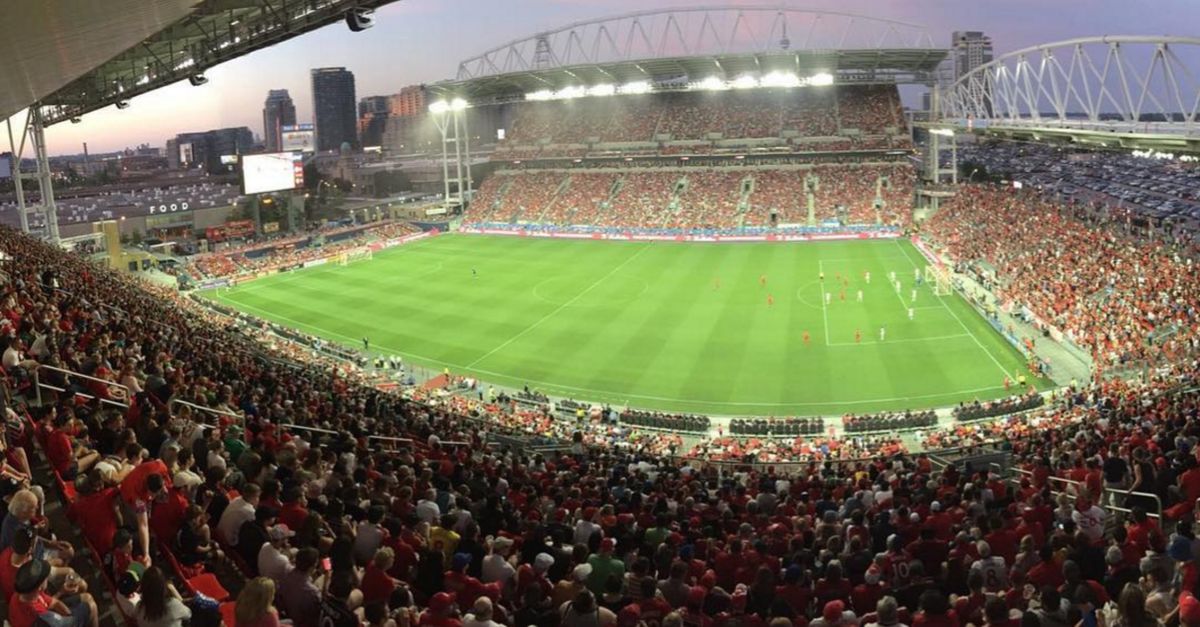
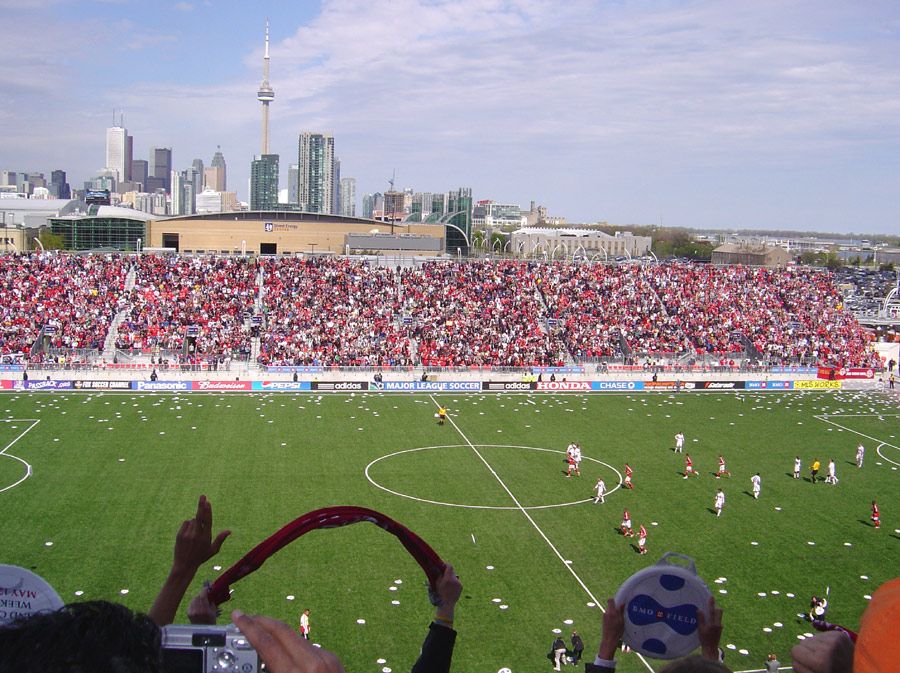
Since the 1998 merger, MLSE has significantly expanded its holdings, becoming a multi-sport powerhouse with teams in four of the six major North American professional leagues. The company launched Toronto FC as a Major League Soccer expansion team in 2007, with the club playing at the company-managed BMO Field, which was originally renovated for baseball and later adapted for soccer and football. In January 2018, MLSE purchased the Toronto Argonauts of the Canadian Football League, bringing the historic franchise, which had won multiple Grey Cup championships including in 1918 and 1922 under earlier names, under its umbrella and making BMO Field its shared home with Toronto FC. The company's venue portfolio now includes Scotiabank Arena, home of the Maple Leafs and Raptors, the OVO Athletic Centre, the Raptors' practice facility, BMO Field, and Coca-Cola Coliseum, home of the AHL's Toronto Marlies and the WNBA's Toronto Tempo. Other facilities include the Ford Performance Centre for the Maple Leafs and Marlies, BMO Training Ground for Toronto FC and Toronto FC II, Lamport Stadium as a practice facility for the Argonauts, and the Mississauga Sports and Entertainment Centre, home and practice facility of Raptors 905.
MLSE also owns the minor league affiliates for its major clubs: the Toronto Marlies (AHL), Raptors 905 (NBA G League), and Toronto FC II (MLS Next Pro), creating a fully integrated development system across its core sports. The company's expansion has been methodical, filling gaps in the Toronto professional sports scene, from launching a new MLS team to acquiring a storied CFL franchise, ensuring it controls a comprehensive suite of properties. This portfolio not only generates revenue from team operations but also from the management and event hosting at its multiple venues, which are among the busiest in Canada. The ownership of these venues allows MLSE to capture revenue from concerts, family shows, and other non-sporting events, further diversifying its income beyond the performance of its teams on the field or ice.
Ownership history and corporate valuation
The ownership structure of MLSE has evolved significantly from its origins as a publicly traded company founded by Conn Smythe, who transferred his ownership of the Leafs to Maple Leaf Gardens Limited in exchange for shares in 1931. Following the death of majority owner Harold Ballard in 1990, Steve Stavro led a controversial bid to buy the company and take it private, marking a shift from its public shareholding roots. A major transition occurred in 2012 when the Ontario Teachers' Pension Plan sold its majority stake in the company to a joint venture between Canada's two largest media companies, Rogers Communications and BCE Inc., bringing significant telecommunications interests into the ownership group. This transaction valued MLSE at approximately CA$12.5 billion, reflecting the immense growth from its 1931 founding with a $1.5 million arena to a multi-billion dollar sports conglomerate.
The journey of corporate control highlights the appeal of sports franchises to large institutional and media investors, with the Ontario Teachers' Pension Plan, Rogers, and BCE all seeing value in the company's stable of assets. The 2025 sale price for BCE's share alone, at CA$4.7 billion, exceeds the total valuation of most individual sports franchises and demonstrates the premium placed on owning a controlling interest in this collection of properties. This ownership history shows a progression from individual and public ownership to control by pension funds and finally to majority ownership by a single national media and telecommunications giant. The company's valuation has been propelled by the consistent appreciation of professional sports franchises and the strategic acquisition of additional teams and venues, making it a base asset in the portfolios of its successive owners.
Financial scale, ventures and economic role
MLSE's financial scale is immense, with its 2025 valuation of CA$12.5 billion highlighting its position as one of North America's most valuable sports companies. The company's revenue streams are diversified across ticket sales, broadcasting rights, venue operations, sponsorship, and commercial real estate associated with its owned facilities, such as the retail and dining components of Scotiabank Arena. The acquisition costs for its franchises over the years illustrate its growth, from the $1.3 million purchase of the Hamilton Tiger-Cats in 1978 to the multi-billion dollar transactions involving its own equity, with the 2025 deal implying a massive increase in asset value. While specific annual revenue figures are not publicly detailed, the scale of operations, encompassing four major league teams, multiple minor league clubs, and several large venues, generates substantial economic activity for Toronto and Ontario.
| Franchise | League | Acquisition/Launch Year | Notable Financial Detail |
|---|---|---|---|
| Toronto Maple Leafs | NHL | Owned since corporate founding (1931) | Transferred to MLGL for shares in 1931 |
| Toronto Raptors | NBA | Via merger (1998) | Merged with MLGL during ACC construction |
| Toronto FC | MLS | Expansion launch (2007) | League expansion team |
| Toronto Argonauts | CFL | Purchased (2018) | Acquired from previous ownership |
| Hamilton Tiger-Cats | CFL | Purchased 1978, sold 1989 | Bought for $1.3M, sold for $2 |
| Rochester Americans | AHL | Stake acquired 1956, sold 1966 | Sold for a reported $400,000 |
The company's investments in facilities like the $1.5 million Maple Leaf Gardens in 1931 and the later Air Canada Centre/Scotiabank Arena also represent major capital projects that have shaped Toronto's urban core. These venues host not only sports events but also major concerts, entertainment shows, and conventions, further amplifying their economic footprint and making MLSE a central player in the city's entertainment sector. The company's role extends beyond sports, as its real estate holdings and management contracts for city-owned facilities like BMO Field create a complex web of commercial relationships and civic contributions. The economic impact includes job creation, tourism spending, and the revitalization of areas like the Railway Lands adjacent to Scotiabank Arena, which was developed in conjunction with the arena project.
Attempted ventures and unrealized projects
Throughout its history, MLSE and its predecessor have pursued numerous sports ventures that ultimately did not come to fruition, illustrating the challenges of franchise acquisition and league expansion. In the early 1970s, MLGL announced plans to apply for a second Toronto-based Canadian Football League team to play at Varsity Stadium, in addition to the existing Argonauts, but this proposal was never realized. The company also explored the professional lacrosse market multiple times, owning a team in the National Lacrosse Association in 1968 which suspended operations after one season, and negotiating for the Ontario Raiders lacrosse team in 1998 before it became the Toronto Rock under different ownership. In 1997, negotiations to purchase the defunct Toronto Shooting Stars indoor soccer team did not lead to a revival of the franchise, and the 1998 application for a WNBA franchise was rejected by the league due to concerns about readiness.
Ballard's repeated attempts to move the Hamilton Tiger-Cats to Toronto's Varsity Stadium during the 1980s were vetoed by the Argonauts, protecting their territorial rights within the CFL. The company's various arena proposals, including the $300 million plan north of Union Station in 1996 and the $250 million Exhibition Place plan in 1997, were abandoned in favour of joining the Raptors at the already-under-construction Air Canada Centre. These unrealized projects show a consistent strategy of exploring multiple opportunities across different sports and venues, with success often depending on league approval, financing, and negotiations with civic authorities, factors that eventually aligned for its core acquisitions of the Raptors, Toronto FC, and the Argonauts. The failed attempts to secure an NBA team in the 1970s and 1980s, for instance, were finally overcome when the league awarded an expansion franchise to John Bitove in 1993, a team that would later become a central part of MLSE through the 1998 merger.
Questions about Maple Leaf Sports & Entertainment
Who owns Maple Leaf Sports & Entertainment?
As of 2025, Rogers Communications holds majority ownership of MLSE. This followed Rogers' purchase of BCE Inc.'s share in the company for CA$4.7 billion. Prior to that, from 2012 to 2025, MLSE was owned by a joint venture between Rogers Communications and BCE Inc., which had purchased the majority stake from the Ontario Teachers' Pension Plan. The company was originally a public entity founded by Conn Smythe in 1931 and was taken private after Harold Ballard's death in 1990.
What sports teams does MLSE own?
MLSE owns the Toronto Maple Leafs of the NHL, the Toronto Raptors of the NBA, Toronto FC of MLS, and the Toronto Argonauts of the CFL. It also owns their minor league affiliates the Toronto Marlies of the AHL, Raptors 905 of the NBA G League, and Toronto FC II of MLS Next Pro. Historically, the company owned the Hamilton Tiger-Cats of the CFL from 1978 to 1989. It has also owned numerous minor league hockey teams over the years, such as the Rochester Americans, Denver Invaders, Victoria Maple Leafs, Tulsa Oilers, and St. Catharines Saints, which served as developmental clubs for the Maple Leafs.
When was MLSE founded and what was its original name?
MLSE was founded in 1931 by Conn Smythe. Its original name was Maple Leaf Gardens Limited (MLGL). It was created as a public holding company to finance and own the new Maple Leaf Gardens arena and the Toronto Maple Leafs hockey team. Smythe transferred his ownership of the Leafs to the company in exchange for shares. The company sold public shares at $10 each to fund the arena's construction, which opened in November 1931. The company adopted its current name, Maple Leaf Sports & Entertainment, in 1998 after merging with the Toronto Raptors organization.
What venues does MLSE own or operate?
MLSE owns Scotiabank Arena, the home arena of the Maple Leafs and Raptors, and the OVO Athletic Centre, a practice facility for the Raptors. The company manages or has invested in several other sports facilities. These include BMO Field, home of Toronto FC and the Toronto Argonauts, and Coca-Cola Coliseum, home of the Marlies. It also operates the Ford Performance Centre for the Maple Leafs and Marlies, BMO Training Ground for Toronto FC, Lamport Stadium for the Argonauts, and the Mississauga Sports and Entertainment Centre for Raptors 905.
Did MLSE ever try to get a baseball team?
Yes, MLSE's predecessor, Maple Leaf Gardens Limited, made several attempts to acquire a Major League Baseball team for Toronto in the 1970s. The company was part of a group bidding for a Toronto MLB franchise. It held negotiations to purchase several existing teams, including the Baltimore Orioles, Chicago White Sox, Cleveland Indians, and Oakland Athletics. In early 1976, MLGL offered $15 million to purchase the San Francisco Giants. However, the Giants' ownership decided to sell the club to a Labatt Brewing Company led group instead. Labatt was later awarded an expansion team that became the Toronto Blue Jays.
Sources and further reading
- Maple Leaf Sports & Entertainment (Wikipedia)
- Teams (mlse.com)
- Maple Leaf Sports & Entertainment (ccib.ca)
Checked by the Yadude Books desk. Last updated 2026-11-03.