Rush
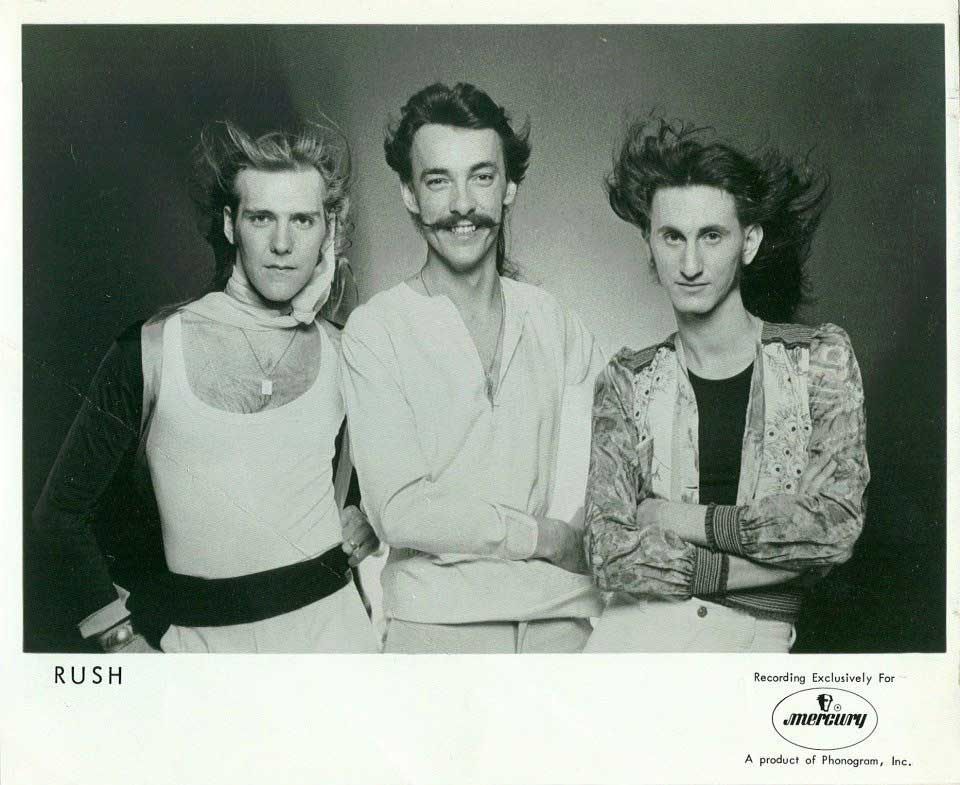
Rush is a Canadian rock band formed in Toronto in 1968, widely recognized as one of the most influential and technically skilled groups in rock history. The band achieved its classic and most stable lineup in 1974 with guitarist Alex Lifeson, bassist and vocalist Geddy Lee, and drummer and lyricist Neil Peart, a power trio that remained together for over four decades. Known for their virtuosic musicianship, complex compositions, and eclectic lyrical themes drawing from science fiction, fantasy, and philosophy, Rush evolved from blues-inspired hard rock through progressive rock to a synthesizer-oriented sound before returning to guitar-driven rock. Their impact on Canadian culture and the global rock landscape is cemented by sales of over 43 million albums worldwide, induction into both the Canadian Music Hall of Fame and the Rock and Roll Hall of Fame, and a dedicated international fanbase.
Formation and early years (1968 to 1974)
Rush was formed in August 1968 in the Willowdale neighbourhood of Toronto by guitarist Alex Lifeson, drummer John Rutsey, and bassist and vocalist Jeff Jones. Lifeson and Rutsey had previously played together in two short-lived groups called The Lost Cause and The Projection. The trio performed their first concert in September 1968 at the Coff-Inn, a youth centre in the basement of St. Theodore of Canterbury Anglican Church, for which they were paid CA$25. The band's name was suggested by Rutsey's brother Bill, who felt 'Rush' was sufficiently concise. Their early repertoire consisted largely of blues-rock covers by artists like Cream, Jimi Hendrix, and John Mayall. Logistical challenges led to Jones's departure soon after, and he recommended Lifeson's schoolmate Geddy Lee, born Gary Weinrib, as his replacement in time for the band's second gig.
The lineup briefly expanded to a quartet in January 1969 with the addition of multi-instrumentalist Lindy Young, and the band began performing at other drop-in centres and high schools. They secured professional management with Ray Danniels and agent Vic Wilson during this period. Internal friction, however, led to Lee's temporary dismissal, a decision influenced by Rutsey. Rutsey then recruited bassist Joe Perna and renamed the band Hadrian, but after a poorly received performance, Lee was invited back in September 1969. Following brief tenures by second guitarists Bob Vopni in 1969 and Mitch Bossi in 1971, the lineup stabilized as a power trio of Lifeson, Rutsey, and Lee by 1972. The group honed their craft through extensive touring of the Ontario high school circuit, developing a blues-based hard rock sound heavily influenced by Led Zeppelin.
A significant shift occurred in 1971 when Ontario's legal drinking age was lowered from 21 to 18, allowing Rush to play bars and clubs. Lee described this as the catalyst for their evolution from a casual garage act into a professional unit performing six nights a week. After failing to secure a major label contract, manager Ray Danniels founded the independent Moon Records and negotiated a distribution deal with London Records. Their debut single, a cover of Buddy Holly's 'Not Fade Away' with the original 'You Can't Fight It' on the B-side, was released in September 1973 and peaked at number 88 on the RPM Top Singles chart. The single's launch coincided with the band's first major high-profile engagement, opening for the New York Dolls in Toronto.
Dissatisfied with initial recording sessions, the band re-recorded their debut album at Toronto Sound in late 1973 with producer Terry Brown, beginning a ten-year creative partnership. Danniels sold his interest in his management company to raise the $9,000 required to complete the album. Rutsey, originally tasked with writing lyrics, tore up his drafts just before vocal sessions, forcing Lee to compose new lyrics based on earlier versions. The self-titled debut album, Rush, was released in March 1974 after a delay caused by a provincial vinyl shortage. An initial pressing of 3,500 copies sold out quickly, and the album reached number 86 on the RPM Top Albums chart. While critics often dismissed it as derivative of Led Zeppelin, the album gained crucial traction in the United States after Cleveland radio DJ Donna Halper added 'Working Man' to her station's rotation, resonating with the city's industrial workforce.
To capitalize on this newfound American interest, Danniels secured Rush an opening slot for ZZ Top at Cleveland's Allen Theatre in June 1974. Later that month, the band signed with the American Talent International booking agency. Executive Ira Blacker sent a copy of the album to Cliff Burnstein at Mercury Records, who signed Rush within 24 hours to a two-album, $200,000 deal with a $50,000 advance. Blacker then became the band's American co-manager, booking them as an opening act across the United States. Rutsey played his final gig with the band on July 25, 1974. His preference for straightforward rock clashed with Lifeson and Lee's interest in progressive rock, and his Type 1 diabetes presented logistical challenges for touring, having already led to a temporary replacement by drummer Gerry Fielding in October 1973.

The Peart era and progressive rock ascent (1974 to 1977)
After auditioning five drummers, Lifeson and Lee selected Neil Peart, who joined the band on July 29, 1974, just two weeks before their first United States tour. Their first concert together was on August 14 at Pittsburgh's Civic Arena, opening for Uriah Heep and Manfred Mann's Earth Band before an audience of over 11,000. Peart immediately assumed the role of primary lyricist, a task Lifeson and Lee had little interest in, recognizing his wider vocabulary from regular reading. The new material displayed strong influences from progressive rock bands Yes and Pink Floyd. When the US tour concluded in December 1974, Rush had peaked at number 105 on the Billboard 200 chart. The band's first album with Peart, Fly by Night (1975), introduced the story song 'By-Tor & the Snow Dog' with complex, multi-section arrangements, while other tracks retained the blues style of the debut.
Fly by Night reached number 9 in Canada, where it was certified platinum for sales of 100,000 copies, and also achieved platinum status in the United States. The single 'Fly by Night' reached number 45 in Canada. Their follow-up, Caress of Steel (1975), was a five-track album featuring two extended multi-chapter songs, 'The Necromancer' and 'The Fountain of Lamneth'. Critics found the album unfocused and audacious due to its heavy reliance on atmospherics and storytelling. Intended as a breakthrough, it sold below expectations, and the ensuing tour of smaller venues with declining receipts was nicknamed the Down the Tubes Tour. In response, their record label pressured them to create more commercially accessible music, but the band ignored this and developed 2112 (1976), featuring a 20-minute title track divided into seven sections.
Despite its ambitious scope, 2112 became Rush's first significant commercial success, reaching number 5 in Canada and earning double platinum certification. The band toured extensively in support of the album from February 1976 to June 1977, with concerts across Canada, the United States, and for the first time in Europe, with dates in the UK, Sweden, Germany, and the Netherlands. Three sold out shows at Massey Hall in Toronto in June 1976 were recorded for Rush's debut live album, All the World's a Stage. Released in September of that year, the double album reached number 6 in Canada and became Rush's first to crack the US top 40. The liner notes for the live album included the statement, "This album to us, signifies the end of the beginning, a milestone to mark the close of chapter one, in the annals of Rush."
- The 2112 tour included the band's first European dates in the United Kingdom, Sweden, Germany, and the Netherlands in 1977.
- Three sold-out shows at Toronto's Massey Hall in June 1976 were recorded for their first live album.
- The resulting double album, All the World's a Stage, was released in September 1976.
- All the World's a Stage reached number 6 on the Canadian albums chart.
- The album became Rush's first release to crack the US top 40.
- The liner notes declared the album 'the end of the beginning' for the band.
All the World's a Stage captured the energy of their progressive era and helped solidify their growing fanbase. After the conclusion of the 2112 tour, Rush recorded A Farewell to Kings in 1977 and Hemispheres in 1978 at Rockfield Studios in Wales. The albums saw the band expanding the progressive elements in their music with increased synthesizer use, lengthy songs, and complex time signature changes. The first single from A Farewell to Kings, "Closer to the Heart", was the band's first successful song in the UK, peaking at number 36. The band's style began to shift with 1980's Permanent Waves, which introduced reggae and new wave elements and contained more radio friendly songs like "The Spirit of Radio".
Peak progressive era and commercial breakthrough (1977 to 1981)
Following the 2112 tour, Rush recorded A Farewell to Kings (1977) and Hemispheres (1978) at Rockfield Studios in Wales. These albums saw the band expanding progressive elements with increased synthesizer use, lengthy songs, and complex time signatures. Lifeson experimented with classical and twelve-string guitars, while Lee added bass-pedal synthesizers and a Minimoog. Peart diversified his percussion setup with instruments like glockenspiel, timpani, and chimes. Lyrical themes remained influenced by classical poetry, fantasy, science fiction, and the writings of Ayn Rand. The first single from A Farewell to Kings, 'Closer to the Heart', became the band's first successful song in the UK, peaking at number 36, while reaching number 76 in the US and number 45 in Canada. The album achieved platinum status in both Canada and the United States.
By this time, Rush's record deal provided a CA$250,000 advance on each album and a 16 percent royalty rate. The band's style began to shift with Permanent Waves (1980), which introduced reggae and new wave elements alongside more synthesizers. Aiming for more radio-friendly material, the album contained shorter songs like 'The Spirit of Radio' and 'Freewill'. 'The Spirit of Radio' became their biggest hit single to date, peaking at number 22 in Canada, number 51 on the US Billboard Hot 100, and number 13 in the UK. Peart's lyrics moved toward humanistic and social themes. The Permanent Waves tour through 1980 reached over 650,000 people across 96 shows, becoming their first profitable tour. After the tour, Rush collaborated with Toronto rock band Max Webster, recording 'Battle Scar' for their 1980 album. Max Webster's lyricist, Pye Dubois, later offered lyrics that Peart reworked into the song 'Tom Sawyer'.
Rush's popularity peaked with the release of Moving Pictures in February 1981. The album continued the accessible progressive rock style of Permanent Waves. The lead single, 'Tom Sawyer', became the band's best-known song, reaching number 24 in Canada, number 44 on the Billboard Hot 100, and number 8 on the US Album Rock Tracks chart. The second single, 'Limelight', reached number 18 in Canada, number 54 on the Hot 100, and number 4 on the Album Rock chart. Moving Pictures featured the 11-minute 'The Camera Eye', which contained their heaviest synthesizer usage to date, hinting at a new direction. The album was Rush's first to reach number 1 on the Canadian Albums Chart and number 3 on both the US Billboard 200 and UK album charts. It has been certified quintuple platinum in both Canada and the United States. Following this success, Rush released their second live album, Exit... Stage Left, in 1981.
Synthesizer-oriented era and stylistic evolution (1981 to 1989)
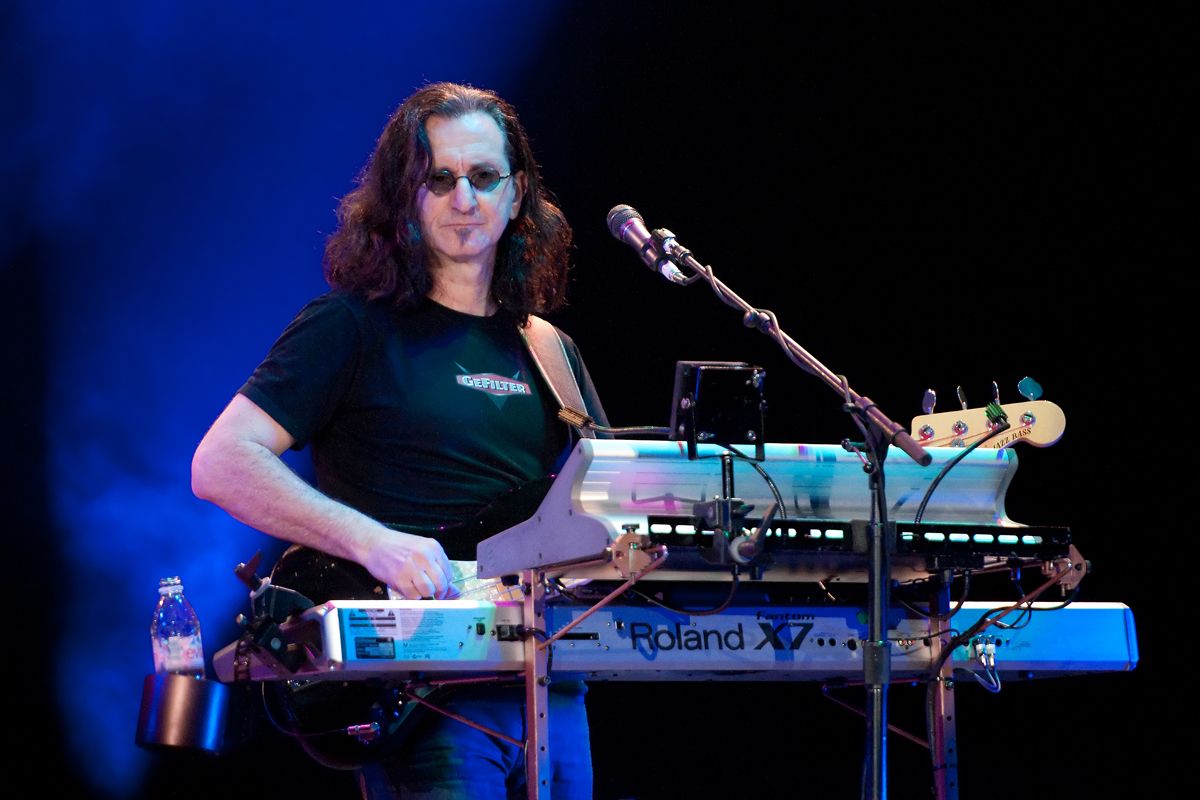
The band underwent another significant stylistic change with Signals in 1982. While synthesizers had been featured since the late 1970s, on this album they were moved to the melodic forefront, as heard in songs like 'Subdivisions' and 'Countdown', which featured prominent lead synth lines with minimalistic guitar work. The album also incorporated previously unused instruments, such as Ben Mink's electric violin on 'Losing It'. Signals contained Rush's biggest hit single, 'New World Man', while other tracks like 'Digital Man' and 'The Weapon' expanded their use of ska, reggae, and funk. The single 'Subdivisions' reached number 36 in Canada and number 5 on the US Album Rock Tracks Chart. Signals became the group's second number 1 album in Canada and peaked at number 10 in the United States.
This period marked Rush's full embrace of technology and shorter song structures, moving decisively away from the extended epics of their progressive era. The integration of sequencers, samplers, and layered keyboards became a defining characteristic of their sound throughout the mid to late 1980s. This shift was partly a response to the changing musical landscape and the band's own desire to explore new textures and rhythms. While some long-time fans were initially unsettled by the reduced role of the guitar, this era produced several of the band's most commercially successful and enduring radio hits. The albums from this time demonstrated a continued commitment to sophisticated musicianship within a more streamlined, contemporary rock framework, ensuring their relevance on radio and MTV.
Musical style and lyrical themes
Rush's musical style evolved significantly over their career, beginning with a blues-inspired hard rock sound on their debut album. With the arrival of Neil Peart, the band moved into progressive rock, characterized by complex compositions, extended song structures, and eclectic instrumentation. This peak progressive era featured lengthy conceptual pieces, detailed time signature changes, and influences from bands like Yes and King Crimson. By the early 1980s, the band began incorporating more synthesizers and shorter, more radio-friendly song formats, leading to their commercial breakthrough. The mid-1980s saw a full embrace of synthesizer-oriented rock, with keyboards often leading the melodic front. In their later career, Rush returned to a more guitar-driven hard rock sound, combining elements from all their previous phases.
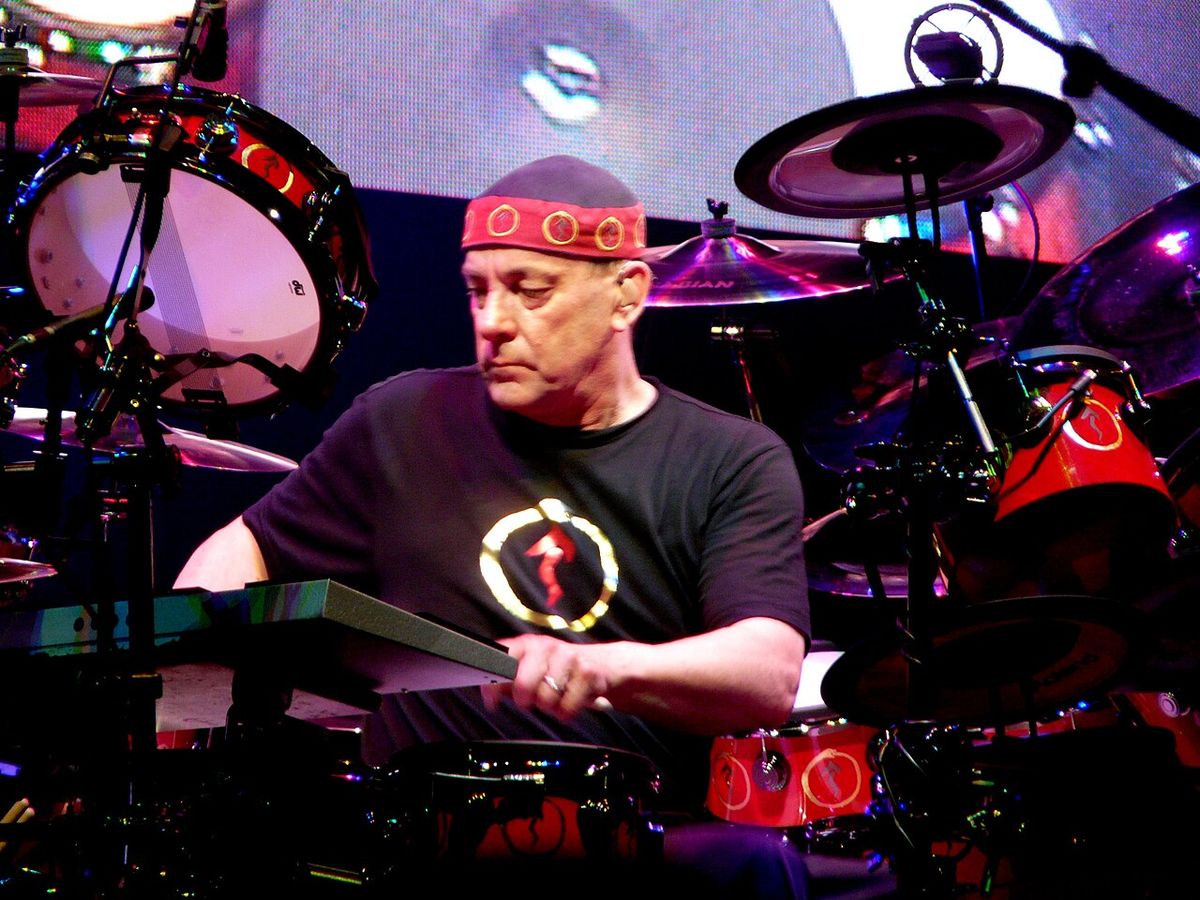
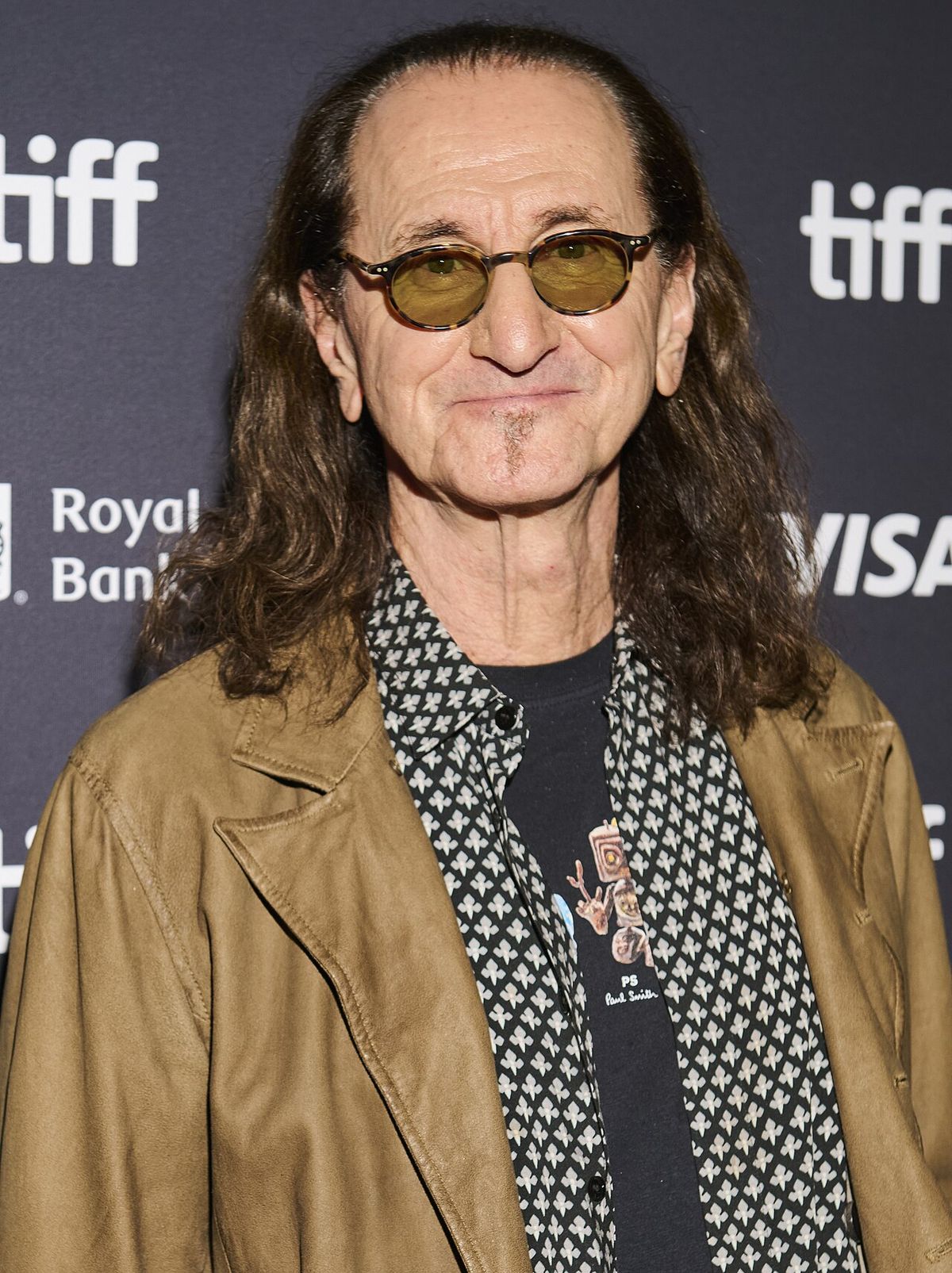
The band members are individually celebrated for their virtuosic proficiency. Geddy Lee is renowned for his high-register vocals, complex bass lines, and simultaneous keyboard playing. Alex Lifeson is noted for his textured guitar work, incorporating a wide array of effects and styles from hard rock riffing to atmospheric passages. Neil Peart is widely considered one of the greatest drummers in rock history, known for his technical precision, elaborate solos, and expansive percussion kit. This collective technical mastery became a central part of the Rush sound. Their live performances were particularly noted for the accurate reproduction of their complex studio recordings, a feat that required immense skill and stamina from all three members.
Lyrical themes were primarily the domain of Neil Peart, especially after 1974. His early work was heavily influenced by fantasy and science fiction literature, as heard in songs like 'By-Tor & the Snow Dog' and the side-long epic '2112'. Philosophical influences, particularly the objectivist writings of Ayn Rand, were prominent during the 1970s. By the 1980s, Peart's writing shifted toward more humanistic and social commentary, exploring themes of individualism, conformity, technology, and personal struggle in songs like 'Subdivisions' and 'The Spirit of Radio'. Later lyrics often reflected personal experiences, travel, and broader existential questions. This intellectual approach to songwriting distinguished Rush from many of their rock contemporaries and fostered a deep connection with their audience.
Commercial performance and accolades
As of 2026, Rush ranks 90th in the United States with sales of 27 million albums, and industry sources estimate their total worldwide album sales at over 43 million copies. Their commercial success is reflected in numerous certifications, including 14 platinum and 3 multi-platinum albums in the United States, and 17 platinum albums in Canada. Their highest-charting album in Canada was Moving Pictures, which reached number one on the Canadian Albums Chart. In the United States, Moving Pictures peaked at number three on the Billboard 200. The band has also seen consistent chart success in the United Kingdom and the Netherlands throughout their career.
Rush's award recognition includes ten Juno Awards from their home country. They have received seven Grammy Award nominations over the years. In 2009, they were honoured with an International Achievement Award at the SOCAN Awards. Their most significant honours are their inductions into the Canadian Music Hall of Fame in 1994 and the Rock and Roll Hall of Fame in 2013. These inductions formally acknowledge their impact on both Canadian culture and the global rock genre. Music critics consistently rank Rush among the greatest and most influential rock bands of all time, a reflection of their longevity, innovation, and dedicated fanbase. The band's major career awards and milestones include the following.
- Induction into the Canadian Music Hall of Fame in 1994.
- Induction into the Rock and Roll Hall of Fame in 2013.
- Nominated for seven Grammy Awards.
- Received the SOCAN International Achievement Award in 2009.
- Their album Moving Pictures is certified 5x platinum in both Canada and the US.
| Album | Year | Peak Canadian Chart Position | Notable Certification (Canada) |
|---|---|---|---|
| Rush | 1974 | 86 | , |
| Fly by Night | 1975 | 9 | Platinum |
| 2112 | 1976 | 5 | 2× Platinum |
| A Farewell to Kings | 1977 | , | Platinum |
| Permanent Waves | 1980 | , | Platinum |
| Moving Pictures | 1981 | 1 | 5× Platinum |
| Signals | 1982 | 1 | Platinum |
Later years, disbandment and reunion
The classic lineup of Lifeson, Lee, and Peart remained stable from 1974 onward, continuing to record and tour for decades. Neil Peart retired from music in 2015, effectively ending the band's active career. Alex Lifeson confirmed in 2018 that Rush had disbanded, citing Peart's health as a contributing factor. The band's legacy was impacted by the death of Neil Peart in January 2020 after a private battle with brain cancer. Following his death, Lifeson and Lee continued to occasionally work together on various projects, honouring their shared history. In a significant development, Lifeson and Lee announced in October 2025 a reunion tour scheduled for 2026 and 2027 under the Rush name.
This reunion will not feature Neil Peart, but will include drummer Anika Nilles filling in for him, with Loren Gold joining as the band's keyboardist. The announcement marks the first planned live performances under the Rush banner since the band's dissolution. The decision to tour again reflects the enduring demand for their music and the desire of Lifeson and Lee to connect with their audience once more. The configuration with supporting musicians acknowledges the irreplaceable role of Peart while allowing the surviving members to perform their extensive catalogue. This new chapter adds a complex layer to the band's storied history, demonstrating the lasting power of their musical partnership. Key events in the band's conclusion and reactivation include the following.
- Neil Peart retired from music in 2015.
- Alex Lifeson confirmed the band's disbandment in 2018.
- Neil Peart died in January 2020.
- Alex Lifeson and Geddy Lee announced a reunion tour in October 2025.
- The tour is scheduled for 2026 and 2027.
- The touring lineup includes Anika Nilles on drums and Loren Gold on keyboards.
Questions about Rush
What are Rush's biggest hit songs?
Rush's best-known and most successful singles include 'Tom Sawyer' from Moving Pictures, which reached number 24 in Canada and number 44 on the US Billboard Hot 100. 'The Spirit of Radio' from Permanent Waves peaked at number 22 in Canada and number 13 in the UK. 'New World Man' from Signals was their biggest hit single. 'Limelight' also achieved significant radio play, charting at number 18 in Canada. Earlier hits like 'Closer to the Heart' and 'Fly by Night' also remain fan favourites and staple classic rock radio tracks.
Why did Neil Peart join Rush?
Neil Peart joined Rush in July 1974 after the departure of original drummer John Rutsey. Lifeson and Lee auditioned five drummers before selecting Peart, who impressed them with his technical skill and musical sensibility. He joined just two weeks before the band's first United States tour. Beyond his drumming, Peart immediately assumed the role of primary lyricist, as Lifeson and Lee had little interest in writing words. His wider vocabulary and literary interests, drawn from regular reading, brought a new depth of fantasy and science fiction themes to the band's music, fundamentally shaping their identity from their second album onward.
How many albums did Rush sell?
As of 2026, Rush has sold over 43 million albums worldwide according to industry estimates. In the United States alone, they have sold 27 million albums, ranking them 90th in US sales. Their commercial success is certified by 14 platinum and 3 multi-platinum albums in the United States. In Canada, they have been awarded 17 platinum albums. Their most commercially successful album, Moving Pictures, has been certified quintuple platinum in both Canada and the United States for sales exceeding five million copies combined in those markets.
Is Rush in the Rock and Roll Hall of Fame?
Yes, Rush was inducted into the Rock and Roll Hall of Fame in 2013. This recognition came after years of advocacy from their dedicated fanbase and acknowledgment of their influence on multiple generations of musicians. The induction placed them among the most esteemed artists in rock history. Prior to this, the band was inducted into the Canadian Music Hall of Fame in 1994, honouring their contribution to Canadian culture. These dual hall of fame inductions solidify their status as one of the most important and respected rock bands to emerge from Canada.
What caused Rush to break up?
Rush effectively disbanded following the retirement of drummer Neil Peart from music in 2015. Alex Lifeson formally confirmed the band's end in 2018, citing Peart's health issues as a contributing factor to the decision. Peart had been privately battling chronic tendinitis and other physical ailments that made the demands of touring unsustainable. His death in January 2020 from brain cancer permanently closed the chapter on the classic trio. The disbandment marked the conclusion of over four decades of collaboration among Lifeson, Lee, and Peart, though Lifeson and Lee have continued to work together occasionally on other projects since.
Is Rush going on tour again?
Yes, Alex Lifeson and Geddy Lee announced a reunion tour in October 2025, scheduled for 2026 and 2027. This will be the first tour under the Rush name since the band disbanded. The tour will not feature Neil Peart, who died in 2020. Instead, drummer Anika Nilles will fill the drumming role, and Loren Gold will join as the band's keyboardist. This configuration allows Lifeson and Lee to perform the band's extensive catalogue live for fans once again, opening a new chapter in the band's history while respectfully acknowledging the irreplaceable legacy of their late bandmate.
Sources and further reading
- Rush (Wikipedia)
- Rush.com | Official News and Information about the ... (rush.com)
- Rush is a Band Blog: Neil Peart, Geddy Lee, Alex Lifeson (rushisaband.com)
Checked by the Yadude Books desk. Last updated 2026-10-19.