Carney touts Canada's economic potential amid protests at Toronto investment summit
Prime Minister Mark Carney promoted Canada as a global investment hub at Toronto's first major investment summit while activists planned protests against corporate influence.
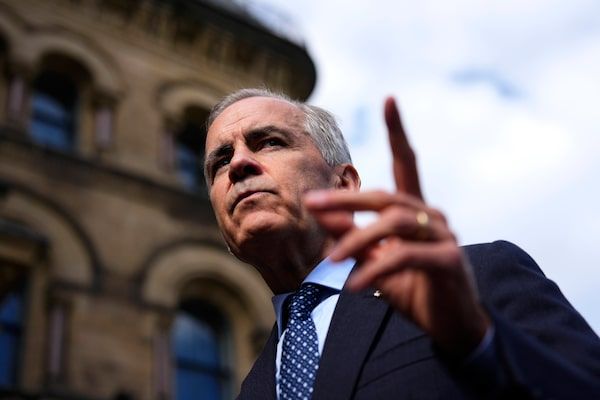
Prime Minister Mark Carney positioned Canada as a prime destination for global investment during the opening of Toronto's inaugural Canada Investment Summit on Sunday evening at the Royal Ontario Museum. The high-stakes gathering represents Canada's most ambitious attempt in recent years to court international capital, attracting hundreds of executives and global asset managers to evaluate major projects across multiple sectors. While political and business leaders celebrated the economic opportunity, civil society groups prepared protests challenging the summit's corporate-driven vision for Canada's future.
Strategic economic positioning
Carney's keynote address laid out a comprehensive case for Canada's competitive advantages in the global economy. The prime minister emphasized five key assets:
"We have what the world wants: the energy, the resources, the talent, the technology and the capital". His remarks carried particular diplomatic weight when highlighting Canada's political stability as an economic advantage, with his observation that
"our greatest strength is something that cannot be found on any balance sheet: trust"interpreted as a contrast with recent U.S. political turbulence under President Donald Trump. This strategic framing positions Canada as a reliable alternative in an era of geopolitical uncertainty.
Investment targets and international interest
Ontario Premier Doug Ford revealed the global scale of investor interest, confirming participation from eight nations: Kuwait, Malaysia, the Netherlands, Singapore, Qatar, Norway, Japan and Australia. His office identified 15 major provincial projects actively seeking investment across four strategic sectors: energy production and transmission, critical minerals and mining, artificial intelligence, and advanced manufacturing. Ford's statement
"Ontario has what the world needs and we're going to make sure the world knows it"reflects the province's central role in Canada's economic strategy. The presence of Cohere CEO Aidan Gomez and Canada's chief trade commissioner Sara Wilshaw among attendees signals the government's focus on both technological innovation and international trade relationships.
Cross-partisan economic consensus
The summit revealed unusual political alignment on economic strategy, with a confidential source confirming former Conservative Prime Minister Stephen Harper's participation in delivering closing remarks. Carney emphasized this emerging national consensus by describing
"a new consensus from Iqaluit to Victoria to Quebec City and St. Johns"about Canada's economic direction. This political unity extends to Carney's ambitious target of stimulating $1 trillion in investment over five years, a goal that appears to transcend traditional party lines. The prime minister acknowledged potential disagreements while stressing shared objectives:
"while those in the room may not always agree, nor do they need to, they all align on where Canada is going".
Civil society opposition
While business and political leaders gathered inside the Royal Ontario Museum, activist groups announced plans for Monday demonstrations under the banner "The Many vs. The Money." The coalition, including labour unions, Indigenous leaders, and climate and housing advocates, told CityNews they planned
"direct intervention"with summit attendees. Their concerns focus on three specific areas: potential impacts on public services from privatization pressures, continued investment in fossil fuel infrastructure including pipelines, and growth in arms manufacturing. This opposition highlights growing tensions between Canada's economic development priorities and social equity considerations that extend beyond traditional political divisions.
Geopolitical context and economic strategy
The summit represents Canada's strategic response to shifting global economic dynamics that have increased international interest in stable, resource-rich economies. Carney's declaration that
"Canada is taking control of our future"and commitment to
"build more, trade more, and create more sustainable prosperity"reflects an assertive economic nationalism adapted to contemporary challenges. The attendance of sovereign wealth funds and pension managers from Asia, Europe and the Middle East signals Canada's attempt to position itself as an alternative to traditional financial hubs by combining natural resources, technological capacity and political stability.
Policy implications and long-term vision
This gathering serves as a practical test of Carney's economic philosophy that substantial foreign investment can drive sustainable domestic growth. The focused attention on energy, critical minerals and advanced manufacturing aligns with global trends in supply chain security and technological sovereignty, while raising important questions about environmental sustainability and equitable development. The presence of both domestic and international investors suggests confidence in Canada's medium-term economic prospects, even as protesters challenge fundamental assumptions about the distribution of benefits. The summit's outcomes will likely influence not only investment patterns but also the broader political debate about Canada's economic model in an increasingly competitive global landscape.
Balancing economic and social priorities
The parallel narratives emerging from the summit - enthusiastic promotion of investment opportunities alongside civil society concerns about corporate influence - reveal the complex challenges facing Canadian policymakers. Carney's vision of
"creating more sustainable prosperity here at home"through increased trade and development will face ongoing scrutiny regarding its social and environmental impacts. The participation of political figures from across the spectrum suggests a temporary truce on economic development goals, but the planned protests demonstrate this consensus remains contested ground in Canadian public life.