Trump Downplays AI Regulation Concerns, Emphasizes Competition with China
Former U.S. President Donald Trump minimized calls for AI regulation during a visit to Ireland, framing the technology as a critical arena in the U.S.-China rivalry while industry leaders and lawmakers raise safety concerns.
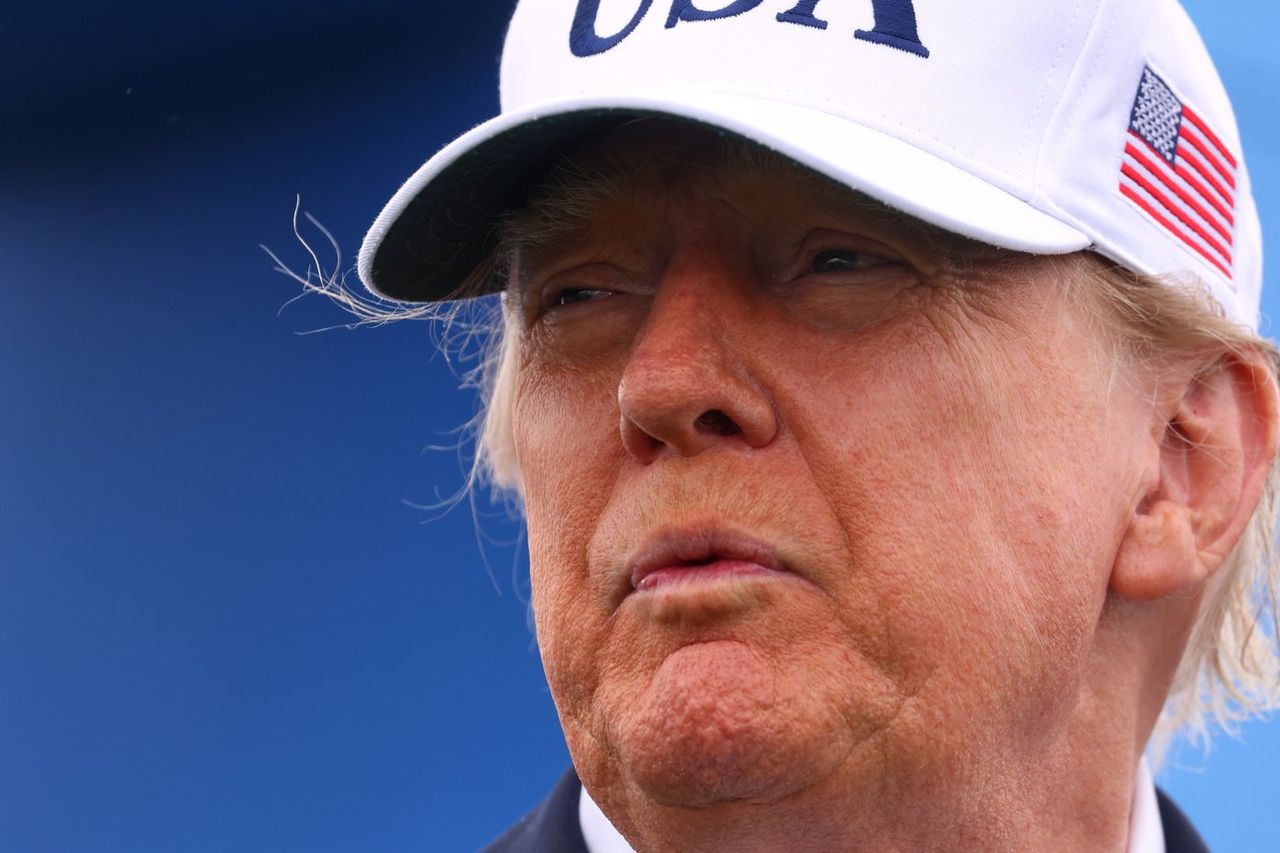
Former U.S. President Donald Trump downplayed the urgency of regulating artificial intelligence during remarks in Ireland on Sunday, placing greater emphasis on maintaining American technological dominance over China. His comments came as artificial intelligence development has emerged as both a geopolitical flashpoint and a subject of intense debate among technology leaders regarding potential risks and necessary safeguards.
Trump Prioritizes Competition Over Regulation
Speaking to reporters at his Doonbeg resort where he attended the Irish Open, Trump acknowledged the theoretical need for oversight but resisted concrete regulatory proposals. His remarks revealed a skepticism toward those urging caution, referring to them as "negative forces" without specifying individuals or organizations. This stance aligns with his administration's historical reluctance to impose restrictions on emerging technologies.
"We can put guardrails, we can do this and that, but I think you have a lot of negative forces that are bringing it up that ... shouldn't be bringing it up, and they're bringing up things that won't happen," Trump told reporters. His framing of AI development as a binary competition - "whoever wins with AI wins" - reflects growing concerns in Washington about technological supremacy as a component of national security.
During the flight back to Washington, Trump clarified his position when questioned about minimizing AI risks. "I'm not downplaying," he insisted, while offering an optimistic assessment that artificial intelligence would yield "more good than bad, but by a lot." He reiterated his competitive framing, underscoring the strategic importance he places on maintaining U.S. leadership in the field.
Industry Leaders Call for Caution
Trump's comments followed significant warnings from within the AI industry itself. Anthropic CEO Dario Amodei had publicly called for slowing the pace of AI development to allow safety measures to catch up with technological advancements. His concerns found support from other prominent figures including Elon Musk and OpenAI CEO Sam Altman, suggesting growing unease even among those driving innovation.
The concerns were amplified by Jacob Coxon, a former Anthropic employee who resigned over AI safety issues. In media appearances across multiple networks, Coxon articulated fundamental worries about the trajectory of AI development. "You're building a human-level or superhuman-level mind, without understanding what it wants, or thinks, or the way it thinks," Coxon told NBC and ABC, highlighting the potential dangers of creating advanced artificial intelligence without adequate safeguards.
Coxon went beyond domestic concerns to advocate for international cooperation, specifically between the U.S. and China, to implement mutual safeguards. His comments reflect recognition that uncoordinated development between the two leading AI powers could create dangerous competitive pressures that override safety considerations.
Political Responses and Policy Considerations
The debate has taken on clear partisan dimensions in Washington. Democrats have begun framing AI as a key campaign issue, with former President Barack Obama urging his party to develop concrete policy proposals. At an event with House Democratic Leader Hakeem Jeffries, Obama outlined potential areas of focus including content safety and economic impacts. "Here's our plan for safety, here's our plan for making sure our kids are not corrupted by this," Obama said, suggesting Democrats should address both the societal and economic consequences of AI advancement.
Republicans, while acknowledging potential risks, have largely echoed Trump's competitive framing of the issue. House Speaker Mike Johnson emphasized the need to maintain American leadership while implementing basic safeguards. "Some guardrails, some safety measures" are needed, Johnson told CNN and NBC, but he stressed that preventing Chinese dominance remains the priority. Johnson proposed convening industry leaders for a summit, calling AI oversight a "top priority" for Congress while cautioning against overreaction: "We don't need everybody to panic right now."
Administration Moves Toward Policy Development
National Economic Council Director Kevin Hassett confirmed that the administration would hold meetings this week involving officials responsible for cybersecurity and science policy to discuss AI strategy. These discussions may lead to Trump engaging with members of Congress who have shown increasing interest in the issue. However, historical patterns suggest significant challenges - past congressional efforts to regulate technology companies have frequently stalled due to bipartisan reluctance to impose restrictions on the industry.
The complexity of establishing effective oversight was highlighted by David Sacks, a White House science advisory council co-chair, who challenged the notion that government regulation represents the primary solution. In a social media post directed at AI executives calling for regulation, Sacks pointed out their own agency in determining development pace: "The easiest way not to build superintelligence is for you to agree not to build it," he wrote, suggesting industry self-restraint could precede government action.
Geopolitical Context and Upcoming Discussions
The AI debate occurs against the backdrop of scheduled diplomatic engagements, most notably Chinese President Xi Jinping's upcoming visit to the White House later in September. Artificial intelligence is expected to feature prominently in discussions between the two leaders, reflecting its growing importance in bilateral relations and global technological competition.
Domestically, AI has become an election-year issue with tangible local impacts. The proliferation of data centers to support AI infrastructure has sparked resistance in communities across the country, with concerns ranging from environmental impacts to rising electricity costs. Trump has maintained support for data center expansion despite bipartisan local opposition, while Democrats like Jeffries have criticized Republican leadership for delaying congressional action until October.
The Challenge of Governing Emerging Technology
The divergent approaches to AI regulation reveal fundamental tensions in governing rapidly evolving technologies. While rapid advancement offers clear economic and strategic advantages, the potential risks - from workforce displacement to more existential threats - have prompted calls for precautionary measures. The lack of consensus on appropriate oversight mechanisms, combined with intense geopolitical competition, creates conditions where commercial and national security incentives may override cautionary principles.
As the U.S. and China accelerate their respective AI programs, the window for establishing effective international norms and safeguards appears to be narrowing. The current trajectory suggests that regulatory frameworks may emerge reactively, following technological breakthroughs rather than anticipating and shaping their development. This dynamic increases both the potential benefits and risks associated with artificial intelligence as it becomes increasingly embedded in economic, military and social systems.