Amazon Cargo Plane Crash at Miami Airport Leaves Five Dead, Sparks Safety Concerns
A Boeing 767 cargo plane operated for Amazon Prime Air overran a runway at Miami International Airport, killing five people and injuring five others in a fiery crash that has raised questions about aviation safety protocols and runway infrastructure.
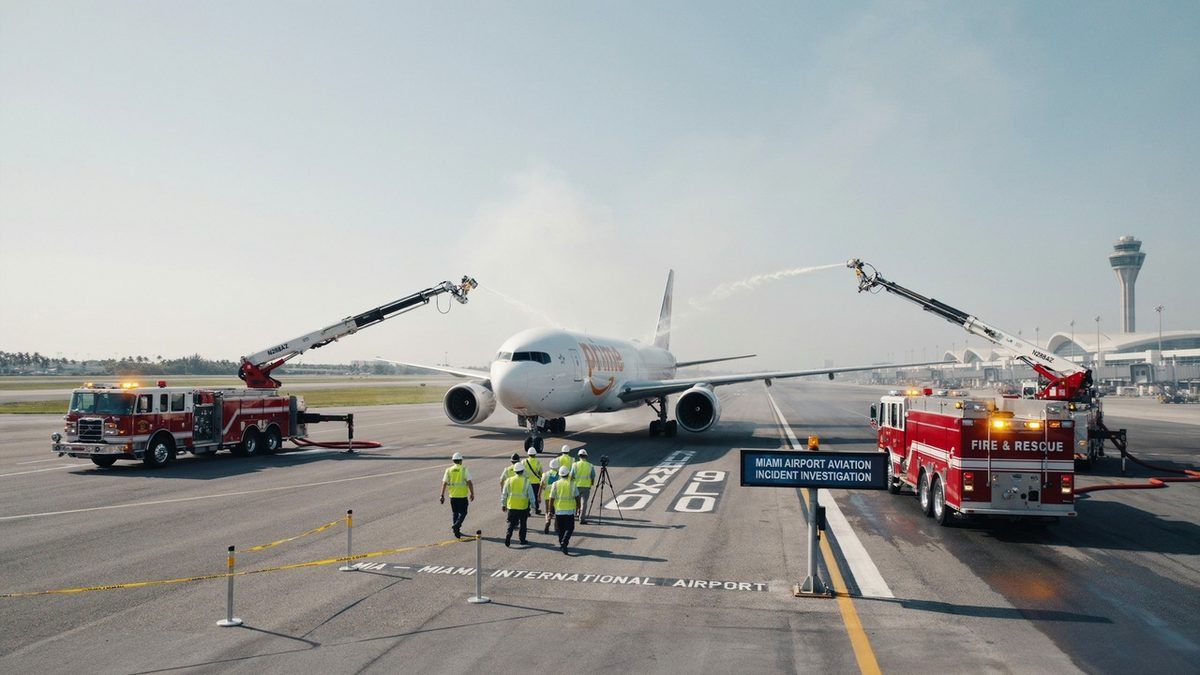
A Boeing 767 cargo aircraft operating for Amazon Prime Air crashed catastrophically after overrunning a runway at Miami International Airport on Sunday afternoon, killing at least five people and injuring five others in an accident that has drawn attention to critical aviation safety considerations. The incident occurred when the plane, arriving from San Juan, Puerto Rico, failed to stop upon landing and careened across a roadway adjacent to the airport, striking vehicles and erupting into flames that sent thick black smoke billowing across the airport complex.
The Crash Sequence and Emergency Response
The aircraft overran the runway around 2 p.m. local time during challenging weather conditions that included thunderstorms and wind gusts reaching 30 mph (48 kph). The plane plowed through a perimeter fence and crossed a road frequently used by warehouse employees and service workers accessing businesses near the airport. Miami-Dade County officials confirmed five fatalities, with three individuals critically injured and two others hospitalized with less severe trauma.
Rescue operations faced multiple challenges as firefighters encountered intense flames and smoke from the plane's complex engine compartment. Miami-Dade Rescue Fire Chief Ray Jadallah described how crews had to simultaneously extricate the pilot and copilot trapped in the cockpit while freeing vehicle occupants, including one person pinned beneath a car. Approximately 200 emergency personnel responded to the scene, deploying specialized foam units to suppress the fuel-fed blaze that continued to pose risks hours after impact due to persistent fuel leaks.
Operational Disruptions and Airport Impact
The crash caused major disruptions at Miami International Airport, a critical hub for both passenger and cargo traffic. FlightAware data showed more than 160 cancellations and nearly 325 delays by late Sunday, with some flights diverted to Orlando International Airport over 200 miles away. The incident effectively shut down operations at one of Florida's busiest airports for much of the afternoon, underscoring how airport infrastructure vulnerabilities can ripple through regional transportation networks.
Photographs from the scene showed the Prime Air-branded aircraft resting on its belly beside a roadway, remarkably intact despite the extensive fire damage. The positioning near two semitrucks highlighted how closely the airport's boundaries intersect with ground transportation routes, a design feature common at many urban airports that creates potential risk zones during runway overruns.
Aircraft History and Operational Context
The 32-year-old Boeing 767 involved in the accident represents a significant segment of the cargo aviation fleet - older passenger aircraft converted for freight service. According to flight-tracking service Flightradar24, this particular airframe had served multiple airlines over two decades in passenger configuration before its 2015 conversion to cargo use. The flight was operated under contract by 21 Air, a North Carolina-based cargo specialist, illustrating the complex web of relationships in modern air logistics networks where major retailers like Amazon outsource operations to specialized carriers.
Aviation safety expert Steve Arroyo, a retired United Airlines pilot, noted the typical crew configuration for such flights would include just a pilot and copilot for domestic routes, raising questions about whether crew fatigue or experience factors might have contributed to the accident. The exact number and status of crew members aboard during the incident remain unclear pending official confirmation from investigators.
Critical Safety Questions Emerge
As the National Transportation Safety Board dispatched a team led by Chairwoman Jennifer Homendy to investigate, aviation professionals immediately raised key questions about the landing attempt. Arroyo emphasized the importance of whether the aircraft touched down within the standard touchdown zone - typically the first 3,000 feet of runway - or whether pilots attempted to continue an unstable approach rather than executing a go-around maneuver.
Mary Schiavo, a pilot and former Transportation Department inspector general, analyzed available video footage that showed the plane floating above the runway for an extended period without properly flaring its nose to initiate firm contact with the pavement. "It didn't touch down right away, and so it lost a lot of critical real estate by just continuing to float over the runway. It was literally still flying," Schiavo observed, suggesting the delayed touchdown may have left insufficient runway remaining for stopping.
Runway Safety Infrastructure Deficiencies
The accident has drawn attention to the absence of engineered materials arresting systems (EMAS) at Miami International Airport. These specialized crushable concrete beds, installed at over 120 U.S. airports beyond runway ends, are designed to safely decelerate overrunning aircraft. Federal Aviation Administration data indicates these systems have prevented hundreds of potential casualties in similar incidents nationwide.
Schiavo highlighted this infrastructure gap, noting that while Miami's runways meet federal length requirements, they lack this additional safety feature that has proven effective elsewhere. The contrast between Miami's configuration and airports with more comprehensive overrun protection raises questions about whether cost-benefit analyses for such systems adequately account for urban airport environments where overruns could impact surrounding communities.
Broader Aviation Safety Implications
This crash marks the second major cargo aircraft accident in recent years, following a 2023 UPS crash in Louisville that killed 15 people. Together, these incidents have renewed scrutiny of operational practices across the air cargo sector, particularly regarding converted aircraft maintenance, pilot training for aborted landings, and runway safety infrastructure. The accident also occurs amid broader discussions about aging aircraft fleets and the unique stresses of cargo operations that often involve heavier weights and different flight profiles than passenger service.
For Amazon, the incident represents a significant challenge to its growing air logistics network, which has expanded rapidly to support next-day delivery capabilities. The company's statement expressing heartbreak and pledging full cooperation with investigators reflects the delicate balance corporations must maintain between operational transparency and legal prudence following transportation disasters.
Community Impact and Ongoing Investigation
Local officials emphasized the human tragedy affecting airport-area workers and first responders. The identities of victims have not been released pending family notifications, but the incident has undoubtedly shaken the close-knit community of airport service employees who regularly traverse the affected roadway. As investigators begin examining flight data recorders, maintenance records, and operational procedures, the aviation industry awaits findings that could influence future safety regulations and operational practices for cargo carriers worldwide.
Historical Context of Runway Overruns
Runway overrun accidents represent a persistent challenge in aviation safety, accounting for numerous incidents annually worldwide. While most result in property damage rather than fatalities, the Miami crash demonstrates how catastrophic consequences can emerge when multiple risk factors converge - including weather conditions, aircraft performance limitations, and proximity to ground infrastructure. The incident will likely renew scrutiny of how airports assess and mitigate overrun risks, particularly for runways adjacent to developed areas.
As the investigation progresses, attention will focus on whether emerging technologies like improved runway surface monitoring or enhanced aircraft braking systems could prevent similar accidents. The tragedy also raises questions about whether current pilot training adequately emphasizes go-around decision-making when landing parameters become unstable, a factor that multiple aviation safety studies have identified as crucial for preventing runway excursions.