Canada's Recognition of Palestine Hinges on Reform Commitments, But Progress Faces Obstacles
Prime Minister Mark Carney made Palestinian statehood recognition contingent on governance reforms, but implementation faces challenges amid ongoing conflict and Israeli restrictions.
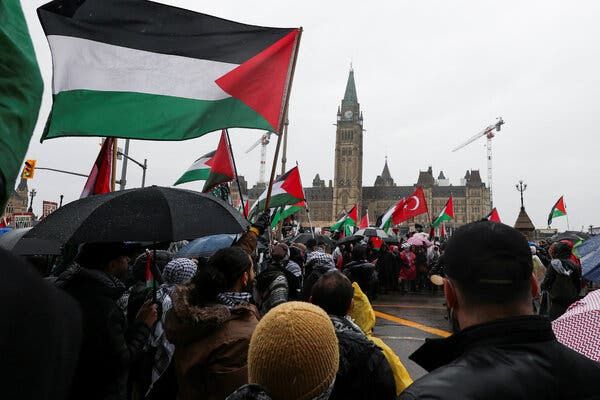
In September 2025, Canada took a significant diplomatic step by officially recognizing the State of Palestine, marking a pivotal moment in Middle East relations. Prime Minister Mark Carney framed this decision as conditional upon substantial governance reforms by the Palestinian Authority (PA), requiring written commitments from Palestinian President Mahmoud Abbas. The Privy Council has declined to publish Abbas's letter outlining these commitments, citing the need to respect international diplomatic protocols. Nearly a year later, the practical implementation of these reforms reveals both progress and persistent challenges deeply intertwined with the ongoing Israeli-Palestinian conflict and economic restrictions imposed by Israel.
The Foundation of Canada's Recognition
Carney explicitly tied Canada's recognition to concrete political transformations within Palestinian governance structures. He told reporters the move was "predicated on the Palestinian Authority's commitment to much-needed reform," emphasizing that Canada had received this assurance directly from Abbas through both written correspondence and subsequent phone discussions. The three core reform areas demanded by Ottawa included fundamental governance changes that would exclude Hamas from any political role, a binding pledge to hold general elections by 2026, and a verifiable commitment to demilitarization.
Senior Canadian officials provided additional context during background briefings, specifying that these reforms must include terminating the PA's controversial payments to families of Palestinians imprisoned for attacks against Israelis. They also insisted on comprehensive revisions to educational materials to eliminate content perceived as promoting antisemitism. This conditional approach reflects Canada's attempt to balance diplomatic recognition with substantive governance improvements, though it has drawn mixed reactions from both supporters and critics of Palestinian statehood.
Palestinian Reform Efforts Amid Occupation
Feda Abdelhady, Palestine's ambassador to Ottawa, offered insights into the reform process during an August 2026 interview. While confirming that reform initiatives are actively underway, she emphasized the severe constraints imposed by ongoing occupation and conflict. "We could do the most incredible job of implementing reforms from textbooks and curriculum and everything else, but the occupation remains," Abdelhady stated, drawing attention to how daily survival struggles in Gaza fundamentally complicate institutional changes.
The Palestinian Finance Ministry substantiated these claims with a July 2026 report documenting completed reforms. According to their assessment, the PA has achieved 30 out of 33 promised legal and social-system changes over an 18-month period. These include strengthened investment laws, enhanced judicial independence measures, and improvements to financial transparency. However, the report contains a significant caveat: further progress remains impossible without addressing Israeli policies that systematically withhold tax revenues and restrict Palestinian economic activity.
Economic Strangulation and Political Deadlock
Since the October 2023 Hamas attacks, Israel has implemented a series of economic measures that have severely hampered the PA's capacity to govern effectively. These include canceling thousands of Palestinian work permits, blocking key export routes, and imposing strict caps on financial transfers. Such policies have created what Palestinian officials describe as an economic stranglehold, limiting their ability to fund social services or implement additional reforms.
The electoral component of Canada's conditions faces particularly steep challenges. While the PA maintains its commitment to hold general elections by 2026, officials insist this cannot occur until at least a year after the Gaza war concludes and Israel ceases its practice of detaining political candidates. The sole exception to this electoral freeze was a municipal vote held in Deir al-Balah in April 2026, marking the first Palestinian election in Gaza since Hamas seized control in 2007. This isolated event underscores both the PA's willingness to reform and the profound structural barriers it faces.
Demilitarization and Social Welfare Reforms
The demilitarization requirement has proven especially contentious. In February 2025, Abbas pledged to end the PA's longstanding practice of providing stipends to families of Palestinians imprisoned or killed by Israel, particularly those accused of violent attacks. The PA transitioned to a needs-based welfare system called Tamkeen, replacing the previous framework that critics labeled as incentivizing violence. While the PA claims an upcoming independent audit will confirm the policy's elimination, Israel maintains these "Pay for Slay" payments continue under different guises.
This reform has sparked domestic controversy in the West Bank, where many view detained Palestinians as resistance figures rather than criminals. The shift reflects the PA's delicate balancing act between meeting international demands and maintaining domestic legitimacy. Palestinian officials have also argued that true demilitarization requires reciprocal security guarantees, possibly involving international peacekeepers, to prevent Israeli military incursions into Palestinian territories.
Educational Reforms and Competing Narratives
The education reform component has similarly become a flashpoint. An analysis conducted by the Israeli firm Impact-SE in November 2025 examined PA textbooks and teachers' guides, identifying passages that glorify historical attacks against Israelis and omit reference to the Holocaust. The report cited specific examples, including material framing the 1972 Munich Olympics attack as legitimate resistance and imagery featuring casualties of Israeli military actions.
Palestinian officials counter these criticisms by pointing to documented biases in Israeli educational materials. They reference a 2012 Hebrew University study that found Israeli textbooks systematically exclude peaceful portrayals of Arabs, while maps used in both Israeli and Palestinian schools often deny the other side's territorial existence. This mutual recrimination reflects the broader narrative conflict underlying the peace process, where educational systems become battlegrounds for competing historical claims.
International Reactions and Legal Context
Israel's response to Canada's recognition policy has been unequivocally negative. Ambassador Iddo Moed articulated Israel's position in stark terms, accusing the PA of corruption and bad faith: "Palestinians really don't live up to their commitments. There is no reason whatsoever to say that there is any kind of Israeli involvement." He pointed specifically to the absence of concrete election timelines as evidence of backsliding on reform promises.
Canadian academics offer more nuanced perspectives. Jeremy Wildeman, a human rights researcher at the University of Ottawa, criticized what he described as "perpetually moving goalposts," arguing that Canada should focus more on restraining Israeli settlement violence than demanding PA reforms under occupation. In contrast, York University's Heidi Matthews interpreted Canada's conditions as an attempt to actively strengthen Palestinian institutions, a requirement under international law. She noted this approach aligns with a July 2024 International Court of Justice advisory opinion that called on states to facilitate Palestinian self-determination through concrete institutional support.
The Path Forward
Canada's conditional recognition of Palestine represents a calculated diplomatic strategy that seeks to incentivize governance improvements while maintaining political leverage. By tying statehood to verifiable reforms, Ottawa aims to promote moderate Palestinian leadership and counter extremism. However, this approach risks appearing disconnected from the power asymmetries that make meaningful reform implementation extraordinarily difficult under military occupation.
The emphasis on institutional capacity-building marks a significant departure from Canada's traditional role as a humanitarian donor in the region. Carney's announcement included dedicated funding for reform implementation, signaling a shift toward long-term state-building assistance. This model could potentially influence other nations' policies toward Palestine, but its effectiveness ultimately depends on complementary pressure on Israel to ease economic and military restrictions. Without such parallel progress, Canada's well-intentioned conditions may become another casualty of the conflict's intractable dynamics.
As the 2026 election deadline approaches, the international community will closely watch whether Canada's innovative approach can help break the longstanding deadlock in Israeli-Palestinian relations, or whether it will join the long list of stalled peace initiatives. The answer may determine whether conditional recognition becomes a template for diplomatic progress or merely another footnote in the conflict's protracted history.