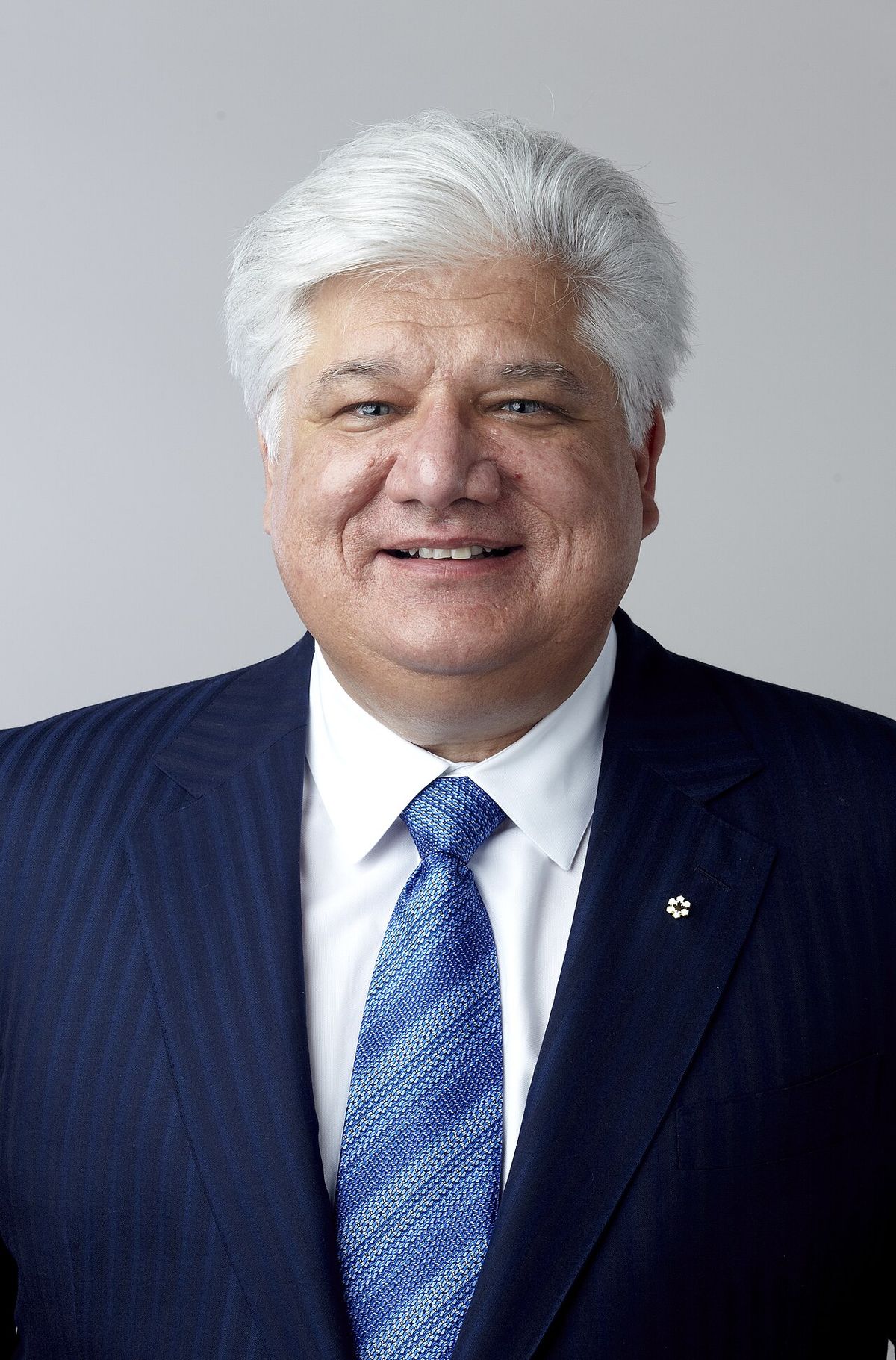
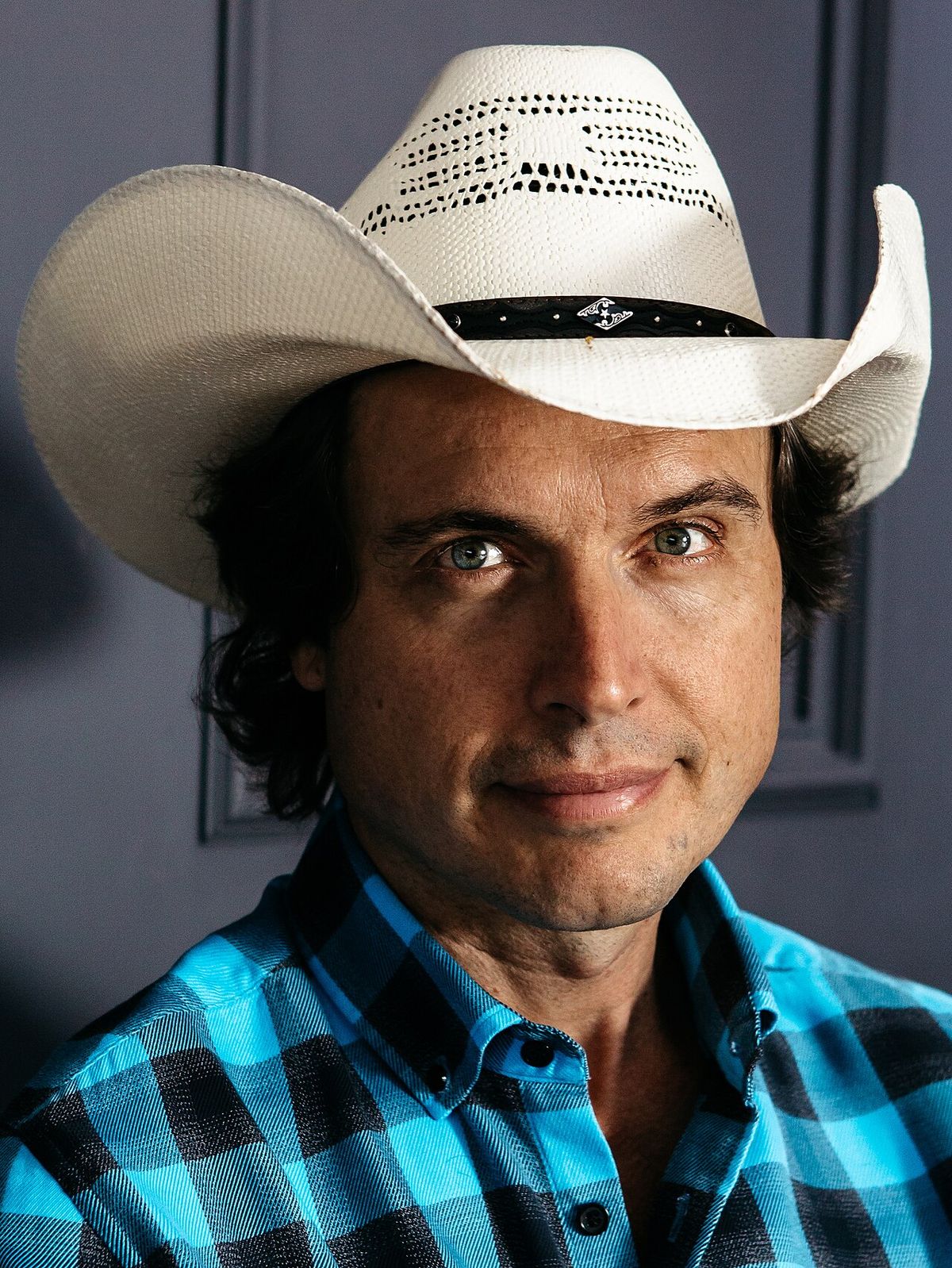
Daniel Nadler
Daniel J. Nadler (born 1983) is a Canadian-born billionaire entrepreneur, artificial intelligence innovator, and published poet. He is the founder and chief executive officer of OpenEvidence, an AI-powered medical search and clinical decision-support platform that, by early 2026, was being used by over a quarter of doctors in the United States and had reached a valuation of US$12 billion. His earlier venture, Kensho Technologies, was a pioneering AI company for financial analysis acquired by S&P Global in 2018 for US$550 million. Nadler's work at the intersection of technology, medicine, and the humanities has earned him recognition on the TIME100 Health and TIME100 AI lists, and as of 2026, Forbes estimated his net worth at US$7.6 billion, largely derived from his majority stake in OpenEvidence.
Early life and education
Daniel Nadler was born in 1983 in Toronto, Ontario, to immigrant parents from Poland and Romania. His father worked as an engineer specializing in using sound to detect microscopic flaws in critical infrastructure such as bridges and submarines. Nadler pursued his undergraduate education at the University of Toronto before moving to Harvard University for graduate studies. At Harvard, he engaged in a broad academic curriculum, studying mathematics and classics while also pursuing poetry under the mentorship of Pulitzer Prize-winning poet Jorie Graham. He completed his doctoral degree in 2016 with a thesis focused on the pricing mechanisms of credit derivatives. During his PhD studies, Nadler served as a visiting scholar at the Federal Reserve, gaining early exposure to the intersection of finance and quantitative analysis that would later inform his first company. This unique educational blend of technical finance, classical humanities, and creative writing established the foundational pattern for his interdisciplinary career.
Founding and sale of Kensho Technologies
While still a PhD student at Harvard in 2013, Daniel Nadler co-founded Kensho Technologies with Peter Kruskall. The company developed an artificial intelligence and machine learning platform designed to perform complex financial analysis through a simple, search-engine-like interface. Kensho's software allowed investment analysts and asset managers on Wall Street to rapidly query vast datasets to understand how global events might impact financial markets. The company's innovative approach attracted significant attention and major clients. Goldman Sachs provided early incubation support, a relationship Nadler later described as the closest he ever had to a traditional job and a professional homecoming. In 2018, financial data and analytics giant S&P Global acquired Kensho for US$550 million, a landmark deal at the time for an AI startup. The successful exit from Kensho provided Nadler with substantial capital, professional experience, and the freedom to explore his next venture without immediate financial pressure.
Interlude: literary, artistic and film work
Following the sale of Kensho, Daniel Nadler did not immediately launch another technology company. Instead, he dedicated a period to deepening his humanistic and artistic education, driven by a personal belief in the capacity for continuous, deep learning. He returned to intensive study of the classics, including relearning Ancient Greek. He undertook formal training in drawing with an instructor from Britain's Royal Academy, practicing fundamental techniques like shading on simple objects such as an apple. His debut poetry collection, Lacunae: 100 Imagined Ancient Love Poems, had been published in 2016 by the prestigious American publisher Farrar, Straus and Giroux, with The Washington Post describing it as a "striking debut." During this time, he also expanded into film production. He served as an executive producer on the 2019 period drama Motherless Brooklyn and as a co-financier and producer on the 2021 drama Palmer starring Justin Timberlake. This interdisciplinary period between companies was a deliberate choice to broaden his perspective before tackling a new complex problem.
Conception and founding of OpenEvidence
Nadler has stated that watching the crisis unfold, particularly the distressing images from New York City, provided a strong sense of activation, motivation, and purpose to build a company in medicine. He recognized this information overload problem, where the haystack of data was doubling in size every few weeks, as structurally similar to the financial analysis challenges Kensho had addressed. Nadler founded OpenEvidence in 2021, co-founding the company with Zachary Ziegler. He initially seeded the venture with his own capital before raising external venture funding. The company's mission was to build what he termed "the MRI of medical knowledge," a tool that would allow a physician to instantly scan the full body of medical research for a specific patient case at the point of care, acting as a "brain extender" for doctors.
Product design and technical architecture
OpenEvidence was built as an AI-powered search and clinical decision-support platform exclusively for physicians, with a foundational design principle that in medicine there is no room for error or AI hallucination. Its core technical innovation was the use of an ensemble of smaller, specialized AI models trained only on peer-reviewed medical literature from trusted sources, rather than a single large general model. This architecture was designed to maximize accuracy and provide full transparency, with every answer generated by the platform including complete source citations so doctors could verify the underlying evidence. The company invested heavily in the software engineering infrastructure required to make the system reliable and available at all times, as physicians began to depend on it for mission-critical clinical decisions. The platform was engineered to help doctors manage the overwhelming volume of new studies and to find information buried deep in the long tail of medical research, which was often where the most relevant data for complex or rare cases resided.
Adoption strategy and market penetration
The company's adoption strategy was unconventional for healthcare technology and was a major factor in its rapid growth. Instead of selling through slow-moving hospital systems or insurers, OpenEvidence made its platform completely free for all verified doctors in the United States, treating physicians as direct consumers. This approach bypassed traditional gatekeepers and led to rapid, organic growth through professional networks and word-of-mouth recommendation. By early 2026, over a quarter of all U.S. doctors were using the platform, with adoption spanning from large medical establishments to small practices serving rural communities. Physicians reported using it most frequently for rare patient cases they might encounter only once or twice in their careers, indicating it addressed a critical long-tail information need. The freemium model created a virtuous cycle where high physician usage demonstrated value to medical publishers, which in turn facilitated content partnerships.
Key elements of the OpenEvidence adoption strategy- Free access provided to all verified U.S. physicians with no cost barrier.
- Direct-to-consumer (doctor) model bypassing institutional healthcare sales cycles.
- Focus on solving the acute, daily pain point of medical information overload.
- Strategic partnerships formed with major medical publishers like the New England Journal of Medicine.
- Platform designed for ease of use at the point of care during patient consultations.
- Organic growth driven by utility and peer recommendation within the medical community.
Growth, valuation, and industry partnerships
OpenEvidence experienced remarkable growth following its 2021 launch, attracting venture capital backing from top-tier firms like Sequoia Capital. The company's free-access model and demonstrated utility for doctors facilitated widespread adoption without traditional enterprise sales or marketing. This adoption created a powerful symbiotic relationship with medical publishers. By sending millions of physician queries directly to journal source pages, OpenEvidence drove significant traffic and engagement to publishers, which in turn helped secure expanded content licensing agreements. By July 2026, following a growth funding round, OpenEvidence reached a valuation of US$12 billion. Daniel Nadler retained a controlling interest, owning nearly 60% of the company as of that date. This ownership stake is the primary source of his personal wealth, which Forbes estimated at US$7.6 billion in 2026. The company's success demonstrated a new model for introducing advanced AI into clinical practice by directly solving acute physician pain points around information management and access.
Public recognition and leadership philosophy
Daniel Nadler's influence in health and technology was formally recognized with two major honours from Time magazine. On May 8, 2025, he was named to the inaugural TIME100 Health list, which spotlights the 100 most influential people in global health. In 2026, he was further included on the TIME100 AI list, recognizing the 100 most influential individuals in the field of artificial intelligence. In interviews and podcasts, such as an appearance on Goldman Sachs' Talks at GS in July 2026, Nadler has articulated a distinct leadership and operational philosophy. He emphasizes building teams composed of individuals with high "neuroplasticity," or the ability to rapidly learn and adapt to new information and situations. He advocates for solving genuine, acute user needs rather than pursuing technology for its own sake, a principle that guided OpenEvidence's focus on the physician's daily challenge. For mission-critical applications like medicine, he prioritizes a relentless focus on accuracy, quality, and dependable infrastructure over pure model scale or speed of development.
Personal life and net worth
As of 2026, Daniel Nadler resides in Surfside, Florida. He maintains a connection to his Canadian roots, having grown up and begun his post-secondary education in Toronto. According to Forbes, his estimated net worth reached approximately US$7.6 billion in 2026, ranking him 498th on the publication's global billionaires list. This wealth is almost entirely derived from his nearly 60% ownership of OpenEvidence, valued at US$12 billion, with earlier wealth from the sale of Kensho. His personal interests continue to reflect the interdisciplinary blend seen in his professional life, encompassing technology, medicine, literature, and the arts. Nadler has framed his personal ethos around the empowering belief that one can learn any complex subject, from rocket science to medicine, which directly informed his non-linear career path and his confidence in founding companies in disparate fields like finance and healthcare.
Chronology of ventures and valuations
Daniel Nadler's career trajectory is defined by two major artificial intelligence companies founded eight years apart. He co-founded Kensho Technologies in 2013, an AI company for financial analysis that was acquired by S&P Global in 2018 for US$550 million. He later founded OpenEvidence in 2021, an AI medical knowledge platform for physicians. Each company achieved a significant valuation by addressing problems of information overload in finance and medicine respectively.
| Company | Year Founded | Core Function | Acquisition/Valuation Event | Year | Value |
|---|---|---|---|---|---|
| Kensho Technologies | 2013 | AI for financial analysis | Acquired by S&P Global | 2018 | US$550 million |
| OpenEvidence | 2021 | AI for medical decision support | Valuation after growth round | July 2026 | US$12 billion |
By early 2026, OpenEvidence reached a valuation of US$12 billion following several private funding rounds. This valuation is significantly larger than the acquisition price of his first company, Kensho. The growth highlights the market potential for AI in healthcare and the widespread adoption OpenEvidence achieved. The platform was used by over a quarter of doctors in the United States, demonstrating rapid scaling and deep product-market fit within the medical community.
Questions about Daniel Nadler
What is Daniel Nadler's net worth and source of wealth?
As of 2026, Forbes estimated Daniel Nadler's net worth to be approximately US$7.6 billion. The primary source of this wealth is his majority ownership stake in OpenEvidence. He owned nearly 60% of the company when it was valued at US$12 billion in July 2026. His earlier wealth came from the 2018 sale of his first AI company, Kensho Technologies, to S&P Global for US$550 million, which provided the initial capital to seed OpenEvidence.
What is OpenEvidence and what does it do?
OpenEvidence is an artificial intelligence company founded by Daniel Nadler in 2021. It provides a medical search and clinical decision-support platform for physicians, acting as an AI copilot at the point of care. The tool is trained exclusively on peer-reviewed medical literature and helps doctors quickly find relevant research to aid in diagnosis and treatment, especially for complex or rare cases. By early 2026, it was being used by over a quarter of all doctors in the United States, offered free of charge to verified physicians, and had formed partnerships with major publishers like the New England Journal of Medicine.
Where is Daniel Nadler from?
Daniel Nadler is from Toronto, Ontario, Canada. He was born there in 1983 to immigrant parents from Poland and Romania. He completed his undergraduate studies at the University of Toronto before pursuing his PhD in political economy at Harvard University in the United States. As of 2026, he resides in Surfside, Florida, and his company OpenEvidence is headquartered in Miami, Florida.
What was Kensho Technologies?
Kensho Technologies was an artificial intelligence company co-founded by Daniel Nadler in 2013 while he was a PhD student. It developed machine learning systems for financial analysis, allowing users to perform complex queries like a search engine. The company was incubated with support from Goldman Sachs. Kensho was acquired by S&P Global in 2018 for US$550 million.
Is Daniel Nadler a poet?
Yes, Daniel Nadler is a published poet alongside his career as a technology entrepreneur. His debut poetry collection, Lacunae: 100 Imagined Ancient Love Poems, was published in 2016 by Farrar, Straus and Giroux and was praised by The Washington Post as a "striking debut. He studied poetry under Pulitzer Prize winner Jorie Graham while at Harvard University. Between founding Kensho and OpenEvidence, he dedicated time to studying drawing with a Royal Academy instructor and relearning Ancient Greek, reflecting his ongoing engagement with the arts and humanities.
Why is Daniel Nadler on the TIME100 lists?
Daniel Nadler was listed on the TIME100 Health list in 2025 for being one of the 100 most influential individuals in global health. This recognition stemmed from his founding of OpenEvidence, an AI company that provides medical search and clinical decision support for physicians. In 2026, he was also named to the TIME100 AI list, which recognizes the 100 most influential people in artificial intelligence. This dual honour highlights his impact in both the health and technology sectors. His work focuses on using reliable AI to help doctors handle the overwhelming volume of medical research.
Sources and further reading
- Daniel Nadler (Wikipedia)
- Daniel Nadler on Building an AI-Powered Search Engine ... (goldmansachs.com)
- Daniel Nadler on OpenEvidence: Doctors' Favorite AI App (sequoiacap.com)
- Daniel Nadler, Co-Founder & CEO of OpenEvidence (siliconvalleyinvestclub.com)
Checked by the Yadude Books desk. Last updated 2026-10-29.