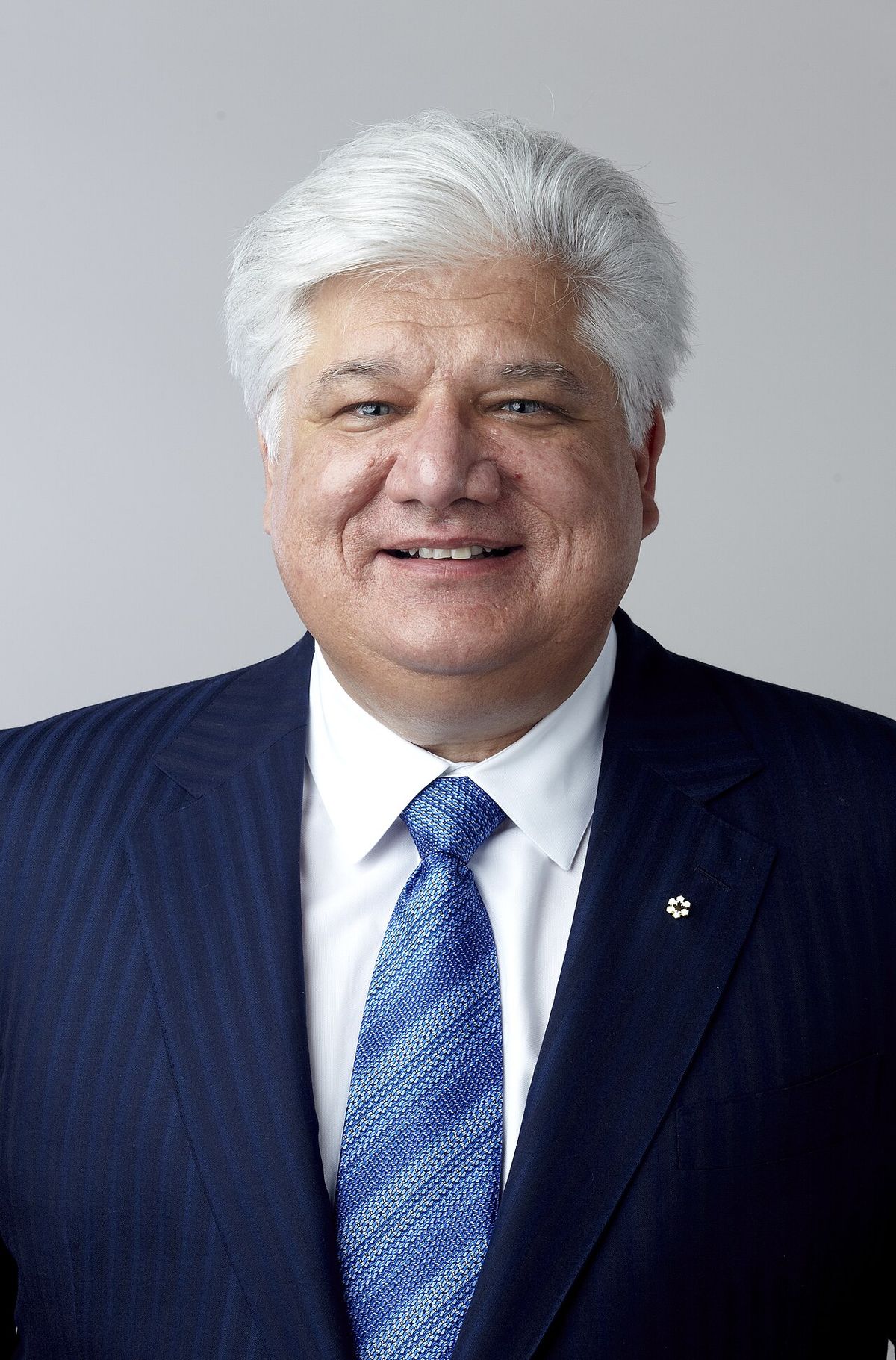
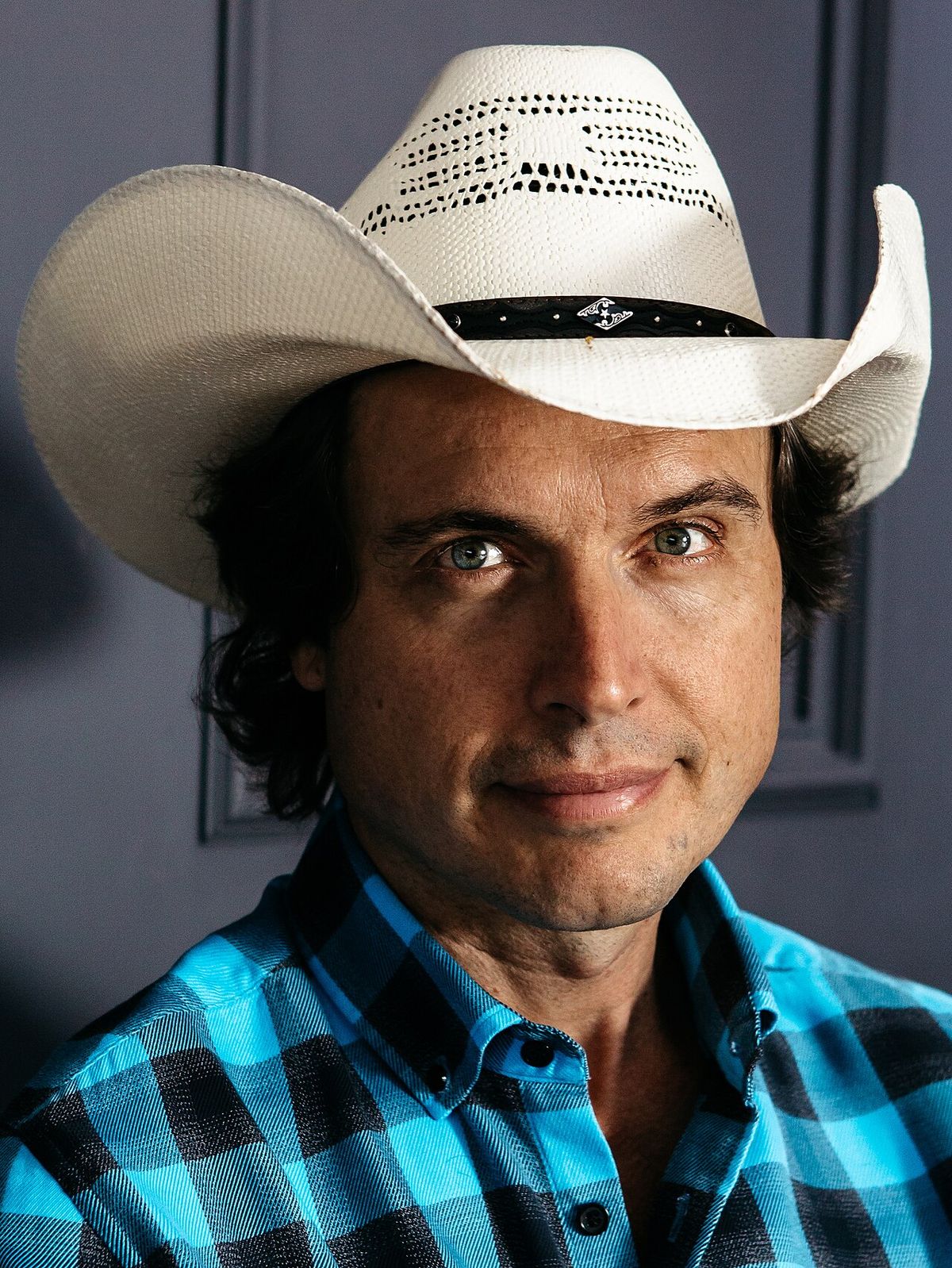
David Cheriton
David Ross Cheriton is a Canadian computer scientist, Stanford University professor emeritus, and a highly successful technology entrepreneur and venture capitalist. His career uniquely bridges academic research in distributed systems with the practical world of Silicon Valley startups, making him one of Canada's wealthiest individuals. Cheriton is renowned for being among the first angel investors in Google and for co-founding and investing in major companies like Granite Systems, VMware, and Arista Networks. His substantial philanthropic contributions, particularly to Canadian universities, and his continued hands-on role in the tech industry highlight his lasting influence on computing and education.
Early life and academic foundation
David Cheriton was born in Vancouver on March 29, 1951, and spent part of his youth in the Highlands neighbourhood of Edmonton, Alberta, where he attended public schools. His initial academic ambition was in music, specifically playing classical and flamenco guitar, which led him to apply to the University of Alberta's music program, but he was rejected. He then pursued mathematics, beginning his studies at the University of Alberta before transferring to the University of British Columbia, where he earned a Bachelor of Science degree in 1973. Cheriton completed his graduate education at the University of Waterloo, receiving a Master of Science in 1974 and a Doctor of Philosophy in computer science in 1978, focusing his doctoral work on operating systems. He began his academic career with a three-year stint as an assistant professor at the University of British Columbia before moving to Stanford University in 1981, where he would build his career at the intersection of academia and industry. Both of Cheriton's parents were engineers, which provided an early technical influence, though his own path initially diverged toward the arts.
Academic research and mentorship at Stanford
At Stanford University, Cheriton founded and led the Distributed Systems Group, focusing his research on distributed computing and computer networking. His early work involved the development of microkernel operating systems, including contributions as a principal developer of the Thoth real-time operating system and the Verex kernel. He then led the group that developed the V kernel, a microkernel operating system created at Stanford. This foundational research in network architecture and distributed systems earned him the prestigious SIGCOMM Award in 2003 for his lifetime contributions to telecommunications networks. Cheriton's role as a professor placed him in contact with numerous talented students, several of whom became prominent technology founders. His mentorship was instrumental for figures like Sergey Brin and Larry Page of Google, Kenneth Duda of Arista Networks, Hugh Holbrook who became vice president of software engineering at Arista, and Kieran Harty, founder of Tintri. His research interests evolved to include in-memory processing and transactional memory, aiming to create systems that are dramatically faster and more reliable, with potential speed increases by a factor of 100,000 for some applications.
As of 2016, Cheriton was working with Stanford students on transactional memory systems designed to be resilient to failures and to fit within existing memory structures. He described the business impact of this work, stating that in-memory processing changes the complete nature of how a business can run. His academic output includes prolific publishing in his fields of expertise, and he has served as a thesis advisor and committee member for many doctoral candidates. The technical depth of his research provided the foundation for his ability to identify and solve real-world problems in the companies he later helped build and fund. His position at Stanford was not just a job but a strategic platform that enabled the network of connections and the flow of ideas that fueled his parallel career in industry.
Entrepreneurial ventures and key investments
The company developed gigabit Ethernet switching technology, which Cheriton said revolutionized the multi-billion dollar Ethernet market by reducing functionality to a single chip. Cisco Systems acquired Granite in 1996 for US$220 million, a deal that made Cheriton a multimillionaire and provided capital for future investments. When asked if he would leave academia after this windfall, Cheriton replied that he had spent 25 years to get to that point and would not walk away just because he had enough money. In August 1998, Cheriton facilitated the famous meeting on his front porch between Bechtolsheim and Stanford PhD students Sergey Brin and Larry Page. Bechtolsheim wrote the first cheque to fund Google, and Cheriton joined as an angel investor with a $200,000 investment, also taking on an early technical advisory role.
Cheriton was also an early investor in VMware, which revolutionized cloud computing through server virtualization. He liked the opportunity because he saw virtualizing operating systems as one of the holy grails of distributed computing, and he met co-founder Mendel Rosenblum at Stanford. In 2001, he and Bechtolsheim founded Kealia, a Palo Alto-based startup that designed a high-capacity streaming video server, the Galaxy server line based on AMD's Opteron processor, and the Thumper network-attached storage system. Sun Microsystems acquired Kealia in 2004, with Thumper becoming the Sun Fire X4500. A major subsequent venture was Arista Networks, co-founded with Bechtolsheim in 2004, where Cheriton served as chief scientist and worked on the foundations of the Extensible Operating System (EOS). Arista had a successful initial public offering in 2014 and reported revenue of $9 billion in 2025.
- 1996: Co-founded Granite Systems, acquired by Cisco for $220 million.
- 1998: Early angel investor in Google with a $200,000 cheque.
- 2001: Co-founded Kealia, acquired by Sun Microsystems in 2004.
- 2004: Co-founded Arista Networks, served as chief scientist. IPO in 2014.
- Early investor in Aster Data Systems, acquired by Teradata in 2011 for $263 million.
- Early investor in Tintri, a storage virtualization company founded by his student Kieran Harty.
- 2014: Co-founded and was sole investor in Apstra, acquired by Juniper Networks in 2021.
- 2015: Co-founded and invested in BrainofT, Inc. (also known as Caspar).
Cheriton's investment strategy focuses on technical challenges where he can add value, leading to early stakes in these companies. He has stated he looks for startups with a technological challenge so that not every idiot can do it, and he prefers to be involved on the technical side. After the Apstra acquisition, Cheriton was named chief data centre scientist at Juniper Networks in 2021, a role he continues to hold. He has funded at least 20 companies throughout his career, applying a consistent method of deep technical engagement rather than passive capital allocation.
Philanthropy and educational contributions in Canada
Despite his immense wealth, David Cheriton maintains a reputation for personal frugality, avoiding costly cars and large houses, which once earned him a place on a list of 'cheapskate billionaires'. In contrast, he is extraordinarily generous in his philanthropic support for computer science education, particularly at Canadian institutions. His most significant gift was a $25 million donation to the University of Waterloo in November 2005, which led to the renaming of its computer science school to the David R. Cheriton School of Computer Science. In 2009, he donated $2 million to the University of British Columbia to fund the Carl Wieman Science Education Initiative. More recently, he donated $7.5 million to UBC to create a new chair in computing and a new first-year course in computational thinking.
Cheriton has also funded two graduate student fellowships and one undergraduate fellowship at Stanford University, and has donated several million dollars to Stanford to fund research. He describes these contributions as investments in the next generation of computing 'hot shots'. His giving enables specific initiatives like the annual Cheriton Research Symposium at the University of Waterloo, an event scheduled for 2026 that features presentations by faculty fellows and graduate scholars. The symposium is a direct result of his endowment and is designed to highlight research excellence in the school that bears his name. These donations have a concrete effect on curriculum, research funding, and student support, shaping the educational landscape for computer science students in Canada and at Stanford.
Investment philosophy and industry influence
Cheriton attributes his investment success to a combination of luck, derived from his position at Stanford, and a focused, hands-on approach. He explicitly avoids the 'spray and pray' model of typical venture capital, instead seeking opportunities where he can contribute deep technical expertise. He looks for startups tackling difficult technological problems and invests both time and money, treating each venture as a personal project. Cheriton is known for his modest and direct public speaking style, often downplaying his own role in favour of crediting the brilliant people he has encountered, once stating, 'I'd rather be lucky than smart and I think I have been pretty lucky.' His lifestyle remains notably unostentatious, consistent with his technical and pragmatic worldview. According to public records, Cheriton has made political donations to Republican causes and candidates, including over $5,000 to Donald Trump's presidential campaign.
Cheriton has also been an influential voice in technology debates beyond his investments. He campaigned against Asynchronous Transfer Mode (ATM) technology that was favoured by telephone carriers, arguing for the simpler, proven alternative of Ethernet, which gradually superseded its competitors. His approach to company-building is evident in the story of Arista Networks, where he described the initial product as being wrong, requiring a pivot that leveraged new trends in cloud computing and APIs to take on Cisco, a scenario he framed as 'David versus Goliath' in the data centre market. This pattern of deep technical involvement and strategic pivoting based on market evolution is characteristic of his method. His most recent focus with Apstra was on automating network operations to address the huge operating costs and complexity of running multi-vendor data centre networks.
Selected company outcomes and financial impact
The financial outcomes of Cheriton's ventures and investments demonstrate the scale of his success. The acquisition of Granite Systems by Cisco provided his first major windfall. His early investment in Google, which grew into a multi-billion dollar holding, forms a central part of his wealth. The successful IPO of Arista Networks and its subsequent growth created another massive source of value. His net worth, estimated by Forbes at US$19.8 billion in 2025 and by Maclean's at $18.64 billion, reflects the cumulative effect of these strategic bets. The table below outlines key exits and their reported values, illustrating the progression from his first exit to his most recent corporate role.
| Company | Cheriton's Role | Outcome / Reported Value | Year |
|---|---|---|---|
| Granite Systems | Co-founder | Acquired by Cisco for $220M | 1996 |
| VMware | Early investor | Acquired by EMC for $625M. Later IPO in 2007 | Investment pre-2004 |
| Kealia | Co-founder | Acquired by Sun Microsystems | 2004 |
| Aster Data Systems | Investor, advisory board | Acquired by Teradata for $263M | 2011 |
| Arista Networks | Co-founder, Chief Scientist | IPO in 2014. 2025 revenue $9B | 2004 founding |
| Apstra | Co-founder, sole investor | Acquired by Juniper Networks | 2021 |
David Cheriton has funded at least 20 companies throughout his career. His wealth, estimated at billions of dollars, allows him to make substantial philanthropic gifts to institutions like the University of Waterloo and Stanford University. He maintains an active investment posture, continually seeking new technical challenges in areas like data centre networking and automation. This is seen with his ongoing work as the chief data centre scientist at Juniper Networks, a role he assumed after their acquisition of Apstra in 2021.
Current activities and ongoing influence
As of 2025, David Cheriton remains actively engaged in the technology sector. His title of professor emeritus at Stanford University acknowledges his transition from active teaching while maintaining his association with the institution. His appointment as chief data centre scientist at Juniper Networks following the Apstra acquisition in 2021 indicates a continued hands-on role in industry innovation, focusing on network automation and operations. He continues to evaluate new technical challenges and opportunities, maintaining his philosophy of deep involvement in a select few ventures. The annual Cheriton Research Symposium and the ongoing work at the school that bears his name ensure his influence extends through academic research and the education of future computer scientists.
Cheriton's career provides a case study in leveraging academic expertise for commercial success without abandoning the core mission of education and research. His ability to identify paradigm shifts, from Ethernet switching to web search to cloud networking, and to back them with both capital and technical insight, sets him apart from pure investors or academics. He interacts with many people who have significant wealth but chooses to stay engaged in building and solving problems. His story, from a music program reject in Alberta to a Stanford professor and billionaire investor who has shaped major segments of the global technology industry, is a unique chapter in Canada's contribution to the digital age. His continued role at Juniper and his ongoing evaluation of emerging technical problems suggest his direct impact on the industry is far from over.
Questions about David Cheriton
How did David Cheriton make his money?
David Cheriton built his wealth through a combination of founding successful technology companies and making early, strategic investments. His first major financial success came from co-founding Granite Systems, which was acquired by Cisco in 1996 for $220 million. His early $200,000 angel investment in Google grew into a multi-billion dollar holding. He also co-founded Arista Networks, which had a successful IPO in 2014 and generated $9 billion in revenue in 2025. Additional investments in companies like VMware and the sale of Apstra to Juniper Networks further contributed to his fortune, estimated at US$19.8 billion in 2025 by Forbes.
What is David Cheriton's connection to Google?
Cheriton was one of Google's first angel investors and a mentor to its founders. As a Stanford professor, he knew students Sergey Brin and Larry Page. In August 1998, he organized a meeting on his front porch between the Google founders and his colleague Andy Bechtolsheim. Bechtolsheim wrote the first cheque to fund the company, and Cheriton immediately joined him as an investor, contributing $200,000 of his own money. He also provided early guidance, initially cautioning them about licensing their technology and later helping them raise their first seed round when licensing attempts failed.
What are David Cheriton's major philanthropic donations?
Cheriton has made several large donations to education, primarily in Canada. In 2005, he donated $25 million to the University of Waterloo, leading to the renaming of its computer science school to the David R. Cheriton School of Computer Science. In 2009, he gave $2 million to the University of British Columbia for the Carl Wieman Science Education Initiative. More recently, he donated $7.5 million to UBC to create a chair in computer science and a new course on computational thinking. He has also funded graduate fellowships and research at Stanford University.
What companies did David Cheriton found?
Cheriton co-founded multiple technology companies. His first was Granite Systems, a gigabit Ethernet company, co-founded with Andy Bechtolsheim. In 2001, he co-founded Kealia, which developed high-capacity servers and storage and was acquired by Sun Microsystems. In 2004, he co-founded Arista Networks, where he served as chief scientist. He later co-founded Apstra in 2014, which was acquired by Juniper Networks in 2021, and BrainofT, Inc. (Caspar) in 2015.
Where did David Cheriton go to university in Canada?
David Cheriton completed his undergraduate degree at the University of British Columbia, receiving a Bachelor of Science in mathematics in 1973. He then earned his Master of Science in 1974 and his Doctor of Philosophy in computer science in 1978 from the University of Waterloo. He briefly attended the University of Alberta but was rejected from its music program before switching to mathematics. This educational foundation in Canadian institutions preceded his move to Stanford University, where he began his academic career after three years as an assistant professor at his alma mater, UBC.
What is David Cheriton's current job?
David Cheriton's current role is Chief Data Centre Scientist at Juniper Networks, a position he assumed after their acquisition of Apstra, Inc. in 2021. He is also a professor emeritus at Stanford University, an honorary title following his distinguished career there as a computer science professor and founder of the Distributed Systems Group. He remains actively involved in the technology sector, focusing on companies where he can provide technical expertise, such as his recent work with Apstra on automating computer network operations. His career continues to bridge academic insight with practical industry innovation in networking and distributed systems.
Sources and further reading
- David Cheriton (Wikipedia)
- Who's David Cheriton?: Meet the Canadian billionaire who ... (financialpost.com)
- How David Cheriton Beats Everyone at Tech Investing (futuriom.com)
- David Cheriton (allbusiness.africa)
Checked by the Yadude Books desk. Last updated 2026-10-29.