Edward S. Rogers Jr.
Edward Samuel "Ted" Rogers Jr. (May 27, 1933 to December 2, 2008) was a Canadian business magnate, philanthropist, and the driving force behind the growth of Rogers Communications into one of the nation's largest media and telecommunications conglomerates. As president and CEO, he built a corporate empire spanning cable television, wireless services, media, and professional sports, fundamentally shaping Canada's communications landscape. His ownership of the Toronto Blue Jays and the renaming of their stadium to Rogers Centre cemented his legacy in Canadian sports and culture. At the time of his death, Rogers was ranked as the fifth-richest person in Canada, leaving behind a substantial business and philanthropic impact.
Early Life and Education
Edward Samuel Rogers Jr. was born in Toronto, Ontario, on May 27, 1933, the son of Velma Melissa Taylor and radio pioneer Edward S. Rogers Sr. His father's work in broadcasting and invention, including the development of the world's first all-electric radio, laid the foundational inspiration for his future career in communications technology. Rogers received his early education at the prestigious Upper Canada College before enrolling at the University of Toronto's Trinity College. He graduated in 1956 with a Bachelor of Arts degree, and during his undergraduate years, he became a member of the Sigma Chi fraternity, an affiliation that would later honour him. In 1979, the fraternity named him a Significant Sig, recognizing his outstanding achievements, making him the 21st Canadian to receive this designation. He subsequently attended Osgoode Hall Law School, though his studies were interrupted by his early business ventures, which began while he was still a student there.
Building a Communications Empire
While still a student at Osgoode Hall Law School in 1960, Ted Rogers made his first major business move by purchasing all the shares in Toronto radio station CHFI. This was a bold venture, as the station pioneered FM broadcasting at a time when only five percent of Toronto households had FM receivers, demonstrating his early willingness to bet on emerging technology. By 1965, Rogers had expanded his interests into the nascent cable television business, recognizing its potential for growth as a new medium for delivering content to Canadian homes. He formally established Rogers Communications in 1967, building the company from these radio and cable foundations into a diversified media and telecommunications powerhouse that would later encompass wireless cellular services, magazines, and television broadcasting. Although his father, Edward S. Rogers Sr., is regarded as the company's founder, the specific station his father started, CFRB, is now owned by competitor Bell Media, a fact that highlights the competitive and evolving nature of the Canadian media industry Rogers helped shape.
Sports Ownership and the Rogers Centre
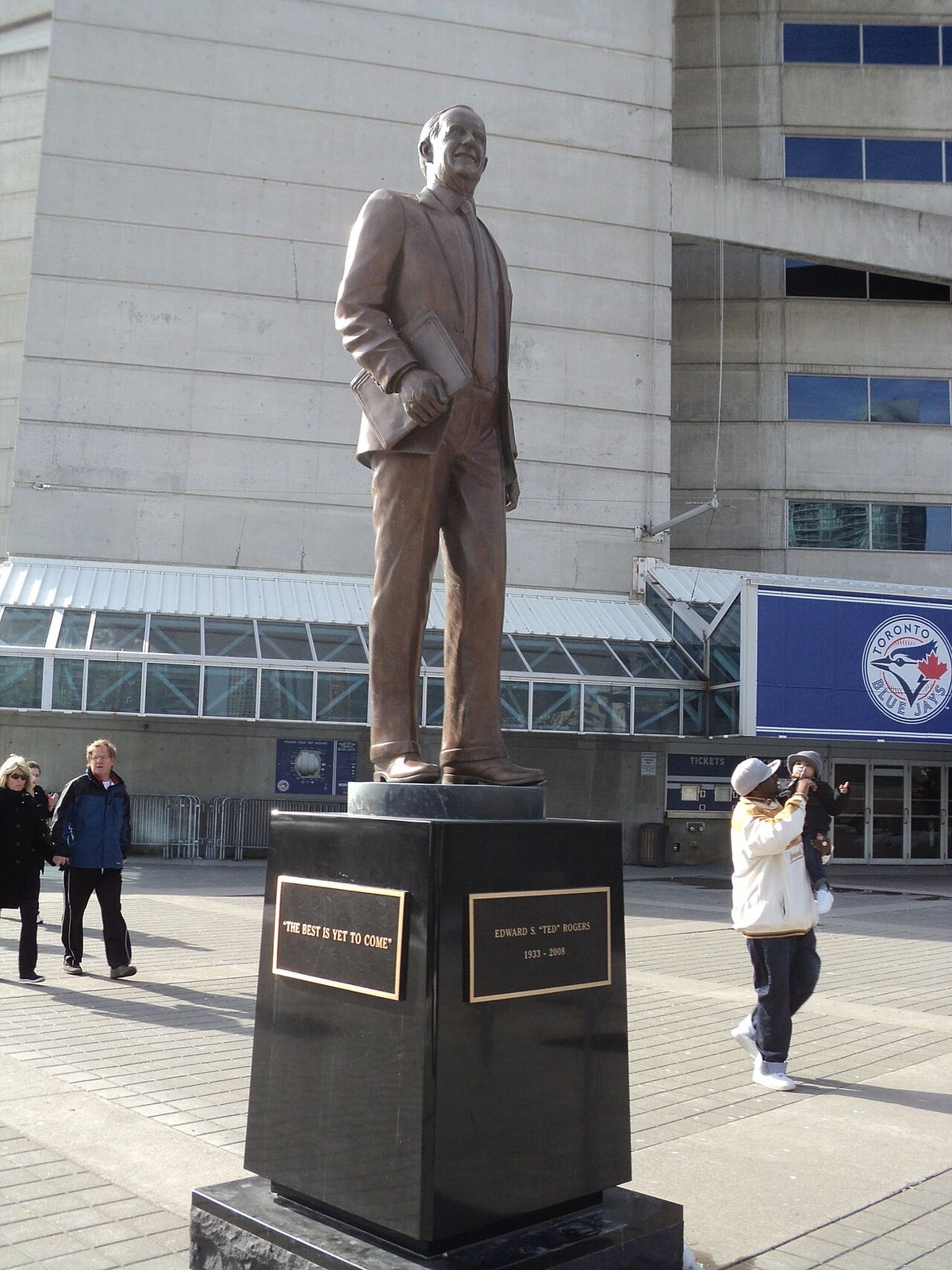
Beyond telecommunications, Ted Rogers made a significant mark on Canadian professional sports through his acquisition of the Toronto Blue Jays Major League Baseball team. On September 1, 2000, Rogers Communications purchased an 80 percent stake in the club, with Labatt Brewing Company retaining 20 percent and the Canadian Imperial Bank of Commerce selling its 10 percent share. Rogers purchased the remaining 20 percent from Labatt in 2003, giving him full ownership of the team until his death, which provided the franchise with stable, local ownership. His influence on the Blue Jays' home was further solidified in 2005 when Rogers Communications purchased the SkyDome stadium, including its naming rights, and renamed it the Rogers Centre, creating a lasting landmark in downtown Toronto. This acquisition ensured the baseball team had a secure, modern home venue under the same corporate umbrella, integrating sports entertainment into the Rogers brand portfolio.
Philanthropy and Major Donations
Ted Rogers and his wife, Loretta, were committed philanthropists, directing substantial gifts to education and medical research. In 2000, they donated $26.8 million to the University of Toronto, specifically to the Faculty of Applied Science and Engineering. This landmark gift led to the naming of the Edward S. Rogers Sr. Department of Electrical and Computer Engineering in honour of his father and funded numerous scholarships, chairs, and laboratories. The Rogers' gift allowed the faculty to establish the Edward S. Rogers Sr. Graduate Scholarships, the Edward S. Rogers Sr. Undergraduate Scholarships, the Edward S. Rogers Sr. Chair in Engineering, the Velma M. Rogers Graham Chair in Engineering, the Rogers AT&T Wireless Communications Laboratories and the Rogers Scholarship Program, creating a comprehensive support system for engineering students and research.
In 2007, the couple gave $15 million to Ryerson University, leading to the renaming of its business faculty as the Ted Rogers School of Management at the donors' request. The majority of this gift was used to establish 52 new undergraduate and graduate student awards and scholarships, and it also aimed to establish a new research chair to seed academic initiatives in management research. The largest philanthropic initiative in his memory came in 2014, when his family made a $130 million gift to launch the Ted Rogers Centre for Heart Research, the largest private gift in Canadian health-care history at that time. This centre united The Hospital for Sick Children, University Health Network and the University of Toronto in taking new approaches to how we diagnose, treat and prevent heart failure in adults and children.
The Ted Rogers Centre for Heart Research was launched on November 20, 2014, after a gift of 130 million dollars from Rogers's family in his memory. It is believed to be the world's first institute to bring together research, education and innovation in personalized medicine, stem cell research, bioengineering, regenerative medicine, digital health and advanced clinical care under one umbrella with a single focus. This centre united The Hospital for Sick Children, University Health Network and the University of Toronto in taking new approaches to diagnosing, treating and preventing heart failure in adults and children. The gift was at the time the largest private gift in Canadian health-care history. Key philanthropic initiatives established by Ted and Loretta Rogers include major donations to the University of Toronto and Ryerson University.
- The Edward S. Rogers Sr. Department of Electrical and Computer Engineering at the University of Toronto (2000).
- The Ted Rogers School of Management at Toronto Metropolitan University (formerly Ryerson University) (2007).
- The Ted Rogers Centre for Heart Research, a partnership of SickKids, UHN, and U of T (2014).
- The Edward S. Rogers Sr. Graduate and Undergraduate Scholarships.
- The Rogers AT&T Wireless Communications Laboratories.
- The Velma M. Rogers Graham Chair in Engineering.
Honours and Recognition
Throughout his career, Ted Rogers received numerous honours for his business leadership and contributions to Canadian society. On October 25, 1990, he was appointed an Officer of the Order of Canada, one of the country's highest civilian honours. That same year, he received the Golden Plate Award from the American Academy of Achievement, which celebrates excellence across various fields. In 2006, he was inducted alongside his father into Canada's Telecommunications Hall of Fame, acknowledging their shared legacy in building the nation's communications infrastructure. His pioneering role in wireless communications was recognized with a posthumous induction into the Wireless Hall of Fame in 2010, cementing his status as a key figure in the global cellular industry.
Personal Life, Family and Autobiography
Ted Rogers married Loretta Anne Robinson on September 25, 1963. Her father was Roland Robinson, 1st Baron Martonmere, a British politician and former Governor of Bermuda. Together, Ted and Loretta Rogers had four children: Lisa, Edward, Melinda, and Martha. The Rogers family has deep roots in Canadian history, with Ted being a direct descendant of Timothy Rogers (1756 to 1834), a Quaker leader who founded the Ontario communities of Newmarket and Pickering. This connection to early Canadian settlement highlighted his family's long-standing presence in the region. Near the end of his life, Rogers authored an autobiography with communications consultant and former business journalist Robert Brehl. The book, titled Relentless: The True Story of the Man Behind Rogers Communications, was released just ten weeks before his death and provided a personal account of his business philosophy and life story.
Death and Commemoration
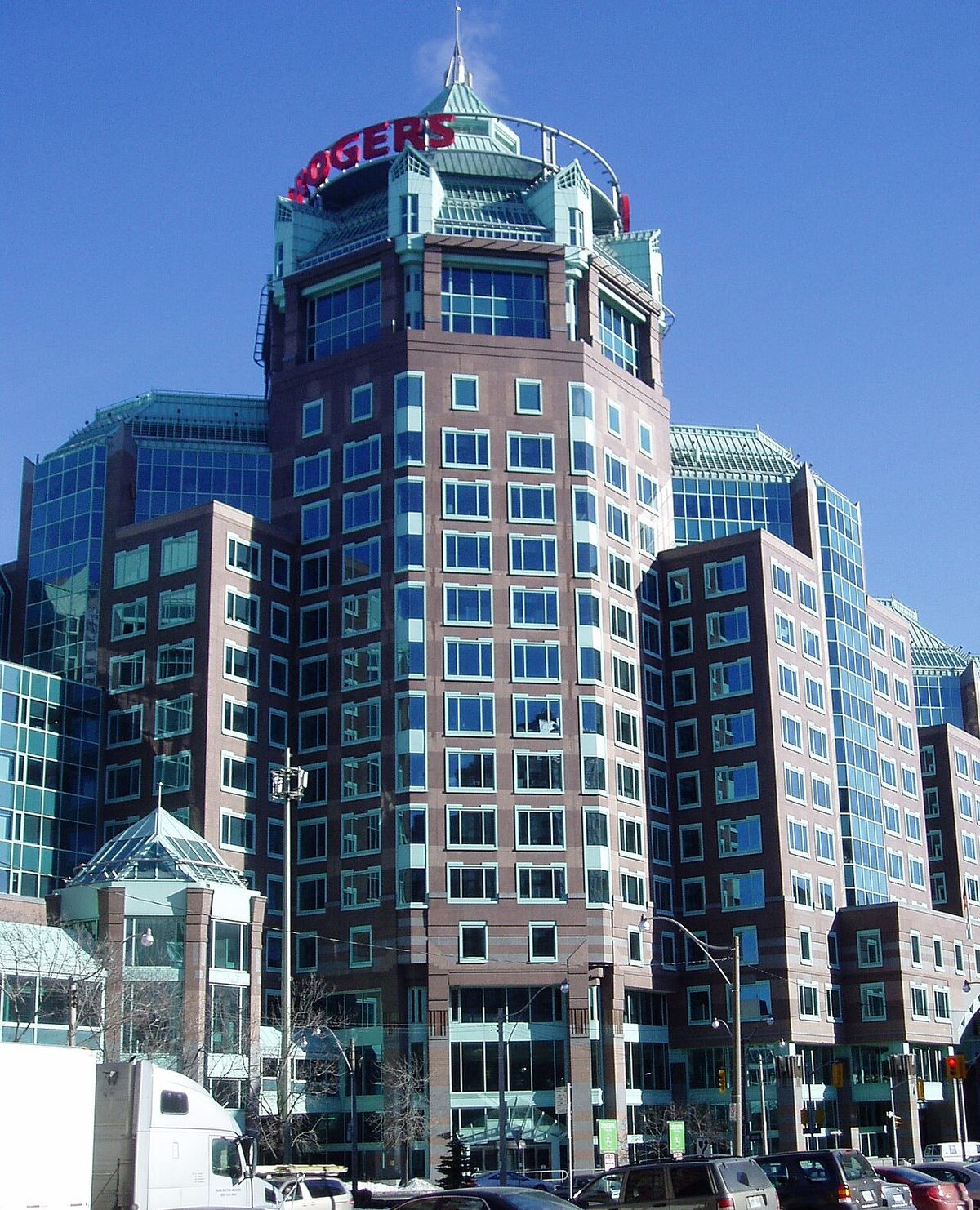
Ted Rogers, who had suffered from congestive heart failure, died at his home in Toronto on the morning of December 2, 2008, at the age of 75. He was buried in the family plot at Mount Pleasant Cemetery in Toronto. On the first anniversary of his passing, the city of Toronto honoured him by renaming a northern section of Jarvis Street, which runs beside the Rogers Building, as Ted Rogers Way. An annual student conference was established in his memory. The Ted Rogers Memorial Conference, first held from March 4 to 6, 2010 and hosted by Toronto Metropolitan University, the Ted Rogers School of Management, and the Ryerson Commerce Society, invites Canadian university students to learn more about Rogers and business. The theme of the conference revolves around the acronym TED: Take risks. Embrace innovation. Defy the status quo, principles that guided his career.
Questions about Edward S. Rogers Jr.
How did Ted Rogers make his money?
Ted Rogers built his fortune by founding and expanding Rogers Communications from a single FM radio station purchase in 1960 into a vast telecommunications and media conglomerate. He strategically entered the cable television business in 1965 and grew the company to become one of Canada's largest providers of wireless, cable, and media services. His wealth was also bolstered by the full ownership of the Toronto Blue Jays and the Rogers Centre stadium. At his death, he was ranked as the fifth-richest person in Canada.
What did Ted Rogers do for the Toronto Blue Jays?
Ted Rogers became involved with the Toronto Blue Jays in 2000 when Rogers Communications purchased an 80 percent stake in the team. He acquired the remaining 20 percent from Labatt in 2003, becoming the sole owner. Under his ownership, the team's home stadium, the SkyDome, was purchased by Rogers Communications in 2005 and renamed the Rogers Centre. His ownership provided stability and significant corporate backing for the Major League Baseball franchise until his death in 2008.
What awards and honours did Ted Rogers receive?
Ted Rogers received several high-profile awards and honours. He was appointed an Officer of the Order of Canada in 1990 and received the Golden Plate Award from the American Academy of Achievement the same year. He was inducted into Canada's Telecommunications Hall of Fame in 2006 alongside his father. Posthumously, he was inducted into the Wireless Hall of Fame in 2010 for his contributions to the cellular industry.
What are Ted Rogers's most notable philanthropic contributions?
Ted Rogers's most notable philanthropic contributions include a 2000 gift of 26.8 million dollars to the University of Toronto's engineering faculty, a 2007 gift of 15 million dollars that renamed Ryerson University's business school, and a 2014 family gift of 130 million dollars that launched the Ted Rogers Centre for Heart Research. The 2000 donation established scholarships and chairs in his father's name within the Faculty of Applied Science and Engineering. The 2007 gift to Ryerson created student awards and led to the Faculty of Business being renamed the Ted Rogers School of Management. The 2014 gift, made in his memory, was the largest private donation in Canadian health care history at the time and established a research centre uniting three major Toronto institutions to fight heart failure.
Where is Ted Rogers buried?
Ted Rogers is buried in the family plot at Mount Pleasant Cemetery in Toronto. He died at his home in Toronto on December 2, 2008, at the age of 75 from congestive heart failure. His death marked the end of his tenure as the president and CEO of Rogers Communications, the media conglomerate he built. Rogers was a major figure in Canadian business, having owned the Toronto Blue Jays baseball team outright since 2003. He was also the fifth richest person in Canada at the time of his death, leaving behind a significant legacy in telecommunications and philanthropy.
What is the Ted Rogers Memorial Conference?
The Ted Rogers Memorial Conference is an annual event first held from March 4 to 6, 2010, to honour the Canadian businessman. It was hosted by Ryerson University, the Ted Rogers School of Management, and the Ryerson Commerce Society. The conference invites Canadian university students to learn more about Rogers and his business philosophy. Its guiding theme revolves around the acronym TED, which stands for Take risks, Embrace innovation, Defy the status quo. This event serves as a commemoration of his life and career, reflecting the principles he was known for in building Rogers Communications into a national media conglomerate.
Sources and further reading
- Edward S. Rogers Jr. (Wikipedia)
- Ted Rogers (thecanadianencyclopedia.ca)
- On the verge of achieving his father's dream, Edward ... (thestar.com)
- Edward S. Rogers Jr. Facts for Kids (kids.kiddle.co)
- Edward S. Rogers Jr., Canadian Media Mogul, Dies at 75 (dealbook.nytimes.com)
Checked by the Yadude Books desk. Last updated 2026-10-31.