Ron Joyce
Ronald Vaughan Joyce (October 19, 1930 to January 31, 2019) was a Canadian entrepreneur and philanthropist best known as the key figure behind the national expansion of the Tim Hortons restaurant chain. As Tim Horton's first franchisee in 1967, Joyce took control of the company following Horton's death and transformed it into a ubiquitous Canadian institution. His legacy is equally defined by his extensive philanthropic work, particularly through the founding of the Tim Horton Children's Foundation, which has provided camp experiences for countless underprivileged youth. Joyce's contributions to business and charity earned him numerous honours, including an appointment to the Order of Canada, solidifying his status as a significant figure in modern Canadian history.
Early Life and Police Career
Ronald Vaughan Joyce was born and raised in the small community of Tatamagouche, Nova Scotia. Seeking better opportunities than those available in post-war Nova Scotia, he moved to Hamilton, Ontario, at the age of sixteen where he worked various odd jobs. He enlisted in the Royal Canadian Navy in 1951 and received training as a wireless operator during his service. After leaving the navy, Joyce joined the Hamilton Police Service in 1956 and served as a police officer for nearly a decade until 1965. His time on the force included memorable incidents, such as once assisting in the delivery of a baby while responding to a distress call with a fellow officer, Colin Millar, who later became Chief Constable. This period provided Joyce with a discipline and work ethic that he applied to his future business ventures.
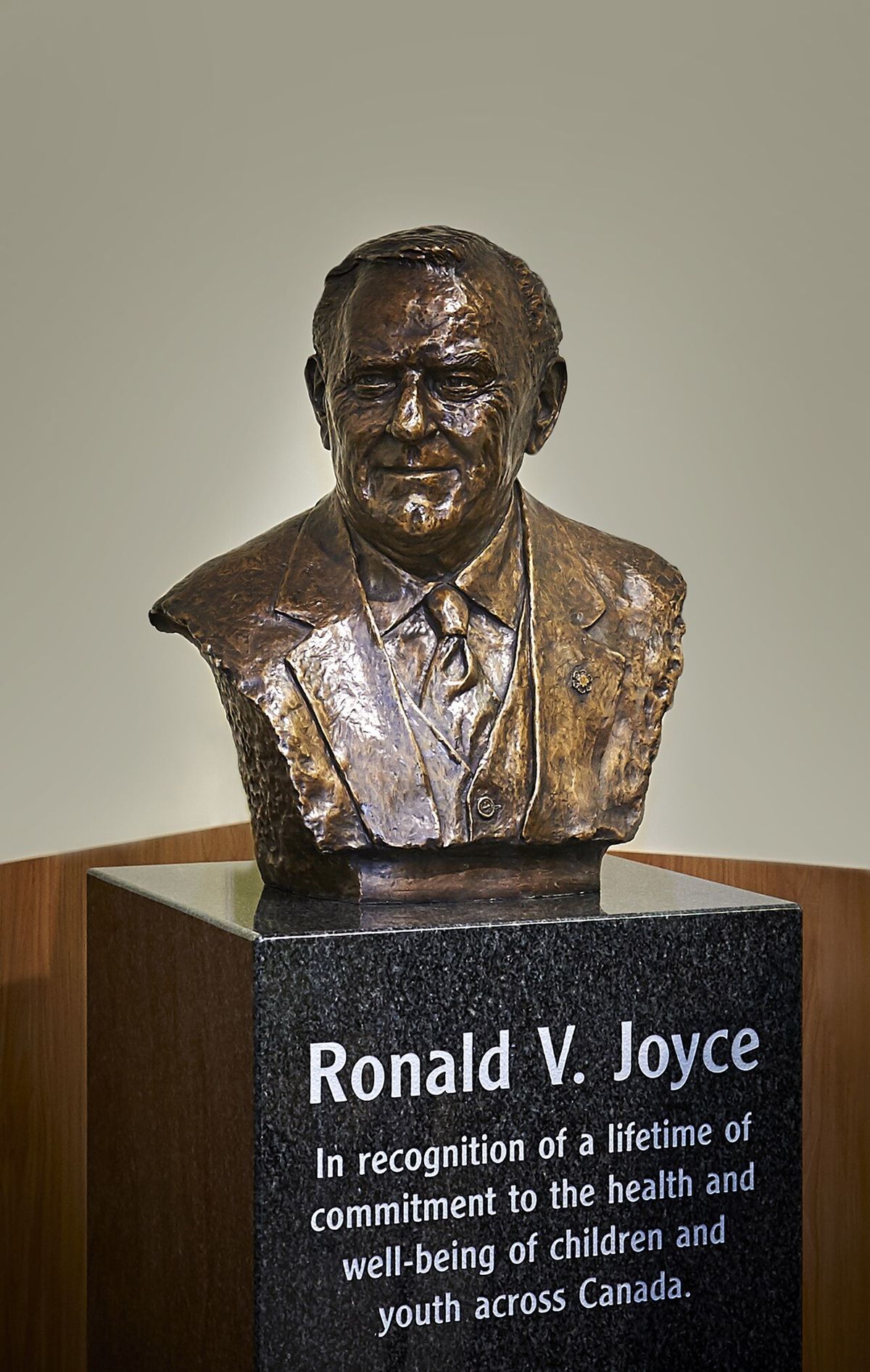
Entry into Business and the Tim Hortons Partnership
Looking to move beyond police work, Joyce decided to enter the growing food service industry and purchased a Dairy Queen franchise in Hamilton in 1963. When the city denied him a license for a second Dairy Queen location, he sought another opportunity and noticed a 'For Sale' sign on a local store. This led him to enter into a franchise partnership with National Hockey League star Tim Horton in 1967, becoming the first Tim Hortons franchisee. The original one-page franchise agreement famously contained a clause requiring rent in advance, to which Joyce reportedly scribbled 'You must be kidding!' The partnership proved successful, and following Horton's tragic death in a car accident in 1974, Joyce purchased Horton's share of the business for approximately one million dollars. This acquisition gave him full control of the fledgling chain and positioned him to guide its future growth and development across Canada.
Building a National Empire
After assuming sole ownership, Ron Joyce began an ambitious plan to expand Tim Hortons across Canada. This strategy was instrumental in transforming the brand from a regional coffee shop into a national powerhouse with locations in every province. A significant development in the chain's growth occurred in the early 1990s when a franchise owner in Prince Edward Island, Danny Murphy, successfully combined a Tim Hortons with a Wendy's restaurant in Montague. This co-location experiment caught the attention of both Joyce and Wendy's founder Dave Thomas, who attended the opening. The success of this model helped pave the way for a corporate merger in 1995, where Wendy's International acquired Tim Hortons. Joyce became the largest shareholder in the combined company, though the two chains would later separate into independent companies once more.
Philanthropic Focus and the Tim Horton Children's Foundation
Motivated by his own challenging childhood experiences, Ron Joyce dedicated a substantial portion of his life and wealth to supporting underprivileged youth. His most enduring philanthropic achievement was the establishment of the Tim Horton Children's Foundation, which sends thousands of children from financially disadvantaged backgrounds to camp each year. The foundation's camps, known as Tim Horton Children's Camps, provide positive, life-enriching experiences for these children. For this work, Joyce received the Gary Wright Humanitarian Award in 1991, which recognizes outstanding contributions to community life in Canada. His charitable efforts were formally recognized at the national level on October 21, 1992, when he was appointed a Member of the Order of Canada for his dedication to Canada's youth. After selling his stake in Tim Hortons, he channeled his personal philanthropy through The Joyce Family Foundation, which he founded to support the social, economic, and emotional well-being of children across the country. The Joyce Family Foundation has made significant donations throughout Canada, and by May 2017 his combined gifts to Atlantic Canadian colleges and universities had surpassed $52 million.
Joyce's philanthropic contributions were wide-ranging and earned him numerous accolades from business and charitable organizations. He received McGill University's Management Achievement Award in 1994 and was inducted into the Canadian Business Hall of Fame in April 1999. That same year, in October, he was named Entrepreneur of the Year for Ontario and Canada. In November 2005, Joyce was the Humanitarian Award Recipient by the Canadian Red Cross, Nova Scotia Region for his work with the Tim Horton Children's Foundation and his support of education and health organizations. His business peers honoured him with the Canadian Franchise Association's Lifetime Achievement Award in November 1996, making him only the second person to ever receive that award.
- Received McGill University's Management Achievement Award (1994).
- Inducted into the Canadian Business Hall of Fame (April 1999).
- Named Entrepreneur of the Year for Ontario and Canada (October 1999).
- Received the Canadian Red Cross Humanitarian Award for the Nova Scotia Region (November 2005).
- Honoured with the Canadian Franchise Association's Lifetime Achievement Award (November 1996), becoming only the second person to receive the honour.
Ron Joyce accepted honorary degrees from seven Canadian universities. These institutions included Mount Allison University, McMaster University, and Cape Breton University. He also received honorary degrees from the University of Calgary, Queen's University, Saint Mary's University, and the University of New Brunswick. These honours recognized his success in business and his extensive philanthropy.
Later Ventures and Retirement
Following the merger with Wendy's and his eventual retirement from active management, Joyce remained engaged in business through his holding company, Jetport Inc. This company held significant interests in real estate, aviation, and commercial projects throughout his retirement years. A major project of this period was the development of the Fox Harb'r Golf Resort & Spa, a five star, four diamond gated community and resort that opened in 2000 in his native Nova Scotia. An airport was constructed as part of the resort, replacing the nearby Tatamagouche Airport that served the local Tim Hortons children's camp. In 2006, Joyce published his memoir, Always Fresh: The Untold Story of Tim Hortons by the Man Who Created a Canadian Empire, providing a firsthand account of the chain's rise from a single franchise to a national brand. He continued to oversee his philanthropic foundation and various business interests until his death in 2019.
Personal Life and Legacy
Ron Joyce was married twice, with both marriages ending in divorce. His personal life became linked with the Horton family when his son, Ron Joyce Jr., married Tim Horton's eldest daughter, Jeri-Lyn. The couple were themselves Tim Hortons franchisees, operating four locations in southern Ontario until they retired in 2023. Joyce faced a serious personal incident in November 2007 when a Bombardier Global 5000 business jet he was travelling in crashed short of the runway at his Fox Harb'r Resort airport, resulting in two fractured vertebrae for Joyce. In later years, he was involved in a settled legal dispute from 2011 regarding an allegation of sexual assault, which was resolved with a $50,000 out-of-court settlement. At the time of his death, his net worth was estimated at US$1.4 billion. Ron Joyce died at his home in Burlington, Ontario, on January 31, 2019, at the age of 88. He is remembered as a major business leader who built a national brand and as a committed philanthropist who changed the lives of generations of Canadian children through his foundation work.
Honorary Degrees
In recognition of his contributions to business and society, Ron Joyce was awarded honorary doctorates from seven Canadian universities. These honours reflect the high esteem in which he was held within the academic and broader community for his leadership and charitable giving. The institutions that conferred degrees upon him are listed below and include major universities from across the country, from Mount Allison in the east to the University of Calgary in the west. Each degree acknowledged his role in building a major Canadian company and his lasting commitment to helping children in need through his philanthropic foundations.
| University |
|---|
| Mount Allison University |
| McMaster University |
| Cape Breton University |
| University of Calgary |
| Queen's University |
| Saint Mary's University |
| University of New Brunswick |
These honorary degrees complemented the many other awards Ron Joyce received. He was named a member of the Order of Canada in 1992. He received the Canadian Franchise Association's Lifetime Achievement Award in 1996. He was inducted into the Canadian Business Hall of Fame and named Entrepreneur of the Year in 1999. He also received the Gary Wright Humanitarian Award and the Canadian Red Cross Humanitarian Award.
Questions about Ron Joyce
How did Ron Joyce get involved with Tim Hortons?
Ron Joyce entered a franchise partnership with Tim Horton in 1967. He was Tim Horton's first franchisee. After Horton's death in 1974, Joyce purchased Horton's share for about one million dollars. He then assumed control of the full Tim Hortons franchise.
What is Ron Joyce's connection to the Tim Horton Children's Foundation?
Ron Joyce was the founder and driving force behind the Tim Horton Children's Foundation. Motivated by his own childhood adversity, he established the foundation to send underprivileged children to camp. The foundation's camps, known as Tim Horton Children's Camps, became his primary philanthropic focus and were the key reason for his appointment to the Order of Canada in 1992. Even after selling his Tim Hortons ownership, he continued his charitable work through his personal vehicle, The Joyce Family Foundation.
What awards and honours did Ron Joyce receive?
Ron Joyce received numerous awards for his business acumen and philanthropy. His highest honour was being appointed a Member of the Order of Canada in 1992. He also received the Gary Wright Humanitarian Award (1991), the Canadian Franchise Association's Lifetime Achievement Award (1996), and was inducted into the Canadian Business Hall of Fame (1999). He was named Entrepreneur of the Year for Ontario and Canada in 1999 and received the Canadian Red Cross Humanitarian Award for Nova Scotia in 2005. Seven Canadian universities granted him honorary degrees.
How is Ron Joyce related to Tim Horton's family?
Ron Joyce's personal life became linked with the Horton family through marriage. His son, Ron Joyce Jr., married Tim Horton's eldest daughter, Jeri-Lyn. The couple were themselves Tim Hortons franchisees, operating four locations in southern Ontario until they retired in 2023. This familial connection further intertwined the legacies of the two co-founders of the well-known Canadian brand.
What was the Fox Harb'r Resort and its significance?
Fox Harb'r Golf Resort & Spa is a five star, four diamond luxury resort and gated community located in Nova Scotia, which Ron Joyce opened in 2000. It represented a major investment in his home province and a flagship project of his later years. The resort includes a private airport that was built to replace the nearby Tatamagouche Airport, which served the local Tim Horton Children's Camp. Fox Harb'r represents Joyce's success and his commitment to development in Atlantic Canada.
What did Ron Joyce do after Tim Hortons?
After retiring from management, Ron Joyce remained active in his holding company, Jetport Inc, which has significant real estate, aviation, and commercial interests. In 2000, he opened Fox Harb'r Golf Resort & Spa, a five star, four diamond resort and gated community. An airport was built as part of this new resort, replacing the nearby Tatamagouche Airport. In 2006, he published his memoirs titled Always Fresh: The Untold Story of Tim Hortons by the Man Who Created a Canadian Empire. He also turned his sights to his own foundation, The Joyce Family Foundation, to administer his personal philanthropic work with a mandate to support the social, economic, and emotional well being of children.
Sources and further reading
- Ron Joyce (Wikipedia)
- About Ron Joyce (mta.ca)
- Ron Joyce (joycefamilyfoundation.com)
- McMaster remembers Ron Joyce (degroote.mcmaster.ca)
- Ron Joyce, AMA Toronto (ama-toronto.com)
Checked by the Yadude Books desk. Last updated 2026-11-02.