Air Canada Rouge
Air Canada Rouge is a leisure-focused, lower-cost subsidiary airline of Air Canada, launched in December 2012. It operates as an integrated part of the Air Canada network, with flights sold under AC flight numbers but designated as operated by Rouge. The carrier was created to compete more effectively in the vacation travel market against airlines like Air Transat, Sunwing, and WestJet. Its operations have historically centred on routes to sun destinations in the Caribbean, Mexico, and the United States, as well as select European cities, though its fleet and network have undergone significant changes following the COVID-19 pandemic and a strategic fleet renewal announced in late 2024.
Launch and early expansion
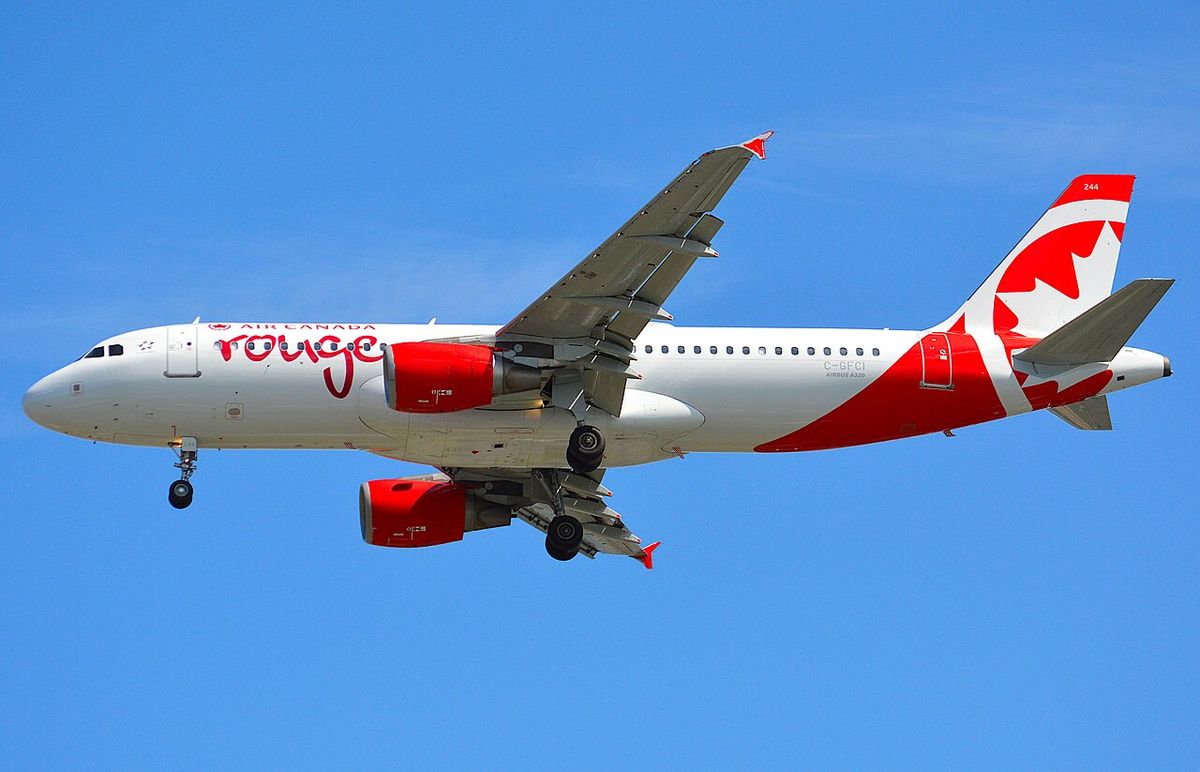
Air Canada officially announced the creation of its Rouge subsidiary in December 2012, with service beginning on Canada Day, July 1, 2013. The inaugural flight operated from Toronto to Kingston, Jamaica, marking the start of the airline's strategy to capture a larger share of the leisure travel market through the Air Canada Leisure Group. At launch, the carrier's fleet consisted of just four aircraft transferred from its parent company: two Airbus A319s and two Boeing 767s. The airline expanded rapidly, growing its fleet to 28 aircraft within its first 18 months of operation, a clear sign of its initial success. By mid-2016, the planned fleet composition was expected to include 16 Boeing 767s, 20 Airbus A319s, and five Airbus A321s, demonstrating a swift scaling of operations. The Boeing 767 fleet alone had expanded to 19 aircraft by early September 2016, enabling longer-haul routes to Europe and other distant leisure markets that were core to its competitive mandate.
Network development and strategic shifts
The airline's initial route network focused on leisure destinations from its eastern Canadian bases, competing directly with charter carriers on price and schedule. A significant westward expansion was announced on March 24, 2014, with Rouge commencing service from Vancouver and Calgary in spring of that year to serve predominantly leisure markets. New routes targeted popular sun and city destinations including Los Angeles, San Francisco, Las Vegas, Phoenix, Palm Springs, Honolulu, Maui and Anchorage, broadening its geographic reach. In May 2015, the network extended to Asia with a seasonal service from Vancouver to Osaka Kansai, testing deeper international markets beyond North America. Further route announcements in December 2015 added destinations like Toronto to Miami, Fort Myers, Charlottetown, and Deer Lake, showing a blend of international sun and domestic seasonal service. The carrier established several year-round routes to solidify its market position against competitors, including key connections from major Canadian cities to Florida and other sun states.
Key year-round routes during this expansion phase included Toronto and Montreal to Fort Lauderdale. Other year-round routes were Montreal to Miami and Vancouver to San Diego and Mexico City. The route from Calgary to Phoenix was also a year-round service. These routes were part of Air Canada Rouge's expansion into Western Canada that began in Spring 2014.
- Toronto and Montreal to Fort Lauderdale
- Montreal to Miami
- Vancouver to San Diego and Mexico City
- Calgary to Phoenix
This period represented the peak of Rouge's long-haul network. The airline utilized its Boeing 767s to serve destinations in Europe and beyond. It directly competed with charter and leisure carriers like Air Transat, Sunwing, and WestJet. This competition was on price and schedule from multiple Canadian gateways in the leisure and vacation travel market.
Fleet transformation and pandemic impact
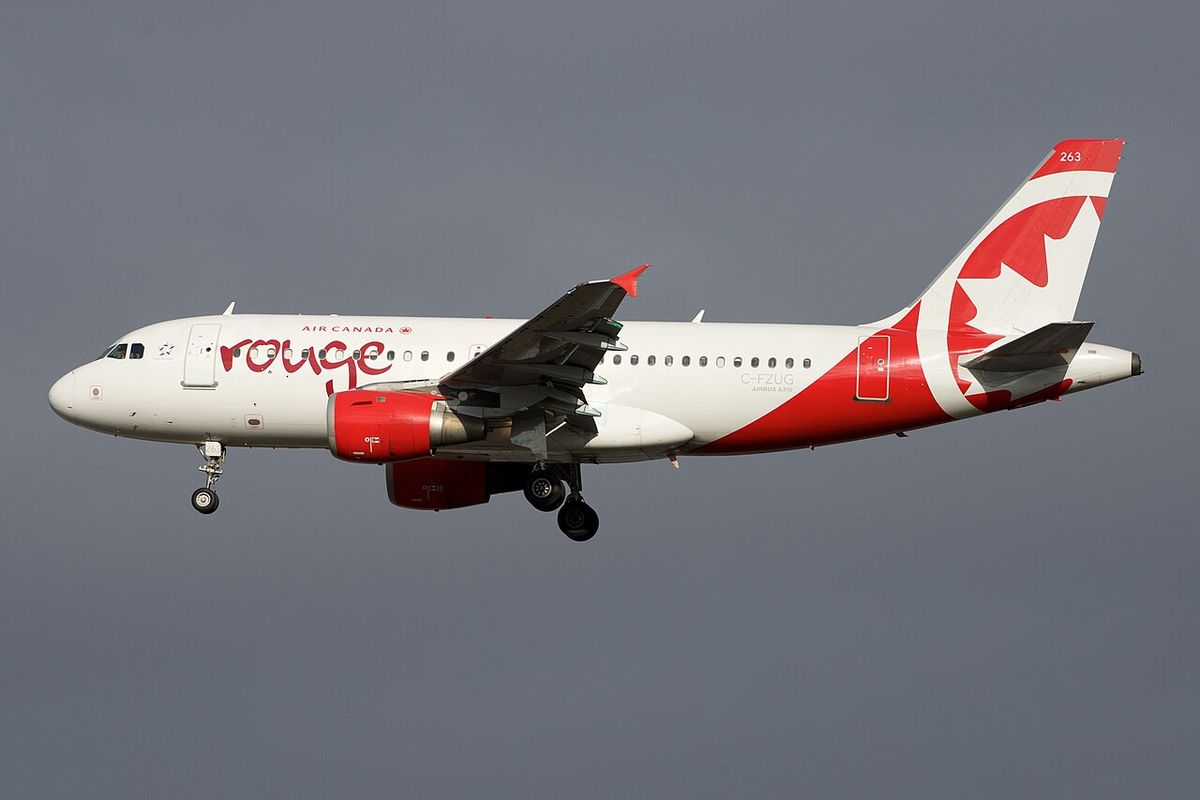
The COVID-19 pandemic precipitated a major restructuring of Air Canada's operations, with a significant impact on Rouge that reshaped its entire business model. In May 2020, Air Canada announced the retirements of 79 aircraft among its mainline and Rouge fleets, including the Boeing 767, Embraer 190, and Airbus A319 aircraft types. For Rouge, this decision resulted in the immediate removal of its entire fleet of 25 Boeing 767-300ER aircraft, and 2 A319s, leaving it with only 18 A320/A321 and 20 Airbus A319 aircraft in its fleet. This fleet reduction meant the airline would no longer be able to reach some of its destinations in Europe, such as Budapest or Zagreb, which required the longer range and capacity of the 767s. Plans were in the works to continue to fly to some European destinations that were in range of these narrowbody aircraft, but the network was drastically curtailed as a result of the lost capability.
By February 2021, the airline removed most of its Central and Eastern European destinations from its schedule. This included Warsaw and Bucharest due to a lack of suitable aircraft. All Air Canada Rouge service was suspended from February 9, 2021 to adhere to new government travel rules aimed at reducing non-essential travel. This suspension lasted until September 7, 2021.
Post-pandemic strategy and new fleet era
Following the pandemic and the lengthy operational suspension, Air Canada initiated a significant strategic overhaul for its Rouge subsidiary to reposition it for future leisure travel demand. On December 17, 2024, the company announced a major fleet transition that would redefine Rouge's operations, cost structure, and geographic focus. The plan involved transferring Air Canada's Boeing 737 MAX 8 aircraft to the Rouge fleet to replace the existing Airbus fleet, creating a modern and efficient single-type narrow-body operation. Concurrently, Air Canada Rouge's Airbus A320 and A321 fleet will transfer to the mainline Air Canada fleet as part of this transition, streamlining the fleets of both entities. This move signalled a standardization of the narrow-body fleet around the modern and fuel-efficient 737 MAX for Rouge's cost-focused operations, aiming to improve unit economics. As part of this new strategy, Air Canada also announced it would create a Rouge hub at Vancouver International Airport, indicating a strengthened focus on western Canadian leisure markets and transborder routes from the Pacific gateway, which aligns with the range of the 737 MAX aircraft.
Destination network evolution
Air Canada Rouge's destination network has evolved considerably since its inception, heavily influenced by fleet changes that have alternately expanded and contracted its reach. Following the retirement of its Boeing 767-300ERs in 2020, the airline ceased all long-haul operations to Asia, Europe, and South America, with all former routes to these continents being cancelled. Its contemporary network, as detailed in 2025, is predominantly focused on leisure markets within range of its narrow-body aircraft, serving destinations in the Caribbean, Central America, and Mexico predominantly, and the United States. With the new addition of the Boeing 737 MAX 8, Air Canada Rouge has started to serve many domestic routes within Canada, expanding its role beyond purely international vacation travel and increasing its utility to the mainline network. This shift allows Rouge to feed the mainline network from the new Vancouver hub while continuing to serve price-sensitive leisure markets with a modernized fleet that offers improved operating costs compared to its previous Airbus aircraft.
Onboard service and seating configuration
Air Canada Rouge is configured for higher density than mainline Air Canada aircraft to support its lower-cost model, a key feature of its service concept that allows it to offer competitive leisure fares. The airline's baggage policy is the same as Air Canada's, providing consistency for customers across the brand and simplifying the travel experience for passengers connecting between networks. On flights longer than two hours in duration, a full meal service is provided in the Premium Rouge cabin, while in the Economy cabin, a buy-on-board food offering in line with mainline service exists, differentiating the service levels. The seating configuration is a primary differentiator, with tighter seat pitches in economy compared to mainline services to achieve lower unit costs, which is a standard practice among leisure-focused airlines globally.
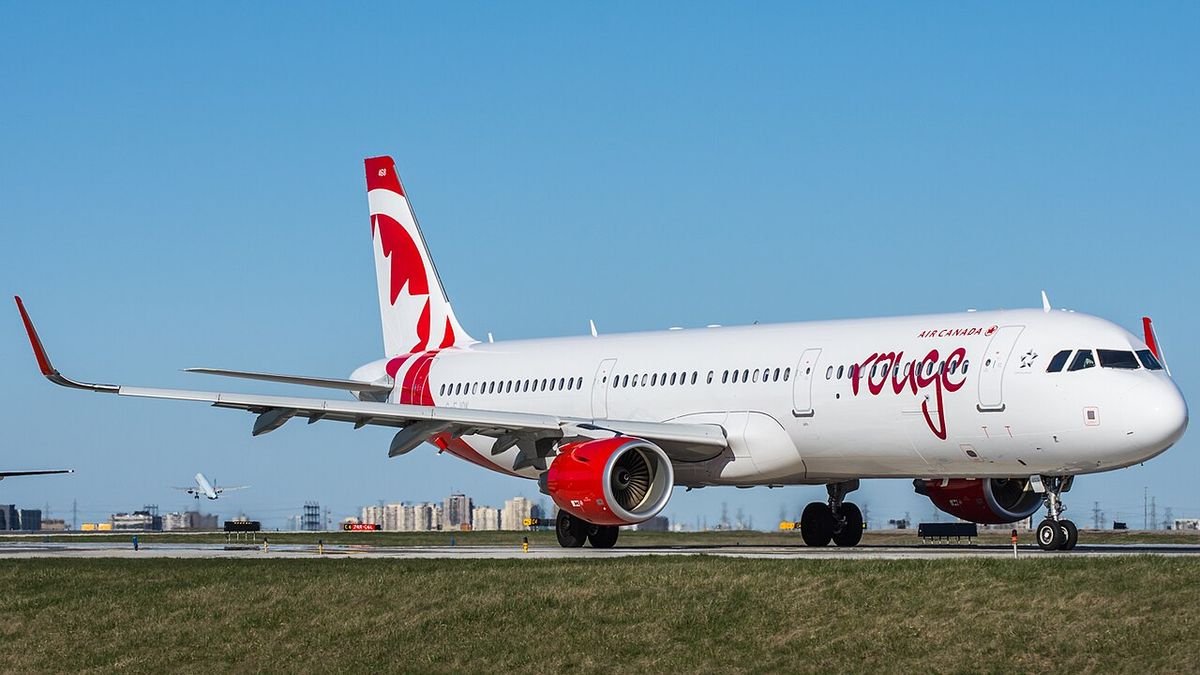
The Air Canada Rouge Airbus A319 had 136 seats, which was 16 more than a regular Air Canada Airbus A319, with the first four rows reserved for Rouge Plus and Premium Rouge passengers. The former Air Canada Rouge Boeing 767-300ER carried 71 more passengers than most regular Air Canada Boeing 767-300ER aircraft, with 282 seats configured with 223 in economy, 35 in Rouge Plus and 24 in Premium Rouge. The 29-inch seat pitch on their A320 series aircraft is one of the smallest in North America, resulting in less leg room than on most other comparable aircraft operated by competitors. The Airbus A321-200 has 12 Premium Rouge seats with 37-inches of pitch while Economy Class seats have 30-inches of pitch, illustrating the tiered service approach within the leisure model where premium options offer more space.
Fleet history and current operations
Air Canada Rouge's fleet has undergone two major transitions driven by market conditions, pandemic response, and long-term corporate strategy to optimize costs and capabilities. The initial fleet, transferred from Air Canada in 2013, consisted of Airbus A319s and Boeing 767-300ERs, with the 767s forming the backbone of its long-haul leisure network until their complete retirement in 2020. Following that retirement, the fleet consisted exclusively of Airbus A319, A320, and A321 narrow-body aircraft, which limited its network range to short and medium-haul markets primarily in the Americas. The December 2024 announcement marked the beginning of the second major transition, phasing out these Airbus aircraft in favour of the Boeing 737 MAX 8 to gain commonality, efficiency, and environmental benefits. As of August 2025, Air Canada Rouge operates Boeing 737 MAX 8 aircraft, a modern type that supports its revised network and hub strategy from its new base at Vancouver International Airport.
| Fleet Era | Primary Aircraft | Network Capability | Notable Configurations & Details |
|---|---|---|---|
| 2013 to 2020 | Boeing 767-300ER, Airbus A319/A320 | Long-haul to Europe/Asia. Leisure sun destinations | 767 with 282 seats (24 Premium Rouge, 35 Rouge Plus). Initial fleet: 2 A319, 2 B767 |
| 2025 onward | Boeing 737 MAX 8 | Domestic, transborder, and sun destinations. Hub at Vancouver | Configurations aligned with cost-leisure model. Replaces entire Airbus fleet |
This fleet modernization is central to Rouge's revised role within the Air Canada group. On December 17, 2024, Air Canada announced it would transfer its Boeing 737 MAX 8 aircraft to Rouge's fleet to replace the Airbus fleet. The plan also included creating a Rouge hub at Vancouver International Airport. Air Canada Rouge's Airbus A320 and A321 fleet will transfer to the mainline fleet as part of this transition.
Competitive position and market role
Air Canada Rouge was conceived specifically to compete more efficiently in the leisure and vacation travel market, a segment dominated by carriers like Air Transat, Sunwing, and WestJet, which pressured Air Canada's mainline yields. Its launch under the Air Canada Leisure Group provided the mainline carrier with a dedicated tool to contest price-sensitive routes without diluting its own full-service brand or cost structure. The use of higher-density aircraft with reduced seat pitch, such as the 29-inch pitch on A320s, allowed Rouge to offer competitive fares while maintaining integration through shared AC flight numbers, reservations systems, and loyalty programs. The suspension of service in 2021 and the subsequent fleet transition to the 737 MAX 8 reflect an ongoing adaptation to post-pandemic travel patterns, environmental goals, and relentless cost pressures in the leisure sector. The establishment of a Vancouver hub positions Rouge to leverage western Canadian demand for leisure travel to the United States and Mexico, ensuring it remains a relevant, streamlined, and economically viable component of Air Canada's overall network strategy for capturing vacation travellers.
Questions about Air Canada Rouge
What is the difference between Air Canada and Air Canada Rouge?
Air Canada Rouge is a lower-cost, leisure-focused subsidiary of Air Canada, fully integrated into the mainline network but with a distinct service model. While flights are sold under Air Canada (AC) flight numbers, they are listed as operated by Air Canada Rouge. Rouge typically features higher-density seating configurations with less legroom in economy class, such as a 29-inch pitch on A320s, compared to mainline Air Canada aircraft. It primarily serves vacation destinations, whereas mainline Air Canada operates a broader global network including business and long-haul routes.
Where does Air Canada Rouge fly to?
Following its fleet changes, Air Canada Rouge's network focuses predominantly on leisure destinations within range of narrow-body aircraft. This includes sun destinations in the Caribbean, Central America, and Mexico, and the United States. With the introduction of the Boeing 737 MAX 8, the airline has also started to serve many domestic routes within Canada. It previously served destinations in Europe and Asia, like Osaka Kansai from Vancouver, until the retirement of its Boeing 767 fleet in 2020.
What is Premium Rouge?
Premium Rouge is Air Canada Rouge's premium cabin offering, available on aircraft like the former Airbus A321 and Boeing 767. It offers an enhanced experience compared to standard economy, featuring seats with more legroom, such as the 37-inch pitch on the A321. On flights longer than two hours, a full meal service is provided in Premium Rouge, whereas economy class has a buy-on-board food offering aligned with mainline service. The retired 767s had 24 Premium Rouge seats within their 282-seat configuration.
When did Air Canada Rouge start flying?
Air Canada Rouge was launched in December 2012 and began its commercial services on July 1, 2013. The airline's inaugural flight was from Toronto to Kingston, Jamaica. It was established as part of the Air Canada Leisure Group to compete more effectively with other leisure carriers like Air Transat and Sunwing. The initial fleet consisted of four aircraft transferred from its parent company. This launch marked Air Canada's strategic entry into the lower cost leisure travel market.
What type of aircraft does Air Canada Rouge fly?
As of August 2025, Air Canada Rouge operates Boeing 737 MAX 8 aircraft. This current fleet configuration resulted from a major transition announced in December 2024, when Air Canada stated it would transfer its Boeing 737 MAX 8 aircraft to Rouge's fleet. These new aircraft are replacing the airline's previous Airbus fleet, specifically the A320 and A321 models, which were transferred to the Air Canada mainline. This fleet renewal is part of a broader strategy that includes establishing a Rouge hub at Vancouver International Airport.
Why did Air Canada Rouge stop flying to Europe?
Air Canada Rouge stopped flying to Europe primarily due to the retirement of its entire fleet of 25 Boeing 767 300ER aircraft in May 2020. This retirement was part of a larger fleet reduction by Air Canada during the COVID 19 pandemic. The remaining aircraft in Rouge's fleet at the time, namely Airbus A319, A320, and A321 narrow body aircraft, did not have sufficient range to reach many European destinations such as Budapest or Zagreb. Consequently, by February 2021, the airline had removed most of its Central and Eastern European destinations from its schedule, cancelling all former routes to Europe.
Sources and further reading
- Air Canada Rouge (Wikipedia)
- Air Canada Rouge (flyrouge.com)
- Air Canada Corporate Profile (aircanada.com)
Checked by the Yadude Books desk. Last updated 2026-11-03.