Quebec Leaders Clash Over Referendum, Economy in Heated Noovo/Crave Debate
Five Quebec party leaders engaged in a fiery 90-minute debate on Noovo and Crave, with sovereignty, infrastructure spending and immigration policy sparking heated exchanges ahead of the October 5 provincial election.
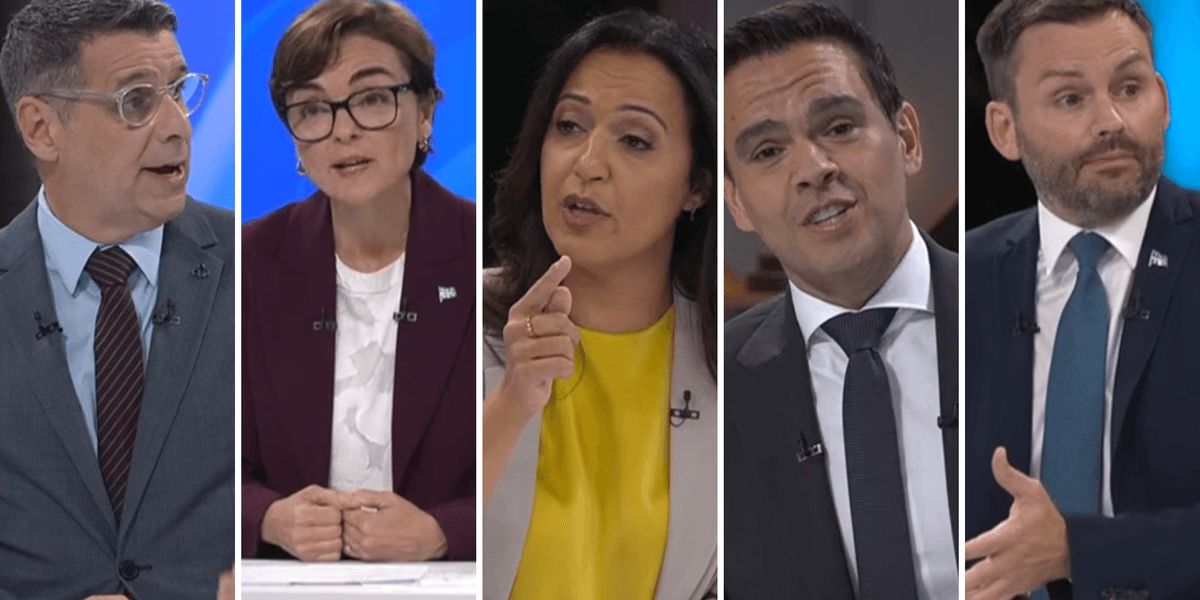
The second of Quebec's three scheduled election debates brought heightened tensions as the five principal party leaders faced off on September 16 in a confrontation broadcast on Noovo and Crave. Moderated by Bell Media's Michel Bherer, this 90-minute exchange between Coalition Avenir Québec (CAQ) leader Christine Fréchette, Parti Québécois (PQ) leader Paul St-Pierre Plamondon, Parti conservateur du Québec (PCQ) leader Éric Duhaime, Parti libéral du Québec (PLQ) leader Charles Milliard, and Québec solidaire (QS) co-spokesperson Ruba Ghazal featured sharper clashes than the previous night's TVA debate, particularly around Quebec's constitutional future and economic direction.
CAQ's Conditional Apology and Sovereignty Warning
Incumbent Premier Christine Fréchette opened the debate's first segment with a carefully calibrated admission regarding her party's eight years in power. "In recent years, let's be honest, the CAQ hasn't been perfect," Fréchette told PQ leader Paul St-Pierre Plamondon, marking one of the rare instances where the governing party acknowledged shortcomings. However, she quickly qualified this statement by emphasizing corrective actions: "I've corrected past errors. You've seen me govern at a good pace these last five months." This partial mea culpa appeared strategically designed to recognize voter frustrations while preventing the opposition from monopolizing criticism of her government's record.
The CAQ leader then pivoted sharply to frame the PQ's sovereignty agenda as an irresponsible distraction. "Is this really the time to add uncertainty with Paul St-Pierre Plamondon's referendum?" she challenged, framing the debate as a choice between stability and constitutional turmoil. Her argument that "What he's proposing isn't change - it's going backward to a Quebec stuck in referendum debates" reflected the CAQ's core campaign strategy to position sovereignty as an outdated preoccupation compared to economic concerns. This exchange set the tone for recurring sovereignty debates throughout the evening.
Infrastructure Spending and Economic Vision
Liberal leader Charles Milliard sustained his economic critiques from the previous debate, employing vivid retail metaphors to criticize CAQ infrastructure spending. "It's like you're shopping at Costco," he quipped. "Everything comes in six-packs." This pointed critique suggested the CAQ approached major projects without proper prioritization, framing them as bulk purchases rather than strategic investments. When Fréchette attempted to redirect discussion back to sovereignty concerns, Milliard pointedly reminded her "Right now you're debating me," forcing continued focus on economic accountability and project selection.
The proposed third highway link between Quebec City and its south shore emerged as a recurring flashpoint, with Québec solidaire's Ruba Ghazal delivering one of the debate's most memorable lines. "Every election campaign, the CAQ rediscovers its passion for the third link, then there's a breakup. And now it starts again," she quipped, drawing laughter while underscoring opposition claims that the project represents political opportunism rather than sound policy. Fréchette defended the proposal as serious infrastructure, countering PQ leader St-Pierre Plamondon's earlier dismissal of it as a "gnocchi project" by insisting it was no "feuille de chou" (piece of nonsense). The PQ leader later clarified he opposed the CAQ's specific proposal rather than the concept itself, revealing nuanced disagreements beneath the rhetorical clashes.
Generational Perspectives on Sovereignty
The sovereignty debate took on intergenerational dimensions when discussion turned to youth issues. Liberal leader Milliard argued that reviving sovereignty debates would exacerbate anxiety among young Quebecers, stating "All those under 49 have never been asked about Quebec becoming sovereign." This framing attempted to position the sovereignty debate as irrelevant to younger generations' concerns. PQ leader St-Pierre Plamondon countered that sovereignty constituted a separate issue from mental health, framing it as a democratic right for younger generations to consider: "It's a distinct topic from youth anxiety."
Their exchange intensified when Milliard cited polls showing 70% opposition to another referendum. St-Pierre Plamondon responded with one of the debate's sharpest rejoinders: "Well 80% of Quebecers don't want the Liberals either. If you want to govern by polls..." This quick-witted retort underscored how referendum politics continue to sharply divide Quebec's political landscape, even after years of relative dormancy on the issue. The exchange also revealed differing philosophies about leadership - whether to follow or shape public opinion on constitutional matters.
Immigration Policy Divides
The debate's concluding segment featured heated exchanges on immigration between Conservative leader Éric Duhaime and Liberal leader Charles Milliard. Milliard advocated for a more welcoming approach, asserting "We need to change our tone and stop making immigrants political punching bags," reflecting traditional Liberal positions on integration. While Duhaime agreed in principle, his qualifications revealed ideological differences: "We need to prioritize taxpaying Quebecers" over asylum seekers, he argued, controversially suggesting immigrants were occupying daycare spots that should go to Quebec-born children.
These comments prompted Milliard to strongly criticize the Conservative proposal to provide payments to parents for home childcare, calling it "a measure that will hurt women" by potentially reducing institutional daycare availability. When Duhaime floated a lottery system for daycare spots, Milliard dismissed the idea with visible frustration: "Exaggeration isn't for me." These exchanges revealed fundamental disagreements about integration priorities and social service allocation in Quebec's evolving demographic landscape, with the Conservatives emphasizing fiscal responsibility and the Liberals stressing inclusion.
Debate Structure and Campaign Implications
The debate's innovative format, inspired by Noovo's "Les débatteurs" program, featured 20 head-to-head matchups organized around five themes: cost of living, economy and infrastructure, youth prospects, healthcare and homelessness, and French language and immigration. This structure created dynamic confrontations that highlighted policy differences more clearly than traditional free-flowing debates.
Strategically, the evening demonstrated how the CAQ seeks to deflect governance criticisms by emphasizing stability against PQ sovereignty plans, while opposition parties concentrate attacks on economic management and policy consistency. With the final debate scheduled for September 23 on Radio-Canada, moderated by Patrice Roy, these exchanges could prove decisive in a campaign where recent polls indicate tightening competition. The October 5 election will determine whether Quebecers prioritize continuity under the CAQ or desire a shift in direction after eight years of its governance, against the backdrop of revived debates about the province's constitutional future and social priorities.