U.S. Military Prepares for Potential Warfare Around the Moon, Top Adviser Says
President Trump's top military adviser warns American troops must prepare for combat extending to lunar orbit as Space Force expands its defensive capabilities amid growing concerns over space militarization by adversaries like China.
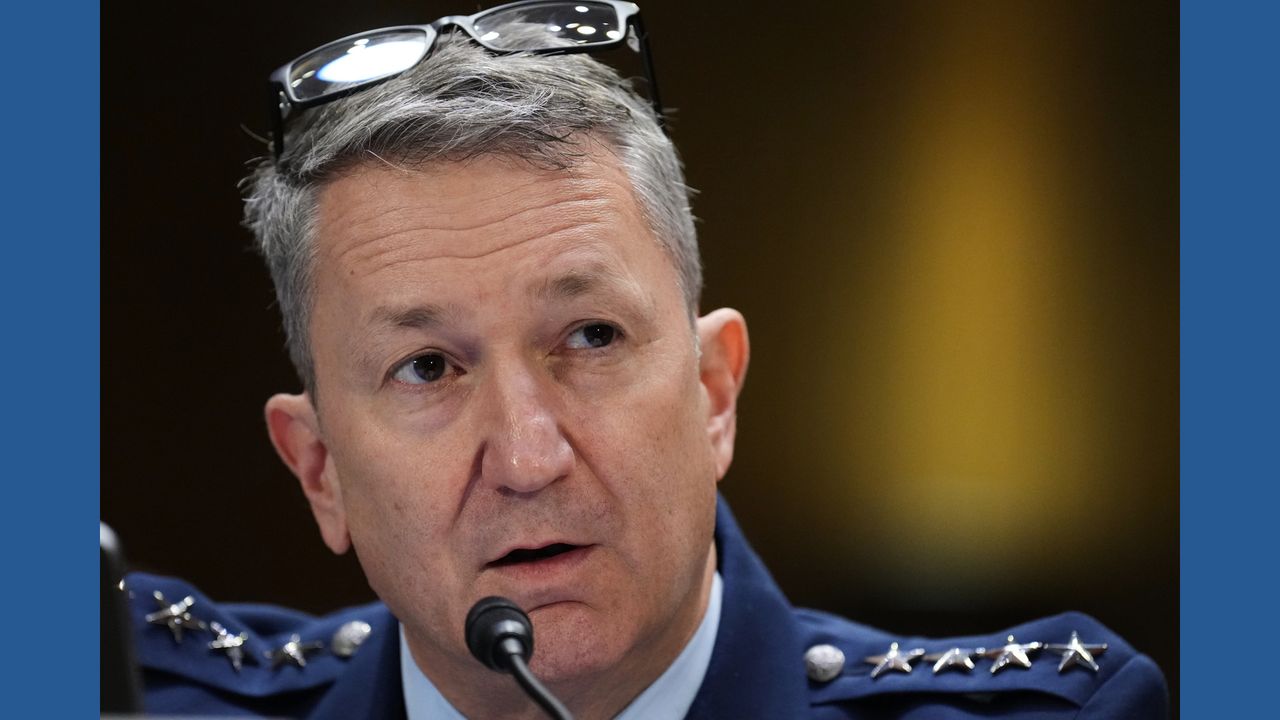
The United States military is actively preparing for the possibility of combat operations extending beyond Earth's orbit to the region around the moon, according to President Donald Trump's top military adviser. This significant shift in defense strategy comes as the U.S. military publicly acknowledges for the first time that it has deployed weapons in space, marking a new phase in global military posturing.
Military Leaders Outline Expanded Combat Zones
Gen. Dan Caine, chairman of the Joint Chiefs of Staff, delivered a stark warning to service members and defense industry figures gathered at the Air, Space and Cyber Conference near Washington. He stated that American forces must adapt to potential conflicts spanning "from the seabed to cislunar space" - referring to the vast area between high Earth orbit and the moon's vicinity. This declaration represents a fundamental reimagining of traditional combat domains.
Lt. Gen. Gregory Gagnon, head of Space Force's Combat Forces Command, provided additional context about the military branch's evolving mission. "Humanity is advancing deeper into space - the Space Force's job is to help be prepared to defend U.S. interests," Gagnon told reporters. The general revealed concrete plans to double Space Force personnel to approximately 25,000 members within five years, with about 16,500 of those new positions focused specifically on combat operations through Combat Forces Command.
On-Orbit Weapons Deployment Confirmed
These strategic pronouncements followed Air Force Secretary Troy Meink's significant disclosure at the same conference that the U.S. has operationalized "on-orbit space control weapons." While military officials declined to provide specific details about these weapons systems - including their technological capabilities, deployment locations, or operational status - the admission itself breaks new ground in military transparency regarding space armaments.
When pressed by reporters about whether these space-based weapons include kinetic systems like bullets or projectiles, Gagnon avoided direct answers, instead directing such inquiries to the Pentagon. As of the conference, Defense Department officials had not responded to requests for clarification about the nature of these space weapons or the policies governing their potential use.
Strategic Concerns About China's Space Activities
Military leaders explicitly cited China's growing space capabilities as a primary motivator for the U.S. space defense expansion. Gagnon stated that intelligence assessments clearly indicate "potential adversaries such as the PRC are actively pursuing activities in the system, in parts of space," using China's official designation, the People's Republic of China. This reference points to China's establishment of dedicated military space troops in 2024, a force specifically charged with managing space-related crises.
The Chinese government responded swiftly to the U.S. announcements through foreign ministry spokesperson Guo Jiakun. Reiterating China's official position, Guo stated the country "always upholds the peaceful use of outer space, maintains outer space security and opposes the weaponization, militarization and an arms race in outer space." The spokesperson directly called on the United States to "stop expanding its military preparations in outer space," framing the American moves as provocative rather than defensive.
Legal and Diplomatic Implications
The U.S. military's space weapons deployment and lunar combat preparations potentially conflict with the 1967 Outer Space Treaty, an international agreement signed by both the United States and China. The treaty explicitly designates celestial bodies like the moon for "exclusive peaceful purposes" and prohibits placing nuclear weapons or other weapons of mass destruction in space. However, the agreement lacks robust enforcement mechanisms and contains ambiguities about conventional weapons systems in space.
Recent diplomatic efforts to strengthen space militarization prohibitions have faltered. In 2024, Russia vetoed a U.S.-backed resolution at the United Nations that would have reinforced bans on space-based weapons of mass destruction. A subsequent Russian proposal for a comprehensive ban on all space weapons also failed to gain sufficient international support, leaving the legal framework for space security in flux.
Space Force's Accelerated Growth
Space Force, established by presidential order in 2019 as the first new U.S. military branch in over 70 years, is undergoing rapid transformation to meet its expanding mission parameters. The planned doubling of its personnel strength reflects the growing prioritization of space operations within overall Pentagon strategy. Gagnon emphasized that Space Force remains committed to "safe and responsible space operations in all the reaches of space," though he carefully avoided directly addressing how this commitment aligns with existing treaty obligations regarding space weaponization.
The disproportionate growth planned for Combat Forces Command - slated to receive about two-thirds of all new Space Force personnel - indicates a strategic shift toward operational warfighting capabilities over support functions. This realignment mirrors broader military concerns about maintaining strategic advantages in space as rival nations develop their own space military capabilities.
Broader Implications of Space Militarization
The public acknowledgment of operational space weapons and preparations for lunar combat represents a pivotal moment in military history. For decades following the Cold War, space remained largely demilitarized by practical consensus, serving primarily as a domain for scientific exploration and civilian communications rather than direct military confrontation. These recent announcements suggest that era may be concluding, with major powers now openly planning for potential space conflicts.
The consequences extend far beyond immediate military considerations. Militarizing space risks creating cascading debris fields from potential conflicts that could render critical orbits unusable for generations, threatening satellites essential for global communications, weather forecasting, financial transactions, and navigation systems. The philosophical implications are equally profound, raising questions about projecting humanity's conflicts beyond our planetary boundaries just as commercial space exploration begins making extraterrestrial travel more accessible.
Looking Ahead
As Space Force expands its capabilities and other nations inevitably respond with their own space military developments, the international community faces critical decisions about preserving space as a shared commons. The coming years may see either renewed diplomatic efforts to strengthen space demilitarization or an accelerating arms race beyond Earth's atmosphere. Military leaders like Gagnon frame current preparations as creating necessary deterrence, but the long-term stability of space as a domain remains uncertain as weapons systems begin orbiting alongside satellites that power modern civilization.