Canada and EU Forging 'Unique' New Partnership Ahead of Carney's Strasbourg Address
The European Union's ambassador reveals plans for an unprecedented Canada-EU partnership to be discussed during PM Carney's rare European Parliament visit next week, with potential agreements spanning security, critical minerals and digital trade.
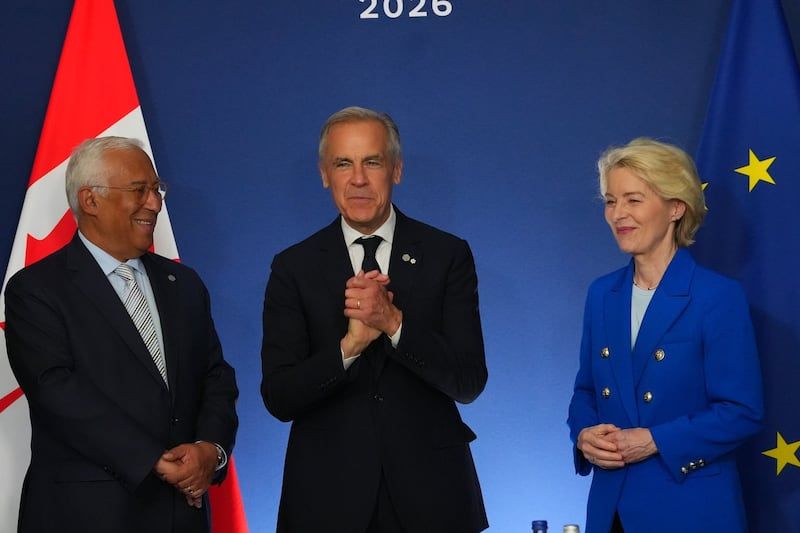
The European Union is developing a groundbreaking new partnership framework with Canada that will differ fundamentally from its existing agreements with other nations, according to the bloc's top envoy in Ottawa. Ambassador Geneviève Tuts revealed in an interview that negotiations are underway for an arrangement that goes beyond current strategic and trade agreements, calling it "something unique" in EU-Canada relations. This initiative comes at a time when both partners are seeking to strengthen transatlantic ties amid global economic volatility and geopolitical realignments.
A Partnership Unlike Others
Prime Minister Mark Carney first signaled his government's intention to pursue deeper European ties last month after signing a defense-industrial cooperation pact. "This fall, we will begin discussions with the European Union, the world's second-largest economy, to build a much stronger and deeper security and economic partnership," Carney stated on August 22. The proposed framework won't mirror the EU's arrangements with neighboring states like Switzerland, Norway or post-Brexit United Kingdom, according to Tuts, who emphasized that both parties are still determining its final form. The uniqueness of this potential partnership stems from Canada's geographic distance from Europe combined with its shared democratic values and economic priorities.
High-Profile Strasbourg Engagement
The partnership will take center stage during Carney's upcoming visit to Strasbourg, where he'll address the European Parliament on September 14, an unusual honor for a non-European leader that underscores the importance Brussels places on Canadian relations. While some media reports speculated about an imminent deal, Tuts clarified that the session will focus on preliminary discussions rather than finalizing terms. European Commission President Ursula von der Leyen will first deliver her annual State of the Union address on September 13, setting the stage for Carney's speech the following morning before 720 members of the European Parliament. This sequence of events positions Canada's priorities within the broader context of the EU's annual policy agenda.
Pathway to October Summit
Following the Strasbourg meetings, both sides will consult their respective stakeholders, the EU with member states and Canada with provincial governments, ahead of a potential formal announcement at the EU-Canada summit scheduled for October 29-30 in Canada. "The idea is to go further in the integration, on substance and on the way we are working together," Tuts explained regarding the phased approach. The location for the late-October summit remains undisclosed, but it will feature von der Leyen and European Council President Antonio Costa meeting with Canadian officials to potentially formalize the new partnership terms. This timeline allows for domestic consultations on both continents while maintaining political momentum from the Strasbourg discussions.
Substance Still Taking Shape
Academic observers caution that the partnership's concrete elements remain fluid. Achim Hurrelmann of Carleton University's Centre for European Studies noted that officials appear to be "scrambling for ideas" about what to include, suggesting the initiative is being assembled rapidly. Potential components could involve critical minerals stockpiling, expanded Erasmus student exchanges, and digital trade agreements, though Hurrelmann doubts these will coalesce into "a systematically new step in the relationship." He characterized the current efforts as "lots of initiatives" that may not justify a new partnership label, suggesting the October summit might produce a package of incremental agreements rather than a comprehensive new framework.
Defense Cooperation Precedent
The existing Security Action for Europe (SAFE) defense loan program provides important context for the new partnership talks. Canada became the first non-European participant in this initiative, which funds joint defense projects between EU members and partner nations. However, only one collaborative project has materialized so far under this program, highlighting the challenges of translating strategic intentions into concrete outcomes. The EU's fee structure for SAFE participation also reveals interesting dynamics, last December, Brussels calculated a significantly lower participation fee for Canada compared to the United Kingdom, suggesting different expectations for economic benefits from the respective partnerships.
Challenges to Deepening Ties
Several geopolitical factors complicate the partnership's prospects. Hurrelmann pointed to Canada's ongoing efforts to secure stable trade access to the U.S. market as a potential constraint on how far it can integrate with European systems. Simultaneously, Europe faces political challenges from rising far-right movements that frequently oppose deeper EU external engagements. These domestic factors on both sides of the Atlantic could limit the ambition of any new agreement. As Hurrelmann observed, "As always in the Canada-EU relationship, it's easier to come up with big pronouncements of new initiatives than to actually follow through on these announcements."
Expanding Collaborative Frontiers
Beyond traditional trade and security matters, Canada and the EU are pursuing "quite dense" collaboration across emerging policy areas according to Tuts. These include critical mineral supply chains crucial for clean energy transitions, coordinated approaches to countering disinformation in democratic societies, and joint technological innovation initiatives. The Canadian government has reportedly assigned multiple officials to oversee these diverse cooperation streams, reflecting the breadth of engagement. The ambassador described the current moment as "very fascinating" in bilateral relations, asserting that the two partners are "closer than ever, and we will be even closer" through this new initiative.
Strategic Context and Implications
This proposed partnership represents Canada's strategic pivot toward Europe at a time of global economic uncertainty and shifting alliances. For the EU, closer ties with Canada offer opportunities to diversify partnerships beyond its immediate neighborhood while aligning with a like-minded democracy on key global issues. The symbolic value of Carney's European Parliament address is significant as it positions Canada as a priority external partner for Europe. However, the real test will come in translating high-level aspirations into tangible cooperation frameworks that deliver measurable benefits. The effort reflects both parties' desire to present a united democratic front on contemporary challenges, but its ultimate impact will depend on implementation details still being negotiated.